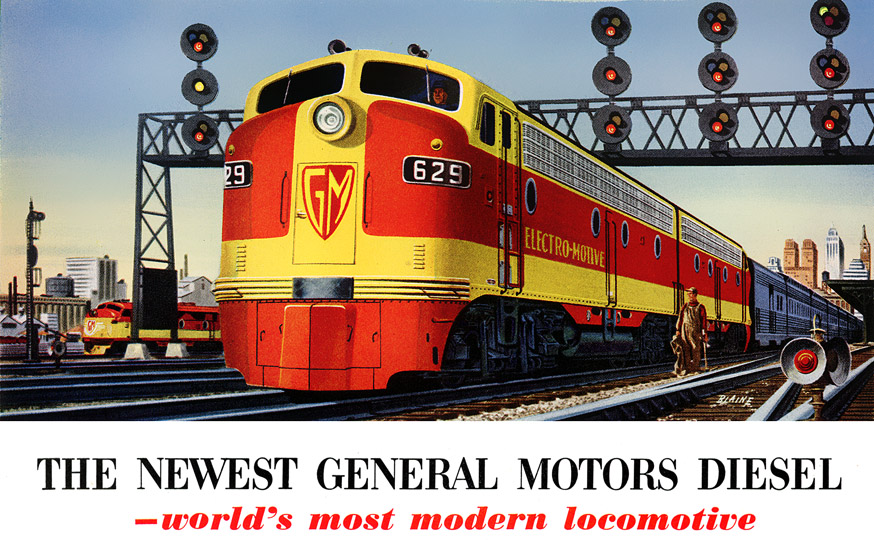
• Home
  • Booklets/Grouped Entries
  • Tech Tsunami
  • List of Entries to Date
  • About the Author

usrevolution5

~ USA Headed for a 5th Revolution! Why?

usrevolution5

Category Archives: General Motors

#48 Squeaky Reigns and It Starts to Rain

07 Wednesday May 2014

Posted by Jordan Abel in Back Asswards Thinking, General Motors

≈ Leave a comment

(Readers: Please note the blog about the 5th revolution in the US is constructed as a story. While not all chapters are linked, the story might be more meaningful by starting at the beginning.)

(Want a PDF version for Entries #1-10, #11-20, #21-30 formatted as an e-book?  Entries #31-40 available soon.  Click links for download.  America’s 5th Revolution Volume I (Entries 1-10), America’s 5th Revolution Volume II (Entries 11-20), America’s 5th Revolution Volume III (Entries 21-30)

Scene: Jordan’s office with Matt, reporter for major publication.  Matt has been asked by POTUS’ office to help write the story of GM.  POTUS wants to use the information as part of a plan to help rebuild US manufacturing.  Entries about GM begin #41.

Matt:  “Jordan, my coffee is refilled.  Situation: early 1980’s.  GM struggling a bit but still the big kahuna.  What was GM’s market share?”

Jordan:  “About 45%, almost 5 of every 10 cars were still GM brands.”

reporter on typewriter clipartMatt:  “That’s a huge number.  What about management?  Was Mr. Murphy still chairman?”

Jordan:  “No, the Board had named Roger Smith chairman in the early 1980’s.”

Matt:  “Was he a clone of Murphy?”

Jordan:  (spitting out his coffee) “My apologies for my reaction.  Roger Smith was the complete opposite of Tom Murphy – 180 degrees apart.”

Matt:  “Different in what way?  Appearance?  Approach to business?  The way he worked with people?”

Jordan:  “Yes, yes and yes.  Let’s start with appearance.  Murphy could have been from Hollywood casting, looking very much the part of CEO.  Smith looked more like Mickey Rooney – short, a bit pudgy and reddish hair.  Plus his voice was high pitched.  In some management circles, he was known as ‘Squeaky.’”
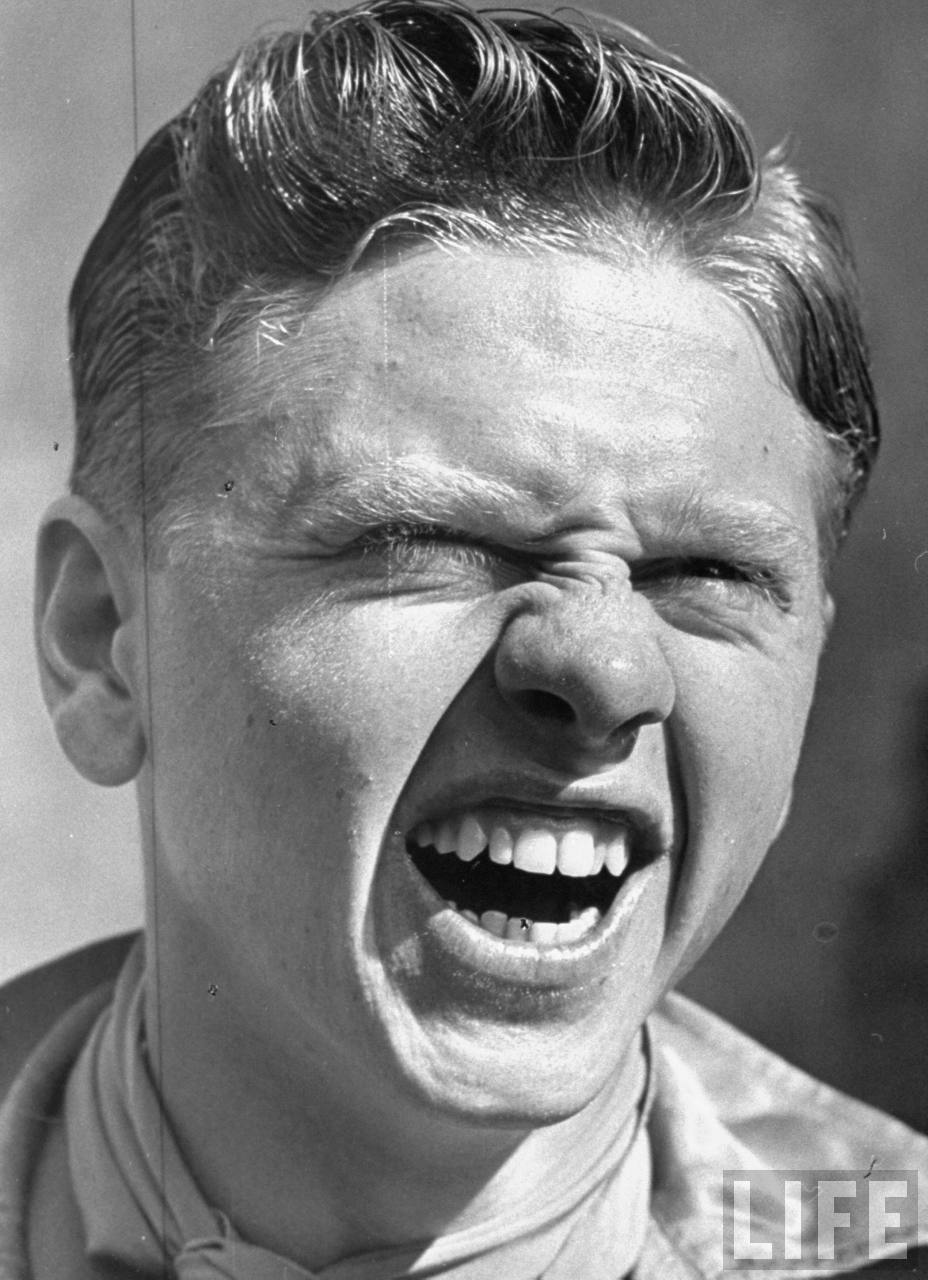
17-mickey_rooney_theredlistMatt:  “You think his appearance made a difference?”

Jordan:  “Speculation on my part but Smith seemed to be conscious of his appearance.  To compensate for physical shortcomings, he tried to intimidate people – and I’d say effectively.”

Matt:  “Does Squeaky…I mean Roger Smith…create a team spirit?  Some leaders can be intimidating and still build a good team and gain respect.”

Jordan:  “Smith has a small cadre of henchmen.  If you were not part of the group, you had no say.”

Matt:  “What else happened?”

Jordan:  “Squeaky changed the focus of GM from selling cars and trucks to maximizing profits.”

Matt:  “Isn’t that what the CEO is supposed to do?”

Jordan:  “Earnings come from sales.  As simple as that is, Squeaky never seemed to understand that concept.”

Matt:  “No sales.  No earnings.”

Jordan:  “Think of it this way.  Take your house.  You can increase your spendable income by deferring maintenance on the house.”

Matt:  “But soon the house starts to deteriorate and eventually falls apart.   And then is worth nothing.”

Jordan:  “That’s exactly what Smith did to GM.  He spent the income on other items and did not address maintenance on the house.”

Matt:  “Give me some examples.”
2007-saturn-outlook-grille-badge-photo-54586-s-1280x782Jordan:  “The one take makes me nauseous to this day is Saturn.”

Matt:  “You don’t think starting Saturn was a good idea?”

Jordan:  “Possibly one of the dumbest ideas in GM history.  To fund Saturn, Smith withheld funds for product development from the other divisions.”

Matt:  “And you said that those divisions, while a bit tarnished, could have recovered with some new product.”

Every brand…and I mean every brand…has a period when the product and sales are a bit out of synch with market demand.”

Matt:  “But don’t kill the brand just because of a solvable problem…right?”

Jordan:  “Squeaky starting Saturn is like putting a very expensive addition on the house.  Then neglecting to maintain the main house.”

Matt:  “Jordan – is the story becoming too complicated?  POTUS wants to use lessons from GM to help formulate a manufacturing policy.  I’m concerned we are getting off track.”

Jordan:  “I understand the question and the concern.  The lesson for us is to stay focused on what GM did best, how did it fix problems rather than ignore problems and how it did not make solutions too complicated.  Then talk about what happened when GM ignored the basics.”

Matt:  “You think GM did not follow the lesson?”

Jordan:  “They missed all three.  And then paid the price…bankruptcy.”

Matt:  “OK they missed but the story needs more specifics.  So far you’ve mentioned Saturn and the negative effect of the other brands.  That needs more explanation.  And what else?

Jordan:  “Second major issue is reorganizing the company in a way that destroyed the internal brand identity and created chaos.  Third is buying non-core businesses depleted capital further.”

Matt:  “Such as…?”

Jordan:  “Such as buying Hughes Aircraft and EDS…Electronic Data Systems.  When your core business needs fixing what is the logic of buying businesses that do not generate revenue?”

Matt:  “Was there surplus cash?”

Jordan:  “No.  The company was short of cash.  The GM money machine – the car divisions – needed some cash to freshen the product.”

Matt:  “And the cash gets spent on Saturn, Hughes and EDS.”

Jordan:  “You got the picture.”

Matt:  “I have a question for you I have never heard addressed.”

Jordan:  “Fire away.”

Matt:  “Do you think Squeaky…pardon me, Roger Smith…envisioned himself as the second coming of Alfred P. Sloan?”

Jordan:  “Funny you ask that.  I’ve had the same thought for a long time.  Smith started at GM when Sloan was still involved, albeit later in his career.”

Matt:  “So you think the question is not whacko.”

Jordan:  “Given Smith’s actions, I sincerely believe he thought he could become Alfred P. Sloan II, as it were.  Look at the decisions.”

Matt:  “Keep going.”

Jordan:  “He starts Saturn.  And yes, we need to spend more time talking about why it was such a debacle.  Then buys EDS and Hughes.  Reorganizes the company away from the Sloan model.  Stresses earnings per share over market share.  Then he targets the UAW, especially in Flint.”

Matt:  “But all those actions seem contrary to Sloan’s model.  What Sloan did was to build GM.”

Jordan:  “I agree.  Smith’s decisions we have talked about…and there are many more…seem to be the exact opposite of the model used to build the GM economic engine.”

Matt:  “Ironically, his decisions seem to be aimed at destroying GM, not rebuilding it.”

Jordan:  “I know.  Head scratching, isn’t it.  Matt, I need a short break.  Talking about this is painful.”
 

#47 Small Car Setbacks Tarnish GM Image

03 Saturday May 2014

Posted by Jordan Abel in Economics, General Motors

≈ Leave a comment

(Readers: Please note the blog about the 5th revolution in the US is constructed as a story. While not all chapters are linked, the story might be more meaningful by starting at the beginning.)

(Want a PDF version for Entries #1-10, #11-20, #21-30 formatted as an e-book?  Entries #31-40 available soon.  Click links for download.  America’s 5th Revolution Volume I (Entries 1-10), America’s 5th Revolution Volume II (Entries 11-20), America’s 5th Revolution Volume III (Entries 21-30)

Scene: Jordan’s office with Matt, reporter for major publication.  Matt has been asked by POTUS’ office to help write the story of GM.  POTUS wants to use the information as part of a plan to help rebuild US manufacturing.  Entries about GM begin #41.

Matt:  “Jordan, now start telling me about the transition of GM from economic engine to sputtering engine to dead stop.  What really happened?

Jordan:  “I’m going to remind you of two things.  The story is my interpretation of events.  Historians and others might not agree.  Second, the story needs the proper context.  Too much emphasis is usually placed on earnings and stock price.”

reporter on typewriter clipartMatt:  “You think there’s a better measure?”

Jordan:  “Earnings and stock price are the result of actions, not the cause.  We want to talk about the cause.  Otherwise the analysis does not contribute to POTUS’ effort to help rebuild US manufacturing.”

Matt:  “OK, let’s get to the next phase.”

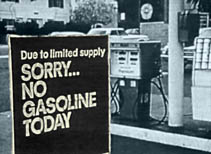
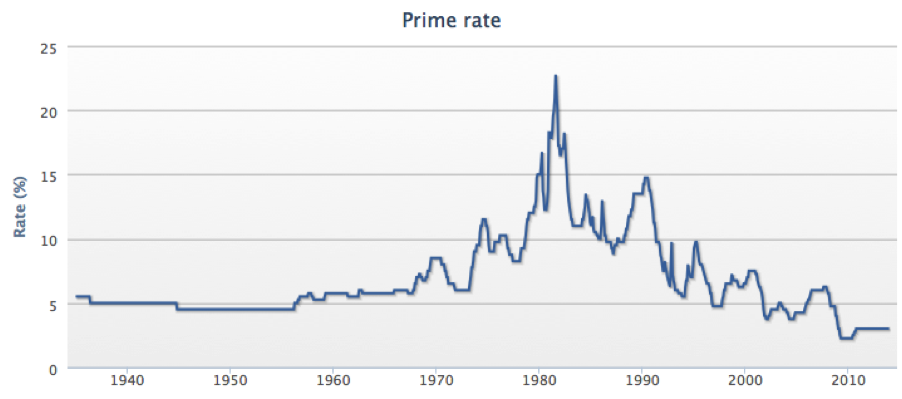
Jordan:  “The 1970’s were chaotic for the US-based manufacturing companies.  The country experienced two oil embargos – 1973 and 1979.  There was also hyper-inflation by US standards.”

Matt:  “What was the prime rate for a while, 15%?”

Jordan:  “It stayed over 15% for several years and actually over 20% for a while.  Hard to comprehend now.”

history-of-prime-rate

Matt:  “High interest rates impact housing and autos, right?”

Jordan:  “For autos, while overall sales declined, the bigger impact was the shift in sales mix – away from large cars and toward smaller cars.”

Matt:  “How did GM fare?”

Jordan:  “Not very well.  Here’s a bit of info to show you how rapidly demand changed.  First, the used car market does not care what the list price of a new car is.  In the used car market, price is set by demand.”

Matt:  “OK…now what?”

Oil EmbargoJordan:  “The oil embargo starts in October 1973.  By January 1974 – three months later – demand for large and small cars has shifted so quickly that the price of a one-year old Chevrolet Vega, a small car, is higher than the price of a one-year old Chevrolet Caprice, a large car.”

Matt:  “And the list price of the Caprice was what…about twice the Vega?”

Jordan:  “That’s a good guess.”

Matt:  “So GM had been strong in large cars now faces a market wanting small cars.”

Jordan:  “GM also suffers because the first oil embargo gives the Japanese imports a real chance to make inroads in the US market.  Sales were languishing prior to the embargo.”

Matt:  “OK, back to GM.”

Jordan:  “GM’s first real small car was the Corvair, introduced in the 1960’s.  Great car until…”

UnsafeAtAnySpeedLargeMatt:  “Ralph Nader wrote ‘Unsafe at Any Speed’.  Was that really true?”

Jordan:  “Rear-engine cars, which the Corvair was…VW Beetle another…and the 911 Porsche…used to have an inherent disadvantage in front-end crashes.”

Matt:  “What do you mean?”

Jordan:  “In front-end crashes the engine absorbs much of the kinetic energy of the impact.  Imagine taking your hand, make a fist and hitting the wall.”

Matt:  “Ouch.”

Jordan:  “Ouch is right.  Now put on a glove, ideally a boxing glove and hit the same wall.”

Matt:  “Does not hurt as much, if at all.”

Jordan:  “Think of the engine of the car as the glove…absorbing the energy from the hit.”

Matt:  “And rear-engine cars have no glove.”

Jordan:  “Had, at least not then.  Structural engineering has improved significantly since the 1960’s.”

Matt:  “So Nader’s points were valid.”

Jordan:  “I think some of the points were valid.  And I also think the benefit of the book has been increased emphasis on surviving accidents – emphasis by government and the auto industry.”

Matt:  “But the book effectively killed the Corvair.  I’ve only seen a few of them at auto shows.  Looks like a great car.”

Jordan:  “Here’s a bit of trivia most people don’t know.  As a lead in, what car first comes to mind when I say 1960’s?”

Matt:  “Mustang.  Now that’s a great car.”

Jordan:  “The father of the Mustang?”

Matt:  “Lee Iacocca.”

Jordan:  “How do you think Iacocca convinced Henry Ford II and the other executives to commit funds to develop the Mustang?”

Matt:  “Don’t know.”

Jordan:  “I don’t remember if I read this in a book or heard this from Lee one night over drinks.  But in the Ford executive garage he lined up all Chevrolet products on one side and all Ford products on the other.”

Matt:  “And on the Ford side there was an empty spot.”

spyder64Jordan:  “An empty spot directly across from the Corvair Monza Spyder.”

Matt:  “So that’s how the Mustang came about.  To counter the Corvair Monza.  Interesting.”

Jordan:  “But as you know, the Corvair dies after Nader’s book.”

Matt:  “And the Mustang lives a robust life.  What did GM do?”

Jordan:  “Counter to the Mustang was the Camaro, which lives to this day.”

Matt:  “But the Camaro was not a Corvair replacement, was it?”

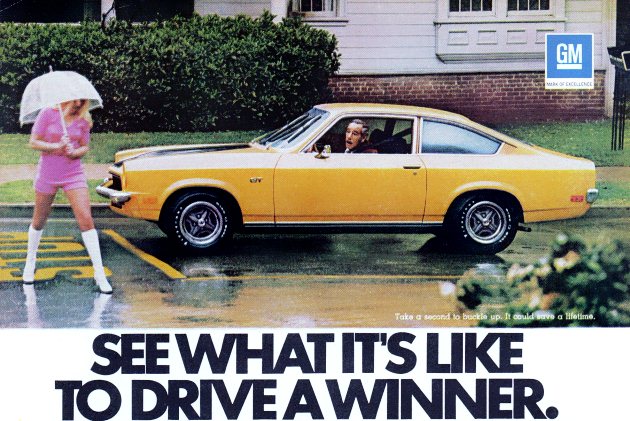
Jordan:  “No, Corvair was replaced by the Chevrolet Vega.”

chevy-vegaMatt:  “The Vega reminds me of the Edsel.  What a disaster.”

Jordan:  “I think Vega was a great concept but had a lot of new technology that was never fully tested.  GM rushed it to market.”

Matt:  “How long was Vega in production?”

Jordan:  “1970-1977.  Problems with the early models doomed the car and production was minimal in the later years.”

Matt:  “So GM enters the 1980’s with two recent small car failures – Corvair and Vega.  At the same time the public has experienced gas rationing and higher gas prices, both of which are pushing sales toward smaller cars…away from GM’s strength.”

Jordan:  “Not a good scene.”

Matt:  “Did GM then just give up on small cars?”

Jordan:  “No.  There was another major program to introduce well-engineered smaller, more fuel-efficient compact cars.  All divisions except Cadillac had a somewhat larger model that would be replaced.  Inside GM these were known as ‘X-cars’ because they were built on what was labeled the ‘X’ platform.  Auto speak.”

Matt:  “These models were introduced when?”

Jordan:  “1979 as 1980 models.”

Matt:  “How well did these cars sell?”

SkylarkJordan:  “Extraordinarily well compared to the Corvair and the Vega.  In fact, the Buick X-car, Skylark, outsold the Chevrolet model every now and then.”

Matt:  “Did something happen?  Why did GM phase them out?

Jordan:  “More quality issues…and lots of recalls.”

Matt:  “More egg on GM’s face for small cars.”

Jordan:  “The X-cars were dropped after six years and yet another series of smaller models was introduced.  But sales never really took off.”

Matt:  “So let me go back.  At the beginning of the 1980’s GM has suffered two embarrassments with small cars.  Then introduces another new series of smaller cars, which sells well initially.  What about the other car lines?  It’s not as if everyone is buying small cars then.”

Jordan:  “You’re right.  A lot of people were buying middle-size and larger cars.  But GM models were getting long in the tooth and needed updating.  In some cases massive changes that would be very expensive.”

Matt:  “Weren’t there some mandated fuel economy standards also?”

Jordan:  “Yes.  The Corporate Average Fuel Economy standards, aka CAFÉ, passed Congress after the original oil embargo.  And GM needed to update the larger, heavier models to help meet CAFÉ standards.”

Matt:  “What about the image of the GM brands?”

cleaning-silver-tarnish-2Jordan:  “My view is the brand images had some tarnish but good new product would begin to restore the image.”

Matt:  “The brands are tarnished, need some polish.  What happens next?”

Jordan:  “What happens next is a break, then we will talk more about GM.”

#46 How CEO Personalities Affect the Organization

30 Wednesday Apr 2014

Posted by Jordan Abel in General Motors, Societal Issues

≈ 1 Comment

(Readers: Please note the blog about the 5th revolution in the US is constructed as a story. While not all chapters are linked, the story might be more meaningful by starting at the beginning.)

(Want a PDF version for Entries #1-10, #11-20, #21-30 formatted for tablets and e-books?  Entries #31-40 available soon.  Click links for download.  America’s 5th Revolution Volume I (Entries 1-10), America’s 5th Revolution Volume II (Entries 11-20), America’s 5th Revolution Volume III (Entries 21-30)

Scene: Jordan’s office with Matt, reporter for major publication.  Matt has been asked by POTUS’ office to help write the story of GM.  POTUS wants to use the information as part of a plan to help rebuild US manufacturing.

Jordan:  “Before we discuss how some changes to the GM organization affected culture, I want to discuss personalities.

reporter on typewriter clipartMatt:  “Not more warm and fuzzy stuff, I hope.  Where’s the meat to the story?”

Jordan:  “POTUS asked me to write about GM and lessons for rebuilding US manufacturing.  Part of the story is how CEO’s can affect the company’s culture and competitiveness.”

Matt:  “Keep talking…but it still sounds warm and fuzzy.”

Jordan:  “Think about what we’ve covered so far.  About 100 years ago GM goes bankrupt twice in less than 15 years.  Then a new management team comes in and voila, GM becomes a profit machine.”

Matt:  “GM printed money for many decades.”

board-clip-art-300x224Jordan:  “So what changed at GM?  My contention is the CEO at GM…and any organization…has more influence than most people realize.”

Matt:  “What about the board of directors?  Don’t they select the CEO?”

Jordan:  “The board might not realize how influential the CEO is, especially a CEO that is bad for morale.”

Matt:  “So a bad guy at the top can influence an entire company?  You really believe that?”

Jordan:  “You know the expression about stuff running downhill.  Well, it’s true at companies too.”

Matt:  “Never really thought about it.  Have you got a GM example?”

GM,_logoJordan:  “Alright.  I want to compare a few GM CEO’s after Alfred P. Sloan.  The comparison won’t be just dollars and cents but personalities.”

Matt:  “Then can we talk organizational structure?”

Jordan:  “Without understanding the personalities, the changes in the organizational structure will mean less.”

Matt:  “I assume the story will have at least one good guy and one bad guy.  Start with the good guy.”

Jordan:  “GM’s CEO in the mid to late 1970’s was an example for everyone to follow, CEO on down.”

Matt:  “Who was that?”

Jordan:  “T.A. Murphy.  Or as he used to say when I answered my boss’ phone after hours, ‘Tell him Thomas Aquinas Murphy is calling.’”

Matt:  “You mean the CEO made his own phone calls?”

Jordan:  “Yes, made his own phone calls.  I told you he was a good example.”

Matt:  “Give me a meatier story…or two.”

Jordan:  “Some years before he became chairman, he was head of GM’s NY Treasurer’s Office.”

Matt:  “And…”

Jordan:  “Any time anyone from that office retired, he insisted on attending the retirement party.  We had to schedule the parties the night of the Board meeting to make sure he was available.”

Matt:  “Are you talking about executives retiring or anyone in the office?”

Jordan:  “Anyone, including the former elevator operator from the former GM building.”

Matt:  “So the CEO of the world’s largest company insists on attending retirement parties of former staff in the NY office…even elevator operators.  That is unusual.”

Jordan:  “Here’s one better.  And I’ll tell you I’ve never seen any written proof but I’ve heard the story from different source who know the parties involved.”

Matt:  “This I am anxious to hear.”

Jordan:  “Murphy is head of the NY office and a staff member – and we are not talking management or high-potential employee but a regular staff member – becomes an alcoholic.”

Matt:  “Does GM have a paid rehab program for alcohol and drug addiction?”

Jordan:  “Not at this time.  So the staff person enters treatment.  And guess who pays for the treatment?”

Matt:  “Murphy.  On his own or through the company?”

Jordan:  “His own checkbook.  Plus he visits her every day in the rehab center.”

Matt:  “Did anyone know about it?”

Jordan:  “I was not there at the time.  But, as I understand, Murphy never talked about it.  Others did only discretely.  I found out when she retired.”

Matt:  “What a great example.  Hard to believe.”

Jordan:  “I agree.  My facts might be off slightly but the essence of the story is correct.”

Matt:  “Any other stories?”

Jordan:  “Yes and one that always makes me smile.”

Matt:  “I’m ready.”

Jordan:  “I work in the NY office…still in my 20’s…and still learning the corporate ropes.  My job was fairly high profile – what they called ‘bag man’ to the chairman.  The ‘bag man’ coordinated all the presentations made at meetings of the Finance Committee and Board of Directors.”

Matt:  “So I suppose Mr. Bag Man spends serious face time with the Chairman.”

Jordan:  “You had to review all the key points with him and then get answers to a bunch of questions.  All the info was in what was called the ‘Red Book.’  And yes it was the color red.”

Matt:  “OK, now what?”

Jordan:  “At the time, the Board meetings were held in NY on the first Monday of every month.  The final review of the Red Book was Sunday afternoon on the plane.”

Matt:  “Company plane, I assume.”

AirplaneJordan:  “Gulfstream.  Now here’s the scene.  My first flight on the company plane.  And no one has briefed me on the dress protocol.  All they told me was don’t be late.”

Matt:  “So what did you wear?”

Jordan:  “The only clean clothes I had left were casual pants and turtleneck sweater…plus a sport coat.”

Matt:  “Was that OK?”

Jordan:  “I get on the plane…a 10 seater.  Eight people are dressed in suits.  My thoughts – just blew this opportunity.”

Matt:  “Then what?”

TurtleneckJordan:  “Mr. Murphy gets on the plane a few minutes later dressed in…guess what?”

Matt:  “Turtleneck sweater and sport coat.”

Jordan:  “You got it.  He sees how everyone else is dressed in a suit, then gives me a slight grin.”

Matt:  “Is there more to the story?”

Jordan:  “Next month same situation.  Only clean clothes are casual pants, turtleneck sweater and the same sport coat.  I head out to the plane, get on a few minutes ahead of the chairman.  Guess how the same eight guys are dressed?”

Matt:  “Turtleneck sweater and sport coats.”

Jordan:  “Exactly.  Then Murphy gets on the plane in a suit and tie.”

Matt:  “Seems as if these guys were always chasing and always two steps behind.”

Jordan:  “I still find the situation amusing…and frustrating.  The other executives forgot to be themselves.”

Matt:  “Interesting story and I agree amusing.  But why is it relevant?”

Jordan:  “Heads of companies are people.  Some CEO’s are extremely humble, gracious and thankful.  Others in that situation act as if they are kings with unlimited authority and no accountability.  More like a dictator.”

Matt:  “Your contention is companies reflect the personality of the person in charge.”

Jordan:  “Being humble and gracious does not mean one cannot be firm and hold people accountable.”

Matt:  “But you do not have to be a jerk or arrogant.”

Jordan:  “People want to respect those in leadership positions, whether it’s in business, religion or politics.  But respect does not necessarily come with the position.  Respect must be earned.”

Matt:  “And you believe leadership at GM earned respect…at least leadership through Tom Murphy.  Then it changed?”

Jordan:  “After Murphy the respect was lost…actually not earned.  And when the respect was gone, what went along with it?”

Matt:  “The economic engine that Sloan and other had built.”

Jordan:  “Now we can start to talk about some things that went terribly wrong at GM.”

#45 GM’s Organizational Structure Helped Build an Economic Engine

26 Saturday Apr 2014

Posted by Jordan Abel in Economics, General Motors, Innovative Thinking: Ideas and Products

≈ Leave a comment

(Readers: Please note the blog about the 5th revolution in the US is constructed as a story. While not all chapters are linked, the story might be more meaningful by starting at the beginning.)

(Want a PDF version for Entries #1-10, #11-20, #21-30 formatted for tablets and e-books?  Entries #31-40 available soon.  Click links for download.  America’s 5th Revolution Volume I (Entries 1-10), America’s 5th Revolution Volume II (Entries 11-20), America’s 5th Revolution Volume III (Entries 21-30)

Scene: Jordan’s office with Matt, reporter for major publication.  Matt has been asked by POTUS’ office to help write the story of GM.  POTUS wants to use the information as part of a plan to help rebuild US manufacturing.

reporter on typewriter clipartMatt:  “I’m still dumbfounded over the last session.  But we have one more segment to go on Sloan – organizational structure.  Why was it so important?”

Jordan:  “Couple of reasons.  Maybe the most important  is Sloan understood people like to identify with an organization or with a brand.  Ask some people who they work for.”

Matt:  “You mean like Apple, or Honda or Starbucks?”

Jordan:  “Right.  Do you ever hear anyone say, ‘Gee I work for this acronym of a holding company.”

Matt:  “No, other than a few Wall Street types.”

Jordan:  “When GM was at its best, the divisions – Cadillac, Buick, etc – were effectively ?????????????????????????????????????????????????????????????????independent companies.  The employees – hourly and salary – the dealers, even some of the suppliers would say ‘I work at Buick.’  And notice I used the word ‘at’ and not ‘for.  Because the employees felt part of the team.”

Matt:  “Did anyone ever say I work at General Motors?”

Jordan:  “Rarely, if ever.  Even when I worked on the corporate staff in New York, we used to identify ourselves as the Treasurer’s Office, New York, aka TONY.”

Matt:  “All these divisions sound great but wasn’t it inefficient to allow so much autonomy?  There must have been a lot of overlap and extra cost.”

Jordan:  “You sure you aren’t a bean counter?”

BeanCounterMatt:  “Jordan, you know I’m not.  But still, seems like a lot of unnecessary overhead.”

Jordan:  “Matt, take a deep breath and listen.  Keep in mind how large the divisions were.  For example, Buick Division was larger than say all of Goodyear Tire and Rubber Company.   That’s Goodyear worldwide.  And Buick was not especially large in GM.”

Matt:  “I had no idea each division was that large a business.”

Jordan:  “Well, now you know what an economic engine GM was.  Sloan understood the economic engine was fueled by sales.  And he understood that clear brand identity was critical for sales.”

Matt:  “Is identity with the brand the foundation for creating an emotional bond?”

Jordan:  “For a reporter, you’re not bad marketer.  Absolutely.  Establishing an emotional bond is important for all types of products.”

Matt:  “You have some examples?”

Jordan:  “Jump from brands of cars to brands of electronics.  In a somewhat cynical way, you can think of most computers, phones and other electronic equipment as just pushing around electrons.”

Matt:  “I suppose not much different than looking at a car as mere transportation.”

Jordan:  “And for some buyers that’s true.  But many, many buyers develop an emotional bond with their product.  When thinking about buying electronic equipment some people are die-hard Apple fans; others are in love with Google.  And still others are die-hard Microsoft fans.  And the same applies to cars and trucks.”

BuickMatt:  “Now that you mention it, my grandfather used to refer to himself as a proud ‘Buick’ man.”

Jordan:  “Mine did as well.  That’s why I was so happy to be assigned to Buick after the Sloan program.”

Matt:  “Was your grandfather alive then?”

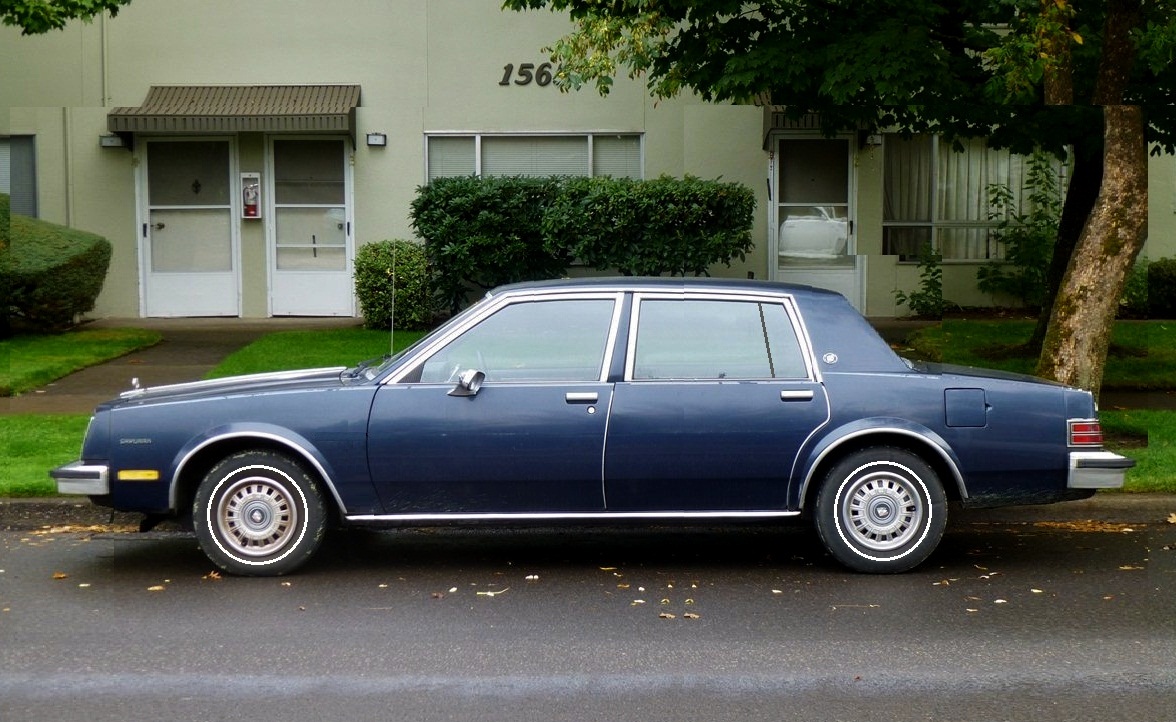
Jordan:  “No.  But many times when talking about Buick product or dealers I would think of him…and one product in particular.  While I was at Buick we introduced…really re-introduced… a large rear-wheel drive sedan.  And guess what we called it?”

Matt:  “Roadmaster?”

Jordan:  “You got it.  The name Roadmaster fit perfectly.  My grandfather loved his Roadmasters.  But the funny part of the naming story happened during some consumer research of the car.”

Matt:  “What do you mean?”

Jordan:  “We had a fiberglass model of the car in a research clinic but no badge identification.”

Matt:  “You mean like no Ford oval or Chevrolet bowtie?”

Jordan:  “No markings at all.  Anyway, this young lady gets a first look at the car and says without any prompting, ‘That looks like a master of the road.  A road master.”

Matt:  “So that cemented any doubts about the name.”

Jordan:  “I could not have scripted it better.”

APSMatt:  “OK, so Sloan allows the divisions to operate fairly autonomously.  You also mentioned the New York office.  What was the name again, TONY?

Jordan:  “The Treasurer’s Office, New York operated as a consulting group.  TONY was to be a voice away from the day-to-day activities at Detroit HQ and the ‘hype’ at the car divisions.”

Matt:  “’Hype’ seems a bit pejorative.  I mean the car divisions weren’t all used-car sales people.”

Jordan:  “Actually only dealers sell used cars but I know what you mean.  The divisions were vertically integrated and included engineering and manufacturing staffs.  But like organizations with a product, the goal for the divisions was to sell more products.”

Matt:  “I still think ‘hype’ is a bit too much.  Still too much like used-car sales people.”

Jordan:  “OK.  How ‘bout ‘enthusiastic’?”

Matt:  “That works.  Back to the New York office.”

Jordan:  “Recall that GM’s bankruptcies in 1909 and 1919…we need to confirm those dates… were not caused by lack of demand but by running out of cash.”

Matt:  “Did Sloan set up some type of system to manage cash?”

Jordan:  “I don’t know all the background but any expenditure beyond a certain dollar amount had to be reviewed and approved by corporate staff…or even the Board.”

Matt:  “And that was TONY’s role?”

Jordan:  “Yes.  We worked directly with the chairman, coordinating the meetings, providing the analysis and making recommendations.  Plus the group developed forecasts of demand.  TONY even had an Economist’s Staff.”

Matt:  “You mean with real PhD economists?”

Jordan:  “Yes, I worked on that staff for a while.  And no I am not a PhD economist.  But I am a decent model builder and forecaster.  At least I was.”

Matt:  “The NY office really does sound like a consulting group.  What about the Treasury function?”

Jordan:  “When the office was established, being close to Wall Street had advantages.  Far less so today.”

Matt:  “What I’ve heard so far is GM was at its best when the divisions operated fairly independently and with their own engineering and manufacturing staffs.  Doing so created…or at least helped create…strong brand identity, which helped build an emotional bond with customers and with employees.”

Jordan:  “Good summary so far.”

Matt:  “In addition, GM had a separate office in NY to oversee use of capital, both internally and as a treasury function.”

Jordan:  “Let’s take a break.  Next session we’ll talk about how some organizational changes in the 1980’s began to destroy Sloan’s formula for the economic engine.”

#44 Sloan’s Segmentation Works, then Trashed by Bean Counters

23 Wednesday Apr 2014

Posted by Jordan Abel in Back Asswards Thinking, General Motors, Innovative Thinking: Ideas and Products, Societal Issues

≈ 1 Comment

(Readers: Please note the blog about the 5th revolution in the US is constructed as a story. While not all chapters are linked, the story might be more meaningful by starting at the beginning.)

(Want a PDF version for Entries #1-10, #11-20, #21-30 formatted for tablets and e-books?  Entries #31-40 available soon.  Click links for download.  America’s 5th Revolution Volume I (Entries 1-10), America’s 5th Revolution Volume II (Entries 11-20), America’s 5th Revolution Volume III (Entries 21-30)

Scene: Jordan’s office with Matt, reporter asked by POTUS to help Jordan write story why GM was so successful and why it failed.  Report will be used as part of effort to rebuild US-based manufacturing.

Jordan:  “Ready for some more GM history under Sloan?”

reporter on typewriter clipartMatt:  “Have my coffee and ready to listen.”

Jordan:  “In addition to the financial discipline, Sloan segmented GM’s car lines.”

Matt:  “Segment in what way?”

Jordan:  “I know the term segmentation seems obvious today but it was not going on 100 years ago.  At the time there were 20 or more car manufacturers with a wide variety of products.

Matt:  “So GM had several brands at the time, didn’t It.?”

Jordan:  “Buick, which was really the cornerstone for GM, Cadillac and Oldsmobile.”

Matt:  “What about Chevrolet and Pontiac?”

Jordan:  “Chevrolet became part of GM in 1918.  Pontiac in the mid-1920’s.”

Matt:  “Saturn was when?”

Jordan:  “Saturn, Hummer, Saab are part of GM post 1980.  We’ll talk about those brands later.  For this paper we’ll skip some other GM brands – Oakland and LaSalle and all the brands sold outside the US – Opel, Vauxhall, Holden’s.  Including them will just confuse the issue.”

APSMatt:  “So under Sloan GM analyzes the car market, segments it and then decides on roles for the different brands.”

Jordan:  “Exactly.  What he…I mean GM…tried to implement was clarity.  Clarity so people outside the company knew what each brand stood for.”

Matt:  “And so people inside the company knew what each brand stood for.”

Jordan:  “You’ve got it.  Remember, at the time Ford was selling only the Model T.  GM models were higher priced so buyers needed to understand what each brand stood for and why it was worth more money.”

Matt:  “What was the segmentation strategy?”

Jordan:  “A car for every price and purpose.  The car market is still emerging.  Most of the segments we have today did not exist.”

Matt:  “Chevrolet covered the lower end.  Oldsmobile, Buick middle to lower upper end.  Cadillac the higher end.  Pontiac filled a gap just above Chevrolet.  Even before Pontiac, GM offered cars for most everyone.”

Jordan:  “Many buyers wanted to move away from the Model T one size fits all.  After owning a couple of Model T’s…that look identical to every other Model T…buyers wanted something different.”

Matt:  “Sloan’s segmentation is another idea that seems so simple.  How successful was it?”

Jordan:  “GM, actually Chevrolet, outsold Ford Motor Company for the first time in 1926 or 1927.  While I think Sloan was a genius, Henry Ford helped GM by sticking with the Model T too long.  During Ford’s changeover to the Model A, GM became the #1 seller.”

Matt:  “Did Ford bounce back and overtake GM?”

Jordan:  “Since then GM has outsold Ford nearly every year, if not every year.  GM was the #1 car company until 2008, when Toyota outsold it worldwide for the first time.  The companies have switched leads several times since.”

Matt:  “When was GM at its peak?”

Jordan:  “In the 1950’s and 1960’s, GM accounted for more 5 of every 10 cars sold in the US.  GM also has the #1 brand refrigerator and the #1 train locomotive.

S052050Matt:  “What?  GM had the #1 selling refrigerator and the #1 selling locomotive?”

Jordan:  “And to help finance cars, GM started a finance company – General Motors Acceptance Corporation.  In fact, GM was so dominant in so many areas the Federal government began an anti-trust investigation.”

Matt:  “What a change.  Anti-trust and too large to government bailout.  Hard to imagine what a machine they were.”

Jordan:  “That’s why POTUS wants this series of articles.  What lessons can we take away that can be applied today?”

Matt:  “So GM peaks in the 1960’s or maybe later and then starts to slide.  Did GM management quit following Sloan’s principles?”

Jordan:  “Yes but not all at once.  We’ll talk more about this later but in the early 1980’s the GM CEO declared that profitability was more important than market share.”

Matt:  “Doesn’t a company have to have market share to generate revenue…and profit?”

Jordan:  “Low market share leads to lower total profits.  The percent profit per car might look good but at the end of the day the stack of dollar bills is smaller.”

Matt:  “What was the rationale?”

Jordan:  “GM could ‘optimize’ earnings and shareholder value by focusing on selling only cars and trucks with certain profit.”

Matt:  “What happened to Sloan’s segmentation scheme?”

Jordan:  “Part of the plan to reduce cost was to reduce the differentiation between the brands.  Doing so would allow certain development costs to be spread over more cars…and customers would never know, or so they thought.”

Matt:  “With this plan, some programs that made Chevrolet different from say Pontiac would be reduced or eliminated.”

Jordan:  “Exactly.  The plan was that separation between Buick and Oldsmobile could also be reduced.  Even Cadillac would be affected.”

Matt:  “But some of this narrowing of brand differentiation started before the 1980’s.”

Jordan:  “True.  But if you look at GM market share, the point of inflection is in the 1980’s.

Matt:  “Did the plan work?”

Line Chart FallingJordan:  “In one word, no.  In fact, the plan made an already difficult situation worse.  GM share at the beginning of the 1980’s was about 45%.  By the end of the 1980’s it was about 35%.”

Matt:  “How much loss is that?”

Jordan:  “1.2-1.5 million cars and trucks per year.”

Matt:  “How many assembly plants is that?”

Jordan:  “Equal to all the production of 5-6 assembly plants per year.  5-6 plants two shifts, 60 cars or trucks per hour, all year long.  Not one year but every year.  So you think the planned worked?”

goodbye-1l842i0Matt:  “They waved good bye to 5-6 assembly plants?  How much money did they wave good-bye to?”

Jordan:  “The numbers are staggering.  Every year GM no longer sold 1,500,000 cars and trucks it used to sell.  In today’s dollars GM sales price to dealers averages about say $30-35,000.”

Cash

Matt: “So GM waves good-bye to $50 billion…$50 billion dollars per year…out the door.  Good-bye.  Whose idea was this?”

Jordan:  “Only a bean-counter could think up such a back-asswards strategy.  Show me one company that saved its way into prosperity?  To earn money companies need to generate revenue.  You cannot make up profit on $50 billion in revenue by cutting expense.  The math does not work.”

Matt:  “I am almost speechless.”

Jordan:  “You should be speechless.  It’s a staggering number.  And we’ve not talked about what happened to all the GM customer and GM employees as a result.”

Matt:  “I see now why you insist this story is more than a numbers game.  It is about management and how it influences the culture of the organization.”

Jordan:  “I’ll give you one more arrow in the culture quiver.  In the 1990’s a then GM CEO had the audacity to state that Sloan’s segmentation was no longer relevant.”

Matt:  “Was he right?”

Jordan:  “Segmentation criteria might get tweaked a bit over time but the fundamentals do not.  Segmentation in the 1990’s was as important as in the 1920’s.”

Matt:  “Why do you think he claimed Sloan’s segmentation was no longer relevant?”

Jordan:  “I don’t know for certain.  But given his background, he thought the reason GM lost so much market share was Sloan’s segmentation.  He never considered that by ignoring Sloan’s segmentation, especially in the 1980’s, GM lost market share.”

Matt:  “Another case of back asswards thinking.  May we take a break, please?  My head hurts.”

#43 Beginning My Years with General Motors

19 Saturday Apr 2014

Posted by Jordan Abel in General Motors, Innovative Thinking: Ideas and Products, Personal Stories, Possible Solutions

≈ Leave a comment

(Readers: Please note the blog about the 5th revolution in the US is constructed as a story. While not all chapters are linked, the story might be more meaningful by starting at the beginning.)

(Want a PDF version for Entries #1-10, #11-20, #21-30 formatted for tablets and e-books?  Entries #31-40 available soon.  Click links for download.  America’s 5th Revolution Volume I (Entries 1-10), America’s 5th Revolution Volume II (Entries 11-20), America’s 5th Revolution Volume III (Entries 21-30)

Scene: Jordan’s office with Matt, reporter asked by POTUS to help Jordan write story why GM was so successful and why it failed.  Report will be used as part of effort to rebuild US-based manufacturing.

Jordan:  “First bit of trivia.  Matt, how many times has GM gone bankrupt?

reporter on typewriter clipartMatt:  “One that I know of – 2009.  That’s when the Feds put in a lot of cash and got a lot of stock in return.  People started calling it Government Motors.”

Jordan:  “A lot of people thought the Feds should have let GM die.  Doing so would have been a huge mistake.  We can discuss why in another session…but not today.”

Matt:  “OK, I give.  How many times has GM gone BK, or bankrupt?”

Jordan:  “Three.  2009, then twice before 1920.  The first was about 1909 and the second about 1919.  We need to get exact dates but close enough for now.”

Matt:  “Three times.  That’s a surprise.”

Jordan:  “And they might survive all three.”

Matt:  “What happened in 1909 and 1919?”

Jordan:  “The short version is this.  Rapid expansion of production and rapid sales growth without proper financial controls.  The result was the deadly sin – running out of cash.”

Matt:  “So unlike 2009 when demand was weak, the other two times demand was strong.  But GM expanded too quickly…really beyond their ability to raise enough cash to finance the growth.”

Jordan:  “Yes.  And that reminds me of my first day in finance at MIT.”

Matt:  “Alright.  First day of finance class.  What happened?”

CashJordan:  “The professor begins the class by saying, ‘Ladies and gentlemen, if you learn nothing else the entire time you are at this esteemed institution, I want you to remember one thing.  It does not matter whether your income statement indicates you made money or lost money.  The only thing that matters is…never run out of cash.’”

Matt:  “Well, GM management apparently didn’t go to that class.”

Jordan:  “A lot of people seemed to have skipped that class…a hundred years ago and now.”

Matt:  “OK, GM goes BK.  But in 1919 there is no government bailout.  Who bailed them out?”

Jordan:  “My view is the second BK and the bailout is the beginning of the GM juggernaut.  The bailout is from the DuPont family.  DuPont’s, already an investor, put in a boatload of cash and end up with a boatload more shares – 30-35% ownership.”

Matt:  “Anything else happen?”

APSJordan:  “The cornerstone for GM’s future success.  Pierre DuPont, chairman of the Board, installs Alfred P. Sloan as president.”

Matt:  “Is that the same Sloan as Sloan-Kettering Hospital in NY…and the Sloan School at MIT?”

Jordan:  “The same Alfred Pritchard Sloan.  Sloan was an MIT grad.  And I think he implemented three major ideas that separated GM from the pack.”

Matt:  “Under Sloan, GM operated differently than other car companies?”

Jordan:  “Very much so.  GM set a new standard.  The ideas applied to car companies and most other manufacturing companies.  And the ideas are still relevant today.”

Matt:  “I’m anxious to hear more but is the story going to get too complicated for people to understand?  We have to keep the story out of the weeds and make sure it is understandable.”

Jordan:  “The topics might seem a bit deep at times.  But this is not a story told in sound bites.  Success does not come with slogans and talking heads…despite what some people think.”

Matt:  “Alright but really try to KISS – keep it simple, stupid.”

Jordan:  “In my estimation, Sloan’s three major contributions were: (i) implementing understandable financial controls (ii) clearly separating GM’s different products (iii) separating strategic and operational decisions.”

Matt:  “I sort of understand financial controls and separating products.   Separating strategic and operational decisions is a bit more abstract.”

Jordan:  “OK, let take these one at a time, starting with financial controls.”

Matt:  “Are you talking about say authority to write checks and keep accurate books?”

Jordan:  “Yes, but there is much more.  What is hard to understand now with computers, electronic databases and scanning equipment is companies were run using information written on index cards and hand-written ledgers.”

Matt:  “That is hard to imagine.”

Jordan:  “Imagine this – and I think the date is about right – until the mid-1920’s Ford Motor Company operated without any real accounting system.”

Matt:  “Ford had become a huge company by then…and no real accounting system?”

Jordan:  “GM before Sloan was similar.  But Sloan brings systems thinking.  Systems for accounting, systems for cash management and systems for forecasting production.”

Matt:  “What you’re saying is GM went from shoe-box accounting to at least reconciling bank statements and creating a budget.”

Jordan:  “In very simple terms, yes.  However, it is hard to overstate the importance of the discipline Sloan began instilling in the company.”

Matt:  “Wasn’t it just an accounting system?”

Jordan:  “No, it was creating a culture of being accountable.  Having a system in place allowed performance to be measured.”

Matt:  “You’re saying the measurement system – production, cost, etc. – allowed measurement of the performance of individuals and groups.  And the measurement made them more accountable.”

Jordan:  “Exactly.  Individuals and groups began to understand what needed to be accomplished and how well they performed.”

Matt:  “Have a specific example?”

Jordan:  “Yes, and I hope it is not too abstract.  But I think critically important to GM’s success.”

Matt:  “What is it?”

Jordan:  “Budgeting is critical in the auto industry…and any industry with high fixed costs.  The company must generate enough sales to pay for all the fixed cost before it begins earning a profit.”

Matt:  “Like the sales person on full commission.  He or she needs to sell a certain amount just to cover expenses – mortgage, utilities, groceries, car payment, fuel.  Then sell some more just to have some spending money.”

Jordan:  “Good example.  And the higher the mortgage payment and car payment, the more the person has to sell.”

Matt:  “But the sales person never knows how much will be sold, and therefore never knows what the commission check will be.”

Jordan:  “Car companies face the same problem.  When the economy is good, people have more money and buy more cars.  When the economy is not so good, people put off buying a new car and sales fall.”

Matt:  “What was so innovative about what Sloan did?”

Jordan:  “Sloan created a budgeting procedure such that GM broke even profit wise at 70% of its capacity.”

Matt:  “So if the company had capacity to sell 1,000,000 cars for a certain year and sales were only 700,000 cars for that year, GM would break even…really, not lose money?  That idea seems so simple.”

Jordan:  “The idea is incredibly simple but very hard to execute.  Forcing the execution helped create a culture of the importance of managing costs.”

Matt:  “So budgets were built around 70% of capacity.  Still not sure if I understand the significance.  And does the process have a name?”

Jordan:  “The budget was called a ‘standard-volume budget.’  Focusing on ‘standard volume” helped people form a discipline of controlling costs.  Early in my career I was assigned to coordinate the budget process for Cadillac.  The budgeting process was not easy and not very pretty.  A lot of negotiating, arm twisting and cajoling.  By the end everyone involved understood the importance of controlling costs.”

Matt:  “Obviously left quite an impact on you.  What’s the second point?”

Jordan:  “All sales above 70% of capacity were very profitable…and I mean very profitable.”

Matt:  “How often did sales fall below 70% of capacity?”

GM,_logoJordan:  “Not very often, even in the Depression.  In fact, GM made money every year from the early 1920’s and throughout the Depression.”

Matt:  “You’re kidding?”

Jordan:  “GM made money while many car companies went out of business.  Duesenberg, Cord, Auburn just to name a few.”

Matt:  “So how many years in a row was GM profitable?”

Jordan:  “70+ years.  From the early 1920’s to the early 1990’s.”

Matt:  “What a run.  What happened?”

Jordan:  “This is a good time to take a break.  Sloan implemented a couple more key ideas that made the 70-year string possible…and the string should still be going on.  We can talk about what went wrong after we talk about what went right.  Let’s take a break.”


#42 The GM Story: Safety Played 2nd Fiddle?

16 Wednesday Apr 2014

Posted by Jordan Abel in Back Asswards Thinking, General Motors, Stupid Is as Stupid Does

≈ Leave a comment

(Readers: Please note the blog about the 5th revolution in the US is constructed as a story. While not all chapters are linked, the story might be more meaningful by starting at the beginning.)

(Want a PDF version for Entries #1-10, #11-20, #21-30 formatted for tablets and e-books?  Entries #31-40 available soon.  Click links for download.  America’s 5th Revolution Volume I (Entries 1-10), America’s 5th Revolution Volume II (Entries 11-20), America’s 5th Revolution Volume III (Entries 21-30)

Scene: Jordan’s Office.  Reporter assigned by POTUS’ office arrives.

Jordan:  “Matt, it has been a long time since we chatted.”

reporter on typewriter clipartMatt:  “I’m trying to think of the last time I interviewed you.  A lot less gray hair on both of us.  But, anyway does not matter.”

Jordan:  “You’re still with my favorite paper but most of the bylines are articles about technology.”

Matt:  “True but apparently POTUS read some earlier pieces I wrote on automotive and thought I was right for the job.”

Jordan:  “I’m delighted you’ve been assigned.”

Matt:  “Keep in mind I still want to be as objective as possible so you might get some pushback from me on certain issues.”

Jordan:  “Understood.  In fact, feel free to challenge me at any time.  The gist of the story is more about culture than anything else.  And my perspective.  Let me know if you think I am being too biased”

GM,_logoMatt:  “I’ll tell you what would help.  A short lesson in GM history.  Not all the gory details but an overview would really help me put the project in context.  And make sure you cover the financial results.  I know you think the issue is more culture but the financial results tell a story, too.”

Jordan:  “I agree that the financials tell a story.  A great story for many years.  Before we start the history lesson, are there any pressing issues?”

Matt:  “Yes.  This baffles me.  The ignition switch — how did GM ignore a safety problem with the switch for what 10 years?  How does that stuff happen?”

Jordan:  “My view is the failure to fix the ignition switch – a $1.00 part at most – is the culmination of 30+ years of a management team and Board of Directors focused on profits and not the customer.”

Matt:  “Your tone of voice tells me how angry you are.”

Jordan:  “Angry is an understatement.  A few clowns decided to ignore very strong evidence of a safety problem.  The cost to fix was less than $1.00.”

Matt:  “Why do you think they ignored the evidence?  The fix was, from all indications was simple and as you said, less than $1.00.”

Jordan:  “You tell me why they ignored it.  That kind of behavior qualifies GM as stupid and I think immoral.”

Matt:  “What about criminal?”

Jordan:  “I am not at Department of Justice and do not have all the facts.  But not to fix a known safety problem for $1.00.  What’s wrong with those people?”

Matt:  “Did you ever experience any decisions where cost overrode safety?”

Jordan:  “No.  Just the opposite.  I recall my days at Buick when we were going to add some piece of equipment that increased the weight of the car to a new category.  I don’t remember which car but the weight was only a couple of pounds over.”

Matt:  “What happened?”

Jordan:  “The tire-and-wheel engineer interrupted the presentation and said the car needed a larger tire and wheel to handle the added weight.”

Matt:  “Even though it was only a couple of pounds?  Was there any discussion or resistance?”

Jordan:  “None.  The guy had the power of a king.  When it came to safety, you did what he said.  No questions asked.”

Matt:  “So safety was an overriding concern.”

Jordan:  “Absolutely.”

Matt:  “What happened to that culture?”

Jordan:  “That is a key issue.  To help answer that question let’s go back to the beginning of General Motors.”

Matt:  “Alright.  But I need a break first.”

Jordan:  “So do I.  How ‘bout 10 minutes?”

#41 POTUS Asks Jordan to Write about GM

12 Saturday Apr 2014

Posted by Jordan Abel in Economics, General Motors, Societal Issues

≈ 7 Comments

(Readers: Please note the blog about the 5th revolution in the US is constructed as a story. While not all chapters are linked, the story might be more meaningful by starting at the beginning.)

(Want a PDF version for Entries #1-10, #11-20, #21-30 formatted for tablets and e-books?  Entries #31-40 available soon.  Click links for download.  America’s 5th Revolution Volume I (Entries 1-10), America’s 5th Revolution Volume II (Entries 11-20), America’s 5th Revolution Volume III (Entries 21-30)

Scene: Jordan’s office.

Gelly (Jordan’s assistant):  “Jordan, POTUS is calling.”

Jordan:  “Good morning, Mr. President.”

white-house-clip-art1POTUS:  “Morning Jordan.  You alive and well today?”

Jordan:  “With a question like that I’m not sure.  But, yes, I’m fine.  Thanks.”

POTUS:  “I need a favor.  Call it a payback for setting up the meetings about rebuilding Detroit.”

Jordan:  “What’s the issue?”

POTUS:  “The special election resulted in some good changes to Congress.  The parties are starting to work together again.”

Jordan:  “Glad to hear it.”

POTUS:  “What the country needs next is to begin addressing economic policy.”

Jordan:  “I’m not a PhD economist.”

POTUS:  “We have plenty of PhD’s around.  What I need is some real-world experience.  The experience needs to be relevant for policies about rebuilding manufacturing and rebuilding the middle class.”

Jordan:  “How can I help?”

POTUS:  “The question that keeps popping into my head is why the USA was so successful at generating wealth for the society in the 1950’s, 1960’s and even the 1970’s.  And we have made no progress since.”

Jordan:  “The economists can probably analyze that for you.”

POTUS:  “I’m not looking for some academic analysis.  I want a different perspective.  And I know you have one.”

Jordan:  “What kind of analysis would be helpful?”

POTUS:  “You spent a number of years at General Motors in some very interesting jobs.  I also know you are a student at heart.”

Jordan:  “You got that right.  I love taking classes and I love to teach.”

POTUS:  “OK, then let’s combine the two.  i’ll give you an assignment and then the opportunity to teach.”

Jordan:  “Alright.  What am I getting into?”

POTUS:  “For many years GM was an economic engine.  Remarkable revenue, remarkable market share and even more remarkable profits.  It was the…capital THE…manufacturing company worldwide.”

GM,_logoJordan:  “True.  GM made lots of products, employed lots of people and paid lots of taxes — federal, state and local.”

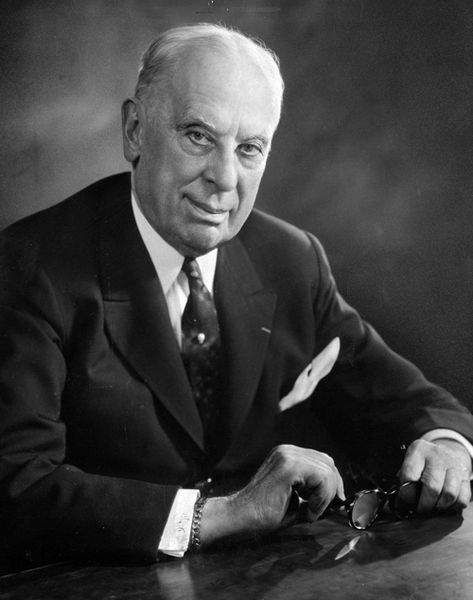
POTUS:  “Years ago, Charles Wilson…”

Jordan:  “…also known as Engine Charlie Wilson…”

POTUS:  “See you do know this stuff.  Anyway, Charlie Wilson said ‘…what’s good for General Motors is good for the country, and vice versa.’”

Charles_Wilson_official_DoD_photoJordan:  “And I think what Engine Charlie said is still correct.”

POTUS:  “Well, Jordan, now you know why I called you.  I would greatly appreciate if you would write a series of articles about GM.  What went right and then what went wrong, terribly wrong.”

Jordan:  “Funny you bring up that idea.  I’ve thought for a long time about writing such articles but never had a reason.”

POTUS:  “Now you have that reason.  Understanding what went right and wrong at GM will help me and many other people trying to set economic policy.”

Jordan:  “If I heard you correctly, you want my perspective on GM and not some widespread study by a bunch of people.”

POTUS:  “To answer your question, ‘yes.’  I understand some people might not agree with your analysis.  But the point is to get your perspective, not some politically correct version scrubbed by a PR agency.  You don’t learn from sanitized versions of situations.”

Jordan:  “Not to worry.  You’ll get the un-sanitized version.  And like any series of events, doubtless there will be…and probably should be…other opinions.  But I’ll give you my perspective.”

POTUS:  “Good.  The articles should really help.”

Jordan:  “Anything else?”

POTUS:  “Only that you cover why GM became such an economic juggernaut and then what lead to the bankruptcy.”

Jordan:  “Which bankruptcy?”

POTUS:  “You mean there was more than one BK?”

Jordan:  “You’ll have to read the story.  I do have one request for this project.”

POTUS:  “What’s that?”

Jordan:  “May I get someone from your staff assigned to help me?  I want the person to act as a reporter and help with the writing and maybe some research.  I’ll provide all the key info but an extra person would be great.”

POTUS:  “Consider it done.  Now you better get off the phone and get to work.  Good bye Jordan.”

Jordan:  “Good bye, Mr. President.”

Newer posts →

Subscribe

  • Entries (RSS)
  • Comments (RSS)

Archives

  • August 2025
  • July 2025
  • June 2025
  • May 2025
  • April 2025
  • March 2025
  • January 2025
  • December 2024
  • November 2024
  • September 2024
  • August 2024
  • July 2024
  • June 2024
  • May 2024
  • April 2024
  • March 2024
  • February 2024
  • January 2024
  • December 2023
  • November 2023
  • October 2023
  • September 2023
  • August 2023
  • July 2023
  • June 2023
  • May 2023
  • April 2023
  • March 2023
  • February 2023
  • January 2023
  • December 2022
  • November 2022
  • October 2022
  • September 2022
  • August 2022
  • July 2022
  • June 2022
  • May 2022
  • April 2022
  • March 2022
  • February 2022
  • January 2022
  • December 2021
  • November 2021
  • October 2021
  • September 2021
  • August 2021
  • July 2021
  • June 2021
  • May 2021
  • April 2021
  • March 2021
  • February 2021
  • January 2021
  • December 2020
  • November 2020
  • October 2020
  • September 2020
  • August 2020
  • July 2020
  • June 2020
  • May 2020
  • April 2020
  • March 2020
  • February 2020
  • January 2020
  • December 2019
  • November 2019
  • October 2019
  • September 2019
  • August 2019
  • July 2019
  • June 2019
  • May 2019
  • April 2019
  • March 2019
  • February 2019
  • January 2019
  • December 2018
  • November 2018
  • October 2018
  • September 2018
  • August 2018
  • July 2018
  • June 2018
  • May 2018
  • April 2018
  • March 2018
  • February 2018
  • January 2018
  • December 2017
  • November 2017
  • October 2017
  • September 2017
  • August 2017
  • July 2017
  • June 2017
  • May 2017
  • April 2017
  • March 2017
  • February 2017
  • January 2017
  • December 2016
  • November 2016
  • October 2016
  • September 2016
  • August 2016
  • July 2016
  • June 2016
  • May 2016
  • April 2016
  • March 2016
  • February 2016
  • January 2016
  • December 2015
  • November 2015
  • October 2015
  • September 2015
  • August 2015
  • July 2015
  • June 2015
  • May 2015
  • April 2015
  • March 2015
  • February 2015
  • January 2015
  • December 2014
  • November 2014
  • October 2014
  • September 2014
  • August 2014
  • July 2014
  • June 2014
  • May 2014
  • April 2014
  • March 2014
  • February 2014
  • January 2014
  • December 2013

Categories

  • Affordable Solutions
  • Back Asswards Thinking
  • Background
  • Background Stupid Is as Stupid Does
  • Benefits of Revolution
  • Causes of the Revolution
  • Common Sense Policies
  • Corporate Policy
  • Definitions
  • Diversions
  • Economics
  • Education Issues
  • Federal Budget
  • General Motors
  • Gov't Policy
  • Infrastructure & Fixed Fuel Prices
  • Innovative Thinking: Ideas and Products
  • Lessons of Revolution
  • Personal Stories
  • Possible Solutions
  • Post Trump Presidency
  • Rebranding Black Community
  • SCOTUS
  • Sense Check
  • Societal Issues
  • Stupid Is as Stupid Does
  • Tech Tsunami
  • Trump 47
  • Uncategorized

Meta

  • Create account
  • Log in

Create a free website or blog at WordPress.com.

Privacy & Cookies: This site uses cookies. By continuing to use this website, you agree to their use.
To find out more, including how to control cookies, see here: Cookie Policy
  • Subscribe Subscribed
    • usrevolution5
    • Join 32 other subscribers
    • Already have a WordPress.com account? Log in now.
    • usrevolution5
    • Subscribe Subscribed
    • Sign up
    • Log in
    • Report this content
    • View site in Reader
    • Manage subscriptions
    • Collapse this bar
 

Loading Comments...