• Home
  • Booklets/Grouped Entries
  • Tech Tsunami
  • List of Entries to Date
  • About the Author

usrevolution5

~ USA Headed for a 5th Revolution! Why?

usrevolution5

Category Archives: Societal Issues

#46 How CEO Personalities Affect the Organization

30 Wednesday Apr 2014

Posted by Jordan Abel in General Motors, Societal Issues

≈ 1 Comment

(Readers: Please note the blog about the 5th revolution in the US is constructed as a story. While not all chapters are linked, the story might be more meaningful by starting at the beginning.)

(Want a PDF version for Entries #1-10, #11-20, #21-30 formatted for tablets and e-books?  Entries #31-40 available soon.  Click links for download.  America’s 5th Revolution Volume I (Entries 1-10), America’s 5th Revolution Volume II (Entries 11-20), America’s 5th Revolution Volume III (Entries 21-30)

Scene: Jordan’s office with Matt, reporter for major publication.  Matt has been asked by POTUS’ office to help write the story of GM.  POTUS wants to use the information as part of a plan to help rebuild US manufacturing.

Jordan:  “Before we discuss how some changes to the GM organization affected culture, I want to discuss personalities.

reporter on typewriter clipartMatt:  “Not more warm and fuzzy stuff, I hope.  Where’s the meat to the story?”

Jordan:  “POTUS asked me to write about GM and lessons for rebuilding US manufacturing.  Part of the story is how CEO’s can affect the company’s culture and competitiveness.”

Matt:  “Keep talking…but it still sounds warm and fuzzy.”

Jordan:  “Think about what we’ve covered so far.  About 100 years ago GM goes bankrupt twice in less than 15 years.  Then a new management team comes in and voila, GM becomes a profit machine.”

Matt:  “GM printed money for many decades.”

board-clip-art-300x224Jordan:  “So what changed at GM?  My contention is the CEO at GM…and any organization…has more influence than most people realize.”

Matt:  “What about the board of directors?  Don’t they select the CEO?”

Jordan:  “The board might not realize how influential the CEO is, especially a CEO that is bad for morale.”

Matt:  “So a bad guy at the top can influence an entire company?  You really believe that?”

Jordan:  “You know the expression about stuff running downhill.  Well, it’s true at companies too.”

Matt:  “Never really thought about it.  Have you got a GM example?”

GM,_logoJordan:  “Alright.  I want to compare a few GM CEO’s after Alfred P. Sloan.  The comparison won’t be just dollars and cents but personalities.”

Matt:  “Then can we talk organizational structure?”

Jordan:  “Without understanding the personalities, the changes in the organizational structure will mean less.”

Matt:  “I assume the story will have at least one good guy and one bad guy.  Start with the good guy.”

Jordan:  “GM’s CEO in the mid to late 1970’s was an example for everyone to follow, CEO on down.”

Matt:  “Who was that?”

Jordan:  “T.A. Murphy.  Or as he used to say when I answered my boss’ phone after hours, ‘Tell him Thomas Aquinas Murphy is calling.’”

Matt:  “You mean the CEO made his own phone calls?”

Jordan:  “Yes, made his own phone calls.  I told you he was a good example.”

Matt:  “Give me a meatier story…or two.”

Jordan:  “Some years before he became chairman, he was head of GM’s NY Treasurer’s Office.”

Matt:  “And…”

Jordan:  “Any time anyone from that office retired, he insisted on attending the retirement party.  We had to schedule the parties the night of the Board meeting to make sure he was available.”

Matt:  “Are you talking about executives retiring or anyone in the office?”

Jordan:  “Anyone, including the former elevator operator from the former GM building.”

Matt:  “So the CEO of the world’s largest company insists on attending retirement parties of former staff in the NY office…even elevator operators.  That is unusual.”

Jordan:  “Here’s one better.  And I’ll tell you I’ve never seen any written proof but I’ve heard the story from different source who know the parties involved.”

Matt:  “This I am anxious to hear.”

Jordan:  “Murphy is head of the NY office and a staff member – and we are not talking management or high-potential employee but a regular staff member – becomes an alcoholic.”

Matt:  “Does GM have a paid rehab program for alcohol and drug addiction?”

Jordan:  “Not at this time.  So the staff person enters treatment.  And guess who pays for the treatment?”

Matt:  “Murphy.  On his own or through the company?”

Jordan:  “His own checkbook.  Plus he visits her every day in the rehab center.”

Matt:  “Did anyone know about it?”

Jordan:  “I was not there at the time.  But, as I understand, Murphy never talked about it.  Others did only discretely.  I found out when she retired.”

Matt:  “What a great example.  Hard to believe.”

Jordan:  “I agree.  My facts might be off slightly but the essence of the story is correct.”

Matt:  “Any other stories?”

Jordan:  “Yes and one that always makes me smile.”

Matt:  “I’m ready.”

Jordan:  “I work in the NY office…still in my 20’s…and still learning the corporate ropes.  My job was fairly high profile – what they called ‘bag man’ to the chairman.  The ‘bag man’ coordinated all the presentations made at meetings of the Finance Committee and Board of Directors.”

Matt:  “So I suppose Mr. Bag Man spends serious face time with the Chairman.”

Jordan:  “You had to review all the key points with him and then get answers to a bunch of questions.  All the info was in what was called the ‘Red Book.’  And yes it was the color red.”

Matt:  “OK, now what?”

Jordan:  “At the time, the Board meetings were held in NY on the first Monday of every month.  The final review of the Red Book was Sunday afternoon on the plane.”

Matt:  “Company plane, I assume.”

AirplaneJordan:  “Gulfstream.  Now here’s the scene.  My first flight on the company plane.  And no one has briefed me on the dress protocol.  All they told me was don’t be late.”

Matt:  “So what did you wear?”

Jordan:  “The only clean clothes I had left were casual pants and turtleneck sweater…plus a sport coat.”

Matt:  “Was that OK?”

Jordan:  “I get on the plane…a 10 seater.  Eight people are dressed in suits.  My thoughts – just blew this opportunity.”

Matt:  “Then what?”

TurtleneckJordan:  “Mr. Murphy gets on the plane a few minutes later dressed in…guess what?”

Matt:  “Turtleneck sweater and sport coat.”

Jordan:  “You got it.  He sees how everyone else is dressed in a suit, then gives me a slight grin.”

Matt:  “Is there more to the story?”

Jordan:  “Next month same situation.  Only clean clothes are casual pants, turtleneck sweater and the same sport coat.  I head out to the plane, get on a few minutes ahead of the chairman.  Guess how the same eight guys are dressed?”

Matt:  “Turtleneck sweater and sport coats.”

Jordan:  “Exactly.  Then Murphy gets on the plane in a suit and tie.”

Matt:  “Seems as if these guys were always chasing and always two steps behind.”

Jordan:  “I still find the situation amusing…and frustrating.  The other executives forgot to be themselves.”

Matt:  “Interesting story and I agree amusing.  But why is it relevant?”

Jordan:  “Heads of companies are people.  Some CEO’s are extremely humble, gracious and thankful.  Others in that situation act as if they are kings with unlimited authority and no accountability.  More like a dictator.”

Matt:  “Your contention is companies reflect the personality of the person in charge.”

Jordan:  “Being humble and gracious does not mean one cannot be firm and hold people accountable.”

Matt:  “But you do not have to be a jerk or arrogant.”

Jordan:  “People want to respect those in leadership positions, whether it’s in business, religion or politics.  But respect does not necessarily come with the position.  Respect must be earned.”

Matt:  “And you believe leadership at GM earned respect…at least leadership through Tom Murphy.  Then it changed?”

Jordan:  “After Murphy the respect was lost…actually not earned.  And when the respect was gone, what went along with it?”

Matt:  “The economic engine that Sloan and other had built.”

Jordan:  “Now we can start to talk about some things that went terribly wrong at GM.”
#44 Sloan’s Segmentation Works, then Trashed by Bean Counters

23 Wednesday Apr 2014

Posted by Jordan Abel in Back Asswards Thinking, General Motors, Innovative Thinking: Ideas and Products, Societal Issues

≈ 1 Comment

(Readers: Please note the blog about the 5th revolution in the US is constructed as a story. While not all chapters are linked, the story might be more meaningful by starting at the beginning.)

(Want a PDF version for Entries #1-10, #11-20, #21-30 formatted for tablets and e-books?  Entries #31-40 available soon.  Click links for download.  America’s 5th Revolution Volume I (Entries 1-10), America’s 5th Revolution Volume II (Entries 11-20), America’s 5th Revolution Volume III (Entries 21-30)

Scene: Jordan’s office with Matt, reporter asked by POTUS to help Jordan write story why GM was so successful and why it failed.  Report will be used as part of effort to rebuild US-based manufacturing.

Jordan:  “Ready for some more GM history under Sloan?”

reporter on typewriter clipartMatt:  “Have my coffee and ready to listen.”

Jordan:  “In addition to the financial discipline, Sloan segmented GM’s car lines.”

Matt:  “Segment in what way?”

Jordan:  “I know the term segmentation seems obvious today but it was not going on 100 years ago.  At the time there were 20 or more car manufacturers with a wide variety of products.

Matt:  “So GM had several brands at the time, didn’t It.?”

Jordan:  “Buick, which was really the cornerstone for GM, Cadillac and Oldsmobile.”

Matt:  “What about Chevrolet and Pontiac?”

Jordan:  “Chevrolet became part of GM in 1918.  Pontiac in the mid-1920’s.”

Matt:  “Saturn was when?”

Jordan:  “Saturn, Hummer, Saab are part of GM post 1980.  We’ll talk about those brands later.  For this paper we’ll skip some other GM brands – Oakland and LaSalle and all the brands sold outside the US – Opel, Vauxhall, Holden’s.  Including them will just confuse the issue.”

APSMatt:  “So under Sloan GM analyzes the car market, segments it and then decides on roles for the different brands.”

Jordan:  “Exactly.  What he…I mean GM…tried to implement was clarity.  Clarity so people outside the company knew what each brand stood for.”

Matt:  “And so people inside the company knew what each brand stood for.”

Jordan:  “You’ve got it.  Remember, at the time Ford was selling only the Model T.  GM models were higher priced so buyers needed to understand what each brand stood for and why it was worth more money.”

Matt:  “What was the segmentation strategy?”

Jordan:  “A car for every price and purpose.  The car market is still emerging.  Most of the segments we have today did not exist.”

Matt:  “Chevrolet covered the lower end.  Oldsmobile, Buick middle to lower upper end.  Cadillac the higher end.  Pontiac filled a gap just above Chevrolet.  Even before Pontiac, GM offered cars for most everyone.”

Jordan:  “Many buyers wanted to move away from the Model T one size fits all.  After owning a couple of Model T’s…that look identical to every other Model T…buyers wanted something different.”

Matt:  “Sloan’s segmentation is another idea that seems so simple.  How successful was it?”

Jordan:  “GM, actually Chevrolet, outsold Ford Motor Company for the first time in 1926 or 1927.  While I think Sloan was a genius, Henry Ford helped GM by sticking with the Model T too long.  During Ford’s changeover to the Model A, GM became the #1 seller.”

Matt:  “Did Ford bounce back and overtake GM?”

Jordan:  “Since then GM has outsold Ford nearly every year, if not every year.  GM was the #1 car company until 2008, when Toyota outsold it worldwide for the first time.  The companies have switched leads several times since.”

Matt:  “When was GM at its peak?”

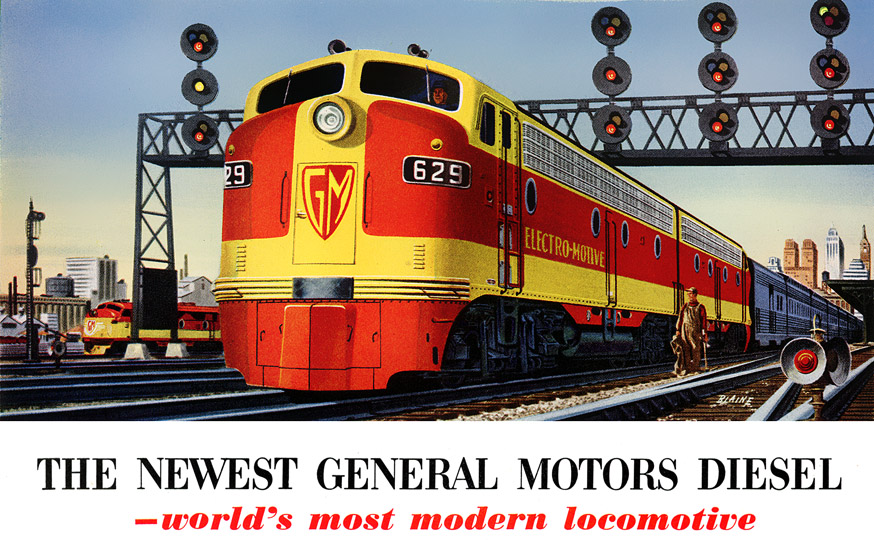
Jordan:  “In the 1950’s and 1960’s, GM accounted for more 5 of every 10 cars sold in the US.  GM also has the #1 brand refrigerator and the #1 train locomotive.

S052050Matt:  “What?  GM had the #1 selling refrigerator and the #1 selling locomotive?”

Jordan:  “And to help finance cars, GM started a finance company – General Motors Acceptance Corporation.  In fact, GM was so dominant in so many areas the Federal government began an anti-trust investigation.”

Matt:  “What a change.  Anti-trust and too large to government bailout.  Hard to imagine what a machine they were.”

Jordan:  “That’s why POTUS wants this series of articles.  What lessons can we take away that can be applied today?”

Matt:  “So GM peaks in the 1960’s or maybe later and then starts to slide.  Did GM management quit following Sloan’s principles?”

Jordan:  “Yes but not all at once.  We’ll talk more about this later but in the early 1980’s the GM CEO declared that profitability was more important than market share.”

Matt:  “Doesn’t a company have to have market share to generate revenue…and profit?”

Jordan:  “Low market share leads to lower total profits.  The percent profit per car might look good but at the end of the day the stack of dollar bills is smaller.”

Matt:  “What was the rationale?”

Jordan:  “GM could ‘optimize’ earnings and shareholder value by focusing on selling only cars and trucks with certain profit.”

Matt:  “What happened to Sloan’s segmentation scheme?”

Jordan:  “Part of the plan to reduce cost was to reduce the differentiation between the brands.  Doing so would allow certain development costs to be spread over more cars…and customers would never know, or so they thought.”

Matt:  “With this plan, some programs that made Chevrolet different from say Pontiac would be reduced or eliminated.”

Jordan:  “Exactly.  The plan was that separation between Buick and Oldsmobile could also be reduced.  Even Cadillac would be affected.”

Matt:  “But some of this narrowing of brand differentiation started before the 1980’s.”

Jordan:  “True.  But if you look at GM market share, the point of inflection is in the 1980’s.

Matt:  “Did the plan work?”

Line Chart FallingJordan:  “In one word, no.  In fact, the plan made an already difficult situation worse.  GM share at the beginning of the 1980’s was about 45%.  By the end of the 1980’s it was about 35%.”

Matt:  “How much loss is that?”

Jordan:  “1.2-1.5 million cars and trucks per year.”

Matt:  “How many assembly plants is that?”

Jordan:  “Equal to all the production of 5-6 assembly plants per year.  5-6 plants two shifts, 60 cars or trucks per hour, all year long.  Not one year but every year.  So you think the planned worked?”

goodbye-1l842i0Matt:  “They waved good bye to 5-6 assembly plants?  How much money did they wave good-bye to?”

Jordan:  “The numbers are staggering.  Every year GM no longer sold 1,500,000 cars and trucks it used to sell.  In today’s dollars GM sales price to dealers averages about say $30-35,000.”

Cash

Matt: “So GM waves good-bye to $50 billion…$50 billion dollars per year…out the door.  Good-bye.  Whose idea was this?”

Jordan:  “Only a bean-counter could think up such a back-asswards strategy.  Show me one company that saved its way into prosperity?  To earn money companies need to generate revenue.  You cannot make up profit on $50 billion in revenue by cutting expense.  The math does not work.”

Matt:  “I am almost speechless.”

Jordan:  “You should be speechless.  It’s a staggering number.  And we’ve not talked about what happened to all the GM customer and GM employees as a result.”

Matt:  “I see now why you insist this story is more than a numbers game.  It is about management and how it influences the culture of the organization.”

Jordan:  “I’ll give you one more arrow in the culture quiver.  In the 1990’s a then GM CEO had the audacity to state that Sloan’s segmentation was no longer relevant.”

Matt:  “Was he right?”

Jordan:  “Segmentation criteria might get tweaked a bit over time but the fundamentals do not.  Segmentation in the 1990’s was as important as in the 1920’s.”

Matt:  “Why do you think he claimed Sloan’s segmentation was no longer relevant?”

Jordan:  “I don’t know for certain.  But given his background, he thought the reason GM lost so much market share was Sloan’s segmentation.  He never considered that by ignoring Sloan’s segmentation, especially in the 1980’s, GM lost market share.”

Matt:  “Another case of back asswards thinking.  May we take a break, please?  My head hurts.”

#41 POTUS Asks Jordan to Write about GM

12 Saturday Apr 2014

Posted by Jordan Abel in Economics, General Motors, Societal Issues

≈ 7 Comments

(Readers: Please note the blog about the 5th revolution in the US is constructed as a story. While not all chapters are linked, the story might be more meaningful by starting at the beginning.)

(Want a PDF version for Entries #1-10, #11-20, #21-30 formatted for tablets and e-books?  Entries #31-40 available soon.  Click links for download.  America’s 5th Revolution Volume I (Entries 1-10), America’s 5th Revolution Volume II (Entries 11-20), America’s 5th Revolution Volume III (Entries 21-30)

Scene: Jordan’s office.

Gelly (Jordan’s assistant):  “Jordan, POTUS is calling.”

Jordan:  “Good morning, Mr. President.”

white-house-clip-art1POTUS:  “Morning Jordan.  You alive and well today?”

Jordan:  “With a question like that I’m not sure.  But, yes, I’m fine.  Thanks.”

POTUS:  “I need a favor.  Call it a payback for setting up the meetings about rebuilding Detroit.”

Jordan:  “What’s the issue?”

POTUS:  “The special election resulted in some good changes to Congress.  The parties are starting to work together again.”

Jordan:  “Glad to hear it.”

POTUS:  “What the country needs next is to begin addressing economic policy.”

Jordan:  “I’m not a PhD economist.”

POTUS:  “We have plenty of PhD’s around.  What I need is some real-world experience.  The experience needs to be relevant for policies about rebuilding manufacturing and rebuilding the middle class.”

Jordan:  “How can I help?”

POTUS:  “The question that keeps popping into my head is why the USA was so successful at generating wealth for the society in the 1950’s, 1960’s and even the 1970’s.  And we have made no progress since.”

Jordan:  “The economists can probably analyze that for you.”

POTUS:  “I’m not looking for some academic analysis.  I want a different perspective.  And I know you have one.”

Jordan:  “What kind of analysis would be helpful?”

POTUS:  “You spent a number of years at General Motors in some very interesting jobs.  I also know you are a student at heart.”

Jordan:  “You got that right.  I love taking classes and I love to teach.”

POTUS:  “OK, then let’s combine the two.  i’ll give you an assignment and then the opportunity to teach.”

Jordan:  “Alright.  What am I getting into?”

POTUS:  “For many years GM was an economic engine.  Remarkable revenue, remarkable market share and even more remarkable profits.  It was the…capital THE…manufacturing company worldwide.”

GM,_logoJordan:  “True.  GM made lots of products, employed lots of people and paid lots of taxes — federal, state and local.”

POTUS:  “Years ago, Charles Wilson…”

Jordan:  “…also known as Engine Charlie Wilson…”

POTUS:  “See you do know this stuff.  Anyway, Charlie Wilson said ‘…what’s good for General Motors is good for the country, and vice versa.’”

Charles_Wilson_official_DoD_photoJordan:  “And I think what Engine Charlie said is still correct.”

POTUS:  “Well, Jordan, now you know why I called you.  I would greatly appreciate if you would write a series of articles about GM.  What went right and then what went wrong, terribly wrong.”

Jordan:  “Funny you bring up that idea.  I’ve thought for a long time about writing such articles but never had a reason.”

POTUS:  “Now you have that reason.  Understanding what went right and wrong at GM will help me and many other people trying to set economic policy.”

Jordan:  “If I heard you correctly, you want my perspective on GM and not some widespread study by a bunch of people.”

POTUS:  “To answer your question, ‘yes.’  I understand some people might not agree with your analysis.  But the point is to get your perspective, not some politically correct version scrubbed by a PR agency.  You don’t learn from sanitized versions of situations.”

Jordan:  “Not to worry.  You’ll get the un-sanitized version.  And like any series of events, doubtless there will be…and probably should be…other opinions.  But I’ll give you my perspective.”

POTUS:  “Good.  The articles should really help.”

Jordan:  “Anything else?”

POTUS:  “Only that you cover why GM became such an economic juggernaut and then what lead to the bankruptcy.”

Jordan:  “Which bankruptcy?”

POTUS:  “You mean there was more than one BK?”

Jordan:  “You’ll have to read the story.  I do have one request for this project.”

POTUS:  “What’s that?”

Jordan:  “May I get someone from your staff assigned to help me?  I want the person to act as a reporter and help with the writing and maybe some research.  I’ll provide all the key info but an extra person would be great.”

POTUS:  “Consider it done.  Now you better get off the phone and get to work.  Good bye Jordan.”

Jordan:  “Good bye, Mr. President.”

#39 How Manufacturing Can Create Societal Wealth

05 Saturday Apr 2014

Posted by Jordan Abel in Definitions, Economics, Innovative Thinking: Ideas and Products, Societal Issues

≈ Leave a comment

Note: Entry #41 begins a series of blogs about General Motors.  How did an apparent culture change over time likely lead to bankruptcy and an apparent disregard for addressing safety issues.  Such actions by corporations affect societal attitudes.

(Want a PDF version for Entries #1-10, #11-20, #21-30 formatted for tablets and e-books?  Click links for download.  America’s 5th Revolution Volume I (Entries 1-10), America’s 5th Revolution Volume II (Entries 11-20), America’s 5th Revolution Volume III (Entries 21-30)

Scene: Jordan Visiting College Campus. Meets Former Economics Professor.

Jordan: “Professor, nice to see you again. Been a while since I was in one of your classes.”

albert_einstein_professor croppedProfessor: “Yes, a long time. I understand you’re spending a lot of time in Washington.

Jordan: “Too much time. I need these kinds of breaks to keep my thinking straight.”

Prof (laughing): “You’re not saying people inside the Beltway have distorted thinking?”

Jordan: “I’ll skip my thoughts on that one. But if you have a few minutes I would like to get your thoughts on some serious issues facing the country.”

Prof: “I’ve got about an hour before my next lecture. What’s on your mind?”

Jordan: “There are some disturbing trends in the economy.

Prof: “Such as?”

Jordan: “The United States needs to generate more wealth as a country. Taxing the rich does not create wealth, merely redistributes income. Like moving money from one pocket to another. What policies should we consider implementing to create more wealth for society? Not just wealth for some individual or some company but wealth for society.”

Prof: “Great question. Creating wealth is a simple concept but far more difficult to execute.”

Jordan: “Let’s pretend we are back in Econ 101. Explain the concept and then we can talk about execution.”

Prof: “OK students, quiet down. Just kidding. For me the easiest way to understand how to create wealth for society is to think manufacturing.”

Jordan: “Exactly what do you mean by manufacturing?

Prof: “Most people think manufacturing as making cars or airplanes or furniture. But in the broadest sense manufacturing is the process by which value is added to a product.”

Jordan: “If I understand, then farming can be considered manufacturing. You start out with seeds and you end up with a bunch of corn. Mining would also be the same. Start out with dirt and end up with say iron ore.”

Prof: “Let’s use your examples. How is wealth created? Let’s take raw material – iron ore, corn, lumber. Step 1 is consider the value of that raw material on its own – a hunk of iron ore, stalk of corn or a tree. Step 2 is think about a product that uses the raw material. Step 3 is compare value between the raw material and the finished product?”

Jordan: “Let’s take this coffee mug. The raw material is some type of clay and some paint for decorations.”

I Luv NY Mug CroppedProf: “Good example. What would you pay for the clay and paint as raw materials?”

Jordan: “Nothing because they are of no value to me.”

Prof: “What did you pay for the coffee mug — $10?

Jordan: “Try $20.  It’s a nice mug.”

Prof: “So value went from $0 for the raw material to $20 as a coffee mug?”

Jordan: “Yes. Whoever made the mug must have created the value.”

Prof: “He does remember Econ 101. Actually there are some other people in the chain but you have the idea.”

Jordan: “The other people – the trucking company, the place where I bought the mug, the company that mined the clay and the company that made the paint – all contributed to the wealth creation.”

Prof: “On a very simplest level, none of those people would be working if you didn’t buy the coffee mug.”

Jordan: “So each one of the companies involved in making and then getting the coffee mug to me contributed to value creation?”

Prof: “One can argue that the people between the potter and the buyer are merely middlemen. You could have purchased the coffee mug directly from the maker.”

Jordan: “So the middleman might not really add value, bur rather…call it ‘facilitate’?”

Prof: “The word ‘facilitate’ will work. ‘Catalyst’ will work also. A catalyst allows a reaction to occur without becoming part of the reaction.”

Jordan: “Hasn’t the internet started to replace the middleman? Many more companies seem to be selling directly to the customer.”

Prof: “The internet has been a disruptive force to the middleman, or distribution system. For centuries people in developed countries bought in physical stores. Virtually all these stores were operated by merchants who sold the goods but did not make the goods.”

Jordan: “Now, with the internet, in many cases I can buy directly from the manufacturer and have the product delivered to my location – no more brick-and-mortar store.”

Prof: “A lot of jobs associated with…call it merchandising business…have been eliminated.”

Jordan: “Did those people really add value and create wealth?”

Prof: “Technically, no. But what they did do was enable a lot more people to buy the product. Without the middleman, the potter who made the coffee mug would have a very limited population to sell to. With the middleman, the potential for sales expanded exponentially.”

Jordan: “Now the potter can use the internet and reach many more people than before. In some cases maybe even more people than with the middleman.”

Prof: “And keep more of the profits since no payment to the middleman.”

Jordan: “At the same time, employment declines because fewer people are working to distribute the product. So did we really create any additional wealth by selling on the internet?”

Prof: “Answering a related question will help you set policies for wealth creation.”

Jordan: “Where are we headed?”

Prof: “What if the coffee mug is no longer made in the US but now made in say China…bad pun, I know.”

Jordan: “I’ll forgive you. If the mug is made in China, the wealth created between the raw material and the finished product – coffee mug – stays in China and not the US.”

Prof: “You’ve got it.

Jordan: “Rather than $20 being spread among US companies, the only value in the US is for transportation and distribution — maybe $5-6. The potter is cut out completely.”

Prof: “One can make a good argument that no wealth is created for US society when products are manufactured outside this country. What we as a society confuse is wealth creation for an individual or company compared to wealth creation for society.”

Jordan: “Macro and micro economics. Or as a friend of mine calls it macro schmacro and micro schmicro economics.”

Prof: “I’ll remember those terms. But the distinction is important. What is of benefit to an individual or a company…schmicro economics…is not always a benefit to society…schmacro economics.”

Jordan: “Moving production of coffee mugs to China might generate more profits for a specific company…schmicro…but overall the US loses wealth as a result…schmacro.  Correct?”

Prof: “Yes…but…and the ‘but’ is the value of trade between countries.”

Jordan: “So trading between countries is not just a one-way street but can create wealth in both countries?”

Prof: “Trading is important because more demand can be created. Just like the internet opened up new markets for the potter who made the coffee mug, trade opens up new markets for countries.”

Jordan: “But isn’t trade usually one sided. I mean the country that exports seems to benefit the most.”

Prof: “The country doing the exporting is usually more efficient at making those products than the country buying the products. But for trade to work the country buying has to offer something in return – another product at a lower cost or some raw material that has value.”

Coffee beansJordan: “Let’s take coffee. Brazil is more efficient at growing coffee beans than the US mainland. Therefore, the US should buy coffee beans from Brazil.”

Prof: “The US is also very efficient at growing certain crops – corn, soybeans, wheat. And it exports lots of those crops.”

Jordan: “But Brazil and the US are not as efficient at producing electronics as say China. So Brazil might trade coffee beans for US wheat and the US might trade corn for electronics made in China.”

CornProf: “You’ve got it the basics. In theory…and I emphasize theory…each country trades products that it produces more efficiently. As a result products made in another country are less costly to consumers and wealth is created in each of the countries.”

Jordan: “I realize understanding wealth creation has many more variables. But the gist of it seems taking a raw material and refining it so it is worth more. Clay becomes a coffee mug. Wheat becomes flour which becomes a cake. Silica becomes silicon which becomes an electronic circuit which becomes a computer.”

Prof: “Very good Jordan.”

Jordan: “Prof, I have a somewhat related question that has bothered me for some time.”

Prof: “Which is…?”

Jordan: “The manufacturing of electronics is mostly automated. Labor cost as a percent of the cost of the product must be very low. So what is the advantage of making so many electronic products in Asia? Lead times are long and it is hard to protect intellectual property.”

Prof: “Let’s take a break and come back to that question. But I want to put the answer in the context of your first question – what policies will help the US create more wealth for society and not just individuals or certain companies?”

Jordan: “Good.  Now I want to refill by coffee mug.  Let’s see where this was made?”


#38 Duke Refuses to Clean Its Ash

02 Wednesday Apr 2014

Posted by Jordan Abel in Back Asswards Thinking, Causes of the Revolution, Societal Issues, Stupid Is as Stupid Does

≈ Leave a comment

(Readers: Please note the blog about the 5th revolution in the US is constructed as a story. While not all chapters are linked, I think the story will be more meaningful by starting at the beginning.)

Want a PDF version for Entries #1-10, #11-20, #21-30 formatted for tablets and e-books?  Click links for download.  America’s 5th Revolution Volume I (Entries 1-10) America’s 5th Revolution Volume II (Entries 11-20) America’s 5th Revolution Volume III (Entries 21-30)

Scene: Jordan’s office with JC — conversation continues. 

Jordan: “OK, JC, we’ve got our coffee refill. What else qualifies Duke Energy for ‘Stupid Is as Stupid Does’?”

JC: “There are several. #1 is Duke, in their terms, wants to take a disciplined, fact-based approach to evaluating long-term solutions for coal-ash basins.'”

Jordan: “What more facts do they need?”

010414_1635_16TeachingS1.jpgJC: “Ya’ got me. Of course earthen dams can leak. Some of the coal ash earth dams have been there for decades. And CEO Goody-Two-Shoes claims Duke needs more time to study.”

Jordan: “That does seem a bit bizarre. Duke is supposed to monitor dams so where are the data?”

JC: Jordan, that coffee must be clearing your brain. You are starting to understand why people are so upset with Duke.”

Jordan: “What else are they doing?”

JC: “Duke wants to restrict the release of information it gives to legislators and environmental groups. Let me read what an attorney said who is representing Duke. Now Duke has an outside attorney as a talking head Goody Two Shoes IIinstead of a Duke employee. Here goes, ‘Duke Energy strongly denies it has in any way knowingly violated the law or committed a crime.’ OK, if no crime, then why outside counsel and not CEO Goody-Two-Shoes talking?”

Jordan: “Some info is private.”

JC: “Mmm. The info is about violations of environmental laws. And they want to withhold the info from the NC DNR.”

Jordan: “What’s their rationale?”

JC: “Duke claims the info might be used in a civil lawsuit against them.”

Jordan: “No info to regulators and no info to people who might want to sue Duke.”

JC: You got it. Goody-Two-Shoes heads a monopoly that is supposed to be monitored by government. Everything smells like Duke violated the law. Now, Duke refuses to provide any info and therefore no one can prove any wrongdoing.”

Jordan: “Are you implying a cover-up?”

JC: “I am not implying anything. I just look at the facts. Duke dumps coal ash into the Dan River, causing a major pollution problem. The NC DNR finally decides to investigate. And now Duke does not want to provide any info. What does that smell like to you?”

Jordan: “At a minimum, smells like a lot of arrogance.”

JC: “And what has been the pattern when companies display a lot of arrogance?”

Jordan: “Some type of wrong doing.”

JC: “And one other little item about Duke.”

Jordan: “What’s that?”

JC: “Gee, somehow Duke was caught dumping coal slurry into some river in eastern North Carolina.”

Jordan: “Illegally?”

JC: “They had a permit to release small amounts. But they were pumping many times over the limit.”

Jordan: “Who discovered it?”

JC: “Believe it or not, the NC DNR. As tight as Duke is…or at least was…with the DNR, the violation must have been really gross for DNR to report Duke.”

Jordan: “What you’ve told me is Duke seems to have a pattern of ignoring the law and/or viewing any fines if they get caught as a cost of doing business.”

JC: “The cost of which they probably figure out how to charge back to rate payers. I don’t condone that behavior from any organization. If a company acts that way, usually you can boycott them and buy a product from someone else.”

Jordan: “But not Duke, because it is a monopoly.”

JC: “Hey, he does understand. Duke is a monopoly that’s run amuck. Now, Jordan, what action is the government going to take.”

Jordan: “Good question. People need electricity. Converting Duke to a publically owned utility is an option but fraught with problems…and lots of lawsuits.”

JC: “What about changing CEO’s?”

Jordan: “The CEO sets the tone for the organization. We might be able to do that.”

JC: “Who was the former CEO at Duke? Something Rogers. All I can think of is Roy Rogers.”

Jordan: “It wasn’t Roy Rogers.”

JC: “But the guy was a cowboy. Seemed to shoot any executive that might question his judgment.”

Jordan: “He did fire his announced successor and then reinstated himself as CEO.”

JC: “Then he picked Goody-Two-Shoes to succeed him.”

Jordan: “The Board of Directors approved.”

JC: “Jordan, don’t be stupid again. Roy Rogers picked the Board members. Why wouldn’t they approve Two-Shoes?”

Jordan: “Alright. I see two major issues with Duke that flame public outrage. #1 is a monopoly disregarding the law. #2 is a monopoly that wants to withhold information from regulators and the public.”

JC: “Duke’s behavior is what leads people to seek revenge…like this revolution. Changing the CEO seems like a great first step.”

Jordan: “Let me get started.”

JC: “Don’t take too long. Duke is a loose cannon and the ship is headed into rough waters.”

Jordan: “Aye, aye, captain. I’ve got my orders. By the way, nice to see you JC.”

JC: “You too Jordan. Good luck.”


#37 Cleaning Duke Energy’s Ash

29 Saturday Mar 2014

Posted by Jordan Abel in Back Asswards Thinking, Causes of the Revolution, Societal Issues, Stupid Is as Stupid Does

≈ Leave a comment

(Readers: Please note the blog about the 5th revolution in the US is constructed as a story. While not all chapters are linked, I think the story will be more meaningful by starting at the beginning.)

Want a PDF version for Entries #1-10, #11-20, #21-30 formatted for tablets and e-books?  Click links for download.  America’s 5th Revolution Volume I (Entries 1-10) America’s 5th Revolution Volume II (Entries 11-20) America’s 5th Revolution Volume III (Entries 21-30)

Scene: Jordan’s Office with JC

Jordan: “JC, nice to see you. What brings you here?”

JC: “Can you believe it?”

010414_1635_16TeachingS1.jpgJordan: “Believe what?”

JC: “The State of North Carolina gets dumber by the day.”

Jordan: “What are you talking about?”

JC: “I understand now why the revolution started in Charlotte. People…normal people anyway…had become so frustrated with the stupid actions of the NC legislators and some NC CEO’s.”

Jordan: “Are you saying ‘stupid is as stupid does’?”

JC: “Exactly. Supposedly smart people doing or saying stupid things.”

Jordan: “OK, what’s the issue?”

JC: “Two issues. One is the NC legislators cut the budget for staff of the Department of Natural Resources…they call it something else in NC. The budget cuts take effect about a month after a major coal-ash spill. Duh, folks, what are you doing?”

Jordan: “What’s the second issue?”

JC: “Duke Energy wants customers to pay for cleaning up the coal ash, which means Duke wants a rate increase.”

Jordan: “The cost of the cleanup is an expense.”

JC: “Jordan, sometimes you could join the ‘stupid is as stupid does’ club. Duke creates an environmental hazard because of their own actions and now wants customers to pay for their mistakes. I do not understand the logic.”

Jordan: “Duke needs to maintain profits in order to attract investors.”

JC: “Make me throw up. That’s the same stupid reasoning that allows Duke and other large companies to disregard many laws.”

Jordan: “What happens if Duke cannot recover expenses and ends up filing for Chapter 11 bankruptcy?”

JC: “Maybe they should go Chapter 11. Duke blatantly disregards environmental laws. Duke must think that as a monopoly it has no obligations to the public.”

DukeEnergy CroppedJordan: “OK, so Duke goes Chapter 11. Who is going to operate the utility?”

JC: “Another company or convert it to a public utility. There are lots of public utilities – TVA, Santee Cooper in SC, Los Angeles Department of Water & Power…and many others. It’s not a new business model.”

Jordan: “You are really upset.”

Mickey-Mouse-fingerJC: “You should be, too. Duke and its goody-two-shoes CEO are basically given the public the finger.”

Jordan: “What do you suggest?”

JC: “First, Duke eats the cost of the clean up. If executives salaries have to be cut to pay for it, then so be it.”

Jordan: “You are getting into touchy territory.”

JC: “Someone has to be held responsible. And it cannot be the public.”

Jordan: “The Duke CEO was not in charge when the coal-ash ponds were started.”

JC: “Jordan, might I remind you, the CEO has been with Duke a very long time and was the Chief Financial Officer before being promoted. You think the CFO was unaware of the problem and/or had no authority? If so, then a lousy CFO.”

Jordan: “I hear you but solving the coal-ash problem is complicated.”

JC: “What is so complicated? Duke puts coal ash in a pond. The pond is not well secured and prone to leaks and spills. Fix the problem.”

Jordan: “Enforcing compliance with these laws is really up to the states – North Carolina and other states.”

JC: “Help!! Please someone, make him listen. Let me remind you the State of North Carolina cut the staff that is supposed to enforce compliance by Duke. Comprende?

Jordan: “OK. Other than a few no-government-under-any-circumstances people, this issue does seem appropriate for Washington to get involved.”

JC: “Finally he understands. Jordan, working with you makes my head hurt sometimes.”

Jordan: “What do think Washington should force Duke to do?”

JC: “At a minimum, relocate the coal ash. Right now many of the ponds are on rivers or lakes used as a source for public drinking water.”

Jordan: “Well, if there is a spill then the water treatment plant should be able to handle cleaning it up.”

JC: “Do you have any brains left? No, the water-treatment plant cannot remove all the arsenic, cadmium and other stuff that’s in the coal ash. Plus, what happens to all the fish and wildlife when the coal ash dumps into the river or lake? Please, get him a brain.”

Jordan: “Alright, so we have Duke move the coal ash. Where?”

JC: “Jordan. I don’t know. But there are practical solutions. Can’t you make bricks or blocks out of this stuff? Isn’t there a way to sort out the heavy metals?”

Jordan: “JC, you’re making my head hurt. I need some coffee then we’ll continue.”

#33 Rekindling the Emotional Bond with Detroit

15 Saturday Mar 2014

Posted by Jordan Abel in Economics, Innovative Thinking: Ideas and Products, Societal Issues

≈ Leave a comment

(Readers: Please note the blog about the 5th revolution in the US is constructed as a story. While not all chapters are linked, I think the story will be more meaningful by starting at the beginning.)

Want a PDF version for Entries #1-10, #11-20, #21-30 formatted for tablets and e-books?  Click links for download.  America’s 5th Revolution Volume I (Entries 1-10) America’s 5th Revolution Volume II (Entries 11-20) America’s 5th Revolution Volume III (Entries 21-30)

Scene: Jordan’s Office with the housing Guru.  Continuing conversation.

Guru: “OK, Jordan, we have our coffee refill.     Tell me what I need to know about making the rehab in Detroit more appealing.”

122213_1351_10GurusIdea1.gifJordan: “You consider yourself a car guy?”

Guru: “Huh? What do you mean?”

Jordan: “You answered the question. You’re not a car guy. Detroit still is the car capital of the world, even if many assembly plants have left.”

Guru: “Where is this conversation headed?”

Jordan: “Are you a fan of Motown music?”

Guru: “Who isn’t? Motown music is alive. It’s lasted several generations and cuts across all ethnic groups.”

Jordan: “And for good reason. The Motown sound is great music.”

Guru: “OK. So are you saying the rehab needs to incorporate cars and Motown?”

Jordan: “In spirit anyway. The rehab program has got to have a soul. It somehow needs to build the same kind of emotional bond that people have with their cars and people have with Motown music.”

Guru: “How am I supposed to do that?”

Jordan: “Guru, that’s your job. You’re the architect…you’re the designer. I’m just the client.”

Guru: “Give me some more guidance about what you want. Start with cars.”

Jordan: “Cars and trucks are very high tech. Today even the least expensive cars have extensive integration of electrical and mechanical components. Somehow the rehab needs to highlight the combination of electrical and mechanical functions. Show how automated functions can make an older building modern.”

Guru: “Like automated parking, for example?”

Jordan: “There you go. Perfect example.”

Guru: “Many of these old factories are wide – in fact, too wide for two modular units and still meet the code for natural lighting. We could have parking between the units…and automate the parking.

Jordan: “Automated parking inside the building that used to assemble cars. I like that.”

Guru: “Now, let’s try to build on that idea. What else can we do?”

Jordan: “How much electronics can you include in the building and in the modular units?

Guru: “As much as you want. All electric circuits and outlets could be integrated – just like a smart house. You can also link the circuits to a smart phone or car.”

Jordan: “What about upgrades to the circuits over time?”

Guru: “How many times are you going to ask me that same question?”

Jordan: “I don’t know. But the modular unit should be designed to allow the resident to upgrade easily wiring and other electrical features for at least 50 years, and preferably 100 years.”

Guru: “All the wiring is on the outside of the module and easily accessible for upgrades and any repairs.”

Jordan: “I know. But just want to make sure it can be upgraded easily.  By the way, we need to stop calling these modular units.  It’s confusing.”

Guru:  “What’s so confusing?”

Jordan:  “People think of modular in the same vein as double-wides.”

Guru:  “They’re completely different.”

Jordan:  “Maybe to you and people in the industry but not to most folks, me included.”

Guru:  “You have a better name?”

Jordan:  “What about ‘component construction’?  Sometimes the component can be large — like an entire unit — or sometimes small — like apportion of a wall.  Using the term ‘component construction’ is easier to understand and allows more flexibility.”

Guru: “Alright, we’ll call it ‘component construction.’  But I might slip every now and then.  Moving right along. What about incorporating the themes of different car companies – Ford, GM, and Chrysler? What about other companies?”

Jordan: “There were lots of companies. In 1910 there were about 400 companies nationwide making cars and some making few trucks. By 1920, I think the number was closer to 20 companies. Many became part of larger companies – GM included Buick, Cadillac, Oldsmobile, Chevrolet and later Pontiac. Cadillac also had the LaSalle brand.”

Guru: “What about other companies that were not acquired. Wasn’t Packard in Detroit?”

Jordan: “Yes. A number of other companies were in Indiana – Auburn, Cord, Duesenberg, and Studebaker. But let’s focus on companies in southeast Michigan.”

Guru: “Alright. What else you thinking about?”

Jordan: “Well, we could name a floor after a company and use the theme from the brand for certain features or design themes on the floor. We don’t want to get too cutesy but capture some of the history.”

Guru: “You worked at both Cadillac and Buick, didn’t you?”

Jordan: “Yes, even though Buick was based in Flint, there is a lot of connection to Detroit. For one, Buick was the cornerstone for GM.”

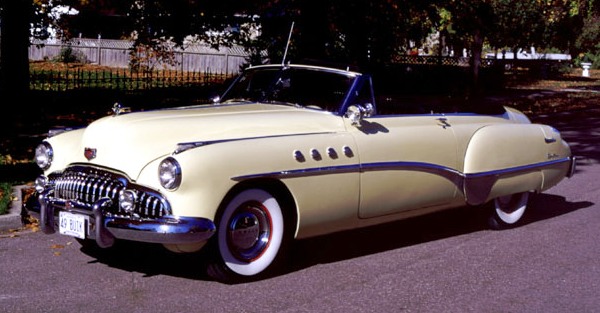
???????????????Guru: “You know what I remember most about Buick? Portholes.”

Jordan: “You’re not alone. Portholes have been a Buick signature for 70 years.”

Guru: “Portholes are a great branding idea.”

Jordan: “The original portholes were to cool the engine but the look quickly became associated with Buick. Years ago when I was at Buick my nephew, about 9 or 10 at the time, and my brother were doing their weekend ‘Let’s go to the junk yard routine.'”

Guru: “Obviously true car guys.”

Jordan: “My nephew sees a stack of crushed cars and yells, ‘Look there’s a Buick. I see the portholes.'”

Guru: “What great brand identity. Recognizing a brand in a stack of crushed cars. That gives me an idea. We could use portholes or circular lamps on one of the floors or in the lobby. Tell me some other themes.”

Ford OvalJordan: “Ford uses the ‘oval’ in the middle of the grill. Chevrolet uses the ‘bow tie.’ The original Chrysler logo looks like an award ribbon. Cadillac has the crest. Fisher Body used what looks like a carriage for a queen. There are all kinds of logos.”

ChevroletGuru: “So if we wanted, we could incorporate some of the logos as escutcheons for door locks – the Ford oval or the Cadillac crest. Or, we could also use door handles from certain models. Didn’t older cars have pull down handles?”

Jordan: “Yes. Another feature from early model cars – at least Fisher Body LogoI know it was true for Cadillac – is the opera lamp. Opera lamps were used originally on horse-drawn carriages. Cadillac brought back opera lamps many years later.”

Guru: “You know we could use automotive lighting – past and present – throughout the building and the parking area. We could actually use headlamp bezels from cars as light fixtures.”

Jordan: “Now you’re thinking like a car guy.’

Guru: “We could also make a mosaic in the front lobby…or maybe outside the elevators on every floor. The mosaic pattern would be a company logo. Hey, I’m liking this.”

Jordan: “One more thing. How would you mix different periods of design? In the early years cars were much like horse carriages. During the 1930’s there was a lot of art deco – Buick had an metallic instrument panel. Can you mix and match decades in the building?

Guru: “Not sure about combining features of early design with the art deco or the modern design on the same floor, for example. But let me think about it.”

Jordan: “We’ve not talked about how to incorporate Motown but I’m sure you will think of something.”

Guru: “Let me work on incorporating automotive stuff first. Then we can talk Motown.”

Jordan: “OK, when will you have ideas to review?”

Guru: “Give me a week or so. I need to get focused.”

Jordan: “Thanks, Guru. See you soon.”

← Back

Thank you for your response. ✨

#32 Helping Rebuild Detroit and Other Cities

12 Wednesday Mar 2014

Posted by Jordan Abel in Innovative Thinking: Ideas and Products, Possible Solutions, Societal Issues

≈ Leave a comment

(Readers: Please note the blog about the 5th revolution in the US is constructed as a story. While not all chapters are linked, I think the story will be more meaningful by starting at the beginning.)

Scene: Jordan’s Office with Housing Guru (see earlier entries for initial discussion)

Jordan: “Guru, nice to see you. Where have you been hiding?”

122213_1351_10GurusIdea1.gifGuru: “Hiding from you so I can get some work done. Actually, I’ve been revising the plan to economically rebuild housing in Detroit – at least part of it.”

Jordan: “Great. I am all ears because POTUS is interested also. What do you have?”

Guru: “POTUS? You’re kidding. You talked to POTUS about this?”

Jordan: “He called me. Met him at the White House. Saying he’s interested in this project is an understatement. He views Detroit as a template for many cities.”

Guru: “That’s good and bad. This project has become very high profile.”

Jordan: “You wanted to rebuild your architectural practice. Well, here’s the chance. Now, we need get this project going. The next call from someone on POTUS’s staff will be asking for a progress report, not just ideas.”

Guru: “Glad he agrees problems in Detroit are not unique, just the most visible. Many US cities have an eroding tax base, high legacy pension costs and infrastructure in need of serious repair.”

Jordan: “Guru, I agree completely. Now we need to layout specific ideas for Detroit and a timeline for implementation.”

Guru: “The idea is simple and what we discussed. Convert existing industrial structures into residential and commercial space.”

Jordan: “That’s what I told POTUS. His question was, ‘Isn’t converting a factory to housing expensive and fraught with problems?'”

Guru: “And I hope you said ‘likely’ unless you think modular.”

Jordan: “Exactly what I said. You’ve trained me well. We also discussed how we need to overcome the negative perception of modular.”

Guru: “I understand. Maybe a start would be to include photos of the modular homes that I designed and built in Charlotte.”

122213_1311_9Guruandthe4.jpgJordan: “Very nice homes and much better than I expected. Now, how do we, in Ricky Ricardo terms, ‘splain’ the modular concept to prospective buyers, the public and financiers?”

Guru: “I’ve done a simulation using CAD of using modular in a factory. We can combine the simulation with the video I did of the houses being assembled in Charlotte.”

Jordan: “By the way, before I forget, POTUS is arranging meetings with head of HUD and senior legislators in Southeast Michigan. We need to have some presentation ready for those meetings.”

Guru: “Jordan, you remind me of my clients. Here’s an idea. What can I look at tomorrow?”

Jordan: “You and I know this is a big deal and great opportunity. We need to be ready.”

Guru: “I know. Let me outline the general content of the pitch.”

Jordan: “Keep going.”

Guru: “The idea is build the units in one factory and install them in a former factory that is now empty. We are replacing a slab of dirt where a house usually sits with a slab of factory floor.”

Jordan: “What other differences?”

Fisher 21Guru: “The rest is fairly straightforward. The factory needs to have enough floor-to-ceiling height to handle the modular unit and some crawl space — for support braces and any adjustments to level the floor – and some space above for ventilation. But most factories have more than enough room.”

Jordan: “What about width. Aren’t there big support posts in these buildings?”

Guru: “Yes, but generally the posts are far enough apart to create adequate living space in between.”

Jordan: “So the module is built in a factory, like today, and then transported to the site. Once there the unit slides in the building?’

Guru: “Yes. But the factory for modular units can be set up next to the building to be rehabbed.  Lots of creative thinking to make that happen but that is a good description. Some units are bedrooms, some are kitchens and baths. It is easy to mix and match.”

Jordan: “What about plumbing and electrical? Are you going to use what’s in the building?”

Guru: “All the plumbing and electrical are on the outside walls of the modular unit so hook-ups are easy and maintenance is easy. The plumbing and electrical from all the units converge at a central location and link to the existing infrastructure. The unit could have a separate unit for purifying water and generating electricity – like the one you’ve been working on.”

Jordan: “How wide are these units?”

Guru: “No more than 20′ for a lot of reasons.”

Jordan: “So once inside the existing building, can you somehow link these units together to make say a three-bedroom apartment?”

Guru: “There are tricks to hooking the units together but yes. And with some creative designs, most people will never know.”

Jordan: “What about all the crud in some of those old buildings? I think of the assembly plants and sheet-metal plants I’ve been in. Who knows what stuff is really in there.”

Guru: “Remediation needs to be completed for the major problems. There are all kinds of products to seal floors, ceilings, pipes, etc. Besides all the plumbing and electrical will be new.”

Jordan: “Could you use this same idea to rehab old hotels, apartment buildings, college dorms?”

Guru: “Each of those could be done. Old factories have the most flexibility because the openings are generally larger. When the opening is smaller – hotel room, or even some factories for example – the modular unit might have to be assembled in the living space. You know, like final assembly of a car.”

Jordan: “Most people do not realize how much sub-assembly there is in a car or truck. Final assembly is the most fun to watch.”

Guru: “We could do a lot of sub-assembly work offsite and do final assembly on site.”

Jordan: “Either way do you think the rehab cost will be competitive?'”

Guru: “Yes. It is also important that total costs are considered. What is the value for taxpayers of a building sitting empty versus one that has people living in it? What is the cost to the city of tearing down a building versus rehabbing it? A lot of times people just compare the cost per square foot of new construction to the cost per square foot of the rehab. Those comparisons do not consider the other costs. Yes, the proposal is competitive.”

Jordan: “This is a great start, Guru. Hats off to you. When can I get some drawings for the upcoming meetings?”

Guru: “You never let up do you. Look, I’m not a meeting guy, especially for political stuff. My shtick is architecture. And my real expertise is making existing spaces more functional and more attractive. And what I really dislike is seeking funding for these projects.”

Jordan: “I can help with meetings and the funding, although no guarantees on funding. Everyone agrees if the project in Detroit is successful, other projects will follow in Detroit and elsewhere.”

Guru: “That potential is exciting.”

Jordan: “One of our hurdles in rebuilding Detroit will be overcoming all the bad press. A lot of people think Detroit caused all of its problems. I agree many problems were self inflicted but not all.”

Guru: “You bad-mouthing Detroit?”

Jordan: “I am not bad-mouthing Detroit. But I am being realistic. Detroit has been in decline for nearly 50 years. It might take the next 50 years to complete the turnaround.”

Guru: “It would help me tremendously if I understood what Detroit was like and the vision for where it wants to go. I can integrate some of the history and the vision into the designs.”

Jordan: “OK, I’ll tell you what I know. But let’s get some coffee first.”

← Back

Thank you for your response. ✨

#31 Rebuilding the Heartbeat of America: Detroit

08 Saturday Mar 2014

Posted by Jordan Abel in Innovative Thinking: Ideas and Products, Possible Solutions, Societal Issues

≈ Leave a comment

(Readers: Please note the blog about the 5th revolution in the US is constructed as a story. While not all chapters are linked, I think the story will be more meaningful by starting at the beginning.)

Scene: POTUS Office, who called Jordan about plans for rebuilding neighborhoods in Detroit

POTUS:  “Jordan, thanks for coming by. Appreciate you changing your schedule.”

white-house-clip-art1Jordan: “Mr. President my schedule is much more flexible than yours.’

POTUS:  “I understand you have a proposal to help rebuild Detroit. And I understand the central theme is ‘Rebuilding the Heartbeat of America.’ I like the theme even if you did steal it from an old Chevrolet ad campaign.”

heartbeat-of-americalogoJordan: “I’m sure Chevy won’t mind. Besides the program will be good PR for them.”

POTUS:  “Tell me more about the plan. How are we going to make this work?”

Jordan: “Glad you emphasized the word we. The problems Detroit is facing are much more widespread than Detroit. And the solutions need to include more groups than just in Detroit.”

POTUS:  “Part of the problem is having the US populous understand the solution is not just Detroit. Detroit and the solution are really national issues.”

Jordan: “I agree but I am not certain how many people outside southeast Michigan understand that.”

POTUS:  “You’re right. For right now, let’s stick with plans for Detroit. So, tell me Jordan, old wise man, how are you going to make this work?”

Jordan: “Detroit has a strategic plan…more of a framework than a real plan. But the idea is to rebuild employment, improve housing, and make the city more livable by expanding parks and some ancillary programs that reinforce the core efforts. What the plan lacks is specifics.”

POTUS:  “You think Heartbeat of America will work with the general plan?”

Jordan: “Yes. Detroit’s strategic plan could become the model for many cities. The Heartbeat program provides a rallying cry and begins to put meat on the bones.”

POTUS: “Good. My experience, and I think yours as well, is that most people need details and examples, not an abstract general plan. What have you got? Let’s start with housing.”

Jordan: “If you think outside the box, some of Detroit’s biggest problems can become a major asset.”

POTUS: “Jordan, I agree but you sound like some politician.”

Jordan: “It’s really true. For one there is a lot of open land. Two there are many industrial buildings currently unoccupied but in reasonable shape. And many of the larger building could be turned into housing.”

POTUS: “Is converting an industrial building to residential housing practical? Seems like a lot of work and expense.”

Jordan: “Depends on how you approach rehabbing the building. If you think about the building as a shell with just a roof and a floor, then a number of options become available.”

POTUS: “What do you mean?”

Jordan: “Take an old assembly plant. Trying to build apartments using the existing interior space would be difficult and expensive. Using the space to house a module for living or a module for an office changes the equation.”

POTUS: “How so?”

Jordan: “You’ve seen Russian dolls, where one doll fits inside another.”

Russian DollsPOTUS: “I’ve seen a lot of Russian dolls. But different kind. But I got the picture.”

Jordan: “The building is the outside doll. Then the next doll is a fixed space within the building. Then the next doll fits inside the fixed space. The point is one fits inside the other.”

POTUS: “So the smaller doll can fit inside even if the larger doll has some bumps and imperfections. You want to use most of the space but do not have to use all the space.”

Jordan: “Exactly. You can make different size dolls and different looking dolls. The point is that one fits inside another.”

POTUS: “Where do you build the units?”

Jordan: “Units can be built in a factory and delivered as a nearly completed modules or built as partially assembled units with final assembly on site.”

POTUS: “Which approach is better, or does it matter?”

Jordan: “Quality with factory built probably slightly better. The real issue is constraints of the building. The design concept needs to be flexible enough to allow conversion of as many buildings as possible to residential or attractive offices.”

POTUS: “I agree. Don’t limit the opportunity to convert many older buildings. The structures are usually sound and the buildings help keep the character of Detroit…or whatever city.”

Jordan: “Glad to hear you support linking the future to the past, at least in some regard.”

POTUS: “I am no architect, but what I do know is a very high percentage of people like the look and feel of older buildings. But the same buildings need to have up-to-date wiring, plumbing and other conveniences.

Jordan: “The design allows upgrades over time as well so the unit can be up-to-date 50 years from now.”

POTUS: “Great. I have another question. Are you really talking about modular housing?”

Jordan: “Yes, sort of. I know modular has such a negative connotation. But in a way it is higher tech. Skyscrapers are being built using modular construction. Look at this YouTube video, Skyscraper in 15 Days.”

POTUS: “Wow, that’s impressive. When I hear the word modular, even after watching the video, I think double-wide.”

Jordan: “The irony is quality of factory-built housing is superior to traditional stick-build. However, even if people understand if modular has superior quality, there is a negative connotation to modular.”

POTUS: “Reminds me of the problem we have in this country with public transportation. Higher income, highly educated people have no problem whatsoever taking a train. But a bus? Not a chance. Even if the bus is faster and cheaper, ridership is not the same as a train. A train is OK but not a bus.”

Jordan: “I confess, I fall in that category. I will take almost any train and avoid almost any bus.”

POTUS: “So you are the problem!”

Jordan: “I have a lot of company. Seriously, to begin overcoming the negative perception of modular housing, we need a few showpieces constructed using modular. And Detroit would be a good place to start.”

POTUS: “Have you got a target in mind?”

Jordan: “Yes, an auto plant that is currently unoccupied. The plant has a lot of history and is interesting architecturally.”

POTUS: “Any major problems?”

Jordan: “Building is generally sound. Couple of structural repairs. There are some environmental remediation issues. All solvable based on what we know now.”

POTUS: “There is a super fund that should pay for most remediation costs, especially if the building can be converted to a livable site. What other problems?”

Jordan: “The project seems to dovetail nicely with the strategic plan adopted by the City of Detroit. The project could be a showpiece for the City…but it needs support both in concept and financially.”

POTUS: “Is the general approach adaptable to other sites, or is this just a one-off, thank you very much program?”

Jordan: “Highly adaptable to different building configurations and interior spaces. The approach will work throughout southeast Michigan – Detroit, Pontiac, Flint, Lansing and points in between. It will also work in virtually any other US city…and worldwide.”

POTUS: “Now we’re talking. Give me three major selling points. I’ll make some phone calls for you.”

Jordan: “Three key points: (i) rehab will be the foundation for neighborhood redevelopment without changing neighborhood character (ii) rehab creates local employment, including suppliers (iii) rehab design can link to and complements other neighborhood efforts.”

POTUS: “Here’s the deal. I call three people: (i) head of HUD (ii) senior senator from Michigan (iii) senior representative from SE Michigan. You meet with each of them and get reaction to the proposal. If they support, we proceed. If not, you are on your own.”

Jordan: “Thanks. I owe you one.”

POTUS: “I’ll keep that in mind. You’ve helped me. Glad I could return the favor. Rehabbing cities is a big problem and a long-term problem. Whoever is in office is going to need lots of help.”

← Back

Thank you for your response. ✨

#30 Government Has No Assets?

05 Wednesday Mar 2014

Posted by Jordan Abel in Definitions, Economics, Societal Issues

≈ 1 Comment

(Readers: Please note the blog about the 5th revolution in the US is constructed as a story. While not all chapters are linked, I think the story will be more meaningful by starting at the beginning.)

Want a PDF version for Entries #1-10 and 11-20 formatted for tablets and e-books?  Click links for download.  America’s 5th Revolution Volume I (Entries 1-10)  America’s 5th Revolution Volume II (Entries 11-20)

Scene: Same coffee shop. Jordan sees Greenie third day in a row.

Greenie: “Jordan, over here.”

010414_1635_16TeachingS2.jpgJordan: “Greenie – three days in a row. What will people think?”

Greenie: “People in this town actually think? Here’s your coffee. And no more meetings after today. At least for awhile.”

Jordan: “This is good service – coffee every day. What’s up?”

Greenie: “One more question about issues in economics that are counterintuitive – not really common sense.”

Jordan: “And that is…?”

Greenie: “A lot of people keep saying the government has too much debt. And they might be right. But I never hear these people talk about what the government owns.”

Jordan: “Greenie, you are very perceptive. Yes, the government has debt. The government also has assets – land, buildings, equipment. Lots of assets.”

Greenie: “Why doesn’t anyone talk about the value of what the government owns?”

Jordan: “Couple of reasons. One is talking about government assets would weaken the case against too much government debt. Another issue is the government does not really put a value on all that it owns.”

AccountingGreenie: “Really? You mean there is no what do you call it…balance sheet…for government property?”

Jordan: “No balance sheet. There is a list of what the government owns but no value is assigned to it.”

Greenie: “So an asset is only assigned a number, not a value. There is no value put on all the roads, bridges, building, parks, oil leases, military equipment, scientific equipment and all that other stuff?

Jordan: “No value assigned.”

Greenie: “That seems really stupid. When private companies buy something they assign a value. When you try to get a mortgage they assign a value to the house.”

Jordan: “It is a political problem. Not having a value assigned allows people opposed to any kind of government debt to emphasize the debt and not the value of what funds are used to buy.”

Greenie: “Companies take on debt all the time in order to buy more assets. Why shouldn’t the government recognize assets?”

Jordan: “Your point is well taken. Tax payers do not know the value of government holdings. All taxpayers hear about is a certain building cost say $50 million. That building might be worth $75 million.

Greenie: “If a company owned the building, everyone would cheer and say it was a smart investment. Many of those same people chastise the government for spending $50 million, even though the building is worth $75 million. By the way, why doesn’t the government value assets?”

Jordan: “Part history. Government never had a need to put a value on assets. Part tax law. Private investors can depreciate buildings and equipment over time, which reduces taxes. Government pays no taxes so no need to assign a value.”

Greenie: “What about lenders? Aren’t most loans backed by some type of collateral? Someone still holds the mortgage to my condo. The finance company’s name was on the title of my car until I paid it off.”

Jordan: “One big difference between lending to individuals or companies and lending to the government. The government can always print more money to pay off the loan. Individuals and companies cannot. So the lender needs some type collateral as a guarantee.”

Greenie: “OK, I’ll buy that is a big difference. But if government recognized the value of assets, seems like the tone of the conversation about the amount of debt might change.”

Jordan: “If the Federal government were a company, the balance sheet of the government might show a surplus of assets over liabilities – you know debt. That would definitely change the story about debt.”

Failure to CommunicateGreenie: “Reminds me of a line of a classic movie, ‘Cool Hand Luke.’ ‘What we have is a failure to communicate.'”

Jordan: “Great example and spot on. I think you need to include in your education program the implications of government not valuing assets. People need to understand parts of economics are not common sense.”

Greenie: “I will. Right now we have three parts of economics that seem counterintuitive. One is why in economic downturns…or upturns…the Federal government should behave differently than companies or individuals. Two is why backing the money supply with precious metal is no guarantee of value. Three is government has assets for which no value is assigned. Whew! That’s a mouthful.”

Jordan: “Might be a mouthful but should be a great educational program. When do you think you’ll be ready?”

Greenie: “Jordan, I need some time to make this easy to understand for everyone. A couple of weeks at least. I’ll let you know.”

Jordan: “Great. And I’ll buy coffee next time.”

Greenie: “Wow. Mr. Generosity himself. Don’t go overboard. But thanks. See you Jordan.”

← Back

Thank you for your response. ✨

← Older posts
Newer posts →

Subscribe

  • Entries (RSS)
  • Comments (RSS)

Archives

  • August 2025
  • July 2025
  • June 2025
  • May 2025
  • April 2025
  • March 2025
  • January 2025
  • December 2024
  • November 2024
  • September 2024
  • August 2024
  • July 2024
  • June 2024
  • May 2024
  • April 2024
  • March 2024
  • February 2024
  • January 2024
  • December 2023
  • November 2023
  • October 2023
  • September 2023
  • August 2023
  • July 2023
  • June 2023
  • May 2023
  • April 2023
  • March 2023
  • February 2023
  • January 2023
  • December 2022
  • November 2022
  • October 2022
  • September 2022
  • August 2022
  • July 2022
  • June 2022
  • May 2022
  • April 2022
  • March 2022
  • February 2022
  • January 2022
  • December 2021
  • November 2021
  • October 2021
  • September 2021
  • August 2021
  • July 2021
  • June 2021
  • May 2021
  • April 2021
  • March 2021
  • February 2021
  • January 2021
  • December 2020
  • November 2020
  • October 2020
  • September 2020
  • August 2020
  • July 2020
  • June 2020
  • May 2020
  • April 2020
  • March 2020
  • February 2020
  • January 2020
  • December 2019
  • November 2019
  • October 2019
  • September 2019
  • August 2019
  • July 2019
  • June 2019
  • May 2019
  • April 2019
  • March 2019
  • February 2019
  • January 2019
  • December 2018
  • November 2018
  • October 2018
  • September 2018
  • August 2018
  • July 2018
  • June 2018
  • May 2018
  • April 2018
  • March 2018
  • February 2018
  • January 2018
  • December 2017
  • November 2017
  • October 2017
  • September 2017
  • August 2017
  • July 2017
  • June 2017
  • May 2017
  • April 2017
  • March 2017
  • February 2017
  • January 2017
  • December 2016
  • November 2016
  • October 2016
  • September 2016
  • August 2016
  • July 2016
  • June 2016
  • May 2016
  • April 2016
  • March 2016
  • February 2016
  • January 2016
  • December 2015
  • November 2015
  • October 2015
  • September 2015
  • August 2015
  • July 2015
  • June 2015
  • May 2015
  • April 2015
  • March 2015
  • February 2015
  • January 2015
  • December 2014
  • November 2014
  • October 2014
  • September 2014
  • August 2014
  • July 2014
  • June 2014
  • May 2014
  • April 2014
  • March 2014
  • February 2014
  • January 2014
  • December 2013

Categories

  • Affordable Solutions
  • Back Asswards Thinking
  • Background
  • Background Stupid Is as Stupid Does
  • Benefits of Revolution
  • Causes of the Revolution
  • Common Sense Policies
  • Corporate Policy
  • Definitions
  • Diversions
  • Economics
  • Education Issues
  • Federal Budget
  • General Motors
  • Gov't Policy
  • Infrastructure & Fixed Fuel Prices
  • Innovative Thinking: Ideas and Products
  • Lessons of Revolution
  • Personal Stories
  • Possible Solutions
  • Post Trump Presidency
  • Rebranding Black Community
  • SCOTUS
  • Sense Check
  • Societal Issues
  • Stupid Is as Stupid Does
  • Tech Tsunami
  • Trump 47
  • Uncategorized

Meta

  • Create account
  • Log in

Blog at WordPress.com.

Privacy & Cookies: This site uses cookies. By continuing to use this website, you agree to their use.
To find out more, including how to control cookies, see here: Cookie Policy
  • Subscribe Subscribed
    • usrevolution5
    • Join 32 other subscribers
    • Already have a WordPress.com account? Log in now.
    • usrevolution5
    • Subscribe Subscribed
    • Sign up
    • Log in
    • Report this content
    • View site in Reader
    • Manage subscriptions
    • Collapse this bar
 

Loading Comments...