
Readers: this blog is set in the future (sometime after the year 2020). Each entry assumes there has been a 5th revolution in the US — the Revenge Revolution. More about the Revenge Revolution and author, Entry #1. Most entries are formatted as conversations. Characters appear in a number of entries, with many entries building on previous conversations.
Occasionally I do a “sense check.” Auditing one’s own work is problematic but I try to be objective. Entries #300 and #301 are the most recent standard “sense checks.” Entries (#310-#313) broke from conversation format.
Scene: Jordan’s office, Washington, DC. Continuing conversation with Gelly, Jordan’s assistant. Conversation began Entry #308.
Jordan: “OK, Gelly, got my coffee refill. Ready to talk more about how societies cope with technology-induced disruptions?”
Gelly: “Yes, but as a reminder, keep it simple, please. I’m just trying to understand the basics. Not trying to become a PhD candidate.”
Jordan: “Not to worry. Besides, I’m not a PhD.”
 Gelly: “Maybe not but you have lots of study time…and a bunch of experience in the real world using economics stuff. Remember, KISS, okay?”
Jordan: “Let’s go back and look at how artificial intelligence (AI) is being used. Another example is your iPhone. Ask Siri a question.”
Gelly: “Siri has artificial intelligence? And I thought she lived in my iPhone. OK, ‘Hey, Siri, what was the score of last week’s Michigan-Indiana football game?’”
 Jordan: “When Siri tells you Michigan beat Indiana, that’s a form of AI.”
Gelly: “I understand that part…I think. Siri hears the question, does a quick search of available databases, finds the answer, and then repeats the score. That easy enough to understand. Not saying easy to make happen, just easy to understand.”
Jordan: “You’re right, not easy to make happen. Now ask Siri to tell you a joke.”
 Gelly: “How does she do that?”
Jordan: “When the question is more abstract, like ‘Tell me a joke,’ it’s the same procedure as looking for the score of the football game. However, for more abstract questions, sometimes the answer is reasonable and sometimes the answer is off the wall. Remember that AI is more effective when parameters of the task are defined. The Michigan-Indiana score is quite specific. So is picking up boxes, which we talked about earlier. Accuracy of AI also improves as more information is added to the database and algorithms refined.”
 Gelly: “So for Siri, Alexa and their siblings, they’re best at providing quick access to available information. At the same time, the working stiffs most affected by Siri and siblings are people employed to provide information. The example might seem a bit dated but as a kid I remember being able to pick up the phone and have the operator get someone’s number, right?”
Jordan: “Right. Another example is society’s need for newspapers. For a couple of centuries newspapers were a primary source of information for all kinds of activities. People used to buy a paper for say just the sports section. That need has changed. Siri just told you the score of the Michigan-Indiana game. And, if you wanted, you could get real-time updates on your smart phone. Even if the game is not broadcast in your viewing area, you can ge an app on your phone to watch the highlights of the game and a bunch of other games as well.”
 Gelly: “What about AI replacing some functions of what lawyers do, or at least law clerks do? Same with some portion of information gathered when visiting a doctor. Seems as if a lot of people could be replaced, or maybe have been replaced already by some form of Siri and siblings. What about using AI for tasks that are a lot more complicated than say picking up boxes or searching a database?”
Jordan: “You mean like people who used to paint cars or weld frames or even lay bricks being replaced by robots?”
Gelly: “Yes, but also tasks that seems even more complicated…like sewing clothes. You might not appreciate it but there are lots of steps in sewing. Lots of turning fabric and moving it back-and-forth. Making even simple clothes requires a lot of steps and precise hand-eye coordination. It’s not easy.”
 Jordan: “Well, some clothes are already being made 100% or nearly 100% by machines. And over time, machines will make clothes that require more steps.”
Gelly: “That’s what I still don’t understand. What does happen to all those people in low-cost countries that are making clothes? If they lose their jobs, what happens? By the way, has anyone ever studies what happened to all those telephone operators, or guys that were painting cars?”
Jordan: “Your concern is spot on. What does happen? Unfortunately, the people who are most negatively affected by a disruptive technology, AI or otherwise, have little or no recourse when their job is eliminated. If they’re lucky, some get a handshake and severance pay but in developing countries, these people are SOL.”
 Gelly: “Another case of the working stiff getting screwed?”
Jordan: “The key for the country is whether the leadership begins adopting new technology and creating new jobs. If not, the country will continue to fall behind.”
Gelly: “How often do these technology disruptions happen? Seems like much faster today.”
Jordan: “Faster today…maybe. But we forget some of the objects or equipment we consider mundane today were really technology disruptions when introduced.”
Gelly: “You mean like the printing press, telegraph, the tractor and combine?”
Jordan: “Think about what was introduced between say 1850-1950. Electricity, cars, planes, trains, repeating rifles, motion pictures, radio, television…and that list doesn’t include any medical advances. So whether change is faster now is debatable. But the same problem exists – what do you do with people replaced by technology?”
Gelly: “OK, what does happen to society? I remember you talking one time about Argentina and the US having roughly the same GDP per capita in 1900. Then 100 or so years later GDP per capita in the US was almost 4x Argentina. Argentina fell way behind.”
 Jordan: “Excellent example. I’m impressed you remembered.”
Gelly: “Thank you. Now, what happens in these countries?”
Jordan: “Remember when we first started to talk about the patterns of revolutions in the US?”
Gelly: “You found that there was a pattern of a revolution roughly every 50 years.”
Jordan: “The word ‘roughly’ is the key. Major changes in societal behavior do not follow some precise timeline. People who want to develop a more predictive model are always disappointed in how squishy the approach is.”
Gelly: “There seems to be a reasonable pattern for revolutions. Is there some kind of pattern or technology disruptions?”
Jordan: “There seems to be but the problem is trying to figure out if and how other factors affect the cycle.”
 Gelly: “Now I’m starting to get even more confused. What happened to KISS…keep it simple, stupid?”
Jordan: “Let me say after technology moves out of the lab and first becomes commercially viable, there’s a period of very rapid growth in companies and countries that use the technology. After a while the growth associated with the technology slows and, eventually, the technology and companies mature and decline.”
Gelly: “OK, a new technology is introduced, companies grows fast, and then decline. How long is the cycle?”
Jordan: “Without any of these other interruptions, 50 years more or less like a reasonable number. Keep in mind, if the data about revolutions are squishy, data for technology cycles are really squishy. I think there’s a pattern but the timeline for that pattern likely varies.”
Gelly: “Have you got a couple of examples. What about the auto industry? You know a lot about that? What about computers?”
Jordan: “What about another break, then we’ll talk more. I promise to try to keep it simple. As I said, the data and cycles are a bit messy.”
(Continued)
 Gelly: “The last lesson we had on economics, professor, was about how tariffs usually don’t work. As a result, when tariffs are imposed it’s often the working stiff that ends up…well, getting screwed.”
 Jordan: “You mean artificial intelligence…like Donald Trump’s intelligence — artificial?”
 Gelly: “I’m also confused about what I hear people calling ‘machine learning.’ Is machine learning the same as artificial intelligence or part of artificial intelligence?”
 Jordan: “Think about how you learn to do some task. Could be learning to use a computer. Maybe something easier like hammering a nail. What’s the first step?”
 Gelly: “So, if somebody shows the machine how to say pick a box off a shelf and load it on a cart, then the machine can learn to do that?”
 Jordan: “Good question. That’s what different about today’s machine learning and attempts in the past. In the past, the limitations were software and computer processing. To get the machine…a robot…to do something required a lot of very precise programming. Plus the capacity of machine ‘memory chips’ was limited…intellectually challenged…so the robot couldn’t really do much. Today’s chips are like Albert Einstein compared to earlier chips.”
 Gelly: “If I understand correctly, by learning a set of small steps, the machine can adapt if some part of the task changes. For example, if the first box is small and the next box is larger, the machine could pick-up either size box and load on the cart. I understand there’s some range of sizes but, as long as the machine has been taught to pick up a bunch of different size boxes, the machine can pick up any size box within that range. Right?”
 Jordan: “That’s the question that seems to be scaring a lot of people. As computer chips continue to be more powerful, the capabilities of the machines will continue to increase.”
 Jordan: “That’s the point. War machines are a different story. While it seems like a bit of science fiction, very sophisticated war robots could decide to turn around and attack.”
 Jordan: “Yes, but countries having to manage the transition from an existing to a disruptive technology is not something new. Countries worldwide have faced this very problem for centuries — what about the introduction of steam engines, planes, cars, telephones, internet…and the list goes on. Some countries have managed the transitions well, other not so well.”
 If you’re a parent, or have a brother or sister, wouldn’t you be proud to be able to make such a proclamation? Well, you can make such a proclamation if you support Donald Trump and his Republican enablers.
 If you’re religious…if not pretend you are for a few minutes…then show me where in your religion is a list of basic tenets indicating acceptable behavior includes lying, cheating, stealing, discriminating. Even if your religion “forgives” such behavior, doesn’t the person being forgiven need to stop such behavior first?
 Let’s put religion aside and talk instead about the oath of office taken by the president. The oath, which is part of the US Constitution, reads, “I do solemnly swear (or affirm) that I will faithfully execute the Office of President of the United States, and will to the best of my Ability, preserve, protect, and defend the Constitution of the United States.”
 No, I won’t get over it…and neither should you. By latest count, Trump has been lying at least 30 times a day with the rate of lies increasing with each day closer to the mid-term elections. And those 30 lies per day are the ones known to the public. How many more lies does he tell inside the White House? Trump supporters – would you tolerate your child lying 30 times a day?
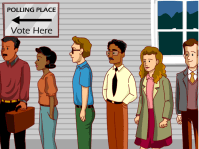 Making a choice about what type behavior you want from the president and other political leaders is not difficult. Do you want someone leading the country and/or representing you who lies, cheats, steals, and discriminates? If you would be proud of such behavior by your child or sibling, then Trump and his gang of enablers are for you.
 usrevolution5