• Home
  • Booklets/Grouped Entries
  • Tech Tsunami
  • List of Entries to Date
  • About the Author

usrevolution5

~ USA Headed for a 5th Revolution! Why?

usrevolution5

Category Archives: Back Asswards Thinking

#49 More Rain Under Roger’s Reign

10 Saturday May 2014

Posted by Jordan Abel in Back Asswards Thinking, General Motors, Stupid Is as Stupid Does

≈ Leave a comment

(Readers: Please note the blog about the 5th revolution in the US is constructed as a story. While not all chapters are linked, the story might be more meaningful by starting at the beginning.)

(Want a PDF version for Entries #1-10, #11-20, #21-30 formatted as an e-book? Entries #31-40 available soon. Click links for download. America’s 5th Revolution Volume I (Entries 1-10), America’s 5th Revolution Volume II (Entries 11-20), America’s 5th Revolution Volume III (Entries 21-30)

Scene: Jordan’s office with Matt, reporter for major publication. Matt has been asked by POTUS’ office to help write the story of GM. POTUS wants to use the information as part of a plan to help rebuild US manufacturing. Entries about GM begin #41.

Matt: “I don’t mean to beat up on Roger Smith but most of his decision seemed to erode GM’s strength.”

reporter on typewriter clipartJordan: “You want an interesting review of GM in the 1980’s? Watch the movie ‘Roger and Me.’”
Matt: “Michael Moore made that didn’t he?”
Jordan: “Yes. I think it was his first major movie.”
Matt: “How much of the movie is true and how much is Hollywood taking some liberties.”
Jordan: “Far more truth than fiction. But the important point….and what you and I have been talking about….is how the personality of the CEO affects the behavior of the corporation.”
Roger_and_Me_posterMatt: “So you think the movie is more about Squeaky than GM. I really should not call him that but the more we talk the more appropriate it seems.”
Jordan: “Yes, it was almost all about Squeaky…and the name is appropriate.”
Matt: “I’ll watch the movie but tell me some more decisions you think are important. We still need to talk organizational structure.”
Jordan: “One decision that rarely gets discussed is academic. Years ago and I think late teens early 1920’s, GM bought a university in Flint, MI that was designed to help train auto executives. GM renamed it General Motors Institute of Technology or GMI.”
University Clip ArtMatt: “GMI was a fully accredited university?”
Jordan: “All but the football team. Hard to get fans for football when you have University of Michigan and Michigan State so close. GMI offered degrees in engineering and business administration…and I’m not sure what else. But the main attraction was GMI co-op program.”
Matt: “Students combined school and work?”
Jordan: “School for 12 weeks, then work for 12 weeks, then back to school. Took five years to graduate.”
Matt: “Students worked mostly where…GM?”
Jordan: “Yes, but other companies sponsored students also.”
Matt: “During the work sessions, did students work in the same department each time?”
Jordan: “No, and that was a major benefit of the program. Students were assigned to work in virtually every section of the business – from the assembly line to the headquarters office.”
Assembly lineMatt: “Were classes all about GM?”
Jordan: “GM was often used as an example but students got a very well-rounded education.”
Matt: “How much was tuition?”
Jordan: “Students made enough money during the work sessions to pay for tuition and cover living expenses.”
Matt: “So families with limited income could send children to college at no cost. And, students were hired full-time at graduation.”
Jordan: “And one other major benefit. Matt, who are some of your closest friends?”

FriendsMatt: “People from my college days.”
Jordan: “Mine, too. And the same with GMI students. GMI students ended up knowing lots of people in GM – friends and people they worked for. I ended up as thesis advisor to 8-9 students, all of whom I got to know reasonably well. GMI students had a great network.”
Matt: “What about so-called ‘group think,’ where everyone starts to think alike. If everyone has the same educational background that can hurt creativity and innovation.”
Jordan: “I’m not sure what percent of GM middle and senior executives were GMI students. Maybe 15-20%.”
Matt: “So you don’t believe ‘group think’ was a problem. Then why did GM quit supporting GMI?”
Jordan: “To save money.”
Matt: “How much money?”
Jordan: “Believe it or not, I’ve heard is less than $10 million per year.”
pennies 2Matt: “You have to be kidding. $10 million is like pennies to GM. $10 mil is not even a rounding error.”
Jordan: “I know. But Smith dropped support. I also think GMI got caught up in Smith’s revenge against Flint.”
Matt: “Revenge against Flint? You mean Flint, MI.”
Jordan: “Yes. We’ll talk about that if we have time.”
Matt: “Did GMI close after GM dropped support?”
Jordan: “No. It regrouped and changed its name to Kettering University…and is doing quite well, thank you.”
Matt: “Is that the same Kettering as Sloan-Kettering Hospital in New York.”
Jordan: “One in the same. And a bit of trivia. You know what Kettering is famous for?”
Matt: “Haven’t a clue.”
Jordan: “Next time you start your car, thank Mr. Kettering, aka Boss Kettering. Among his many inventions was the electric starter. Until then you could only start your car with a hand crank.”
Matt: “How do you know all this stuff, anyway?”
Jordan: “Who knows?”
Matt: “So Squeaky closes GMI and GM loses the benefit of management having a great network. But was the network really valuable? You didn’t go to GMI and you had a wide network.”
Jordan: “One more story about the network and then we’ll move on.”
Matt: “Hit it.”
Jordan: “I’m now at Buick. A guy in one of the departments I manage is a GMI grad. Call him Bagel Bill – not his real name, of course.”
Bagel BillMatt: “So what does Bagel Bill do?”
Jordan: “His official title is something like Sales-Engineering liaison. I cannot remember exactly.”
Matt: “What’s that mean?”
Jordan: “All I know if there is a problem in engineering or manufacturing that is affecting Buick’s ability to sell cars, Bagel Bill makes a few phone calls, has coffee with some people and the problem is fixed.”
Matt: “Using his network of old GMI buddies.”
Jordan: “Exactly. What I did not appreciate fully was how many problems he prevented.”
Matt: “What do you mean?”
Jordan: “I think it was Einstein who said ‘Intellectuals solve problems. Geniuses prevent problems.’ If that’s true, old Bagel Bill was a genius.”
Matt: “Did GM really understand the value of guys like that? Or, was Bagel Bill just another employee?”
Jordan: “At least under Squeaky, GM never really understood how valuable these guys were.”
Matt: “Give me an example.”
Jordan: “Bagel Bill was about 55 years old when I started at Buick. Because of his time at GMI he was technically eligible for retirement. So, when GM decided to cut back on employees, I was directed to offer him a retirement package.”
Matt: “Did he accept it?”
Jordan: “No, thankfully.”
Matt: “So, what’s the story?”
Jordan: “A year or so later, GM goes on another program to retire older employees. And this time Bagel Bill took the package.”
Matt: “Then what?”
dutchBoy[1]Jordan: “Then what is all hell breaks loose. You know the story of ‘The Little Dutch Boy,’ who held back a flood by putting his finger in the dyke?”
Matt: “Of course.”
Jordan: “Well, Bagel Bill retiring was like the kid pulling his finger out of the dyke. We started to have problems with engineering and manufacturing that I never knew existed.”
Matt: “So Bagel Bill had taken care of problems…actually probably prevented problems…using his old buddy network from GMI.”
Jordan: “Stopping support for GMI also resulted in more employees not understanding how an auto company really works.”
Matt: “You were not GMI and you managed.”
Jordan: “True, but I had a lot of help from guys who had been around a long time, including a bunch of GMI grads.”
Matt: “What I just heard from you is a Smith created a double brain drain program. Retire the old guys who have vast institutional knowledge. Eliminate hiring new employees who have been trained in the auto business.”
Jordan: “You got it. Not very smart, huh? Plus, GM then obligates itself to a lifetime pension for the same people who could have been contributing to the company.”
Matt: “By the way, what did Bagel Bill do?”
Jordan: “Went to work for a GM supplier. So now GM is paying his pension and effectively paying again through the supplier.”

goofy006Matt: “And Squeaky was supposed to be a financial genius? If he did not understand how this was a lose-lose for GM, what did he understand?”
Jordan: “I didn’t know then and I don’t know now.”
Matt: “Let’s try to wrap up the Squeaky end. We need to close out the story.”
Jordan: “I hear you but we might need to add a session or two. I admit until we started to talk about the Smith era, I did not appreciate fully how bad his decisions were. It’s embarrassing.”
Matt: “OK, a couple more about Squeaky, then we have to move on. I’m interested in learning more about EDS and Ross Perot. You also need to more about Saturn.”
Jordan: “Let’s talk EDS and Perot. Like many companies in the 1980’s, GM was migrating to widespread electronic data bases. Also, like many companies, the data bases were not always integrated. Improvements were needed.”

84ba0dear-quill-penMatt: “Do you agree having an EDS-like company help with the integration was a valid idea?”
Jordan: “Yes. But GM had a large IT staff. It’s not as if GM had been operating using quill pen and papyrus paper. The IT staff could have used some outside guidance but GM did not…repeat not need to buy EDS.”
Matt: “What was the integration like? Did EDS flow seamlessly into GM?”
cowboy-clip-artJordan: “Horrible would be an understatement. The EDS culture reflected the cowboy personality of Ross Perot. We know best. Get out of my way.”
Matt: “But EDS had been very successful.”
Jordan: “True. But I am going to repeat what I’ve heard from every person who gets involved in automotive after spending time in another industry.”
Matt: “And that is…”
Jordan: “Within the first three weeks of getting involved, the person says, ‘Gee, automotive is a lot more complicated than I realized.’ And usually there are a couple of expletives in the sentence.”
Matt: “Did EDS experience the same thing?”
Jordan: “Yes, but most EDS staffers were reluctant to admit it.”
Matt: “What about Perot?”
Jordan: “He’s on the Board of Directors and GM’s largest single shareholder.”
Matt: “Was he as outspoken on the Board as he was in public about other issues?”
Jordan: “Possibly more so.”
Matt: “How did Squeaky react?”
Jordan: “The way Squeaky always reacted to someone challenging him. Except with Perot, he couldn’t fire him so Squeaky bought him out to get him off the Board.”
Matt: “How much did GM pay Perot to go away?”
Jordan: “$700 million in 1986.”
money_24077_lgMatt: “$700 million. Wow. That’s about $1.5 billion in today’s dollars.”
Jordan: “Plus, now GM owns EDS that no one inside GM wants, other than maybe Squeaky. And EDS employees are no longer lead by Ross Perot.”
Matt: “Sounds like a disaster.”
Jordan: “Worse. The money used to buy EDS and then take out Perot…all that money was diverted from product programs for the car divisions.”
Matt: “As you said earlier, the divisions were a bit tarnished but could have been polished up with some new product. Instead, the money is spent on buying EDS and then paying again to get Perot off the Board.”

2007-saturn-outlook-grille-badge-photo-54586-s-1280x782Jordan: “Ugly, huh? Probably qualifies as ‘stupid is as stupid does.'”
Matt: “What about Saturn.”
Jordan: “Saturn drained even more cash. We’ll do Saturn and then end up with the reorganization. But let’s take a break.”

#48 Squeaky Reigns and It Starts to Rain

07 Wednesday May 2014

Posted by Jordan Abel in Back Asswards Thinking, General Motors

≈ Leave a comment

(Readers: Please note the blog about the 5th revolution in the US is constructed as a story. While not all chapters are linked, the story might be more meaningful by starting at the beginning.)

(Want a PDF version for Entries #1-10, #11-20, #21-30 formatted as an e-book?  Entries #31-40 available soon.  Click links for download.  America’s 5th Revolution Volume I (Entries 1-10), America’s 5th Revolution Volume II (Entries 11-20), America’s 5th Revolution Volume III (Entries 21-30)

Scene: Jordan’s office with Matt, reporter for major publication.  Matt has been asked by POTUS’ office to help write the story of GM.  POTUS wants to use the information as part of a plan to help rebuild US manufacturing.  Entries about GM begin #41.

Matt:  “Jordan, my coffee is refilled.  Situation: early 1980’s.  GM struggling a bit but still the big kahuna.  What was GM’s market share?”

Jordan:  “About 45%, almost 5 of every 10 cars were still GM brands.”

reporter on typewriter clipartMatt:  “That’s a huge number.  What about management?  Was Mr. Murphy still chairman?”

Jordan:  “No, the Board had named Roger Smith chairman in the early 1980’s.”

Matt:  “Was he a clone of Murphy?”

Jordan:  (spitting out his coffee) “My apologies for my reaction.  Roger Smith was the complete opposite of Tom Murphy – 180 degrees apart.”

Matt:  “Different in what way?  Appearance?  Approach to business?  The way he worked with people?”

Jordan:  “Yes, yes and yes.  Let’s start with appearance.  Murphy could have been from Hollywood casting, looking very much the part of CEO.  Smith looked more like Mickey Rooney – short, a bit pudgy and reddish hair.  Plus his voice was high pitched.  In some management circles, he was known as ‘Squeaky.’”

17-mickey_rooney_theredlistMatt:  “You think his appearance made a difference?”

Jordan:  “Speculation on my part but Smith seemed to be conscious of his appearance.  To compensate for physical shortcomings, he tried to intimidate people – and I’d say effectively.”

Matt:  “Does Squeaky…I mean Roger Smith…create a team spirit?  Some leaders can be intimidating and still build a good team and gain respect.”

Jordan:  “Smith has a small cadre of henchmen.  If you were not part of the group, you had no say.”

Matt:  “What else happened?”

Jordan:  “Squeaky changed the focus of GM from selling cars and trucks to maximizing profits.”

Matt:  “Isn’t that what the CEO is supposed to do?”

Jordan:  “Earnings come from sales.  As simple as that is, Squeaky never seemed to understand that concept.”

Matt:  “No sales.  No earnings.”

Jordan:  “Think of it this way.  Take your house.  You can increase your spendable income by deferring maintenance on the house.”

Matt:  “But soon the house starts to deteriorate and eventually falls apart.   And then is worth nothing.”

Jordan:  “That’s exactly what Smith did to GM.  He spent the income on other items and did not address maintenance on the house.”

Matt:  “Give me some examples.”

2007-saturn-outlook-grille-badge-photo-54586-s-1280x782Jordan:  “The one take makes me nauseous to this day is Saturn.”

Matt:  “You don’t think starting Saturn was a good idea?”

Jordan:  “Possibly one of the dumbest ideas in GM history.  To fund Saturn, Smith withheld funds for product development from the other divisions.”

Matt:  “And you said that those divisions, while a bit tarnished, could have recovered with some new product.”

Every brand…and I mean every brand…has a period when the product and sales are a bit out of synch with market demand.”

Matt:  “But don’t kill the brand just because of a solvable problem…right?”

Jordan:  “Squeaky starting Saturn is like putting a very expensive addition on the house.  Then neglecting to maintain the main house.”

Matt:  “Jordan – is the story becoming too complicated?  POTUS wants to use lessons from GM to help formulate a manufacturing policy.  I’m concerned we are getting off track.”

Jordan:  “I understand the question and the concern.  The lesson for us is to stay focused on what GM did best, how did it fix problems rather than ignore problems and how it did not make solutions too complicated.  Then talk about what happened when GM ignored the basics.”

Matt:  “You think GM did not follow the lesson?”

Jordan:  “They missed all three.  And then paid the price…bankruptcy.”

Matt:  “OK they missed but the story needs more specifics.  So far you’ve mentioned Saturn and the negative effect of the other brands.  That needs more explanation.  And what else?

Jordan:  “Second major issue is reorganizing the company in a way that destroyed the internal brand identity and created chaos.  Third is buying non-core businesses depleted capital further.”

Matt:  “Such as…?”

Jordan:  “Such as buying Hughes Aircraft and EDS…Electronic Data Systems.  When your core business needs fixing what is the logic of buying businesses that do not generate revenue?”

Matt:  “Was there surplus cash?”

Jordan:  “No.  The company was short of cash.  The GM money machine – the car divisions – needed some cash to freshen the product.”

Matt:  “And the cash gets spent on Saturn, Hughes and EDS.”

Jordan:  “You got the picture.”

Matt:  “I have a question for you I have never heard addressed.”

Jordan:  “Fire away.”

Matt:  “Do you think Squeaky…pardon me, Roger Smith…envisioned himself as the second coming of Alfred P. Sloan?”

Jordan:  “Funny you ask that.  I’ve had the same thought for a long time.  Smith started at GM when Sloan was still involved, albeit later in his career.”

Matt:  “So you think the question is not whacko.”

Jordan:  “Given Smith’s actions, I sincerely believe he thought he could become Alfred P. Sloan II, as it were.  Look at the decisions.”

Matt:  “Keep going.”

Jordan:  “He starts Saturn.  And yes, we need to spend more time talking about why it was such a debacle.  Then buys EDS and Hughes.  Reorganizes the company away from the Sloan model.  Stresses earnings per share over market share.  Then he targets the UAW, especially in Flint.”

Matt:  “But all those actions seem contrary to Sloan’s model.  What Sloan did was to build GM.”

Jordan:  “I agree.  Smith’s decisions we have talked about…and there are many more…seem to be the exact opposite of the model used to build the GM economic engine.”

Matt:  “Ironically, his decisions seem to be aimed at destroying GM, not rebuilding it.”

Jordan:  “I know.  Head scratching, isn’t it.  Matt, I need a short break.  Talking about this is painful.”


#44 Sloan’s Segmentation Works, then Trashed by Bean Counters

23 Wednesday Apr 2014

Posted by Jordan Abel in Back Asswards Thinking, General Motors, Innovative Thinking: Ideas and Products, Societal Issues

≈ 1 Comment

(Readers: Please note the blog about the 5th revolution in the US is constructed as a story. While not all chapters are linked, the story might be more meaningful by starting at the beginning.)

(Want a PDF version for Entries #1-10, #11-20, #21-30 formatted for tablets and e-books?  Entries #31-40 available soon.  Click links for download.  America’s 5th Revolution Volume I (Entries 1-10), America’s 5th Revolution Volume II (Entries 11-20), America’s 5th Revolution Volume III (Entries 21-30)

Scene: Jordan’s office with Matt, reporter asked by POTUS to help Jordan write story why GM was so successful and why it failed.  Report will be used as part of effort to rebuild US-based manufacturing.

Jordan:  “Ready for some more GM history under Sloan?”

reporter on typewriter clipartMatt:  “Have my coffee and ready to listen.”

Jordan:  “In addition to the financial discipline, Sloan segmented GM’s car lines.”

Matt:  “Segment in what way?”

Jordan:  “I know the term segmentation seems obvious today but it was not going on 100 years ago.  At the time there were 20 or more car manufacturers with a wide variety of products.

Matt:  “So GM had several brands at the time, didn’t It.?”

Jordan:  “Buick, which was really the cornerstone for GM, Cadillac and Oldsmobile.”

Matt:  “What about Chevrolet and Pontiac?”

Jordan:  “Chevrolet became part of GM in 1918.  Pontiac in the mid-1920’s.”

Matt:  “Saturn was when?”

Jordan:  “Saturn, Hummer, Saab are part of GM post 1980.  We’ll talk about those brands later.  For this paper we’ll skip some other GM brands – Oakland and LaSalle and all the brands sold outside the US – Opel, Vauxhall, Holden’s.  Including them will just confuse the issue.”

APSMatt:  “So under Sloan GM analyzes the car market, segments it and then decides on roles for the different brands.”

Jordan:  “Exactly.  What he…I mean GM…tried to implement was clarity.  Clarity so people outside the company knew what each brand stood for.”

Matt:  “And so people inside the company knew what each brand stood for.”

Jordan:  “You’ve got it.  Remember, at the time Ford was selling only the Model T.  GM models were higher priced so buyers needed to understand what each brand stood for and why it was worth more money.”

Matt:  “What was the segmentation strategy?”

Jordan:  “A car for every price and purpose.  The car market is still emerging.  Most of the segments we have today did not exist.”

Matt:  “Chevrolet covered the lower end.  Oldsmobile, Buick middle to lower upper end.  Cadillac the higher end.  Pontiac filled a gap just above Chevrolet.  Even before Pontiac, GM offered cars for most everyone.”

Jordan:  “Many buyers wanted to move away from the Model T one size fits all.  After owning a couple of Model T’s…that look identical to every other Model T…buyers wanted something different.”

Matt:  “Sloan’s segmentation is another idea that seems so simple.  How successful was it?”

Jordan:  “GM, actually Chevrolet, outsold Ford Motor Company for the first time in 1926 or 1927.  While I think Sloan was a genius, Henry Ford helped GM by sticking with the Model T too long.  During Ford’s changeover to the Model A, GM became the #1 seller.”

Matt:  “Did Ford bounce back and overtake GM?”

Jordan:  “Since then GM has outsold Ford nearly every year, if not every year.  GM was the #1 car company until 2008, when Toyota outsold it worldwide for the first time.  The companies have switched leads several times since.”

Matt:  “When was GM at its peak?”

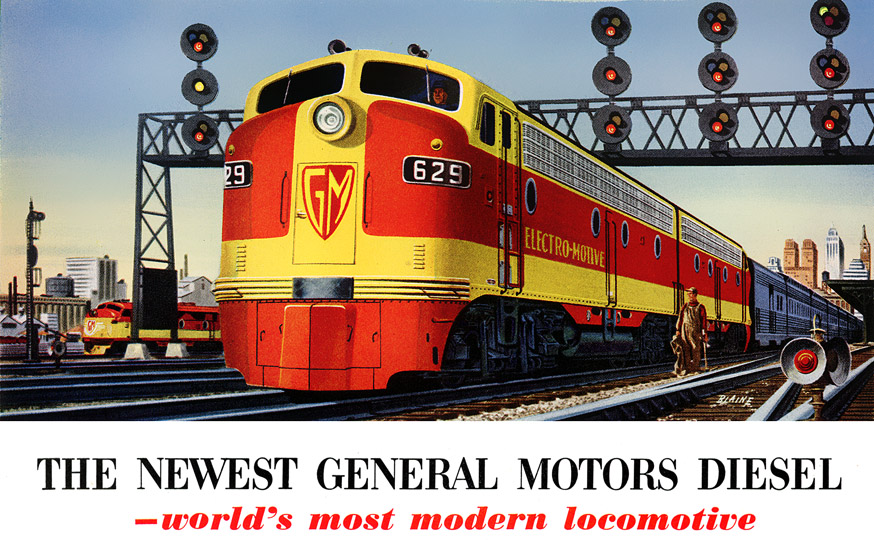
Jordan:  “In the 1950’s and 1960’s, GM accounted for more 5 of every 10 cars sold in the US.  GM also has the #1 brand refrigerator and the #1 train locomotive.

S052050Matt:  “What?  GM had the #1 selling refrigerator and the #1 selling locomotive?”

Jordan:  “And to help finance cars, GM started a finance company – General Motors Acceptance Corporation.  In fact, GM was so dominant in so many areas the Federal government began an anti-trust investigation.”

Matt:  “What a change.  Anti-trust and too large to government bailout.  Hard to imagine what a machine they were.”

Jordan:  “That’s why POTUS wants this series of articles.  What lessons can we take away that can be applied today?”

Matt:  “So GM peaks in the 1960’s or maybe later and then starts to slide.  Did GM management quit following Sloan’s principles?”

Jordan:  “Yes but not all at once.  We’ll talk more about this later but in the early 1980’s the GM CEO declared that profitability was more important than market share.”

Matt:  “Doesn’t a company have to have market share to generate revenue…and profit?”

Jordan:  “Low market share leads to lower total profits.  The percent profit per car might look good but at the end of the day the stack of dollar bills is smaller.”

Matt:  “What was the rationale?”

Jordan:  “GM could ‘optimize’ earnings and shareholder value by focusing on selling only cars and trucks with certain profit.”

Matt:  “What happened to Sloan’s segmentation scheme?”

Jordan:  “Part of the plan to reduce cost was to reduce the differentiation between the brands.  Doing so would allow certain development costs to be spread over more cars…and customers would never know, or so they thought.”

Matt:  “With this plan, some programs that made Chevrolet different from say Pontiac would be reduced or eliminated.”

Jordan:  “Exactly.  The plan was that separation between Buick and Oldsmobile could also be reduced.  Even Cadillac would be affected.”

Matt:  “But some of this narrowing of brand differentiation started before the 1980’s.”

Jordan:  “True.  But if you look at GM market share, the point of inflection is in the 1980’s.

Matt:  “Did the plan work?”

Line Chart FallingJordan:  “In one word, no.  In fact, the plan made an already difficult situation worse.  GM share at the beginning of the 1980’s was about 45%.  By the end of the 1980’s it was about 35%.”

Matt:  “How much loss is that?”

Jordan:  “1.2-1.5 million cars and trucks per year.”

Matt:  “How many assembly plants is that?”

Jordan:  “Equal to all the production of 5-6 assembly plants per year.  5-6 plants two shifts, 60 cars or trucks per hour, all year long.  Not one year but every year.  So you think the planned worked?”

goodbye-1l842i0Matt:  “They waved good bye to 5-6 assembly plants?  How much money did they wave good-bye to?”

Jordan:  “The numbers are staggering.  Every year GM no longer sold 1,500,000 cars and trucks it used to sell.  In today’s dollars GM sales price to dealers averages about say $30-35,000.”

Cash

Matt: “So GM waves good-bye to $50 billion…$50 billion dollars per year…out the door.  Good-bye.  Whose idea was this?”

Jordan:  “Only a bean-counter could think up such a back-asswards strategy.  Show me one company that saved its way into prosperity?  To earn money companies need to generate revenue.  You cannot make up profit on $50 billion in revenue by cutting expense.  The math does not work.”

Matt:  “I am almost speechless.”

Jordan:  “You should be speechless.  It’s a staggering number.  And we’ve not talked about what happened to all the GM customer and GM employees as a result.”

Matt:  “I see now why you insist this story is more than a numbers game.  It is about management and how it influences the culture of the organization.”

Jordan:  “I’ll give you one more arrow in the culture quiver.  In the 1990’s a then GM CEO had the audacity to state that Sloan’s segmentation was no longer relevant.”

Matt:  “Was he right?”

Jordan:  “Segmentation criteria might get tweaked a bit over time but the fundamentals do not.  Segmentation in the 1990’s was as important as in the 1920’s.”

Matt:  “Why do you think he claimed Sloan’s segmentation was no longer relevant?”

Jordan:  “I don’t know for certain.  But given his background, he thought the reason GM lost so much market share was Sloan’s segmentation.  He never considered that by ignoring Sloan’s segmentation, especially in the 1980’s, GM lost market share.”

Matt:  “Another case of back asswards thinking.  May we take a break, please?  My head hurts.”

#42 The GM Story: Safety Played 2nd Fiddle?

16 Wednesday Apr 2014

Posted by Jordan Abel in Back Asswards Thinking, General Motors, Stupid Is as Stupid Does

≈ Leave a comment

(Readers: Please note the blog about the 5th revolution in the US is constructed as a story. While not all chapters are linked, the story might be more meaningful by starting at the beginning.)

(Want a PDF version for Entries #1-10, #11-20, #21-30 formatted for tablets and e-books?  Entries #31-40 available soon.  Click links for download.  America’s 5th Revolution Volume I (Entries 1-10), America’s 5th Revolution Volume II (Entries 11-20), America’s 5th Revolution Volume III (Entries 21-30)

Scene: Jordan’s Office.  Reporter assigned by POTUS’ office arrives.

Jordan:  “Matt, it has been a long time since we chatted.”

reporter on typewriter clipartMatt:  “I’m trying to think of the last time I interviewed you.  A lot less gray hair on both of us.  But, anyway does not matter.”

Jordan:  “You’re still with my favorite paper but most of the bylines are articles about technology.”

Matt:  “True but apparently POTUS read some earlier pieces I wrote on automotive and thought I was right for the job.”

Jordan:  “I’m delighted you’ve been assigned.”

Matt:  “Keep in mind I still want to be as objective as possible so you might get some pushback from me on certain issues.”

Jordan:  “Understood.  In fact, feel free to challenge me at any time.  The gist of the story is more about culture than anything else.  And my perspective.  Let me know if you think I am being too biased”

GM,_logoMatt:  “I’ll tell you what would help.  A short lesson in GM history.  Not all the gory details but an overview would really help me put the project in context.  And make sure you cover the financial results.  I know you think the issue is more culture but the financial results tell a story, too.”

Jordan:  “I agree that the financials tell a story.  A great story for many years.  Before we start the history lesson, are there any pressing issues?”

Matt:  “Yes.  This baffles me.  The ignition switch — how did GM ignore a safety problem with the switch for what 10 years?  How does that stuff happen?”

Jordan:  “My view is the failure to fix the ignition switch – a $1.00 part at most – is the culmination of 30+ years of a management team and Board of Directors focused on profits and not the customer.”

Matt:  “Your tone of voice tells me how angry you are.”

Jordan:  “Angry is an understatement.  A few clowns decided to ignore very strong evidence of a safety problem.  The cost to fix was less than $1.00.”

Matt:  “Why do you think they ignored the evidence?  The fix was, from all indications was simple and as you said, less than $1.00.”

Jordan:  “You tell me why they ignored it.  That kind of behavior qualifies GM as stupid and I think immoral.”

Matt:  “What about criminal?”

Jordan:  “I am not at Department of Justice and do not have all the facts.  But not to fix a known safety problem for $1.00.  What’s wrong with those people?”

Matt:  “Did you ever experience any decisions where cost overrode safety?”

Jordan:  “No.  Just the opposite.  I recall my days at Buick when we were going to add some piece of equipment that increased the weight of the car to a new category.  I don’t remember which car but the weight was only a couple of pounds over.”

Matt:  “What happened?”

Jordan:  “The tire-and-wheel engineer interrupted the presentation and said the car needed a larger tire and wheel to handle the added weight.”

Matt:  “Even though it was only a couple of pounds?  Was there any discussion or resistance?”

Jordan:  “None.  The guy had the power of a king.  When it came to safety, you did what he said.  No questions asked.”

Matt:  “So safety was an overriding concern.”

Jordan:  “Absolutely.”

Matt:  “What happened to that culture?”

Jordan:  “That is a key issue.  To help answer that question let’s go back to the beginning of General Motors.”

Matt:  “Alright.  But I need a break first.”

Jordan:  “So do I.  How ‘bout 10 minutes?”

#40 Why Manufacturing in the US Can Be Less Expensive

09 Wednesday Apr 2014

Posted by Jordan Abel in Back Asswards Thinking, Causes of the Revolution, Economics, Innovative Thinking: Ideas and Products, Possible Solutions

≈ 1 Comment

Note: Entry #41 begins a series of blogs about General Motors.  How did an apparent culture change over time likely lead to bankruptcy and an apparent disregard for addressing safety issues.  Such actions by corporations affect societal attitudes.

(Want a PDF version for Entries #1-10, #11-20, #21-30 formatted for tablets and e-books?  Click links for download.  America’s 5th Revolution Volume I (Entries 1-10), America’s 5th Revolution Volume II (Entries 11-20), America’s 5th Revolution Volume III (Entries 21-30)

Scene: Jordan met former college economics professor. Just got a coffee refill.

Professor: “A few minutes ago you asked why US companies manufacturer electronic products in China when albert_einstein_professor croppedmuch of the production is automated.”

Jordan: “I really do not understand. But I think the #1 reason by far is perceived lower labor costs.”

Professor: “The perception of lower labor costs, not necessarily the reality of lower labor costs.”

Jordan: “Let me give you some personal experience. I realize data points of one are dangerous but the more I talk to people about their real experiences, the more my experience seems typical.”

Professor: “This should be interesting.”

Jordan: “I was recruited to run a small, publicly held company in northern California.”

Professor: “Lucky you. Near wine country?”

Jordan: “Smack in the middle of it. The area is great for grapes and apples but not what one calls a hotbed for manufacturing.”

Professor: “What was the product line?”

Jordan: “Electric bikes and scooters, all of which are assembled at company facilities in the same town.”

Professor: “What’s the issue? The company was manufacturing, or at least assembling in the US”

Jordan: “The Board of Directors wants to move assembly to China and lay off many of the US employees.”

Professor: “Because labor costs were too high?”

Jordan: “That’s what they thought but none of the Board members had any real manufacturing experience.”

Professor: “They could have been right. If the area is not a major manufacturing center, the costs could be too high.”

Jordan: “My analysis? To understand true labor costs we also needed to analyze other systems. When I started average production was 37 scooters per day. Some days production was 75 scooters and other days production was zero scooters.”

Professor: “Seems like a production scheduling issue.”

Jordan: “Scheduling and parts sourcing at a minimum. The company did not fully evaluate how quality of parts could affect the rate of production.”

Professor: “Give me an example.”

Jordan: “The scooter drive system included a sprocket that linked the electric motor and a belt, which turned one of the wheels. The price of the sprocket appeared cheap…”

Professor: “But further analysis…”

Jordan: “Further analysis indicated 80% of the parts were not to specifications. As a result the output of the motor assembly line was lower. Even worse was when the workers tried to make the sprocket fit, they sometimes inadvertently damaged the motor, which caused more problems.”

Professor: “So to get 100 good sprockets you had to buy 500 sprockets. Where were the sprockets manufactured? Let me guess…China.”

Jordan: “Yes. Look, China makes some quality products. I asked the chief engineer to call a contact of mine in automotive. We sent the drawings. He quoted parts from a US manufacturer that cost 30% less and guaranteed all parts were to spec.”

Professor: “The individual part cost 30% less?”

Jordan: “Each part. Not the total but each part.”

Professor: “Good move. Quality goes up, production goes up and purchase costs go down and warranty goes down. As if that’s not enough, anything else?”

Jordan: “We made some changes to the assembly line.”

Professor: “Equipment and automation?”

Jordan: “No capital equipment or automation, just basic layout and processes. Most of the ideas came from the employees. We also implemented some recommendations from lean manufacturing techniques…but all ideas you would learn before the first coffee break on the first day of class.”

Professor: “You’re telling me you used very basic information to begin to make improvements.”

Jordan: “I am embarrassed to tell you how basic. We literally taped off work stations, color-coded hand tools by worker, bought a few hand carts and implemented employee suggestions.”

Professor: “What happened to production?”

Jordan: “Give me a guess. In just 7 months how much do you think production increased?”

Professor: “50%? No make it 100%. You doubled production.”

Jordan: “Try a higher number.”

Professor: “OK 300%. Production increased from 37 to 150 per day.”

Jordan: “Try 37 to 250 per day. Well above a 500% increase in production with basically the same equipment…and workforce.”

Professor: “You didn’t add any people?”

Jordan: “We added a few in shipping because they could not keep up. But nowhere else.”

Professor: “What about labor costs? How much more did you pay people?”

Jordan: “We gave people bonuses for reaching certain targets. Here’s an interesting statistic. Take the US labor rate and bonus at the seven months and double it.”

Professor: “So you are going to pay the US twice as much?”

Jordan: “Yes. Now take the labor cost for products made in China and make it zero.”

Professor: “Double the labor cost in the US and make labor cost in China zero…free.”

Jordan: “And tell where it’s cheaper to build the product?

Professor: “I know this is a set up. Cheaper in the US.”

Jordan: “Hard to believe but it is true.”

Professor: “That’s remarkable. But seems like an extreme example.”

Jordan: “I agree the percent increase in production is unusual but not the savings in other costs. What companies often overlook are the less obvious costs – lead time between order and receipt of goods. Cost of not being able to adjust production quickly for parts changes or even a bad part. You might end up with container loads of product before the change.”

Professor: “What is the lead time between ordering and receipt.”

cargo_shipJordan: “Usually months. Unless you air freight, you have 6-8 weeks shipping time on the ocean versus days by train or truck in the US.”

Professor: “Is quality control really an issue?”

Jordan: “Quality control is a problem for any manufacturing company. But when your supplier is thousands of miles away and with long lead time, the impact of problems grows exponentially. Plus, the cultures are different when it comes to quality. Also ask companies how difficult it is to protect IP.”

Professor: “Intellectual property?”

Jordan: “Yes. Product knock-offs are a real problem.”

Professor: “In your example labor costs became a very small piece of the overall cost. Why do you think the companies continue to source outside the US when total cost seems to be cheaper when manufacturing in the US?”

Jordan: “That’s my frustration. And let’s take electronics specifically. Virtually all of the manufacturing and assembly of many electronic products are automated. Why go outside the US?”

Professor: “US offers competitive…and maybe lower cost…and faster turnaround time.”

Jordan: “That’s why we need a national policy to get more companies to start manufacturing in the US. Even with automation, there will be more people employed in the US. And we can start to rebuild wealth.”

Professor: “The administration can begin rebuilding with some macro-economic policies. The first recommendation might sound silly but the administration needs to promote buying products made in America. I’m not talking about everything but products that can be made here at a very competitive price.”

Jordan: “Are you suggesting that as a policy?”

Professor: “Jordan, you know as well as I know the power of persuasion. If the president begins to discuss in understandable terms why people should buy products made in America, then customers will begin to force companies to change.”

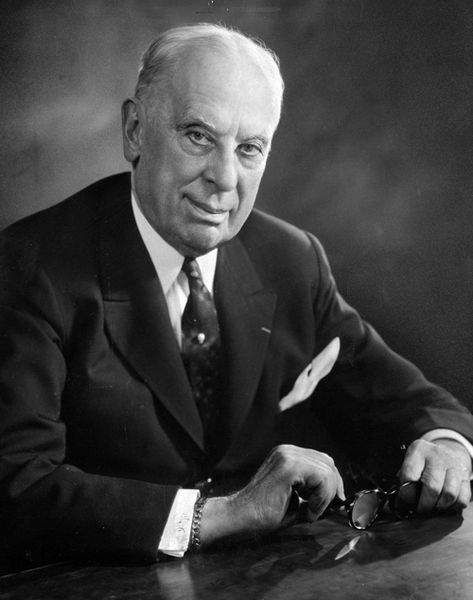
fdr_~FdrJordan: “You talking about fireside-chat talks, like FDR did?

Professor: “Have you ever listened to those chats…or read the transcripts? If you have not, you should. FDR presented major issues and solutions in an understandable way.”

Jordan: “None of the hyperbole of today?”

Professor: “Incredibly straightforward. You need to listen to them. If fact, all politicians Firesideneed to listen to them.”

Jordan: “A series of fireside chats might be a great start.”

Professor: “The chats will give you time to refine some recommendations.”

Jordan: “OK, we have a plan. I’ll propose fire-side chats. Can you help with the longer-term recommendations?

Professor: “Thought you would never ask. It would be an honor. ”


#38 Duke Refuses to Clean Its Ash

02 Wednesday Apr 2014

Posted by Jordan Abel in Back Asswards Thinking, Causes of the Revolution, Societal Issues, Stupid Is as Stupid Does

≈ Leave a comment

(Readers: Please note the blog about the 5th revolution in the US is constructed as a story. While not all chapters are linked, I think the story will be more meaningful by starting at the beginning.)

Want a PDF version for Entries #1-10, #11-20, #21-30 formatted for tablets and e-books?  Click links for download.  America’s 5th Revolution Volume I (Entries 1-10) America’s 5th Revolution Volume II (Entries 11-20) America’s 5th Revolution Volume III (Entries 21-30)

Scene: Jordan’s office with JC — conversation continues. 

Jordan: “OK, JC, we’ve got our coffee refill. What else qualifies Duke Energy for ‘Stupid Is as Stupid Does’?”

JC: “There are several. #1 is Duke, in their terms, wants to take a disciplined, fact-based approach to evaluating long-term solutions for coal-ash basins.'”

Jordan: “What more facts do they need?”

010414_1635_16TeachingS1.jpgJC: “Ya’ got me. Of course earthen dams can leak. Some of the coal ash earth dams have been there for decades. And CEO Goody-Two-Shoes claims Duke needs more time to study.”

Jordan: “That does seem a bit bizarre. Duke is supposed to monitor dams so where are the data?”

JC: Jordan, that coffee must be clearing your brain. You are starting to understand why people are so upset with Duke.”

Jordan: “What else are they doing?”

JC: “Duke wants to restrict the release of information it gives to legislators and environmental groups. Let me read what an attorney said who is representing Duke. Now Duke has an outside attorney as a talking head Goody Two Shoes IIinstead of a Duke employee. Here goes, ‘Duke Energy strongly denies it has in any way knowingly violated the law or committed a crime.’ OK, if no crime, then why outside counsel and not CEO Goody-Two-Shoes talking?”

Jordan: “Some info is private.”

JC: “Mmm. The info is about violations of environmental laws. And they want to withhold the info from the NC DNR.”

Jordan: “What’s their rationale?”

JC: “Duke claims the info might be used in a civil lawsuit against them.”

Jordan: “No info to regulators and no info to people who might want to sue Duke.”

JC: You got it. Goody-Two-Shoes heads a monopoly that is supposed to be monitored by government. Everything smells like Duke violated the law. Now, Duke refuses to provide any info and therefore no one can prove any wrongdoing.”

Jordan: “Are you implying a cover-up?”

JC: “I am not implying anything. I just look at the facts. Duke dumps coal ash into the Dan River, causing a major pollution problem. The NC DNR finally decides to investigate. And now Duke does not want to provide any info. What does that smell like to you?”

Jordan: “At a minimum, smells like a lot of arrogance.”

JC: “And what has been the pattern when companies display a lot of arrogance?”

Jordan: “Some type of wrong doing.”

JC: “And one other little item about Duke.”

Jordan: “What’s that?”

JC: “Gee, somehow Duke was caught dumping coal slurry into some river in eastern North Carolina.”

Jordan: “Illegally?”

JC: “They had a permit to release small amounts. But they were pumping many times over the limit.”

Jordan: “Who discovered it?”

JC: “Believe it or not, the NC DNR. As tight as Duke is…or at least was…with the DNR, the violation must have been really gross for DNR to report Duke.”

Jordan: “What you’ve told me is Duke seems to have a pattern of ignoring the law and/or viewing any fines if they get caught as a cost of doing business.”

JC: “The cost of which they probably figure out how to charge back to rate payers. I don’t condone that behavior from any organization. If a company acts that way, usually you can boycott them and buy a product from someone else.”

Jordan: “But not Duke, because it is a monopoly.”

JC: “Hey, he does understand. Duke is a monopoly that’s run amuck. Now, Jordan, what action is the government going to take.”

Jordan: “Good question. People need electricity. Converting Duke to a publically owned utility is an option but fraught with problems…and lots of lawsuits.”

JC: “What about changing CEO’s?”

Jordan: “The CEO sets the tone for the organization. We might be able to do that.”

JC: “Who was the former CEO at Duke? Something Rogers. All I can think of is Roy Rogers.”

Jordan: “It wasn’t Roy Rogers.”

JC: “But the guy was a cowboy. Seemed to shoot any executive that might question his judgment.”

Jordan: “He did fire his announced successor and then reinstated himself as CEO.”

JC: “Then he picked Goody-Two-Shoes to succeed him.”

Jordan: “The Board of Directors approved.”

JC: “Jordan, don’t be stupid again. Roy Rogers picked the Board members. Why wouldn’t they approve Two-Shoes?”

Jordan: “Alright. I see two major issues with Duke that flame public outrage. #1 is a monopoly disregarding the law. #2 is a monopoly that wants to withhold information from regulators and the public.”

JC: “Duke’s behavior is what leads people to seek revenge…like this revolution. Changing the CEO seems like a great first step.”

Jordan: “Let me get started.”

JC: “Don’t take too long. Duke is a loose cannon and the ship is headed into rough waters.”

Jordan: “Aye, aye, captain. I’ve got my orders. By the way, nice to see you JC.”

JC: “You too Jordan. Good luck.”


#37 Cleaning Duke Energy’s Ash

29 Saturday Mar 2014

Posted by Jordan Abel in Back Asswards Thinking, Causes of the Revolution, Societal Issues, Stupid Is as Stupid Does

≈ Leave a comment

(Readers: Please note the blog about the 5th revolution in the US is constructed as a story. While not all chapters are linked, I think the story will be more meaningful by starting at the beginning.)

Want a PDF version for Entries #1-10, #11-20, #21-30 formatted for tablets and e-books?  Click links for download.  America’s 5th Revolution Volume I (Entries 1-10) America’s 5th Revolution Volume II (Entries 11-20) America’s 5th Revolution Volume III (Entries 21-30)

Scene: Jordan’s Office with JC

Jordan: “JC, nice to see you. What brings you here?”

JC: “Can you believe it?”

010414_1635_16TeachingS1.jpgJordan: “Believe what?”

JC: “The State of North Carolina gets dumber by the day.”

Jordan: “What are you talking about?”

JC: “I understand now why the revolution started in Charlotte. People…normal people anyway…had become so frustrated with the stupid actions of the NC legislators and some NC CEO’s.”

Jordan: “Are you saying ‘stupid is as stupid does’?”

JC: “Exactly. Supposedly smart people doing or saying stupid things.”

Jordan: “OK, what’s the issue?”

JC: “Two issues. One is the NC legislators cut the budget for staff of the Department of Natural Resources…they call it something else in NC. The budget cuts take effect about a month after a major coal-ash spill. Duh, folks, what are you doing?”

Jordan: “What’s the second issue?”

JC: “Duke Energy wants customers to pay for cleaning up the coal ash, which means Duke wants a rate increase.”

Jordan: “The cost of the cleanup is an expense.”

JC: “Jordan, sometimes you could join the ‘stupid is as stupid does’ club. Duke creates an environmental hazard because of their own actions and now wants customers to pay for their mistakes. I do not understand the logic.”

Jordan: “Duke needs to maintain profits in order to attract investors.”

JC: “Make me throw up. That’s the same stupid reasoning that allows Duke and other large companies to disregard many laws.”

Jordan: “What happens if Duke cannot recover expenses and ends up filing for Chapter 11 bankruptcy?”

JC: “Maybe they should go Chapter 11. Duke blatantly disregards environmental laws. Duke must think that as a monopoly it has no obligations to the public.”

DukeEnergy CroppedJordan: “OK, so Duke goes Chapter 11. Who is going to operate the utility?”

JC: “Another company or convert it to a public utility. There are lots of public utilities – TVA, Santee Cooper in SC, Los Angeles Department of Water & Power…and many others. It’s not a new business model.”

Jordan: “You are really upset.”

Mickey-Mouse-fingerJC: “You should be, too. Duke and its goody-two-shoes CEO are basically given the public the finger.”

Jordan: “What do you suggest?”

JC: “First, Duke eats the cost of the clean up. If executives salaries have to be cut to pay for it, then so be it.”

Jordan: “You are getting into touchy territory.”

JC: “Someone has to be held responsible. And it cannot be the public.”

Jordan: “The Duke CEO was not in charge when the coal-ash ponds were started.”

JC: “Jordan, might I remind you, the CEO has been with Duke a very long time and was the Chief Financial Officer before being promoted. You think the CFO was unaware of the problem and/or had no authority? If so, then a lousy CFO.”

Jordan: “I hear you but solving the coal-ash problem is complicated.”

JC: “What is so complicated? Duke puts coal ash in a pond. The pond is not well secured and prone to leaks and spills. Fix the problem.”

Jordan: “Enforcing compliance with these laws is really up to the states – North Carolina and other states.”

JC: “Help!! Please someone, make him listen. Let me remind you the State of North Carolina cut the staff that is supposed to enforce compliance by Duke. Comprende?

Jordan: “OK. Other than a few no-government-under-any-circumstances people, this issue does seem appropriate for Washington to get involved.”

JC: “Finally he understands. Jordan, working with you makes my head hurt sometimes.”

Jordan: “What do think Washington should force Duke to do?”

JC: “At a minimum, relocate the coal ash. Right now many of the ponds are on rivers or lakes used as a source for public drinking water.”

Jordan: “Well, if there is a spill then the water treatment plant should be able to handle cleaning it up.”

JC: “Do you have any brains left? No, the water-treatment plant cannot remove all the arsenic, cadmium and other stuff that’s in the coal ash. Plus, what happens to all the fish and wildlife when the coal ash dumps into the river or lake? Please, get him a brain.”

Jordan: “Alright, so we have Duke move the coal ash. Where?”

JC: “Jordan. I don’t know. But there are practical solutions. Can’t you make bricks or blocks out of this stuff? Isn’t there a way to sort out the heavy metals?”

Jordan: “JC, you’re making my head hurt. I need some coffee then we’ll continue.”

#36 New Category: “Stupid Is As Stupid Does”

26 Wednesday Mar 2014

Posted by Jordan Abel in Back Asswards Thinking, Background Stupid Is as Stupid Does, Causes of the Revolution, Stupid Is as Stupid Does

≈ 1 Comment

After several weeks of thinking about it, I decided to introduce a new category, “Stupid Is as Stupid Does.”

Entries will be based on events that are possible contributors to the cause of the Revenge Revolution. Events will be selected based severity and the potential for long-lasting impact. Some one-time events might have a severe and long-lasting impact – the Exxon Valdez spill, for example, or even worse an assassination. Other events, which individually seem unimportant, might cumulatively result in a severe and long-lasting impact. An example is daily discharge of small amounts of pollutants into a river or lake eventually renders the body of water uninhabitable. Another is continual restrictions on individual rights.

stupid Resized clipart-illustration-443616Some events will seem obvious, some more abstract. To qualify for “Stupid Is as Stupid Does” the event needs to be outside what one would consider “rational thinking.” When such events occur many people pause and ask, “What were they thinking?”

Lest those in glass houses not be accused of throwing stones, I am the first to admit we all make mistakes. But our individual goal should be to keep damage from mistakes to a minimum. When there is adequate time to analyze a situation and make a correction and no correction is made, then one becomes eligible for “Stupid Is as Stupid Does.”  Only “Stupid Is as Stupid Does” events will be included that could become contributors to the Revenge Revolution.

Ideally selection of the “Stupid Is as Stupid Does” decisions will not be based on “20-20 hindsight,” or using a sports term, based on “Monday-morning” quarterbacking.  The goal is to make the selection real time, recognizing there will be a short time lapse between the trigger event and the blog entry.  Further becoming “eligible” for the “Stupid Is as Stupid Does” category likely will require more than one decision.

Because repeated SIASD decisions are required for eligibility, the individual or organization likely suffers from a systemic failure to understand the implications of the action taken.  In very simple terms, “They just don’t get it.”

A series of decisions by two companies prompted the idea to develop this category.  The events were (1) Duke Energy’s decisions surrounding management of coal ash from power plants; (2) General Motors’ decision to not recall several model years’ production of vehicles with a clear safety problem.  More about each company’s actions will be detailed in a future entry.

After deciding to that a SIASD section would be worthwhile, I thought the number of entries would be infrequent.  I mean, really, can people and organizations be that stupid?  The answer is…unfortunately, yes.

One more example and then on to the SIASD write-ups.  In the March 16, 2003 “Review” section of the NY Times, there was an article about the lack of black characters in children’s books.  The article cited a study indicating only 93 of 2,300 children’s books published in CY2013 were about children of color.

Pardon me for the obvious, folks, but the solution is simple.  Encourage more writers of color to write about children of color.

Publishing a book has never been easier.  An author does not need an agent, not need a publisher.  E-books can be published at zero cost.  Yes, that is zero cost.  Understand?

In an earlier blog entry, I asked the question whether Black History Month was a benefit or detriment.  To me, citing the low percentage of children’s books with characters of color, with particular emphasis on black characters, is an example of whining and not stepping up and solving the problem.

The Internet does not discriminate.  There is no one, repeat no one, stopping writers of color from publishing more children’s books with characters of color.  Go solve the problem.

A point of clarification so some readers don’t get all exorcised.  Is discrimination a problem?  Yes.  Are some blacks denied certain rights?  Yes.  But groups that believe they are discriminated against, however one defines discrimination and/or defines a particular group, need to lead the effort to reduce the discrimination.  One way to lead is solve problems that can be solved by the group.  Increasing the number of children’s books with characters of color is about as easy a problem to solve as it gets.  Go do it.

Next entry: Cleaning Duke Energy’s Ash

#35 US Solar Efforts Back Asswards? (con’t)

22 Saturday Mar 2014

Posted by Jordan Abel in Back Asswards Thinking, Innovative Thinking: Ideas and Products, Possible Solutions

≈ Leave a comment

(Readers: Please note the blog about the 5th revolution in the US is constructed as a story. While not all chapters are linked, I think the story will be more meaningful by starting at the beginning.)

Want a PDF version for Entries #1-10, #11-20, #21-30 formatted for tablets and e-books?  Click links for download.  America’s 5th Revolution Volume I (Entries 1-10) America’s 5th Revolution Volume II (Entries 11-20) America’s 5th Revolution Volume III (Entries 21-30)

Scene: Jordan’s Office.  Jordan and Technology Man have refilled coffee.  Conversation about US solar energy efforts continues. 

Jordan: “I’m not forgetting about that venture. I learned just enough about batteries to be dangerous.”

TechManTechMan: “Even more dangerous than normal?”

Jordan: “I’ll ignore that comment. A lot of articles lately about breakthroughs in battery technology. But I remember two sayings from our battery days. ‘Technology will be ready in just five more years…”

TM: “…And, ‘Liars, damn liars and battery manufacturers.'”

Jordan: “It’s hard to tell what’s real progress and what’s hype. Based on what you know, what newer-technology, higher-energy density batteries are in production, affordable…and safe?”

Flow Battery cell_stack_illustrat_700TM: “Our old friend the flow battery is making a rebound. Flow batteries are ideal for storing electricity from solar…and wind.”

Jordan: “How would you link batteries to the electric grid? Right now, don’t all surplus electrons go back on the grid?”

TM: “If the truth be known, most of the electrons from solar and wind are likely wasted.”

Jordan: “You’re kidding? How?”

TM: “The current system makes it difficult for the utilities to integrate electricity from solar and wind.”

Jordan: “But it seems so simple.”

TM: “Like you said, Jordan, you know enough to be dangerous. Think about it the situation. A utility cannot count on a predictable flow of electrons from solar or wind. So what do they do?”

Jordan: “Why can’t they store the electrons?”

TM: “Hold on. We’ll get there. While the utilities will likely never admit it…at least publically…my guess is they keep the power plant operating as if there were no solar panels or wind…just to make sure there is enough electricity.”

Jordan: “From a planning standpoint I can’t blame them. If that’s true, then the only beneficiary of solar is the home owner who realizes a lower bill.”

TM:    “And whatever cost the homeowner saves is probably passed on to everyone else who does not have solar.”

Jordan: “So, at the end of the day, unless we can figure out how to store electrons. The power plant still operates the same way and…”

TM: “…Everyone else’s electric bill is slightly higher. But not high enough so that anyone can track it.”

Jordan: “What about storing electrons in electric vehicle batteries.”

TM: “Another brain freeze, Jordan? Have you forgotten everything you ever learned? Washington must really screw up the brain.”

Jordan: “Yeah, I know it was a stupid question. The minute I said it I wanted to retract it.”

TM: “OK, so you answered your own question.”

2014-chevrolet-volt-5Jordan: “Owners of 100% electric vehicles owners have a concern about range. Hybrid owners – Chevrolet Volt or Toyota Prius for example – don’t care because they can operate using the gas engine.”

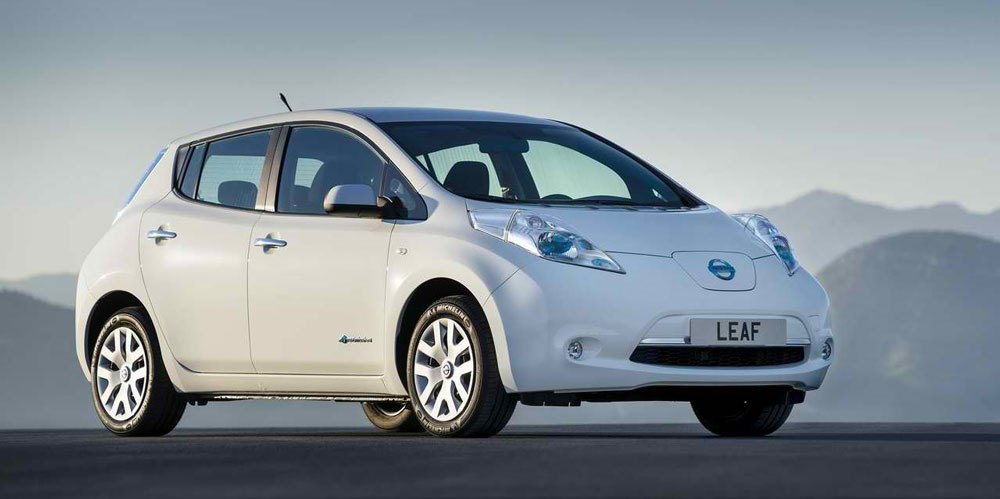
TM: “Can you imagine a Nissan Leaf or Tesla owner jumping in their car after work in say a really hot day in July? Ready to leave and oops, not 2014-Nissan-Leaf-goenough juice left to run the AC or even make the trip home. Not a happy camper.”

Jordan: “Using electric vehicle battery packs to balance the peak load is only an option if someone is home or has access to another car.”

TM: “Like I said, the idea must have been concocted by someone who has never lived in the real world. You know, Washington.”

Jordan: “OK, so we should start putting solar on all rooftops and storing those electrons using a battery, maybe a flow battery.”

TM: “Yes. Localizing the generation…the rooftop…eliminates the losses in transmission. Electrons go from the roof to the battery to the appliance.”

Jordan: “How do we make this work?”

TM: “First, you cannot put the utilities out of business. Utilities need to be part of the solution. Next, we need to start establishing localized grids. Some people call them micro-grids.”

Jordan: “You are saying that utilities, even though part of the problem, are also part of the solution.”

TM: “Think about your automotive days. The government and the auto companies finally started working together to reduce tailpipe emissions and reduce fuel consumption. They’ve made good progress.”

Jordan: “How can the utilities be part of the solution? Their business model is built around large grids, not micro-grids.”

TM: “Let’s start with the revenue stream so Wall Street won’t have apoplexy. Utilities can help fund the purchase and installation of the solar panels.”

Jordan: “Are you suggesting utilities buy the panels and then let the utilities charge customers for the panels with electricity bills, something like a mortgage?”

TM: “Yes. The model is already working in some locations. For the user, the electricity bill would be lower but the utility would also be paid back for buying and installing the panels.”

Jordan: “Utilities keep a revenue stream and reallocate capital to solar panels rather than building a new power plant.”

TM: “A big hurdle is convincing the coal lobby this makes sense? Coal lobby is well entrenched in Washington.”

Jordan: “Coal needs to realize the world is changing. Unless the coal companies can figure out how to make clean energy from coal, they will go the way of buggy-whip manufacturers.”

TM: “What about all the people employed in the coal mining industry?”

Jordan: “What about all the people that used to be employed in the auto industry, especially in Michigan? You know as well as anyone that technology can be a disruptive force. Businesses need to change to stay in business. Issues facing coal are not new.”

TM: “Some people are going to claim you are anti-union, especially against the mine workers.”

Jordan: “Look, times change and the groups involved need to quit pointing fingers and start solving problems.”

TM: “Unlike your former employer.”

Jordan: “They finally came around but it took Chapter 11 as a wake-up call. As far as solar, based on what you said we should be able to create a cost-effective micro-grid arm-wrestling-695086using existing solar and battery technology…and working with utilities.”

TM: “Yes, some arm wrestling required but the goal is achievable.”

Jordan: “Technology Man, you have got yourself a job.”

TM: “Why did I agree to have coffee with you? OK, I’ll do it.”

#34 US Solar Energy Efforts Back Asswards?

19 Wednesday Mar 2014

Posted by Jordan Abel in Back Asswards Thinking, Causes of the Revolution, Innovative Thinking: Ideas and Products, Possible Solutions

≈ Leave a comment

(Readers: Please note the blog about the 5th revolution in the US is constructed as a story. While not all chapters are linked, I think the story will be more meaningful by starting at the beginning.)

Want a PDF version for Entries #1-10, #11-20, #21-30 formatted for tablets and e-books?  Click links for download.  America’s 5th Revolution Volume I (Entries 1-10) America’s 5th Revolution Volume II (Entries 11-20) America’s 5th Revolution Volume III (Entries 21-30)

Scene: Jordan and Technology Man having coffee and bagels.

Jordan: “Technology Man, are you in between black-hole projects for the military?”

TechManTechMan: “Jordan, you know I can’t tell you anything about what I do.”

Jordan: “I know. But from what little I know you’ve been involved in some really interesting projects — stealth fighters, drones, weird electronics, and who knows what else.  Plus, the other fun things that you do — like photography.”

TechMan: “OK, Jordan. Now tell me, why are we having coffee beyond just catching up?”

Jordan: “Why would think I had something in mind?”

TM: “I’ve known you too long.”

Jordan: “Just a simple question for you.”

TM: “Simple questions are a rarity from you.”

Jordan: “I need to get your ideas on establishing a national policy for solar energy. Solar seems great. Clean source of energy. Solar is everywhere, at least some of the time.”

TM: “So what about the policy?”

Jordan: “The ‘so what’ is the approach the US is taking to solar. We don’t have a real policy. And the lack of a coherent policy was part of the cause of the revolution.”

TM: “You think so?”

Jordan: “Yes, too much reliance on coal and lots of resistance to alternative fossil fuels.”

TM: “The resistance still baffles me. The fossil-fuel energy companies have such a great opportunity to capitalize on solar and wind…and they don’t do it.”

Jordan: “When the companies do get involved, they use an antiquated approach.”

TM: Such as…”

Jordan: “Building large solar farms but putting the solar farms in the middle of nowhere.”

solar_panelsTM: “Jordan, where do you think most farms are? Farms are in the middle of nowhere.”

Jordan: “Yes, but middle of nowhere means the transportation to consumers.”

TM: “I agree the problem with solar farms in the middle of nowhere is the same – distance between the farm and the user.”

Jordan: “From what I understand, transmitting electrons over long distances is not very efficient.”

TM: “Inefficient is a better word. Not unusual for 50% of the electricity generated at a remote power plant not to make it to the user.”

Jordan: “Half lost? So what we are doing with these remote locations is doubling the size of the power plant…in this case solar farm…to compensate for the losses in transmission.”

TM: “Even worse. Many solar farms and wind farms require new transmission lines to get the electricity from the farm to the user. The cost of the lines is substantial. Plus some utilities are trying to put the new transmission lines through underdeveloped and environmentally sensitive areas. Why? Because it is easier and cheaper.”

Jordan: “What you’re describing is why current thinking about the best way to use solar and probably wind seems to be back asswards.”

TM: “Many of the plans for solar and wind have been developed by the same folks who wanted coal plants in remote locations so residents wouldn’t complain about emissions…and coal ash ponds.”

Jordan: “Alright, so what should the policy be for solar? We have a chance to make some changes.”

TM: “The most cost-effective approach, I think, is to install solar on all rooftops, whether residential or commercial buildings. And some locations are encouraging that.”

Jordan: “Solar on roofs is adequate to handle all electricity needs?”

TM: “Not until solar gets more efficient. But installing the panels cuts way back on the need for new power plants and likely eliminates the need for some older, coal-fired plants.”

Jordan: “What else would you do?”

TM: “Start storing electricity generated by solar. Right now electricity from solar is either consumed at the site or pushed onto the grid. But the problem is the mismatch of generation and demand. We need to store surplus electrons for use later.”

Jordan: “You talking about storing in batteries? Isn’t that very expensive?”

TM: “Speaking of batteries. I need to recharge mine with another cup of coffee.”

To be continued

Newer posts →

Subscribe

  • Entries (RSS)
  • Comments (RSS)

Archives

  • August 2025
  • July 2025
  • June 2025
  • May 2025
  • April 2025
  • March 2025
  • January 2025
  • December 2024
  • November 2024
  • September 2024
  • August 2024
  • July 2024
  • June 2024
  • May 2024
  • April 2024
  • March 2024
  • February 2024
  • January 2024
  • December 2023
  • November 2023
  • October 2023
  • September 2023
  • August 2023
  • July 2023
  • June 2023
  • May 2023
  • April 2023
  • March 2023
  • February 2023
  • January 2023
  • December 2022
  • November 2022
  • October 2022
  • September 2022
  • August 2022
  • July 2022
  • June 2022
  • May 2022
  • April 2022
  • March 2022
  • February 2022
  • January 2022
  • December 2021
  • November 2021
  • October 2021
  • September 2021
  • August 2021
  • July 2021
  • June 2021
  • May 2021
  • April 2021
  • March 2021
  • February 2021
  • January 2021
  • December 2020
  • November 2020
  • October 2020
  • September 2020
  • August 2020
  • July 2020
  • June 2020
  • May 2020
  • April 2020
  • March 2020
  • February 2020
  • January 2020
  • December 2019
  • November 2019
  • October 2019
  • September 2019
  • August 2019
  • July 2019
  • June 2019
  • May 2019
  • April 2019
  • March 2019
  • February 2019
  • January 2019
  • December 2018
  • November 2018
  • October 2018
  • September 2018
  • August 2018
  • July 2018
  • June 2018
  • May 2018
  • April 2018
  • March 2018
  • February 2018
  • January 2018
  • December 2017
  • November 2017
  • October 2017
  • September 2017
  • August 2017
  • July 2017
  • June 2017
  • May 2017
  • April 2017
  • March 2017
  • February 2017
  • January 2017
  • December 2016
  • November 2016
  • October 2016
  • September 2016
  • August 2016
  • July 2016
  • June 2016
  • May 2016
  • April 2016
  • March 2016
  • February 2016
  • January 2016
  • December 2015
  • November 2015
  • October 2015
  • September 2015
  • August 2015
  • July 2015
  • June 2015
  • May 2015
  • April 2015
  • March 2015
  • February 2015
  • January 2015
  • December 2014
  • November 2014
  • October 2014
  • September 2014
  • August 2014
  • July 2014
  • June 2014
  • May 2014
  • April 2014
  • March 2014
  • February 2014
  • January 2014
  • December 2013

Categories

  • Affordable Solutions
  • Back Asswards Thinking
  • Background
  • Background Stupid Is as Stupid Does
  • Benefits of Revolution
  • Causes of the Revolution
  • Common Sense Policies
  • Corporate Policy
  • Definitions
  • Diversions
  • Economics
  • Education Issues
  • Federal Budget
  • General Motors
  • Gov't Policy
  • Infrastructure & Fixed Fuel Prices
  • Innovative Thinking: Ideas and Products
  • Lessons of Revolution
  • Personal Stories
  • Possible Solutions
  • Post Trump Presidency
  • Rebranding Black Community
  • SCOTUS
  • Sense Check
  • Societal Issues
  • Stupid Is as Stupid Does
  • Tech Tsunami
  • Trump 47
  • Uncategorized

Meta

  • Create account
  • Log in

Create a free website or blog at WordPress.com.

Privacy & Cookies: This site uses cookies. By continuing to use this website, you agree to their use.
To find out more, including how to control cookies, see here: Cookie Policy
  • Subscribe Subscribed
    • usrevolution5
    • Join 32 other subscribers
    • Already have a WordPress.com account? Log in now.
    • usrevolution5
    • Subscribe Subscribed
    • Sign up
    • Log in
    • Report this content
    • View site in Reader
    • Manage subscriptions
    • Collapse this bar
 

Loading Comments...