• Home
  • Booklets/Grouped Entries
  • Tech Tsunami
  • List of Entries to Date
  • About the Author

usrevolution5

~ USA Headed for a 5th Revolution! Why?

usrevolution5

Category Archives: Economics

#70 Beginning to Rebrand the Black Community (Part #1)

24 Thursday Jul 2014

Posted by Jordan Abel in Causes of the Revolution, Economics, Innovative Thinking: Ideas and Products, Rebranding Black Community, Societal Issues

≈ Leave a comment

Scene: Pizza joint with Jordan and Rock Man discussing ideas to help get blacks off the bottom rung of the economic ladder. Initial episode for this section begins #67 “Why Do Blacks Remain at the Bottom of the Economic Ladder?”

Rock Man: “Jordan, you’ve got me thinking. By the way, the pizza was great. Who owns this place anyway?”
Jordan: “Turns out owners are part of the family that started Buddy’s Pizza in Detroit many years ago. A colleague from my Detroit days told me about the place. Great pizza, huh?”
Rock Man: “Maybe the best I’ve ever had.”
Jordan: “Back to the task at hand. I’ve got you thinking about what?”

010114_1917_19RockManCo1.png Rock Man: “Asking me to describe the ideal black community could be the foundation for a marketing campaign.”
Jordan: “Now you are on to something.”
Rock Man: “What we are talking about doing is rebranding the black community.”
Jordan: “This might sound a bit crass but rebranding the black community is like Nike building a brand of shoes around Michael Jordan or…”
Rock Man: “I thought we were shying away from sports figures?”
Jordan: “You’re right. Then building a brand of clothing – Polo, for example. Or soda – Coke. Or Yogurt. Pick a product and there is a certain image that comes to mind when you mention the brand name. And we can use your words to describe the ideal black community. But we need to make the words describe how the brand feels.”
Rock Man: “What do you call that essence statement?”
Jordan: “Positioning statement.”
Rock Man: “That’s it. Positioning statement. But the brand has to have a product.”
Jordan: “It does have a product…the black community.”
Rock Man: “So you’re thinking of rebranding the entire black community?”
Jordan: “Changing the perception of the black community. Obviously not everyone will fit the mold but the goals is to change the overall perception of the community.”
Rock Man: “You think that’s realistic?”
Jordan: “Your question is an excellent checkpoint. And one we will use at the end of this exercise. But let me ask you, when I say…OK, Jewish community, what words or phrases come to mind?”
Rock Man: “More educated, professionals – lots of doctors, lawyers, college professors. Lots of merchants – doctor-clipart-illustration-31325Saks, Bergdorf-Goodman, Bloomingdales. And financial people – Solomon Brothers.”

Jordan: “Clearly, not every Jew falls in one of those categories. But I think that is a fair description of the perception of the Jewish community in general.”
Rock Man: “So we are trying to build a brand for the black community that fits some type of positioning statement, correct?”
Jordan: “One thing to be clear about – a substantial portion…don’t ask me what the exact number is…but a substantial percentage of blacks will need to fit the mold or the perception will never take hold. Just making a claim that the black community is like ‘X,’ ‘Y’ and ‘Z’ won’t make people change their perception.”
Rock Man: “Let’s go back and try to translate my general description into a positioning statement.”
Jordan: “Alright but just don’t get to anal right now about having a perfect positioning statement. The statements evolve over time.”
Rock Man: “Speaking of time, how long is this rebranding session going to take?”
Jordan: “Session? You mean sessions. Probably 4-5, maybe more before we complete the initial phase.”
Rock Man: “You serious? That long for the initial phase?”

elephant-clip-art Jordan: “Rock Man, the process of rebranding is like eating an elephant. There’s a lot there and you can only eat one bite at a time.”
Rock Man: “Before we get too far into this, do you think we might be covering old ground? I mean, didn’t Martin Luther King cover this issue 50-60 years ago. What’s going to make a program we come up with different?”
Jordan: “Good question. I’ve thought about the question a lot. My take is this. Dr. King had a vision about equality. And ideally that will be the result of our efforts.”
Rock Man: “So what’s different?”
Jordan: “Scholars might disagree but I think one of the reasons why MLK’s vision did not come true is blacks did not have a positioning statement.”
Rock Man: “Explain more, please.”
Jordan: “Without a positioning statement, blacks did not know what to become. There were no guideposts or guidelines. Blacks were just supposed to be equal but no real map on how to get there.”
Rock Man: “Over the years you’ve talked about how a clear, concise positioning statement helped guide a lot of activities at Buick. If I remember correctly, the positioning statement was ‘Buick is a premium American motorcar that is substantial, distinctive, powerful and mature.’”
Buick Jordan: “Very good. And when Buick followed that positioning decisions were much easier and Buick gained market share.”
Rock Man: “Then what happened? Buick had a really rough period in the late 1990’s and early 2000’s. It’s coming back now but it was rocky road for a number of years.”
Jordan: “My view? Most of the problem had nothing to do with the positioning statement. It was all in the execution.”
Rock Man: “Whadda mean?”

Michigan Jordan: “Product tastes evolve over time. I had done a lot of research at the University of Michigan Institute for Social Research. The results indicated product design that appeals to one generation will not necessarily appeal to the next generation. Just look at clothing styles for certain age groups. They seem to cycle over time.”
Rock Man: “What else?”
Jordan: “The fundamental positioning of the product can remain the same but how it’s designed needs to change. The research suggested Buick could keep all key attributes but needed to update the design to appeal to a younger generation.”
Rock Man: “So what happened?”
Jordan: “I lost the argument. My boss, who was not that much older, thought younger buyers would ‘adopt’ the same tastes as the previous generation.”
Rock Man: “So Buick makes some design changes but also keeps many of the attributes that appealed to older generations. And their market share becomes smaller and smaller since existing buyers are dying off and not being replaced by younger buyers.”
Jordan: “Exactly. The Buick look today is very similar to what we recommended years ago, although there are many more electronic features available now.”
Rock Man: “So what’s the lesson for the black community?”
Jordan: “Rock Man, that’s the $1,000,000 question. What we do know is a simple, easy to understand and credible positioning statement is a start. And we need to tighten up your words.”
Rock Man: “Let’s get started. Here’s a napkin.”
(To be continued)

#68 New Ideas to Start Getting Blacks Off the Bottom Rung

16 Wednesday Jul 2014

Posted by Jordan Abel in Causes of the Revolution, Economics, Innovative Thinking: Ideas and Products, Societal Issues

≈ Leave a comment

(Readers: Please note the blog about the 5th revolution in the US is constructed as a story. While not all chapters are linked, after reading a few recent entries, you might want to start at the beginning. More about the blog and about the author. )

Scene: Jordan and Rock Man continuing conversation about how to begin getting blacks off the bottom rung of the economic ladder. First conversation. More about Rock Man.


Jordan: “OK, Rock Man, let’s get back to the topic at hand. How do we get blacks off the bottom rung of the economic ladder?”
010114_1917_19RockManCo1.pngRock Man: “Jordan, seems like we’ve had a version of this conversation before.”
Jordan: “We had it before your sabbatical. But nothing got resolved. And the need for a plan keeps gnawing at me. It should gnaw at you even more.”
Rock Man: “Maybe I’m too close to it…or maybe used to it.”
Jordan: “We need to change some thinking. It has been 150+ years since the Emancipation Proclamation. It has been 50+ years since the Civil Rights Act. 150 years is 6-7 generations.”
Rock Man: “A very long time in those terms. You have some advice?”
Jordan: “Yes, but like much of this conversation, not politically correct.”
Rock Man: “Let me guess. Blacks need to take the lead and quit following.”
Jordan: “The man did learn something on sabbatical. Seriously, that needs to happen. Blacks need to figure out a plan, spell out the key points and then, if necessary, ask for help.”
Rock Man: “Any ideas where to start? Tell me your idea Contro-man.”
Jordan: “What’s with the Contro-man? What are you talking about?”
Rock Man: “You’re bringing up a very controversial topic – why do blacks remain at the bottom of the economic ladder. You ready for all the heat when this starts to get public attention?”
Jordan: “If you think the conversation so far has been controversial, have another sip of coffee.”
Rock Man: “Keep talking Contro-man.”
Jordan: “I casually mentioned this idea before but we never really put much meat on it. One other rule when we discuss this topic.”
Rock Man: “What’s the rule?”
Jordan: “There’s always a lot of finger-pointing and blaming when this come up. Too much of government something caused something else. A lot of looking in the rearview mirror and trying to figure out who’s to blame.”
Car Rock Man: “Jordan, if there’s one thing I remember about all our conversations, it’s that you cannot drive very fast looking in the rearview mirror.”
Jordan: “I’m glad you remember that. Now, let’s start looking out the windshield and driving faster.”
Rock Man: “I’m mashing the accelerator.”
Jordan: “You’re southern roots are showing. First question, ‘In what occupations are blacks most successful?’”
Rock Man: “That’s easy, sports. Football, basketball, track and some baseball. But especially professional football and basketball – NFL, NBA.”
NFLJordan: “Right. In the NFL, what 2 of 3 players are black? NBA must be about 4 of 5 are black. Blacks are very successful in both sports.”
Rock Man: “Entertainment, also. But what’s your point?”
Jordan: “Question #2, ‘Where do you see the least number of blacks?’”
Rock Man: “At a KKK meeting…and that’s not a college fraternity.”
Jordan: “Good one smartass. Really, what professions?”
Rock Man: “Engineering. More like occupations that require lots of math and/or science.”
Jordan: “I agree.”
Rock Man: “Come to think of it, I don’t know of a highly successful software company started by blacks.”
Jordan: “I’m sure there are some but no company comes to mind.”
Rock Man: “When you were at MIT how many blacks were there?”
Jordan: “MIT was a long time ago but black students were few and far between.”
Rock Man: “OK, so Contro-man, what’s the idea?
Jordan: “We both agree that making incremental changes won’t work. Something radical is required.”
Rock Man: “Get to the idea, already.”
Jordan: “The idea is simple. Black refuse to play professional sports. No blacks enter the NFL. No blacks enter the NBA.”
Rock Man: “What about professional curling?”
Jordan: “That’s OK.”
Rock Man: “Seriously, what about college athletics.”
Jordan: “Yes, because those athletes have an opportunity for a college degree at little or no cost. And without the pressure to enter professional sports, more will student athletes will complete the degree. But, I’m talking about real, marketable degrees and not Afro-American studies.”
Rock Man: “You are pushing the envelope. You really want to deny these athletes a chance to make millions of dollars playing professional sports?”
Jordan: “In a word, ‘yes.’ Besides, what do these athletes do for the black community?”
Rock Man: “They hold sports camps and go to schools and talk about their sports.”
Jordan: “My point exactly. The athletes, many of whom…in fact I would venture to say most of whom never graduated college…are promoting the one thing at which only a handful of people excel – professional sports. Where’s the emphasis on education? Where’s the role model?”
Rock Man: “Point well taken.”
Jordan: “Rock Man, you are an excellent role model for black students. I’m always fascinated with your background. How many kids in the family?
Rock Man: “Eight.”
Jordan: “And what did your parents do?”
Cotton Rock Man: “You know what they did. Cotton farmers in eastern North Carolina.”
Jordan: “And they were high-end, wealthy cotton farmers?”
Rock Man: (Laughing) “Jordan, you know we were dirt poor. We were so poor that I literally…and I mean literally…did not have a pot to piss in.”
Jordan: “OK, so how did you go from no pot to piss in to all eight kids getting a college education and what, half the kids with a graduate degree? Was your role model some athlete?”
Rock Man: “No. The role model was my parents pushing all the kids hard to get an education. Neither of my parents graduated from high school. In fact, they barely got out of grammar school.”
Jordan: “Rock Man, now I need a break. Let’s go get a pizza.”

(Want a PDF version for Entries #1-10, #11-20, #21-30 formatted as an e-book? Entries #31-60 available when I get some time. Click links for download. America’s 5th Revolution Volume I (Entries 1-10), America’s 5th Revolution Volume II (Entries 11-20), America’s 5th Revolution Volume III (Entries 21-30)


#67 Why Do Blacks Remain at the Bottom of the Economic Ladder?

12 Saturday Jul 2014

Posted by Jordan Abel in Economics, Personal Stories, Possible Solutions, Societal Issues

≈ 13 Comments

(Readers: Please note the blog is constructed as a story. While not all chapters are linked, after reading a few recent entries, you might want to start at the beginning. More about the blog and about the author. )

Scene: Jordan meeting with Rock Man, who has been on sabbatical.

Jordan: “Rock Man, wonderful to see you. How was the sabbatical?”
Rock Man: “Great learning experience and great fun. This was my Sloan Program.”
Jordan: “Hope so. The Sloan Program was a seminal moment in my life.”
010114_1917_19RockManCo1.png Rock Man: “I know your time is short. What’s on your mind?”
Jordan: “A problem that has been bothering me for a long time. And it only seems to get worse.”
Rock Man: “You with a problem? Losing your touch? What’s the issue and why me?”
Jordan: “One is you are coming off sabbatical so your brain is clear of lots of mundane stuff.”
Rock Man: “You’re assuming I still have a brain.”
Jordan: “You’ve got a brain. Second reason is someone needs to lead this effort to come up with a solution. And your qualifications are perfect.”
Rock Man: “OK, let me have it. What am I in for now?”
ladder Jordan: “The question, really a dilemma, is this. Why do blacks stay at the bottom of the economic rung when every other ethnic group has progressed? I know there is no easy answer but the issue perplexes me and frustrates me.”
Rock Man: “Frustrates me, too. I’ve got two kids that are doing OK but a lot of people I grew up with…and I mean a lot of them…are no better off today than 40-50 years ago.”
Jordan: “While each immigrant group has its own characteristics, all immigrant groups faced some discrimination. Some of the discrimination was severe. Yet all have made significant progress.”
Rock Man: “I hate to say this but many blacks seem to have self-destructive behavior. One behavior that really baffles me is the attraction to Islam. What are these guys thinking?”
Jordan: “I agree. I understand the desire for religion. But if you want to get out of the cellar why choose Islam? One is hard pressed to find an Islamic-dominated country that offers equal rights, has sustained economic growth and a well-educated population.”
Rock Man: “Maybe the converts think Islam is going to get them an education.”
Jordan: “At one time I would have agreed with that. That time, however, was up until the 16th or 17th Century.”
Rock Man: “You that old Jordan?”
Jordan: “Good one, Rock Man. Glad you haven’t lost your touch.”
Rock Man: “I’ve got a good mentor…you.”
Jordan: “Thanks for the compliment. But back to Islam. For centuries, Muslims were very involved in international trade and leaders in some fields of education. Muslims are given credit for advancements in algebra, for example.”
Rock Man: “I did not know that. What about now?”
Jordan: “If you want to hitch your wagon to a religion or group that pushes education, find a Jewish wagon.”
Rock Man: “Good point. Jews were enslaved by the Egyptians. And they’ve suffered some form of discrimination since.”
Jordan: “More important to blacks is many Jews were early supporters of the Civil Rights Movement in the US.”
Rock Man: “I’m too young to remember but I read several Jews were killed in the 1960’s marching with blacks in the South.”
Jordan: “Here’s my take. Every other ethnic group has moved up the economic ladder through education. Not sports. Not entertainment. Education.”
Rock Man: “Maybe blacks need to take a different approach and really emphasize education.”
Jordan: “If you were black…I know you’re already there but you know what I mean. If you were black and wanted an education would you become a Muslim or a Jew?”
Rock Man: “I know where you’re headed but give me some facts.”
Jordan: “OK, here’s something to think about. Jews constitute about 0.2% of the world’s population.”
Rock Man: “Only 2 of every 1,000 people is Jewish?”
Jordan: “What percent of the world’s population is Muslim?”
Rock Man: “I’ll guess 20%. 200 out of every 1,000 people.”
Jordan: “About right. That means there are at least 100 Muslims for every one Jew.”
Rock Man: “So why do Muslims feel so threatened by Jews? Muslims have a 100:1 advantage.”
Jordan: “We’ll talk about why another time but remember the 100:1 ratio.”
Rock Man: “Got it. 100 Muslims, 1 Jew.”
Jordan: “Now when I say awards for science, medicine, economics, etc…you know accomplishments requiring high level of education…what prize comes to mind?
Nobel Rock Man: “The Nobel Prize.”
Jordan: “What percentage of Nobel Prizes has been awarded to Jews?”
Rock Man: “I know this is a set up so I’ll exaggerate my answer. 5%. No, make it 10%.”
Jordan: “Nobel prizes awarded to Muslims?”
Rock Man: “Well, if Muslims account for 20 out of 100 people, they should have at least 10% of the prizes.”
Jordan: “Let’s just say your right. Each group has 10%. That ratio would make Jews 100x more likely to be awarded a Nobel Prize than a Muslim.”
Rock Man: “Wow. That’s a big difference.”
Jordan: “Now what if I told you that of all the Nobel Prizes awarded 20+% have gone to Jews and 1% to Muslims.”
Rock Man: “If I do my math correctly, that means Jews are not 100x more likely but 2,500x more likely to be awarded a Nobel Prize based on population.”
Jordan: “Your math is correct.”
Rock Man: “Jews 2,500 times more likely than Muslims. The difference is so large that it’s difficult to comprehend.”
Jordan: “Let’s try this approach. If you were selecting players for a basketball team, would you choose the player who scored 2,500 points or the player scored one point?”
Rock Man: “Duh, let me think about that. The 2,500 point player.”
Jordan: “Let me try one other comparison. If you started to take a walk, after the Muslim took one step, the Jew would be 1.5 miles down the road.”
Rock Man: “I see your point. If you think education is a key to getting off the bottom rung of the ladder, go with people who are proven winners, not losers.”
Jordan: “OK, called me biased because I’m Jewish. I know the comparison re Nobel Prizes is a bit convoluted, but the facts are hard to refute.”
Rock Man: “What’s adding to my frustration is blacks are aligning with a group responsible for 09/11 and bringing down the World Trade Towers.”
Jordan: “Look, aligning with Jews is not the only answer but you get my point about the value of education.”
Rock Man: “Jordan, you’ve thrown a lot out on the table. I need to digest this. May we take a short break?”
Jordan: “Of course. Let’s get a coffee.”


#62 More about Creating Wealth. What’s Fair and What’s Game.

25 Wednesday Jun 2014

Posted by Jordan Abel in Causes of the Revolution, Economics, Societal Issues

≈ Leave a comment

(Readers: Please note the blog about the 5th revolution in the US is constructed as a story. While not all chapters are linked, you might want to start at the beginning.  There are also some sections of interest — #41-60. More about the blog and about the author. )

Scene: Italian restaurant. Jordan with long-time friend, aka “Ms” and daughter, Maggie, whom Jordan knows but has not seen in years. Conversation is continuation of Entry #61 and resumes after dinner is served.

Ms: “I’m anxious to hear your definition of ‘fair-and-square’, especially since the youngster here is married to Womens symbol a mutual fund manager.”
Maggie: “Yes, Jordan, please define ‘fair-and-square.’”
Jordan:  “Alright. Let’s take mutual funds. Maybe the entire finance industry.”
Ms: “This should be good. You might manage to alienate both of us. Or have you forgotten I worked at a bank for a while.”
Jordan: “Well, here goes. Banking is very important to commerce. The securities market is also very important. Both functions can help the country’s economy grow.”
Maggie: “He’s OK so far…but really hasn’t said much.”
Ms: “Foot not in mouth yet so please continue.”
Jordan: “What I view as the problem is when the bank and the securities traders…”
Margaret Maggie: “Spell that please.”
Jordan: “T-r-a-d-e-r-s.”
Maggie:  “I thought you might have said traitors.”
Jordan:  “The problem is when banks and securities traders start moving money back and forth with no benefit to the populous.”
Ms: “What do you mean?”
Jordan: “Banks and securities firms should be focused on creating wealth for the country. When wealth is created everyone benefits.”
Maggie: “What’s wrong with just trading securities?”
Jordan: “Without wealth creation, then trading becomes a zero-sum game. In a zero-sum game, there is a winner…and a loser.”
Ms: “I’m still not sure what you mean. Define wealth creation.”
Jordan: “Simply put, taking raw materials and making something of more value that the individual parts.”
Maggie: “You’re talking about like making a car.”
Jordan: “Yes. There are lots of examples of manufacturing. At the end of the day, the value of the product is worth more than the raw materials used to make it…including any cost for labor.”
Ms: “What about medicine? Is that manufacturing. Certainly expensive and the cost is a whole lot more than the individual parts. What about banking? Hotels?”
Jordan: “All your examples are considered services. No new wealth is created for the country.”
Ms: “But some doctors make lots of money…”
Maggie: “…especially plastic surgeons in Southern California.”
Jordan: “Individuals performing a service – plastic surgeons to use your example – can get rich. But the surgeon got rich because money was transferred from one person’s pocket to another. No new wealth was created, merely a transfer of money between people.”
Maggie: “”Ok, what about securities traders. They way you’re talking, you probably consider them traitors with a ‘t’.”
Jordan: “If we are talking about trading stocks, I have no problem. Because stocks are linked to an organization that is supposed to make a profit.”
Maggie: “Pardon me for my ignorance, but what else gets traded besides stocks?”
Jordan: “There are trades where one person essentially bets interest rates will go up and other person bets interest rates will go down.”
Ms: “Sounds like gambling to me.”
Jordan: “Gambling is exactly what it is. Other than a few instances, such trades are no different than rolling dice in Las Vegas.”
dice Maggie: “Are you opposed to gambling?”
Jordan: “Not at all as long as…repeat as long as one gambles with his or her own money.”
Ms: “Whose money is being gambled?”
Jordan: “Yours.”
Ms: “Mine? How?”
Jordan: “Banks, mutual funds, securities brokers all use your money to gamble in a part of the market that has little, if any, regulation. And when the gamble goes bad…as it did in 2008…the firms beg for a bailout from Washington. Your money.”
Ms: “Why should they get a bailout?”
Jordan: “Because you and Maggie and many other people would get the royal shaft when the firm went bankrupt.”
Maggie: “That does not seem fair.”
Jordan: “For much of the securities trading, if you are the little guy, the game is the proverbial ‘Heads I win. Tails you lose.’ And if I lose really big, you lose even more.”
Ms: “So when things go really bad on Wall Street, they ask for some type of taxpayer bailout.”
Jordan: “You got it.”
Maggie: “Has it always been like this?”
Jordan: “No, not to this degree. Securities trading on Wall Street has always been subject to some insider trading and favoring the larger players. For many years most of the money these guys traded was their own. When it’s your own money, most people take less risk. That all changed in the 1990’s.”
Ms: “You talking about the repeal of the Glass-Steagall Act?”
fdr-signs-glass-steagallJordan: “Ms, sometimes you amaze me. Yes, Glass-Steagall was passed in the early 1930’s to prevent securities firms from trading with client’s money. It was repealed in the late 1990’s. Lots of shenanigans since.”
Maggie: “Why can’t congress reinstate Glass-Steagall?”
Jordan: “There was an effort after 2008-2009 crash but no real progress. Banks and investment houses basically bought off congress…pardon me…encouraged members of Congress to take the teeth out of the proposed reinstatement.”
Maggie: “Any chance now. We have a new Congress.”
Jordan: “Maybe. The revolution resulted in a new Congress. What the new Congress considers fair remains to be seen.”
Ms: “Jordan, you talk a good game. What are you doing to address the problems in this country?”
Jordan: “Haven’t lost your touch with the harpoon, have you?”
Maggie: “Yes, Jordan, what are you doing besides yapping?”
Jordan: “And just like your mother. Well, guys, the last few months I’ve been working on a project to help rebuild manufacturing in the US.”
Ms: “Doing this on your own?”
Jordan: “Project for POTUS.”
021214_1242_24Resultsof1.gif Maggie: “POTUS? What’s that or who’s that?”
Ms: “I forget how much knowledge one acquires with age. POTUS stands for President of the United States.”
Maggie: “Wow. That’s impressive. You’re a big dog.”
Jordan: “Part of a team working on the project.”
Ms: “When does it go public?”
Jordan: “Don’t know exactly but soon. I’ll let you know.”

Dessert arrives. To be continued.

(Want a PDF version for Entries #1-10, #11-20, #21-30 formatted as an e-book? Entries #31-40 available soon. Click links for download. America’s 5th Revolution Volume I (Entries 1-10), America’s 5th Revolution Volume II (Entries 11-20), America’s 5th Revolution Volume III (Entries 21-30)

#61 Herpes Handbags? So, What’s Not Fair?

21 Saturday Jun 2014

Posted by Jordan Abel in Back Asswards Thinking, Causes of the Revolution, Economics, Societal Issues

≈ 3 Comments

(Readers: Please note the blog about the 5th revolution in the US is constructed as a story. While not all chapters are linked, after a few recent entries, you might want to start at the beginning. More about the blog and about the author. )
 

Scene: Italian restaurant. Jordan and friends, Ms and daughter, Maggie.

Jordan: “Great to see both of you. Maggie, your mother and I had dinner a few weeks ago. It’s been years since we’ve seen each other. Bring me up to date.”
Margaret Maggie: “Short version is finished college. Got married. Got divorced. Moved to California and started working in high-end fashion.”
Ms: “Really high-end fashion. Maggie is too polite to mention she managed a fashion store in Beverly Hills.”
Jordan: “Wow. That’s impressive. What kind of stuff did you sell?”
Maggie: “Probably a better word than ‘stuff.’ We sold women’s shoes, handbags, other kinds of accessories. All fairly high-end.”
Womens symbol Ms: “High end is an understatement. Outrageously expensive.”
Jordan: “Coming from you, it must be expensive.”
Maggie: “Excuse me but the waiter is here to take our order.”
Jordan: “Speaking of giving orders. Maggie, you remind me of your mother. Do this. Do that. I think what we have is a case of ‘Like mother, like daughter.’”
Ms: “Jordan, let’s order as Maggie is suggesting.”

(Order complete. Waiter leaves.)

Jordan: “Just how expensive are these handbags? A thousand, two thousand?”
Maggie: (Laughing) “Two thousand would be our Wal-Mart model.”
Ms: “Add some more money.”
Jordan: “OK, five thousand.”
Maggie: “You’re still cold. Try $20,000 plus.”
Jordan: “$20k for a handbag? What’s it made out of, dinosaur skin with kryptonite locks?”
Ms: “You’re not far off. They use some really exotic skins and precious metals.”
Jordan: “Does anyone really buy this stuff?”
Handbag Maggie: “Each handbag is a limited edition. We usually have a waiting list.”
Ms: “There’s even a market for used handbags. Not used a lot, but still used.”
Maggie: “A few years ago a college student starting buying used handbags and reselling on eBay. In a couple of years he built a very nice business.”
Jordan: “There was an article in the NY Times about the guy. He was selling herpes handbags…”
Ms: ”…Jordan, those are not herpes handbags. They’re Hermes handbags. Hermes. Got it?”
Jordan: “Hermes handbags, herpes handbags, what’s the difference? You’ve been screwed either way.”
Ms: “You are awful. And in front of my daughter.”
Maggie: “Mom, I’m not some kid. Besides, I think calling it a herpes handbag is pretty funny.”
Jordan: “Anyway, there was some controversy because the used bag man left one company and went to Christie’s Auction House. Is a used bag man like a used car salesman?”
Ms: “Sometimes I just have to shake my head when I hear you talk.”
Jordan: “Really, this all seems rather stupid to me.”
Maggie: “That’s because you’re not a woman. It is a big deal. There is a real market for used bags.”
Jordan: “Funny, I know a few old bags and no one seems interested in them.”
Ms: “Careful. Were you talking about me?”
Jordan: “Did I say you were an old bag?”
Maggie: “You guys always talk to each other like this?”
Ms: “He’s usually not so polite. Must be because you’re here.”
Jordan: “C’mon, Ms. When have I not been polite to you?”
Ms: “Well, OK. You do always respect me…in the morning.”
Maggie: “Children. Back to the story, please.”
Used Car royalty-free-car-salesman-clipart-illustration-443283Jordan: “I don’t really care what people do with their money. But I do think when one company files suit to stop a used bag salesman from going to another company to sell used bags, the country’s value system has gotten out of whack.”
Maggie: “BH…I mean Beverly Hills…has always been a little out of whack.”
Jordan: “True, but at some point sanity needs to take over. Selling handbags that cost more than many people earn all year seems over the top. And waiting lists!”
Ms: “Are you implying that’s not fair?”
Jordan: “I suppose I am.”
Maggie: “What’s not fair? I mean didn’t these people earn the money fair and square?”
Jordan: “Earned yes. Fair and square? A lot of times, not really.
Ms: “Here’s dinner. Hold that thought.”
(To be continued)

(Want a PDF version for Entries #1-10, #11-20, #21-30 formatted as an e-book? Entries #31-40 available soon. Click links for download. America’s 5th Revolution Volume I (Entries 1-10), America’s 5th Revolution Volume II (Entries 11-20), America’s 5th Revolution Volume III (Entries 21-30)

#54 EV1 Ends CEO’s Tenure. Bean Counters Reign, Again.

28 Wednesday May 2014

Posted by Jordan Abel in Back Asswards Thinking, Economics, General Motors, Stupid Is as Stupid Does

≈ 2 Comments

(Readers: Please note the blog about the 5th revolution in the US is constructed as a story. While not all chapters are linked, the story might be more meaningful by starting at the beginning.)

(Want a PDF version for Entries #1-10, #11-20, #21-30 formatted as an e-book? Entries #31-40 available soon. Click links for download. America’s 5th Revolution Volume I (Entries 1-10), America’s 5th Revolution Volume II (Entries 11-20), America’s 5th Revolution Volume III (Entries 21-30)

Scene: Jordan’s office with Matt, reporter for major publication. Matt has been asked by POTUS’ office to help write the story of GM. POTUS wants to use the information as part of a plan to help rebuild US manufacturing. Entries about GM begin #41.

Matt: “As you were saying…something about a meeting.”
Jordan: “The GM EV1 (electric vehicle) program was effectively dead before it was ever introduced. Like we talked about earlier, when Bob Stempel supported the program, it likely killed his career.”
reporter on typewriter clipart Matt: “I hear you say that but really?”
Jordan: “Here’s the scene – GM Building, West Grand Boulevard, Detroit, small conference room, near executive offices and the Board room. Meeting starts at 3:00pm.”
Matt: “Who was there?”
Jordan: “Four executives from the EV1 program and four from GM corporate – chairman, president, head of financial staff and an assistant.”
Matt: “Man, heavy-weight group. What was the content?”
Jordan: “We presented a review of progress on EV1 – product update, interest among prospective buyers, media coverage, cost, etc. A bit broader than the typical product program update.”
Matt: “What was the reaction?”
Jordan: “The behavior of the individuals was the most telling. Stempel, who was a strong supporter of the program…”
Matt: “…He was still chairman, right?”
EV1 Jordan: “Yes. Stempel took notes during the meeting and asked a number of questions. Jack Smith, then GM’s president, sat with his arms folded and took not a single note.”
Matt: “What a contrast. Wasn’t Jack Smith really a financial guy?”
Jordan: “Yes, virtually all of Jack’s career leaned toward the financial side. No one ever called him a car guy…at least that I heard.”
Matt: “Then what happened?”
1700 ClockJordan: “During the meeting Jack would occasionally glance at his watch. Then at precisely 5:00pm, Jack stands up, turns to Stempel, who is to his right, and says, ‘Bob, you cannot afford the program.’ Then walks out.”
Matt: “What happened at the rest of the meeting?”
Jordan: “To tell you the truth I do not remember. Smith’s remark and then leaving the meeting effectively ended it.”
Matt: “Quite a scene. By the way, is Jack Smith related to Squeaky…I mean Roger Smith?”
Jordan: “No relation to my knowledge.”
Matt: “So Jack Smith says the EV1 program is too costly. How does Stempel counter the argument and keep the program alive? After all he is chairman.”
Jordan: “The short story is…he doesn’t. Within a few weeks Stempel resigns as chairman and Jack Smith takes over as CEO. My version of events is slightly different than the official story.”
Matt: “Different in what way?”
Jordan: “I believe that Jack Smith instigated a palace coup to throw out Stempel.”
Matt: “Why so?”
Jordan: “The Board of Directors was still packed with appointments from Roger Smith’s tenure. These were guys who supported Smith’s idea that earnings were more important than market share. Under Stempel, earnings started to fall, but through no fault of his.”
Matt: “It was on his watch.”
Jordan: “Matt, Matt, you know better than to say that. Earnings during Stempel’s time suffered from some of the shenanigans pulled under Squeaky’s reign. The poor economy just made earnings look worse. Truth be told, GM was probably technically bankrupt at the time.”
Matt: “Stempel gets caught in a vortex.”
Jordan: “My view is Jack Smith could see the problems coming. Rather than have the problems on his watch, he supported…or didn’t resist…putting Stempel in as chairman following Squeaky. Stempel was set up as the fall guy.”
Matt: “Really?”
Jordan: “Think about this. If you’re Jack Smith…or Roger Smith, who is still on the Board…you can state that Stempel’s support of the EV1 program when the company was so short of cash was proof that he did not understand how to run the company. Therefore a change at the top was needed.”
Matt: “I recall there was an issue about Stempel’s health.”
Jordan: “He did not look good at the meeting. I rarely talk about business issues with wife but I did mention to her how he did not look well.”
Matt: “How serious was the problem?”
Jordan: “He ended up with a stent as I recall. But Bob was very active for many years after the procedure. I think any concern about his health was a smoke screen.”
BeanCounter Matt: “OK, so Stempel is out and is replaced as CEO by Jack Smith. Based on what you’ve said, Jack is more of a bean counter than product guy. Then what happens?”
Jordan: “Soon thereafter, the GM Board of Directors effectively kills the EV1 program. And guess what date?”
Matt: “I have no idea.”
Jordan: “December 7.”
Matt: “You are kidding, right? How ironic. GM has a car that creates all kinds of interest and improves GM’s image. GM could capitalize on the improved image and begin to counter losses in market share to imports, especially Japanese imports. And then what does the Board do? Kill the EV1? And on what day? December 7.”
Jordan: “Hollywood script material, huh?”
Matt: “Better than Hollywood. True back asswards thinking. Actually, maybe no thinking by the Board.”
Jordan: “Let’s get another cup of coffee.”
Matt: “How about a glass of wine, instead. I’m still shaking my head.”

#47 Small Car Setbacks Tarnish GM Image

03 Saturday May 2014

Posted by Jordan Abel in Economics, General Motors

≈ Leave a comment

(Readers: Please note the blog about the 5th revolution in the US is constructed as a story. While not all chapters are linked, the story might be more meaningful by starting at the beginning.)

(Want a PDF version for Entries #1-10, #11-20, #21-30 formatted as an e-book?  Entries #31-40 available soon.  Click links for download.  America’s 5th Revolution Volume I (Entries 1-10), America’s 5th Revolution Volume II (Entries 11-20), America’s 5th Revolution Volume III (Entries 21-30)

Scene: Jordan’s office with Matt, reporter for major publication.  Matt has been asked by POTUS’ office to help write the story of GM.  POTUS wants to use the information as part of a plan to help rebuild US manufacturing.  Entries about GM begin #41.

Matt:  “Jordan, now start telling me about the transition of GM from economic engine to sputtering engine to dead stop.  What really happened?

Jordan:  “I’m going to remind you of two things.  The story is my interpretation of events.  Historians and others might not agree.  Second, the story needs the proper context.  Too much emphasis is usually placed on earnings and stock price.”

reporter on typewriter clipartMatt:  “You think there’s a better measure?”

Jordan:  “Earnings and stock price are the result of actions, not the cause.  We want to talk about the cause.  Otherwise the analysis does not contribute to POTUS’ effort to help rebuild US manufacturing.”

Matt:  “OK, let’s get to the next phase.”

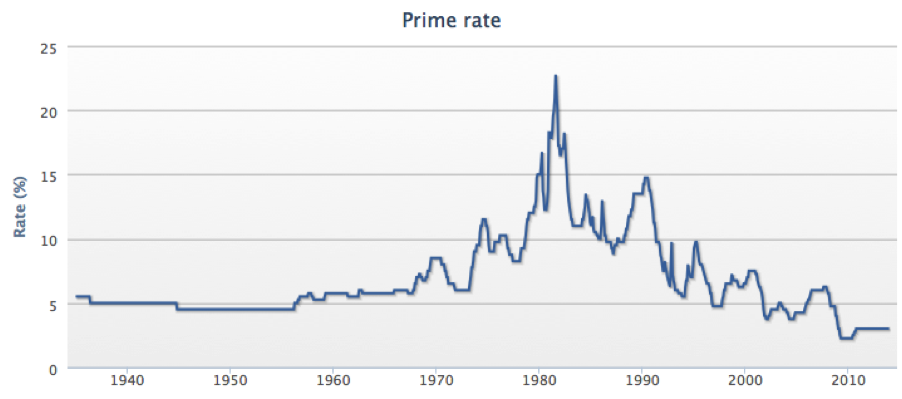
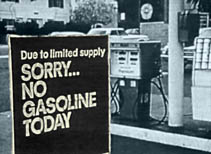
Jordan:  “The 1970’s were chaotic for the US-based manufacturing companies.  The country experienced two oil embargos – 1973 and 1979.  There was also hyper-inflation by US standards.”

Matt:  “What was the prime rate for a while, 15%?”

Jordan:  “It stayed over 15% for several years and actually over 20% for a while.  Hard to comprehend now.”

history-of-prime-rate

Matt:  “High interest rates impact housing and autos, right?”

Jordan:  “For autos, while overall sales declined, the bigger impact was the shift in sales mix – away from large cars and toward smaller cars.”

Matt:  “How did GM fare?”

Jordan:  “Not very well.  Here’s a bit of info to show you how rapidly demand changed.  First, the used car market does not care what the list price of a new car is.  In the used car market, price is set by demand.”

Matt:  “OK…now what?”

Oil EmbargoJordan:  “The oil embargo starts in October 1973.  By January 1974 – three months later – demand for large and small cars has shifted so quickly that the price of a one-year old Chevrolet Vega, a small car, is higher than the price of a one-year old Chevrolet Caprice, a large car.”

Matt:  “And the list price of the Caprice was what…about twice the Vega?”

Jordan:  “That’s a good guess.”

Matt:  “So GM had been strong in large cars now faces a market wanting small cars.”

Jordan:  “GM also suffers because the first oil embargo gives the Japanese imports a real chance to make inroads in the US market.  Sales were languishing prior to the embargo.”

Matt:  “OK, back to GM.”

Jordan:  “GM’s first real small car was the Corvair, introduced in the 1960’s.  Great car until…”

UnsafeAtAnySpeedLargeMatt:  “Ralph Nader wrote ‘Unsafe at Any Speed’.  Was that really true?”

Jordan:  “Rear-engine cars, which the Corvair was…VW Beetle another…and the 911 Porsche…used to have an inherent disadvantage in front-end crashes.”

Matt:  “What do you mean?”

Jordan:  “In front-end crashes the engine absorbs much of the kinetic energy of the impact.  Imagine taking your hand, make a fist and hitting the wall.”

Matt:  “Ouch.”

Jordan:  “Ouch is right.  Now put on a glove, ideally a boxing glove and hit the same wall.”

Matt:  “Does not hurt as much, if at all.”

Jordan:  “Think of the engine of the car as the glove…absorbing the energy from the hit.”

Matt:  “And rear-engine cars have no glove.”

Jordan:  “Had, at least not then.  Structural engineering has improved significantly since the 1960’s.”

Matt:  “So Nader’s points were valid.”

Jordan:  “I think some of the points were valid.  And I also think the benefit of the book has been increased emphasis on surviving accidents – emphasis by government and the auto industry.”

Matt:  “But the book effectively killed the Corvair.  I’ve only seen a few of them at auto shows.  Looks like a great car.”

Jordan:  “Here’s a bit of trivia most people don’t know.  As a lead in, what car first comes to mind when I say 1960’s?”

Matt:  “Mustang.  Now that’s a great car.”

Jordan:  “The father of the Mustang?”

Matt:  “Lee Iacocca.”

Jordan:  “How do you think Iacocca convinced Henry Ford II and the other executives to commit funds to develop the Mustang?”

Matt:  “Don’t know.”

Jordan:  “I don’t remember if I read this in a book or heard this from Lee one night over drinks.  But in the Ford executive garage he lined up all Chevrolet products on one side and all Ford products on the other.”

Matt:  “And on the Ford side there was an empty spot.”

spyder64Jordan:  “An empty spot directly across from the Corvair Monza Spyder.”

Matt:  “So that’s how the Mustang came about.  To counter the Corvair Monza.  Interesting.”

Jordan:  “But as you know, the Corvair dies after Nader’s book.”

Matt:  “And the Mustang lives a robust life.  What did GM do?”

Jordan:  “Counter to the Mustang was the Camaro, which lives to this day.”

Matt:  “But the Camaro was not a Corvair replacement, was it?”

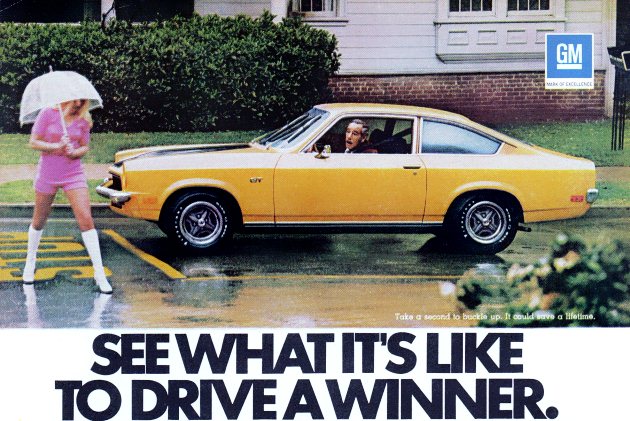
Jordan:  “No, Corvair was replaced by the Chevrolet Vega.”

chevy-vegaMatt:  “The Vega reminds me of the Edsel.  What a disaster.”

Jordan:  “I think Vega was a great concept but had a lot of new technology that was never fully tested.  GM rushed it to market.”

Matt:  “How long was Vega in production?”

Jordan:  “1970-1977.  Problems with the early models doomed the car and production was minimal in the later years.”

Matt:  “So GM enters the 1980’s with two recent small car failures – Corvair and Vega.  At the same time the public has experienced gas rationing and higher gas prices, both of which are pushing sales toward smaller cars…away from GM’s strength.”

Jordan:  “Not a good scene.”

Matt:  “Did GM then just give up on small cars?”

Jordan:  “No.  There was another major program to introduce well-engineered smaller, more fuel-efficient compact cars.  All divisions except Cadillac had a somewhat larger model that would be replaced.  Inside GM these were known as ‘X-cars’ because they were built on what was labeled the ‘X’ platform.  Auto speak.”

Matt:  “These models were introduced when?”

Jordan:  “1979 as 1980 models.”

Matt:  “How well did these cars sell?”

SkylarkJordan:  “Extraordinarily well compared to the Corvair and the Vega.  In fact, the Buick X-car, Skylark, outsold the Chevrolet model every now and then.”

Matt:  “Did something happen?  Why did GM phase them out?

Jordan:  “More quality issues…and lots of recalls.”

Matt:  “More egg on GM’s face for small cars.”

Jordan:  “The X-cars were dropped after six years and yet another series of smaller models was introduced.  But sales never really took off.”

Matt:  “So let me go back.  At the beginning of the 1980’s GM has suffered two embarrassments with small cars.  Then introduces another new series of smaller cars, which sells well initially.  What about the other car lines?  It’s not as if everyone is buying small cars then.”

Jordan:  “You’re right.  A lot of people were buying middle-size and larger cars.  But GM models were getting long in the tooth and needed updating.  In some cases massive changes that would be very expensive.”

Matt:  “Weren’t there some mandated fuel economy standards also?”

Jordan:  “Yes.  The Corporate Average Fuel Economy standards, aka CAFÉ, passed Congress after the original oil embargo.  And GM needed to update the larger, heavier models to help meet CAFÉ standards.”

Matt:  “What about the image of the GM brands?”

cleaning-silver-tarnish-2Jordan:  “My view is the brand images had some tarnish but good new product would begin to restore the image.”

Matt:  “The brands are tarnished, need some polish.  What happens next?”

Jordan:  “What happens next is a break, then we will talk more about GM.”

#45 GM’s Organizational Structure Helped Build an Economic Engine

26 Saturday Apr 2014

Posted by Jordan Abel in Economics, General Motors, Innovative Thinking: Ideas and Products

≈ Leave a comment

(Readers: Please note the blog about the 5th revolution in the US is constructed as a story. While not all chapters are linked, the story might be more meaningful by starting at the beginning.)

(Want a PDF version for Entries #1-10, #11-20, #21-30 formatted for tablets and e-books?  Entries #31-40 available soon.  Click links for download.  America’s 5th Revolution Volume I (Entries 1-10), America’s 5th Revolution Volume II (Entries 11-20), America’s 5th Revolution Volume III (Entries 21-30)

Scene: Jordan’s office with Matt, reporter for major publication.  Matt has been asked by POTUS’ office to help write the story of GM.  POTUS wants to use the information as part of a plan to help rebuild US manufacturing.

reporter on typewriter clipartMatt:  “I’m still dumbfounded over the last session.  But we have one more segment to go on Sloan – organizational structure.  Why was it so important?”

Jordan:  “Couple of reasons.  Maybe the most important  is Sloan understood people like to identify with an organization or with a brand.  Ask some people who they work for.”

Matt:  “You mean like Apple, or Honda or Starbucks?”

Jordan:  “Right.  Do you ever hear anyone say, ‘Gee I work for this acronym of a holding company.”

Matt:  “No, other than a few Wall Street types.”

Jordan:  “When GM was at its best, the divisions – Cadillac, Buick, etc – were effectively ?????????????????????????????????????????????????????????????????independent companies.  The employees – hourly and salary – the dealers, even some of the suppliers would say ‘I work at Buick.’  And notice I used the word ‘at’ and not ‘for.  Because the employees felt part of the team.”

Matt:  “Did anyone ever say I work at General Motors?”

Jordan:  “Rarely, if ever.  Even when I worked on the corporate staff in New York, we used to identify ourselves as the Treasurer’s Office, New York, aka TONY.”

Matt:  “All these divisions sound great but wasn’t it inefficient to allow so much autonomy?  There must have been a lot of overlap and extra cost.”

Jordan:  “You sure you aren’t a bean counter?”

BeanCounterMatt:  “Jordan, you know I’m not.  But still, seems like a lot of unnecessary overhead.”

Jordan:  “Matt, take a deep breath and listen.  Keep in mind how large the divisions were.  For example, Buick Division was larger than say all of Goodyear Tire and Rubber Company.   That’s Goodyear worldwide.  And Buick was not especially large in GM.”

Matt:  “I had no idea each division was that large a business.”

Jordan:  “Well, now you know what an economic engine GM was.  Sloan understood the economic engine was fueled by sales.  And he understood that clear brand identity was critical for sales.”

Matt:  “Is identity with the brand the foundation for creating an emotional bond?”

Jordan:  “For a reporter, you’re not bad marketer.  Absolutely.  Establishing an emotional bond is important for all types of products.”

Matt:  “You have some examples?”

Jordan:  “Jump from brands of cars to brands of electronics.  In a somewhat cynical way, you can think of most computers, phones and other electronic equipment as just pushing around electrons.”

Matt:  “I suppose not much different than looking at a car as mere transportation.”

Jordan:  “And for some buyers that’s true.  But many, many buyers develop an emotional bond with their product.  When thinking about buying electronic equipment some people are die-hard Apple fans; others are in love with Google.  And still others are die-hard Microsoft fans.  And the same applies to cars and trucks.”

BuickMatt:  “Now that you mention it, my grandfather used to refer to himself as a proud ‘Buick’ man.”

Jordan:  “Mine did as well.  That’s why I was so happy to be assigned to Buick after the Sloan program.”

Matt:  “Was your grandfather alive then?”

Jordan:  “No.  But many times when talking about Buick product or dealers I would think of him…and one product in particular.  While I was at Buick we introduced…really re-introduced… a large rear-wheel drive sedan.  And guess what we called it?”

Matt:  “Roadmaster?”

Jordan:  “You got it.  The name Roadmaster fit perfectly.  My grandfather loved his Roadmasters.  But the funny part of the naming story happened during some consumer research of the car.”

Matt:  “What do you mean?”

Jordan:  “We had a fiberglass model of the car in a research clinic but no badge identification.”

Matt:  “You mean like no Ford oval or Chevrolet bowtie?”

Jordan:  “No markings at all.  Anyway, this young lady gets a first look at the car and says without any prompting, ‘That looks like a master of the road.  A road master.”

Matt:  “So that cemented any doubts about the name.”

Jordan:  “I could not have scripted it better.”

APSMatt:  “OK, so Sloan allows the divisions to operate fairly autonomously.  You also mentioned the New York office.  What was the name again, TONY?

Jordan:  “The Treasurer’s Office, New York operated as a consulting group.  TONY was to be a voice away from the day-to-day activities at Detroit HQ and the ‘hype’ at the car divisions.”

Matt:  “’Hype’ seems a bit pejorative.  I mean the car divisions weren’t all used-car sales people.”

Jordan:  “Actually only dealers sell used cars but I know what you mean.  The divisions were vertically integrated and included engineering and manufacturing staffs.  But like organizations with a product, the goal for the divisions was to sell more products.”

Matt:  “I still think ‘hype’ is a bit too much.  Still too much like used-car sales people.”

Jordan:  “OK.  How ‘bout ‘enthusiastic’?”

Matt:  “That works.  Back to the New York office.”

Jordan:  “Recall that GM’s bankruptcies in 1909 and 1919…we need to confirm those dates… were not caused by lack of demand but by running out of cash.”

Matt:  “Did Sloan set up some type of system to manage cash?”

Jordan:  “I don’t know all the background but any expenditure beyond a certain dollar amount had to be reviewed and approved by corporate staff…or even the Board.”

Matt:  “And that was TONY’s role?”

Jordan:  “Yes.  We worked directly with the chairman, coordinating the meetings, providing the analysis and making recommendations.  Plus the group developed forecasts of demand.  TONY even had an Economist’s Staff.”

Matt:  “You mean with real PhD economists?”

Jordan:  “Yes, I worked on that staff for a while.  And no I am not a PhD economist.  But I am a decent model builder and forecaster.  At least I was.”

Matt:  “The NY office really does sound like a consulting group.  What about the Treasury function?”

Jordan:  “When the office was established, being close to Wall Street had advantages.  Far less so today.”

Matt:  “What I’ve heard so far is GM was at its best when the divisions operated fairly independently and with their own engineering and manufacturing staffs.  Doing so created…or at least helped create…strong brand identity, which helped build an emotional bond with customers and with employees.”

Jordan:  “Good summary so far.”

Matt:  “In addition, GM had a separate office in NY to oversee use of capital, both internally and as a treasury function.”

Jordan:  “Let’s take a break.  Next session we’ll talk about how some organizational changes in the 1980’s began to destroy Sloan’s formula for the economic engine.”

#41 POTUS Asks Jordan to Write about GM

12 Saturday Apr 2014

Posted by Jordan Abel in Economics, General Motors, Societal Issues

≈ 7 Comments

(Readers: Please note the blog about the 5th revolution in the US is constructed as a story. While not all chapters are linked, the story might be more meaningful by starting at the beginning.)

(Want a PDF version for Entries #1-10, #11-20, #21-30 formatted for tablets and e-books?  Entries #31-40 available soon.  Click links for download.  America’s 5th Revolution Volume I (Entries 1-10), America’s 5th Revolution Volume II (Entries 11-20), America’s 5th Revolution Volume III (Entries 21-30)

Scene: Jordan’s office.

Gelly (Jordan’s assistant):  “Jordan, POTUS is calling.”

Jordan:  “Good morning, Mr. President.”

white-house-clip-art1POTUS:  “Morning Jordan.  You alive and well today?”

Jordan:  “With a question like that I’m not sure.  But, yes, I’m fine.  Thanks.”

POTUS:  “I need a favor.  Call it a payback for setting up the meetings about rebuilding Detroit.”

Jordan:  “What’s the issue?”

POTUS:  “The special election resulted in some good changes to Congress.  The parties are starting to work together again.”

Jordan:  “Glad to hear it.”

POTUS:  “What the country needs next is to begin addressing economic policy.”

Jordan:  “I’m not a PhD economist.”

POTUS:  “We have plenty of PhD’s around.  What I need is some real-world experience.  The experience needs to be relevant for policies about rebuilding manufacturing and rebuilding the middle class.”

Jordan:  “How can I help?”

POTUS:  “The question that keeps popping into my head is why the USA was so successful at generating wealth for the society in the 1950’s, 1960’s and even the 1970’s.  And we have made no progress since.”

Jordan:  “The economists can probably analyze that for you.”

POTUS:  “I’m not looking for some academic analysis.  I want a different perspective.  And I know you have one.”

Jordan:  “What kind of analysis would be helpful?”

POTUS:  “You spent a number of years at General Motors in some very interesting jobs.  I also know you are a student at heart.”

Jordan:  “You got that right.  I love taking classes and I love to teach.”

POTUS:  “OK, then let’s combine the two.  i’ll give you an assignment and then the opportunity to teach.”

Jordan:  “Alright.  What am I getting into?”

POTUS:  “For many years GM was an economic engine.  Remarkable revenue, remarkable market share and even more remarkable profits.  It was the…capital THE…manufacturing company worldwide.”

GM,_logoJordan:  “True.  GM made lots of products, employed lots of people and paid lots of taxes — federal, state and local.”

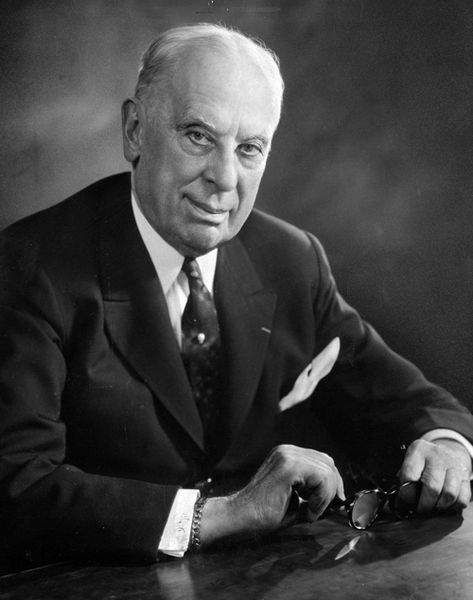
POTUS:  “Years ago, Charles Wilson…”

Jordan:  “…also known as Engine Charlie Wilson…”

POTUS:  “See you do know this stuff.  Anyway, Charlie Wilson said ‘…what’s good for General Motors is good for the country, and vice versa.’”

Charles_Wilson_official_DoD_photoJordan:  “And I think what Engine Charlie said is still correct.”

POTUS:  “Well, Jordan, now you know why I called you.  I would greatly appreciate if you would write a series of articles about GM.  What went right and then what went wrong, terribly wrong.”

Jordan:  “Funny you bring up that idea.  I’ve thought for a long time about writing such articles but never had a reason.”

POTUS:  “Now you have that reason.  Understanding what went right and wrong at GM will help me and many other people trying to set economic policy.”

Jordan:  “If I heard you correctly, you want my perspective on GM and not some widespread study by a bunch of people.”

POTUS:  “To answer your question, ‘yes.’  I understand some people might not agree with your analysis.  But the point is to get your perspective, not some politically correct version scrubbed by a PR agency.  You don’t learn from sanitized versions of situations.”

Jordan:  “Not to worry.  You’ll get the un-sanitized version.  And like any series of events, doubtless there will be…and probably should be…other opinions.  But I’ll give you my perspective.”

POTUS:  “Good.  The articles should really help.”

Jordan:  “Anything else?”

POTUS:  “Only that you cover why GM became such an economic juggernaut and then what lead to the bankruptcy.”

Jordan:  “Which bankruptcy?”

POTUS:  “You mean there was more than one BK?”

Jordan:  “You’ll have to read the story.  I do have one request for this project.”

POTUS:  “What’s that?”

Jordan:  “May I get someone from your staff assigned to help me?  I want the person to act as a reporter and help with the writing and maybe some research.  I’ll provide all the key info but an extra person would be great.”

POTUS:  “Consider it done.  Now you better get off the phone and get to work.  Good bye Jordan.”

Jordan:  “Good bye, Mr. President.”

#40 Why Manufacturing in the US Can Be Less Expensive

09 Wednesday Apr 2014

Posted by Jordan Abel in Back Asswards Thinking, Causes of the Revolution, Economics, Innovative Thinking: Ideas and Products, Possible Solutions

≈ 1 Comment

Note: Entry #41 begins a series of blogs about General Motors.  How did an apparent culture change over time likely lead to bankruptcy and an apparent disregard for addressing safety issues.  Such actions by corporations affect societal attitudes.

(Want a PDF version for Entries #1-10, #11-20, #21-30 formatted for tablets and e-books?  Click links for download.  America’s 5th Revolution Volume I (Entries 1-10), America’s 5th Revolution Volume II (Entries 11-20), America’s 5th Revolution Volume III (Entries 21-30)

Scene: Jordan met former college economics professor. Just got a coffee refill.

Professor: “A few minutes ago you asked why US companies manufacturer electronic products in China when albert_einstein_professor croppedmuch of the production is automated.”

Jordan: “I really do not understand. But I think the #1 reason by far is perceived lower labor costs.”

Professor: “The perception of lower labor costs, not necessarily the reality of lower labor costs.”

Jordan: “Let me give you some personal experience. I realize data points of one are dangerous but the more I talk to people about their real experiences, the more my experience seems typical.”

Professor: “This should be interesting.”

Jordan: “I was recruited to run a small, publicly held company in northern California.”

Professor: “Lucky you. Near wine country?”

Jordan: “Smack in the middle of it. The area is great for grapes and apples but not what one calls a hotbed for manufacturing.”

Professor: “What was the product line?”

Jordan: “Electric bikes and scooters, all of which are assembled at company facilities in the same town.”

Professor: “What’s the issue? The company was manufacturing, or at least assembling in the US”

Jordan: “The Board of Directors wants to move assembly to China and lay off many of the US employees.”

Professor: “Because labor costs were too high?”

Jordan: “That’s what they thought but none of the Board members had any real manufacturing experience.”

Professor: “They could have been right. If the area is not a major manufacturing center, the costs could be too high.”

Jordan: “My analysis? To understand true labor costs we also needed to analyze other systems. When I started average production was 37 scooters per day. Some days production was 75 scooters and other days production was zero scooters.”

Professor: “Seems like a production scheduling issue.”

Jordan: “Scheduling and parts sourcing at a minimum. The company did not fully evaluate how quality of parts could affect the rate of production.”

Professor: “Give me an example.”

Jordan: “The scooter drive system included a sprocket that linked the electric motor and a belt, which turned one of the wheels. The price of the sprocket appeared cheap…”

Professor: “But further analysis…”

Jordan: “Further analysis indicated 80% of the parts were not to specifications. As a result the output of the motor assembly line was lower. Even worse was when the workers tried to make the sprocket fit, they sometimes inadvertently damaged the motor, which caused more problems.”

Professor: “So to get 100 good sprockets you had to buy 500 sprockets. Where were the sprockets manufactured? Let me guess…China.”

Jordan: “Yes. Look, China makes some quality products. I asked the chief engineer to call a contact of mine in automotive. We sent the drawings. He quoted parts from a US manufacturer that cost 30% less and guaranteed all parts were to spec.”

Professor: “The individual part cost 30% less?”

Jordan: “Each part. Not the total but each part.”

Professor: “Good move. Quality goes up, production goes up and purchase costs go down and warranty goes down. As if that’s not enough, anything else?”

Jordan: “We made some changes to the assembly line.”

Professor: “Equipment and automation?”

Jordan: “No capital equipment or automation, just basic layout and processes. Most of the ideas came from the employees. We also implemented some recommendations from lean manufacturing techniques…but all ideas you would learn before the first coffee break on the first day of class.”

Professor: “You’re telling me you used very basic information to begin to make improvements.”

Jordan: “I am embarrassed to tell you how basic. We literally taped off work stations, color-coded hand tools by worker, bought a few hand carts and implemented employee suggestions.”

Professor: “What happened to production?”

Jordan: “Give me a guess. In just 7 months how much do you think production increased?”

Professor: “50%? No make it 100%. You doubled production.”

Jordan: “Try a higher number.”

Professor: “OK 300%. Production increased from 37 to 150 per day.”

Jordan: “Try 37 to 250 per day. Well above a 500% increase in production with basically the same equipment…and workforce.”

Professor: “You didn’t add any people?”

Jordan: “We added a few in shipping because they could not keep up. But nowhere else.”

Professor: “What about labor costs? How much more did you pay people?”

Jordan: “We gave people bonuses for reaching certain targets. Here’s an interesting statistic. Take the US labor rate and bonus at the seven months and double it.”

Professor: “So you are going to pay the US twice as much?”

Jordan: “Yes. Now take the labor cost for products made in China and make it zero.”

Professor: “Double the labor cost in the US and make labor cost in China zero…free.”

Jordan: “And tell where it’s cheaper to build the product?

Professor: “I know this is a set up. Cheaper in the US.”

Jordan: “Hard to believe but it is true.”

Professor: “That’s remarkable. But seems like an extreme example.”

Jordan: “I agree the percent increase in production is unusual but not the savings in other costs. What companies often overlook are the less obvious costs – lead time between order and receipt of goods. Cost of not being able to adjust production quickly for parts changes or even a bad part. You might end up with container loads of product before the change.”

Professor: “What is the lead time between ordering and receipt.”

cargo_shipJordan: “Usually months. Unless you air freight, you have 6-8 weeks shipping time on the ocean versus days by train or truck in the US.”

Professor: “Is quality control really an issue?”

Jordan: “Quality control is a problem for any manufacturing company. But when your supplier is thousands of miles away and with long lead time, the impact of problems grows exponentially. Plus, the cultures are different when it comes to quality. Also ask companies how difficult it is to protect IP.”

Professor: “Intellectual property?”

Jordan: “Yes. Product knock-offs are a real problem.”

Professor: “In your example labor costs became a very small piece of the overall cost. Why do you think the companies continue to source outside the US when total cost seems to be cheaper when manufacturing in the US?”

Jordan: “That’s my frustration. And let’s take electronics specifically. Virtually all of the manufacturing and assembly of many electronic products are automated. Why go outside the US?”

Professor: “US offers competitive…and maybe lower cost…and faster turnaround time.”

Jordan: “That’s why we need a national policy to get more companies to start manufacturing in the US. Even with automation, there will be more people employed in the US. And we can start to rebuild wealth.”

Professor: “The administration can begin rebuilding with some macro-economic policies. The first recommendation might sound silly but the administration needs to promote buying products made in America. I’m not talking about everything but products that can be made here at a very competitive price.”

Jordan: “Are you suggesting that as a policy?”

Professor: “Jordan, you know as well as I know the power of persuasion. If the president begins to discuss in understandable terms why people should buy products made in America, then customers will begin to force companies to change.”

fdr_~FdrJordan: “You talking about fireside-chat talks, like FDR did?

Professor: “Have you ever listened to those chats…or read the transcripts? If you have not, you should. FDR presented major issues and solutions in an understandable way.”

Jordan: “None of the hyperbole of today?”

Professor: “Incredibly straightforward. You need to listen to them. If fact, all politicians Firesideneed to listen to them.”

Jordan: “A series of fireside chats might be a great start.”

Professor: “The chats will give you time to refine some recommendations.”

Jordan: “OK, we have a plan. I’ll propose fire-side chats. Can you help with the longer-term recommendations?

Professor: “Thought you would never ask. It would be an honor. ”


← Older posts
Newer posts →

Subscribe

  • Entries (RSS)
  • Comments (RSS)

Archives

  • August 2025
  • July 2025
  • June 2025
  • May 2025
  • April 2025
  • March 2025
  • January 2025
  • December 2024
  • November 2024
  • September 2024
  • August 2024
  • July 2024
  • June 2024
  • May 2024
  • April 2024
  • March 2024
  • February 2024
  • January 2024
  • December 2023
  • November 2023
  • October 2023
  • September 2023
  • August 2023
  • July 2023
  • June 2023
  • May 2023
  • April 2023
  • March 2023
  • February 2023
  • January 2023
  • December 2022
  • November 2022
  • October 2022
  • September 2022
  • August 2022
  • July 2022
  • June 2022
  • May 2022
  • April 2022
  • March 2022
  • February 2022
  • January 2022
  • December 2021
  • November 2021
  • October 2021
  • September 2021
  • August 2021
  • July 2021
  • June 2021
  • May 2021
  • April 2021
  • March 2021
  • February 2021
  • January 2021
  • December 2020
  • November 2020
  • October 2020
  • September 2020
  • August 2020
  • July 2020
  • June 2020
  • May 2020
  • April 2020
  • March 2020
  • February 2020
  • January 2020
  • December 2019
  • November 2019
  • October 2019
  • September 2019
  • August 2019
  • July 2019
  • June 2019
  • May 2019
  • April 2019
  • March 2019
  • February 2019
  • January 2019
  • December 2018
  • November 2018
  • October 2018
  • September 2018
  • August 2018
  • July 2018
  • June 2018
  • May 2018
  • April 2018
  • March 2018
  • February 2018
  • January 2018
  • December 2017
  • November 2017
  • October 2017
  • September 2017
  • August 2017
  • July 2017
  • June 2017
  • May 2017
  • April 2017
  • March 2017
  • February 2017
  • January 2017
  • December 2016
  • November 2016
  • October 2016
  • September 2016
  • August 2016
  • July 2016
  • June 2016
  • May 2016
  • April 2016
  • March 2016
  • February 2016
  • January 2016
  • December 2015
  • November 2015
  • October 2015
  • September 2015
  • August 2015
  • July 2015
  • June 2015
  • May 2015
  • April 2015
  • March 2015
  • February 2015
  • January 2015
  • December 2014
  • November 2014
  • October 2014
  • September 2014
  • August 2014
  • July 2014
  • June 2014
  • May 2014
  • April 2014
  • March 2014
  • February 2014
  • January 2014
  • December 2013

Categories

  • Affordable Solutions
  • Back Asswards Thinking
  • Background
  • Background Stupid Is as Stupid Does
  • Benefits of Revolution
  • Causes of the Revolution
  • Common Sense Policies
  • Corporate Policy
  • Definitions
  • Diversions
  • Economics
  • Education Issues
  • Federal Budget
  • General Motors
  • Gov't Policy
  • Infrastructure & Fixed Fuel Prices
  • Innovative Thinking: Ideas and Products
  • Lessons of Revolution
  • Personal Stories
  • Possible Solutions
  • Post Trump Presidency
  • Rebranding Black Community
  • SCOTUS
  • Sense Check
  • Societal Issues
  • Stupid Is as Stupid Does
  • Tech Tsunami
  • Trump 47
  • Uncategorized

Meta

  • Create account
  • Log in

Create a free website or blog at WordPress.com.

Privacy & Cookies: This site uses cookies. By continuing to use this website, you agree to their use.
To find out more, including how to control cookies, see here: Cookie Policy
  • Subscribe Subscribed
    • usrevolution5
    • Join 32 other subscribers
    • Already have a WordPress.com account? Log in now.
    • usrevolution5
    • Subscribe Subscribed
    • Sign up
    • Log in
    • Report this content
    • View site in Reader
    • Manage subscriptions
    • Collapse this bar
 

Loading Comments...