• Home
  • Booklets/Grouped Entries
  • Tech Tsunami
  • List of Entries to Date
  • About the Author

usrevolution5

~ USA Headed for a 5th Revolution! Why?

usrevolution5

Category Archives: Possible Solutions

Range of ideas to consider for helping the US transition from revolution to a more stable environment.

#105 Do What with Fuel Prices? Are You Crazy? (Part 2)

20 Saturday Dec 2014

Posted by Jordan Abel in Economics, Infrastructure & Fixed Fuel Prices, Innovative Thinking: Ideas and Products, Possible Solutions, Societal Issues

≈ 2 Comments

(Readers: The assumed chronological date for most of the entries in this blog is after the expected 5th revolution in the US.  For more background about  the expected revolution – labeled the Revenge Revolution – and author, please view entry #01.) 

Scene: POTUS called Jordan to discuss idea.  Call interrupted.  POTUS calling back.

Jordan:  “Yes, Mr. President.  Get the problem solved?”

POTUS:  “One of those events where I had to be there rather than any real problem.  L021214_1242_24Resultsof1.gifet’s get back to where we were.”

Jordan:  “We were discussing the idea of funding infrastructure using the gas tax.  But you never told me your specific idea.  What is it?”

POTUS:  “Simple.  Set fixed prices for gasoline and diesel fuel.”

Jordan:  “You talking about having the same price in all 50 states?”

POTUS:  “Yes.”

Jordan:  “What about the spot price of oil?  That get fixed also?”

POTUS:  “No.  Let the price of oil fluctuate.  Besides we cannot control the spot market for oil.  If we ever tried the Republicans and even some Democrats would scream.”

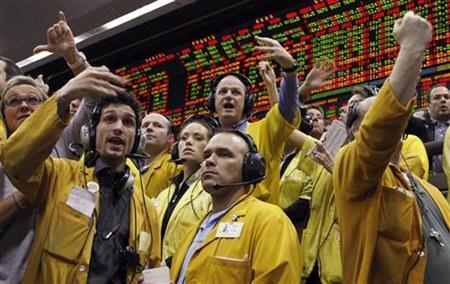
JMercantile Exchangeordan:  “So, when the price of oil in the spot market declines, the government collects more tax revenue.  And when the price of oil increases, the government collects less tax.”
POTUS:  “Simple, huh?”

Jordan:  “What about state taxes on fuel?  Do they fluctuate?”

POTUS:  “That’s up to the state.  If they want to gamble and collect more tax in down markets, that’s up to the state.  However, if they want to link to the Federal policy, states would receive a portion of additional Federal revenue.”

Jordan:  “When you first said fixed fuel price, I thought the idea was crazy.”

PcrazyOTUS:  “Thanks.  I view that as a compliment.”

Jordan:  “Then with just a bit more thought the idea didn’t seem so crazy after all.  Knowing the price of fuel will be fixed takes away a lot of uncertainty.  But what about the long-term price for gas and diesel?”

POTUS:  “Build in some adjustment for inflation – use the WPI or some other measure.”

Jordan:  “As a cynical taxpayer…”

POTUS:  “Jordan, you cynical?  Since when?”

Jordan:  “I’ll ignore that.  As a cynical taxpayer how do I know the taxes will go for repairing and improving infrastructure and not just some other part of the Federal or state budget?”

Jordan:  “Make the use of funds part of the legislation.  Put some real restrictions on the use of funds.”

Jordan:  “You think the approach will generate enough funds?”

POTUS:  “Well, let’s start with pricing gasoline at $4.50 per gallon and diesel at $5.00 per gallon.”

Jordan:  “Wow.  That’s way above current market price.  Won’t the price be a shock to the economy?”

POTUS:  “C’mon, Jordan, you sound like a Republicant.”

Jordan:  “Well, pardon me, Mr. President.”

POTUS:  “I hear you but think about this.  When gas prices increase 50₵ a gallon, even $1.00 a gallon, what happens?

Jordan:  “A lot of ranting and moaning but really not much else.”

PORantTUS:  “That’s my point.  Not much else happens.  Now think about the benefits of eliminating uncertainty…really the benefits of creating certainty.”

Jordan:  “Car and truck manufacturers can focus on improving mpg without the concern that fuel prices will fall and make the programs less marketable.  Same with air craft manufacturers and railroads.  The concern over uncertainty has slowed the adoption of many fuel-saving technologies.”

POTUS:  “Consumers could buy knowing the price for fuel.  And most importantly, we would have the funds to begin rebuilding infrastructure.”

Jordan:  “Earlier in this conversation you asked me to play Mr. Marketer.”

POTUS:  “And so, Mr. Marketer, how do we get people to want to pay $4.50-$5.00 for a gallon of fuel…and be happy about it?”

Jordan:  “If we go back to what Tip O’Neill said about all politics being local, then we need to make sure all projects are highly visible locally.  And we need to cover many different locations.”

POTUS:  “We also need to include projects other than road related.  Otherwise we are going to miss key infrastructure areas that need to be rebuilt.”

Jordan:  “You talking about railroads and mass transit?”

POTmetro-north1US:  “Yes, specifically rail-based transit.”
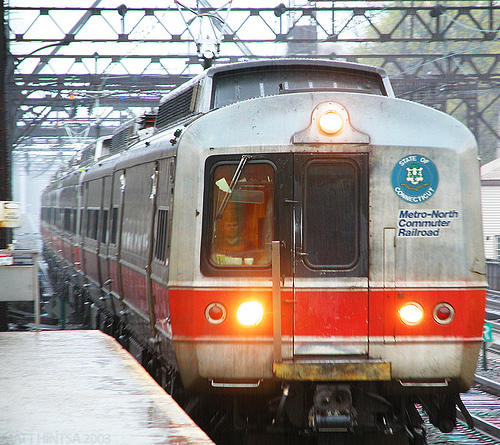
Jordan:  “What about communications infrastructure?”

POTUS:  “Yes.”

Jordan:  “Water and sewer projects?”

POTUS:  “Yes.”

Jordan:  “Airports?”

POTUS:  “Yes.  We’ve neglected each one of those areas.”

Jordan:  “Seems a bit unfair to put the burden on only the people who drive.”

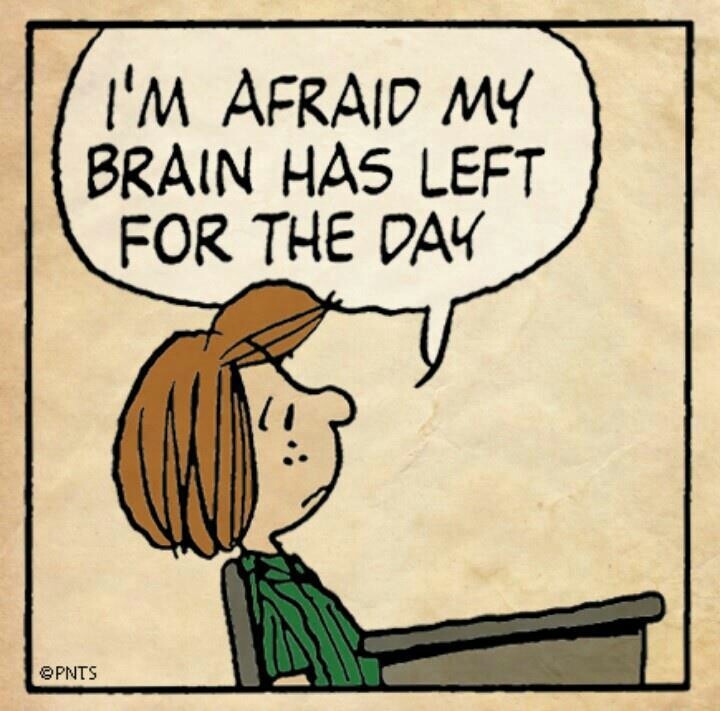
POTUS:  “Seriously, Jordan, your brain gone dead?”

JBrain deadordan:  “Whadda mean?”
Jordan:  “Every product we buy has some cost included for transportation.  Even if you don’t own a car, you are paying for fuel riding a taxi, train or airplane.  Plus transportation costs affect grocery prices, clothing…everything.”

Jordan:  “Then your point is the cost of fuel is really a consumption tax.  The more you consume, the more you pay.”

POTUS:  “Exactly.”

Jordan:  “But isn’t the fuel tax also regressive?”

POTUS:  “True but if you really analyze the data, most every group of taxes when measured again real disposable personal income is regressive.  Besides, you have any otquestionher ideas how to fund rebuilding infrastructure?”

Jordan:  “Not right now.”

POTUS:  “When you do, let me know.  In the meantime we need to start an education campaign on why $4.50 and $5.00 fuel is good for consumers, businesses and the country.  And, guess what?  You are in charge of the campaign?  Got it?”

Jordan:  “Yes, sir.”

POTUS:  “Good.  Now you have a week to get a draft of the campaign together.  Say goodbye, Jordan.”

Jordan:  “Goodbye, Jordan…I mean goodbye Mr. President.”

#104 Paying for Infrastructure. A New Approach. (Part 1)

17 Wednesday Dec 2014

Posted by Jordan Abel in Economics, Infrastructure & Fixed Fuel Prices, Possible Solutions, Societal Issues

≈ 3 Comments

(Readers: The assumed chronological date for most of the entries in this blog is after the expected 5th revolution in the US.  For more background about  the expected revolution – labeled the Revenge Revolution – and author, please view entry #01.) 

Scene: Jordan’s office.  POTUS calls Jordan for some advice.

Jordan:  “Yes, Mr. President, nice to hear from you.”

white-house-clip-art1POTUS:  “Jordan, all well with you?”

Jordan:  “Fine, thanks.  I assume all OK with you…well, as much as can be expected in Washington.  What’s up?”

POTUS:  “A social call.”

Jordan:  “C’mon.  You calling me is never a social call.  What’s the issue and how can I help?”

POTUS:  “The issue is repairing the infrastructure in the US.  It’s horrible and needs to be fixed.”

Jordan:  “I agree.  As a country we have fallen farther and farther behind.”

POTUS:  “You know.  I know it.  But the deterioration has been gradual so a lot of people don’t realize there’s a problem.  At least don’t know it until something happens to them.”

Jordan:  “I equate the infrastructure repair problem to the proverbial frog in the pot of water.  If you put the frog in and the water is cold and then turn up the heat, the frog dfrog-in-boiling-water-photo-by-tim-sheppardoesn’t jump out and boils to death.  If you throw the frog in the water when it’s hot, it jumps out.  People don’t seem to realize the extent of the problem with infrastructure.”

POTUS:  “I’ve always wondered if the story of the frog in the pot is true.  But I guess it doesn’t really matter.  The story is a good way to think about the infrastructure issue.”

Jordan:  “You and I know the public is not good at looking ahead.  Preventive maintenance is not a strong suit for most people.”

POTUS:  “And preventive maintenance is not very sexy topic for politicians.  Think about it.  Would you rather cut a ribbon for a new bridge…or tell people we are going to repair the highway and they should plan on traffic delays for the next 12-18 months?”

Jordan:  “Not much of a political choice…at least the way most people think about issues.”

PPotholeOTUS:  “Maybe that’s the secret.  Reframe the issue.  You mentioned to me once before the need to reframe these kinds of issues.”

Jordan:  “Frame the issue so people…voters…look at the traffic disruption as a positive, not a negative.”

POTUS:  “OK, Mr. Marketer.”

Jordan:  “Former Mr. Marketer.”

POTUS:  “Whatever.  Put on your old marketing hat.  How do we convince people we need to repair infrastructure and…notice I said and…raise taxes to pay for it?”

Jordan:  “At the end of the day all politics is local.  Tip O’Neill said that how many years ago?”

POTUS:  “Sometime in the 1980’s.  But it is still true today.  Maybe we should take Tip’s advice to begin bridging the divide between Republicans and Democrats.”

Jordan:  “Part of the divide was eliminated with the new Congress after the Revenge Revolution.”

POTUS:  “But a lot of rancor still exists.  So if we frame the infrastructure issues as being local, then maybe we make some real progress.”

Jordan:  “We can position repairing the bridge and the disruption as a local project to help local area become more competitive and create more jobs locally.”

POTUS:  “Voters don’t really care much about national issues, let alone international issues.”

JRusted Bridgeordan:  “OK, then how do we convince people to pay for the cost of repairing infrastructure and be happy with the disruption?”

POTUS:  “Let’s talk about paying for it.  We can fund the repairs the same way they have been funded for many years…the gas tax.”

Jordan:  “Raise the federal tax on fuel?”

POTUS:  “Exactly.  Most people have no idea what the federal tax…or state tax…is on fuel.”

Jorquestiondan:  “I’m not even sure I know.”

POTUS:  “You made my case.”

Jordan:  “How much you thinking about raising the tax?”

POTUS:  “I have a different approach that should even satisfy die-hard, never-raise taxes Republicants.”

Jordan:  “I love the term Republicants.  What’s the idea for raising taxes?”

POTUS:  “I’ll let you know but I need to call you back in a little while.”

#93 Jordan and POTUS: “The Buck Stops Here” (con’t)

25 Saturday Oct 2014

Posted by Jordan Abel in Innovative Thinking: Ideas and Products, Possible Solutions, Societal Issues

≈ Leave a comment

(Readers: Please note the blog is constructed as a story. While not all chapters are linked, after reading a few recent entries, you might want to start at the beginning. More about the blog, how the characters are constructed and about the author.)

Scene: Conversation resumes after coffee refills. POTUS had called Jordan for advice how to get Congress working together again.  Before the break, Jordan and POTUS discussed the approach to the presidency taken by Harry S. Truman. Beginning of conversation.

POTUS: “Jordan, you back on the line?”

coffee-cupJordan: “Yes, sir.  Coffee cup refilled and ready.”

POTUS: “We were talking about using addressing infrastructure issues as a way to get Congress to start working together.  How do we get started?”

Jordan: “First, as general manager, you’ll need to lead the effort.”

POTUS: “OK.  What’s the best way to frame the problem and the solution?”

Jordan: “The problem…to me anyway…is the US needs to bring existing infrastructure up to world standards, and preferably the US should become the world standard.  Why?  We need infrastructure to maintain jobs and create new jobs.”

021214_1242_24Resultsof1.gifPOTUS: “You said existing infrastructure.  You talking about rebuilding existing infrastructure?  Why not build new infrastructure?”

Jordan:  “If we rebuild existing infrastructure, I think we reduce the fight about taking away productive land or cutting down trees and then paving over with concrete.  Lots of resistance to taking that approach…and I happen to agree.  Rebuilding reduces the carbon footprint from these projects.”

POTUS: “But doesn’t rebuilding cost more?  Republicans will scream the projects are wasting taxpayer dollars.”

Jordan: “Here’s where you need to frame the cost in holistic terms rather than allowing critics to look at the cost of only one component.”

POTUS: “Tell me more of what you mean.”

1-road-constructionJordan: “I agree that say building a road over existing farmland is cheaper if one considers only the actual cost of construction.  But let’s look at the whole picture.”

POTUS: “You mean what is the cost of taking productive farm land out of production…forever.”

Jordan: “Yes, and what are we going to do with the old road?  If we leave it, there is no immediate cost but the road will need repair over time.”

POTUS: “What about the additional disruption to the environment and wildlife with the new road.  Such disruption occurred when the original road was built.  A new road is effectively doubling the negative impact on the environment.  Now I see what you mean by holistic approach.”

Jordan: “I know we are not supposed to mix religion and politics but there are numerous citations in the bible about being a good steward of the environment.  I Bible Genericwouldn’t be as blatant as some Republicans are but referencing Genesis now and then might help the argument.”

POTUS: “At least make the conservative Republicans think before resisting.  So you really believe much of the infrastructure can be rebuilt cost effectively?”

Jordan: “Here’s another angle.  People are going to whine that rebuilding is going to cause congestion and disrupt their lives.  So rather than apologize about the disruption, frame the disruption as an indicator of economic development, job Delayscreation.  Now everyone affected by the disruption is contributing to economic growth and helping reduce the carbon footprint.”

POTUS: “I like this approach.  So where do we start with one of these programs?”

Jordan: “Most successful projects I’ve been involved with have a pilot program.”

POTUS: “Smooth out the inevitable kinks.”

Jordan: “Exactly.  If I were you, I would start infrastructure rebuilding in places that have been hit hardest by either bad policy coming out of Washington or inaction by Washington.”

POTUS: “Such as?”

Jordan: “Detroit, Chicago, Cleveland, Buffalo, Milwaukee.  All have been hard hit by poor economic policy, including tax policy that encourages companies to relocate mmichiganelsewhere in the US and even worse, relocate outside the US.  The tax policy has benefited company executives and hurt the workers and these cities.”

POTUS: “People are going to resist rebuilding those cities.  Many will claim the cities are at fault, not Washington, and therefore the cities deserve to die on the vine.”

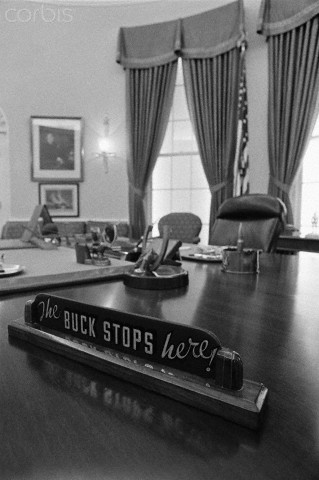
Jordan: “Pardon me for being rude, but Mr. President if you want to act like HST (Harry S. Truman) then do so and quit being concerned about what people think.  The buck stops in your office.”

POTUS: “No pardon necessary, Jordan.  Your comment is spot on.  And, yes, the buck does stop in the Oval Office.  I or whomever is president, needs to lead and do what’s Harry Truman's The Buck Stops Here Signright…and quit worrying about the polls.”

Jordan: “You and I know that some people will criticize you no matter what.  If you take the lead and act more like a general manager trying to build a team, the group that criticizes will become smaller and smaller.”

POTUS: “OK, Jordan, I got it.  Even if I don’t benefit personally, the next POTUS and the ones thereafter will.”

Jordan: “Mr. President, I think we have the start of a wonderful relationship between the White House and the public.  And the country will be much better off.”

Jordan: “I agree.  And, Jordan, thanks.”

#92 Jordan Tell POTUS “The Buck Stops Here”

22 Wednesday Oct 2014

Posted by Jordan Abel in Innovative Thinking: Ideas and Products, Possible Solutions, Societal Issues

≈ 1 Comment

(Readers: Please note the blog is constructed as a story. While not all chapters are linked, after reading a few recent entries, you might want to start at the beginning. More about the blog, how the characters are constructed and about the author.)

Scene: Jordan in office, receives phone call on private line.

Jordan: “Jordan Abel.”

white-house-clip-art1POTUS: “Jordan, this is the president.”
Jordan: “Yes, Mr. President.  Nice to talk to you.  Been a while.  How may I help?”

POTUS: “Need some advice about getting Congress…and the country…to work together again.”

Jordan: “Again?”

POTUS: “I know.  It’s been probably 40-50 years since we had a real working Congress.  But after the revolution there’s hope.”

Jordan: “Glad you think so.  The people certainly think we need a working Congress.  Getting the two sides of the aisle to work together might take a while.”

122813_1852_11GurusIdea1.gifPOTUS: “Lao-tzu said a journey of 1,000 miles begins with one step.”

Jordan: “Like most people, I always assumed someone like Confucius said that.  But anyway, I think there is a critical first step.”

POTUS: “That step is?”

Jordan: “Clearly defining a goal that (i) is easy to understand (ii) has a specific timeline (iii) can be measured (iv) is relevant to most people.”

POTUS: “So you’re suggesting a rallying cry of sorts.”

Jordan: “Rallying cry…yes, of sorts.  But the goal has to have true meaning.  Not just some slogan.  Think about those times when the Congress and the country have worked together.”

POTUS: “WWII for certain.  Another was getting a man on the moon in the 1960’s.  I still marvel at how much was accomplished so quickly.  Post 9/11 for a while but not very long.  What other examples?”

Jordan: “Since WWII, not many.  Maybe the war on poverty.  But truth be known, that was more LBJ strong arming Congress than widespread support.”

POTUS: “Civil Rights Act and the Voting Rights Act maybe also.  Probably not since both remain highly contentious today.”

Jordan: “What about trying to end the Cold War?”

POTUS: “That dragged on for a long time and took so many twists and turns, I’m not sure.”

Jordan: “So, as you said, it’s been 40-50 years, maybe longer since there was a program that was clearly understood and supported by the public and Congress.  This is not going to be easy.”

POTUS: “No wonder we had the revolution.  Alright, Jordan, what project do you suggest?  What’s going to get the country…or at least Congress working together again?”

Jordan: “Let’s take a look at what needs to get fixed.  Something that’s easy to understand.”

POTUS: “What are some big needs – energy independence, or at least less reliance on other countries.  Improving the environment.  Creating jobs.  Increasing real wages of most people.  Fixing infrastructure.  Reforming…no rebuilding the education system.  Is that enough of a list to get started?”

Jordan: “Now we need to take one of those…and I’m not sure it matters which one…and break it into pieces that people understand.”

POTUS: “…and a project with minimal politics.  Sometime politics baffles me.  For example, I still cannot understand why so-called conservative Republicans are so opposed to some basics of education…like science.”

Jordan: “You and I both know that for many people, religious beliefs trump facts.”

POTUS: “I know but religion and science are not mutually exclusive.”

Jordan: “Now there you go using logic again.  I agree with you by the way.  What’s ironic is that science becomes even more marvelous and fascinating when you add religion on top of it.”

POTUS: “OK, we’ll never convince some people so let’s pick a project.”

Jordan: “What about rebuilding infrastructure?  Roads, bridges, airports and rail in this country need serious repair and upgrades.”

POTUS: “Add electric and electronic infrastructure to the list.”

Jordan: “Good add.”

POTUS: “Alright, what kind of program will satisfy Republicans?”

Jordan: “With all due respect, your question, which needs to be answered, might be part of the problem.”

POTUS: “Whadda mean part of the problem?”

Jordan: “Meaning the problem and the solution need to be articulated clearly to reduce…if not eliminate…political posturing by both parties.  The effort to satisfy a political party should not be a primary issue.  Solving the problem should be first.”

POTUS: “OK, then, how are we going to describe the problem?”

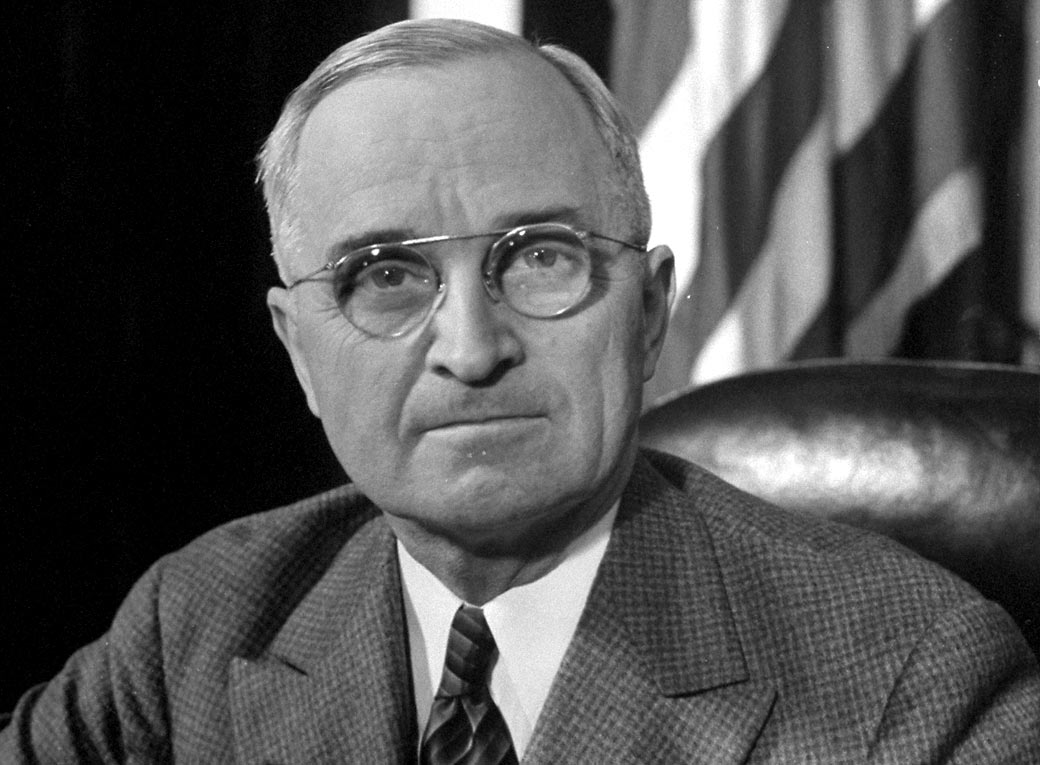
harry_trumanJordan: “Let’s take a lesson from one of your predecessors…Harry S. Truman.”

POTUS: “I admit he was forthright.  But life was much simpler then.”

Jordan: “Funny, I had a very similar conversation with someone the other day.  Her perception of life being simpler during the Truman years was the same as yours.”

POTUS: “At least I’m not the only one who thinks that way.  What was your response?”

Jordan: “Life was different in many ways.  But HST faced very difficult decisions – dropping the atomic bomb on Japan, transitioning economy from war to civilian production, which usually includes a major recession, Korean War, firing Douglas McArthur…and the start of the Cold War.  Berlin airlift, e.g.”

POTUS: “You’re right.  Some very tough decisions.  But you know what many people remember most about HST?”

Jordan: “The sign on his desk.”

Harry Truman's The Buck Stops Here SignPOTUS: “Exactly.  A simple sign with a very clear message.  ‘The buck stops here.’”

Jordan: “Seems to me the first step for you is getting a sign for your desk that says, ‘The buck stops here.’”

POTUS: “Won’t people think I’m copying HST?”

Jordan: “Who cares what they think?  Rather than negative I think it would be perceived as positive.  Whether it’s true or not, people do think the buck stops in the Oval Office.  The sign might be a good reminder to Congress.”

POTUS: “Interesting idea.  And, hey, people elected me to get things done.”

Jordan: “That’s right.  They elected a general manager for the country, not some king or dictator.”

POTUS: “With the sign, I can probably force Republicans and Democrats to start work together.  I’ll state I’m the general manager and I’m leading a team to get things done.”

Jordan: “Now we are getting somewhere.  I beginning to feel as if something positive can actually happen.”

POTUS: “Me, too.  Let’s take a break for a minute and get a coffee refill.”

(To be continued)


#91 The Rocky and Bullwinkle Party. How to Straighten Out Washington.

18 Saturday Oct 2014

Posted by Jordan Abel in Innovative Thinking: Ideas and Products, Possible Solutions, Societal Issues

≈ 1 Comment

(Readers: Please note the blog is constructed as a story. While not all chapters are linked, after reading a few recent entries, you might want to start at the beginning. More about the blog, how the characters are constructed and about the author.)

JC: “Whew, I feel better.  OK, where were we?”

Jordan: “We started out talking about how animals are like children…or was it the other way around?  We decided they both acted in similar ways.”

122813_1403_ThePoundDog1.jpgJC: “Just before the break we concluded that unlike animals and children, which keep things fairly simple, anything that gets sent to Congress is likely to get complicated and messy.”

Jordan: “Well there’s a lesson for the post-revolution Congress – keep it simple like kids, squirrels and an occasional president.”

JC: “When was the last president to keep it simple…and not sound like an idiot?”

Jordan: “Is your idiot reference referring to a 21st Century president by chance…maybe the first president elected in the 21st Century?”

JC: “Never mind.  Who are you thinking about?”

Jordan: “The other night at dinner several of us had an interesting conversation about which president in recent times could be a model for the future.”

JC: “What criteria did you use?”

Jordan: “We didn’t have a checklist per se but the conversation focused on communicating clearly about what decisions were made and the expected outcomes.”

JC: “What about decisions driven by ratings in the polls, satisfying party ideologues, trying to get reelected and all those factors that seem to have taken over the presidency.”

Jordan: “That’s what we tried to sort out.  What president did not seem concerned about all the side issues and got to the point?”

JC: “And your consensus was?”

Jordan: “Harry S. Truman.  We concluded he was simple…not simple minded…straightforward and unpretentious.”

harry_trumanJC: “But life was much simpler then.”

Jordan: “We all say that but I’m not so sure.  We all say life on the prairie was simple but in fact life on the prairie was fairly complicated and required a wide range of skills.”

JC: “OK Daniel Boone.  What was so complicated for Truman?”

Jordan: “First major issue was whether to drop the atomic bomb on Japan.  The initial tradeoff seemed straightforward – trading Japanese lives for American lives…and the Allies.  Who knows if he or anyone beyond a handful of scientists really understood the likely long-term consequences?”

JC: “What else?”

Jordan: “Post-WWII decisions.  Virtually every war is followed by a sharp and severe recession as war production drops and employment decreases.  The transition following WWII was relatively smooth with what I would characterize as minor disruptions compared to the potential disruption.”

JC: “You know, I never thought about the economy following a war.  What do you do with all those people in uniform coming back and what do you do with all the people in factories who replaced the people who went to war?  OK, big problem solved reasonably well.  Next?”

Jordan: “Soviet threat, especially start of the Cold War and blockade in Berlin.”

JC: “The Berlin airlift.  That lasted more than a year, didn’t it?”

Jordan: “Yes.  And then there was the Korean War and firing General Douglas MacArthur.”

JC: “Alright, some heavy-duty decisions.  But every president has those.  Maybe not the same magnitude but heavy-duty nonetheless.  Wasn’t the media friendlier?”

Jordan: “Not sure any friendlier but certainly not 24×7 with all the blowhards on Fox and talk radio.”

JC: “Whether one is left or right politically, hard to dispute that pre cable the news was more fair and balanced than today.”

Jordan: “The balance helped some but some of the press pilloried Truman unmercifully.”

JC: “So what did your dinner group decide was the difference between Truman and most other presidents…at least post-WWII presidents?”

Jordan: “He made himself accountable publicly.”

JC: “He had that sign on his desk.  What did it say, I’ve forgotten.”

Harry Truman's The Buck Stops Here SignJordan: “The Buck Stops Here.”

JC: “Right.  Great sign.  Anything else?”

Jordan: “He was plain-spoken.  No obfuscation of the situation.  Just straight-forward talk.”

JC: “The other day I heard part of a speech he gave to Congress.  The speech was about as easy to understand as anything I’ve heard from Washington.  A lesson there.”

Jordan: “And when his term was up, what do the Truman’s do?  Drive to Independence, Missouri.”

JC: “Where were the Secret Service guys?”

Jordan: “There weren’t any.  If there were, there were only a couple.  No big escort.  Just jump in the car and head out of Dodge…well Washington…for Missouri.”

JC: “What’s happened to our country?  I know you can’t put the genie back in the bottle but we have made life in politics far too complicated.”

Jordan: “Maybe the squirrels, ducks and other back-yard creatures can teach the politicians a thing or two.”

JC: “First lesson would be KISS — keep it simple, stupid.  Second lesson would be pay attention to who’s really feeding you…and it’s the folks whose backyard you live in and not the special interest lobbyists.”

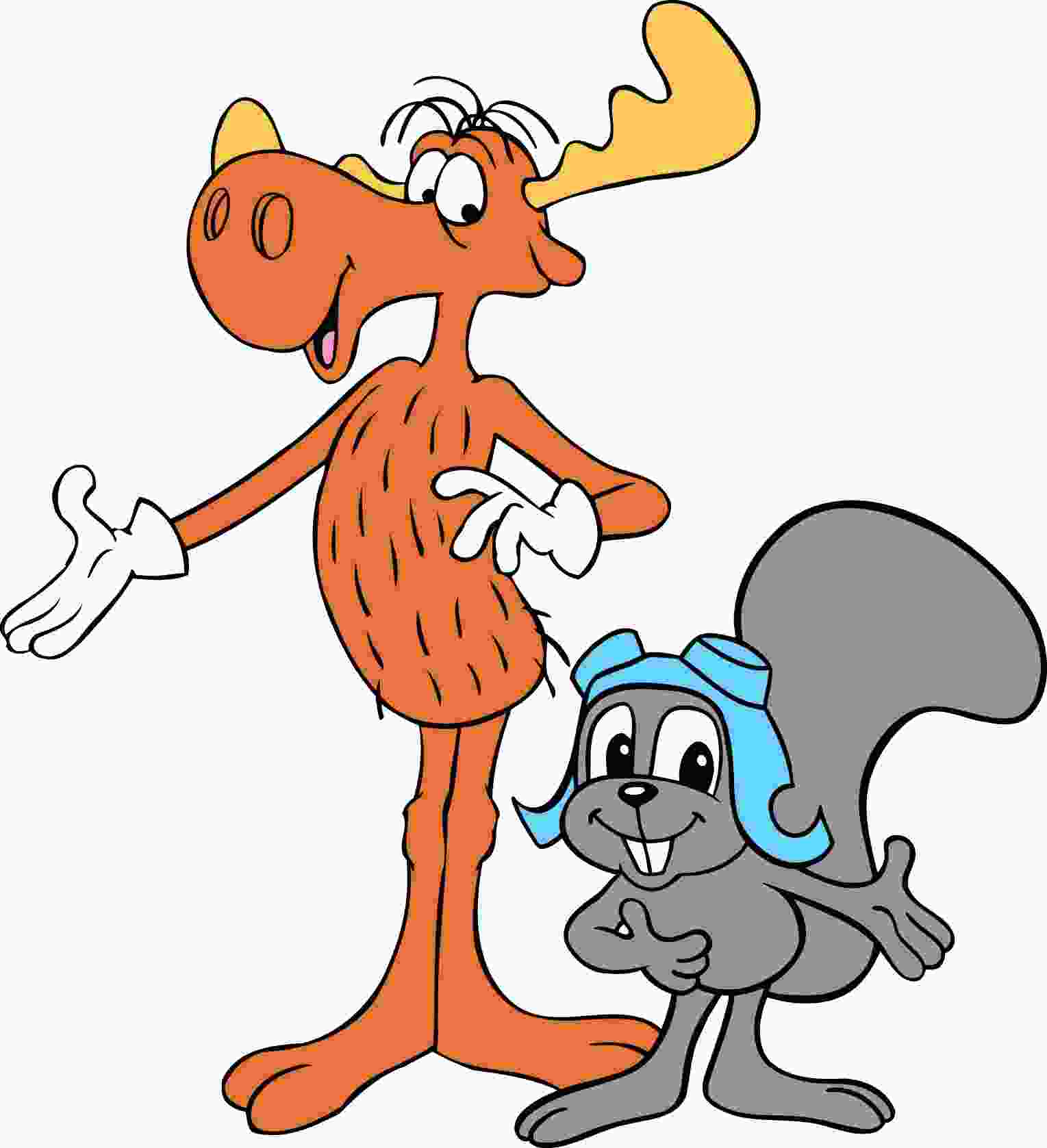
bullwinkle1Jordan: “Here’s an idea.  What about Rocky the Squirrel for President.  His running mate, of course…”

JC: “Bullwinkle.  Rather than the Bull Moose Party we can have the Rocky and Bullwinkle Party!”

Jordan: “Ah, Washington could start functioning again.  Here’s a toast to the Rocky and Bullwinkle Party.”

#84 Change Starts with Personal Responsibility

10 Wednesday Sep 2014

Posted by Jordan Abel in Causes of the Revolution, Education Issues, Innovative Thinking: Ideas and Products, Possible Solutions, Societal Issues

≈ Leave a comment

(Readers: Please note the blog is constructed as a story. While not all chapters are linked, after reading a few recent entries, you might want to start at the beginning. More about the blog and about the author. )

Scene:  JC, Greenie and Jordan continuing conversation about higher education.  Start of conversation entry #80.

Greenie:  “I think most everyone wants teachers and productive members of society, 122813_2140_15Education2.jpgnot prisoners.  But when all is said and done, how are we going to make this happen?”

JC:  “Jordan, I agree with Greenie.  This idea seems too ethereal to me.  The concept is great but are the concrete steps to implement?  We need a simple plan.”

Jordan:  “It is a big, abstract idea.  But we’ve already laid out two steps.  #1 is stop busing and use tax dollars for teachers.  #2 is trade the cost of incarcerating someone for more teachers.”

k14630609JC:  “So, back to my question.  What are the concrete steps to implement the two ideas?”

Jordan:  “To me the first step is for those disadvantaged to begin saying ‘Stop busing.  Use the money saved to improve our neighborhood schools.”

Greenie:  “Then what?  Each situation is going to be different, so the residents need to realize they might end up working closely with the school board.”

122813_2140_15Education1.jpgJC:  “Residents might have to work with the courts also.  Remember busing started implementing Brown vs. Board of Education (Topeka) and the repeal of Plessy vs. Ferguson (separate, but equal).

Jordan:  “Speaking of Ferguson…Ferguson, MO might be a good place to start this project.”

Greenie:  “Excellent location, if nothing else for the publicity.  Someone needs to check how much busing actually goes on in Ferguson but I like the location.”

JC:  “Residents are probably open to most any idea that gives them more control.”

Greenie:  “Plus the Justice Department is already investigating Ferguson so they might be open to the idea as well.”

Jordan:  “So now we have one possible location for a pilot program.  We need some more locations.”

JC:  “Jordan, what about getting with Justice for ideas?  Surely they have a ‘watch list’ for school districts that are not complying with the law.”

Jordan:  “Alright.  I’ve got a contact there I’ll call.”

Greenie:  “You know what I like about this idea?”

JC:  “OK, what do you like about this idea?”

Greenie:  “OK, wise guy.  The plan puts more control back with parents and the school district.”

JC:  “I like more control with parents.  But some of the school districts do not want integration.”

Jordan:  “This plan might give some districts an out from forced busing, which they should support.  I can’t blame parents for not wanting to have their kids bussed.  Busing is a waste of time and eats into kids’ study time and free time.”

School-Bus-ClipartGreenie:  “Tell me about the disruptive part.  My kids were two blocks from the neighborhood school and ended up being bussed.”

Jordan:  “How long was the ride?”

Greenie:  “30 minutes each way.  60 minutes each day on some bus when the kids were two blocks from school.  A lot of kids spend even more time on the bus.”

Jordan:  “You know what might help get the effort going?  A template for parents to follow.”

JC:  “Why not publish a template?  Conservative political groups have templates for legislators.  Aren’t they running the NC House and Senate?”

Jordan:  “Seems like it.  More ALEC templates than any home-grown legislation.”

Greenie:  “These groups are effective.  And they must think the public is incredibly stupid.  In the 2014 mid-terms Republican candidates in three different states ran TV ads their Democratic opponent was the last vote that made Obamacare law.”

JC:  “Being last three times on a single vote is hard to do.  But, hey Republicans have their own math.”

Greenie:  “Now, now.  Be nice.”

Jordan:  “I’ve got another one.  The Charlotte Observer published a letter to the editor from someone I know.  He is CEO of his father’s business.  The son can’t string two sentences together, let alone a coherent letter.  He used a template for the letter and added a few names to make it local.  And the paper published it.”

Greenie:  “Not often do I admit learning something from far-right Republicans, but in this case, we should take a lesson from them.”

JC:  “Let’s use their template idea.  We need to make sure the tone and text focus on moving forward and not rehash old issues.”

ladderGreenie:  “If we’re not careful, we’ll spend too much time talking about why the black community remains at the bottom of the economic ladder and not enough time looking at solutions.”

Jordan:  “What do you mean?”

JC:  “How many times have you heard or read that blacks were slaves, then subject to Jim Crow Laws.  As a result, blacks lost self-esteem and blah, blah, blah.”

Jordan:  “JC, aren’t you being overly harsh?  Isn’t a lot of that true?”

JC:  “My point is what you keep preaching, Jordan.  You can’t drive very fast looking through the rear-view mirror. “

Greenie:  “But all the info is true.”

JC:  “And so what?  Every other ethnic group has been discriminated against.  And guess what?  Every other ethnic group has moved on.”

Greenie:  “Point well taken.”

boiling_potJC:  “Put all the information, arguments, blame and whatever else you want in a pot, turn the heat to high and wait for it to boil.  When it’s finished boiling, there’s one thing left.” Jordan:  “That one thing is.”

JC:  “Personal responsibility.”

Greenie:  “Seems to me we are back to the adage ‘You can lead a horse to water but you can’t make it drink.”

JC:  “That’s exactly where we are.  Nothing of significance is going to happen to get blacks off the bottom rung of the economic ladder until the black community stands up and says, ‘We want to change.  Not whites want you to change.  We, the black community, want to change.  We would others to help us.”

Jordan:  “The first project could be rebuilding neighborhood schools.”


#83 What Do You Want to Pay for – One Prisoner or One Teacher?

06 Saturday Sep 2014

Posted by Jordan Abel in Education Issues, Innovative Thinking: Ideas and Products, Possible Solutions, Societal Issues

≈ 1 Comment

(Readers: Please note the blog is constructed as a story. While not all chapters are linked, after reading a few recent entries, you might want to start at the beginning. More about the blog and about the author. )

Scene:  JC, Greenie and Jordan continuing conversation about higher education.  Start of conversation entry #80.

Greenie:  “Holistic respect.  Respect holistically.  You know, Jordan, even after having 010414_1635_16StudentsL2.jpglunch neither tag line rings.  We need something else.

JC:  “I like Aretha’s R-E-S-P-E-C-T but I don’t like holistic.  The idea of holistic is fine but we need a different term.  But let’s not get hung up on terms right now.  What’s next?”

Jordan:  “Next is trying to get support for the idea, whatever we call it.”

Greenie:  “You said something about a pilot program.  Surely some school district must be taking this approach already.”

Jordan:  “No doubt a few districts are.  But you know how provincial school districts are.”

010414_1635_16StudentsL1.jpgJC:  “Tell me about it.  Such-and-such an idea won’t work here because…well, because things are different here.”

Jordan:  “I can’t tell you how many times I heard that very phrase in Charlotte.  The resistance was especially strong if the idea worked some place north of the Mason-Dixon Line.”

JC:  “So are we implying the movement for more neighborhood schools needs to be grass-roots or at least start locally?”

Greenie:  “Ground up and driven by people who have the most to gain.”

JC:  “That group being…?”

Greenie:  “Who have we been taking about…the black community.  From my perspective, they have the most to lose without major changes to the education system and the most to gain with changes, especially neighborhood schools.”

Jordan:  “I agree.  The movement toward neighborhood schools and the argument about using a holistic-cost approach needs to come from the black community, not some think tank in Washington.”

JC:  “OK, then who’s going to take the lead on this effort?  The problem is complex and going to take several generations to fix.  Who’s going to convince people to have patience?”

Greenie:  “A journey of a thousand miles begins with one step.”

122213_1351_10GurusHous1.gifJordan:  “Did Confucius say that?”

JC:  “Jordan, you spent too many hours with those math problems and not enough time reading.  It was Lao Tzu.  I really wonder about you sometimes.”

Greenie:  “JC, don’t be so hard on little Jordan.  He can’t help it.  Bless his little heart.”

Jordan:  “Thanks for the sympathy Greenie.  You’re a tough crowd.  Besides, I think the problem of getting people to understand might be less complicated than you think.  Let’s break down the key parts.”

Greenie:  “Seems to me we can get more buy-in if we tie recommended actions to saving taxpayer dollars.  Keep the fuzzy stuff in the closet.”

JC:  “If we’re going to focus on benefits and cost…what do you call that Jordan?

Jordan:  “I call that too much time with warm and fuzzy books and not enough time learning quantitative analysis.  But the answer is ‘cost:benefit analysis.’”

School-Bus-ClipartJC:  “OK, we’re even.  The first issue should be a cost: benefit analysis of busing.  Make the case to trade dollars spent on busing for additional teachers or TA’s.”

Greenie:  “There are hard data on costs for busing.  The equation should be simple to understand.”

JC:  “For every $50k spent on busing – buying the bus, fuel, drivers, maintenance, insurance, whatever…the school district hires a new teacher for the neighborhood schools.”

Greenie:  “But only for neighborhood schools with a high percentage of poverty.”

Jordan:  “What else?”

PrisonerJC:  “Trading the cost of incarceration for education.  I’m still astounded that sending someone to prison for 5 years costs more than sending someone for a 4-year degree at Harvard or MIT.  That is so hard to believe.”

Greenie:  “I’m dumbfounded also.  But I think a more effective argument, and one that will be easier to get across, is taking the nearly $50k per year for incarceration and transferring that to public schools.  One prisoner equals one teacher.”

Black School TeacherJC:  “Keep the person out of prison, help them get an education and then a job and voila…you turn a tax expenditure into tax revenue.”

Greenie:  “One prisoner equals one teacher.  Even the most die-hard conservative ought to be able to understand that.”

(To be continued)

#82 Why Pay for Public Schools? 5 Years in Prison Costs Same as Degree at MIT

04 Thursday Sep 2014

Posted by Jordan Abel in Causes of the Revolution, Education Issues, Innovative Thinking: Ideas and Products, Possible Solutions, Societal Issues

≈ 2 Comments

(Readers: Please note the blog is constructed as a story. While not all chapters are linked, after reading a few recent entries, you might want to start at the beginning. More about the blog and about the author. )

Scene:  JC, Greenie and Jordan continuing conversation about higher education.  Start of conversation entry #80.

Greenie:  “What’s the real issue here?  Busing, separate but equal, quality 010414_1635_16StudentsL2.jpgneighborhood schools, or something else?”

JC:  “I’m confused too, Jordan.  What is the real issue?  And what do we need to do to address it?”

Jordan:  “Now we are getting someplace.  As a society we are great at treating symptoms and lousy at addressing the underlying causes.”

JC:  “OK, great Mr. Philosopher, explain to us mortals what you’re talking about.”

Greenie:  “Specifically related to schools or busing or education or whatever.  More to the point, please.”

Jordan:  “My view is the only sure-fire way out of poverty is education.”

122813_1403_12ThePoundD1.jpg JC:  “Agreed.”

Jordan:  “I also believe, based on many years empirical data in this country, and worldwide, that a  public-school system can deliver a high-quality education.”

Greenie:  “I agree.  We are all products of public primary and secondary schools.  And JC and I, unlike you Jordan, attended public universities for our advanced degrees.”

Jordan:  “I taught at a public university…or at least I was an adjunct.  So there.”

JC:  “Now that we have the public/private school backgrounds out of the way, what about recreating a credible, quality public-school system for K-12?  Make that K thru college.”

Jordan:  “I think that’s a good way to frame the issue?  ‘What’s required to recreate a credible, quality public-school system?’  I would add one element…affordability.  The system needs to be affordable for taxpayers and affordable for participants, especially at the college level.”

Greenie:  “Making it affordable is critical.  Have you checked tuition at some public universities?”

JC:  “Tuition rivals some middle-line private schools.”

Greenie:  “Jordan, are you suggesting we cut back on or even eliminate charters and private schools?”

Jordan:  “You know my feelings about charter schools.  Despite all the rhetoric, charters are a diversion of public tax dollars to the private sector.  Using tax dollar to fund charters is part of a long-term strategy to erode and eventually eliminate public schools.”

JC:  “Whoa, Jordan.  What about private schools?”

Jordan:  “If people want to pay for private schools, including parochial schools, I’m OK.  But…and this is an important but…”

Greenie:  “…no vouchers?”

Jordan:  “You got it.  You want to send your kid to private school?  OK but so subsidy from taxpayers.”

JC:  “What about home schooling?”

Jordan:  “I’m opposed to that as well.  As we talked about, parents can do all the home schooling they want after regular school hours.  If little Johnnie is as bright as the parents claim, then little Johnnie can soak all the information he wants after regular school hours.  Kids need to be exposed to more diversity, not less diversity.  Bright kids need to learn how to deal with others who aren’t as gifted.”

JC:  “Alright, what’s next?”

Jordan:  “The only way public schools are going to work effectively is to start with schools in the neighborhood.  Neighborhood schools allow kids to develop an emotional bond to the school.”

Greenie:  “Neighborhood schools mean no busing for most students.”

JC:  “What if the neighborhood has a high crime rate.  How are the kids going to get to school?”

Jordan:  “Here’s where society has an obligation.  We…collective we…have to protect the kids going to/from school.”

JC:  “I need to ask a question again about cost.  Who’s going to pay for all this?  I know the question sounds so Republican-like but who is going to pay for this?”

Greenie:  “Good question, JC.”

Jordan:  “It is a good question and a great lead-in to finding a solution.”

JC:  “…and that solution is?”

Jordan:  “A holistic approach to calculating cost.”

Greenie:  “Jordan, sounds like another abstract idea.  Washington have your brain muddied?”

Jordan:  “The approach might appear abstract but the approach is sound, and realistic.  To me using a holistic approach to cost is the only way we…again, collective we…are ever going to start making progress toward rebuilding a quality education system.”

JC:  “Why do you say that?”

122813_2140_15Education4.jpgJordan:  “A holistic approach allows all cost increases and all cost decreases to be combined.  Without a holistic approach, usually only a portion of the issue is addressed.”

Greenie:  “A holistic is an Interesting idea, but I need an example.  Still too abstract.”

Jordan:  “Alright.  Take the idea of what we’ve been discussing — credible, quality neighborhood schools.  What are the extra costs to achieve the goal?”

JC:  “More security in some neighborhoods.  Higher teacher pay.  Maybe rehabbing some schools.”

Jordan:  “What about the savings?”

Greenie:  “Fewer buses, less fuel, fewer bus drivers, more time before and after school for education and activities and probably lower crime.  And, eventually more productive members of society.”

Jordan:  “Take crime.  How much it cost to incarcerate someone?”

JC:  “How much does it cost to keep someone in prison for a year?  Don’t know.”

Jordan:  “Try $40-50,000 per year.”

JC:  “So over a 5-year period, the cost is $200-$250k.  Over a 10-year period, the cost MIT-logoto society is say $400-$500k.  So if we send someone away for five years, it’s the same cost as an undergraduate education at Harvard or MIT?  And that’s without any financial help from the school. I never thought about it that way.”

Greenie:  “You mean as a society we have a choice – send someone to prison for 5 years or pay full tuition, room, board, books and everything else for someone to attend Harvard or MIT?”

JC:  “I’ll take paying for someone to go Harvard.”

Jordan:  “I’ll take MIT.”

Greenie:  “We figured that.”

Jordan:  “Anyway, now you are beginning to see how the choices we make as a society affect us in different ways.  A holistic approach attempts to consider all implications of a decision, not just a few parts.”

Greenie:  “For the same cost to taxpayers, we can put someone in prison for 5 years and teach him or her few, if any, skills that are useful upon exiting or send someone to school and end up with a great education.  Duh.  Seems simple enough to me.”

Jordan:  “Let’s be realistic.  Not everyone who goes to prison comes out as totally untrained.  And not everyone who goes to prison is smart enough to attend university.  But many people are and as a society we are wasting that potential.”

JC:  “Interesting approach. Spend money in one area and avoid spending money in another area.  How are we going to get that point across?  So many politicians and voters focus on today and 10-second sound bites and not focus on the longer term.”

Jordan:  “What segment of society is affected most by lack of quality, credible neighborhood schools?”

Greenie:  “The black community, I guess.  But the issue really applies to a larger portion of society.”

JC:  “Greenie, you’re right.  Jordan has been outlining a program to help the black community get off the bottom rung of the economic ladder.”

Greenie:  “Is this holistic cost approach part of that program?”

Jordan:  “Implied but not overtly detailed.”  Maybe it should be.”

JC:  “Jordan, you used one word to summarize the program.”

Greenie:  “What word was that?”

JC:  “R-E-S-P-E-C-T.”

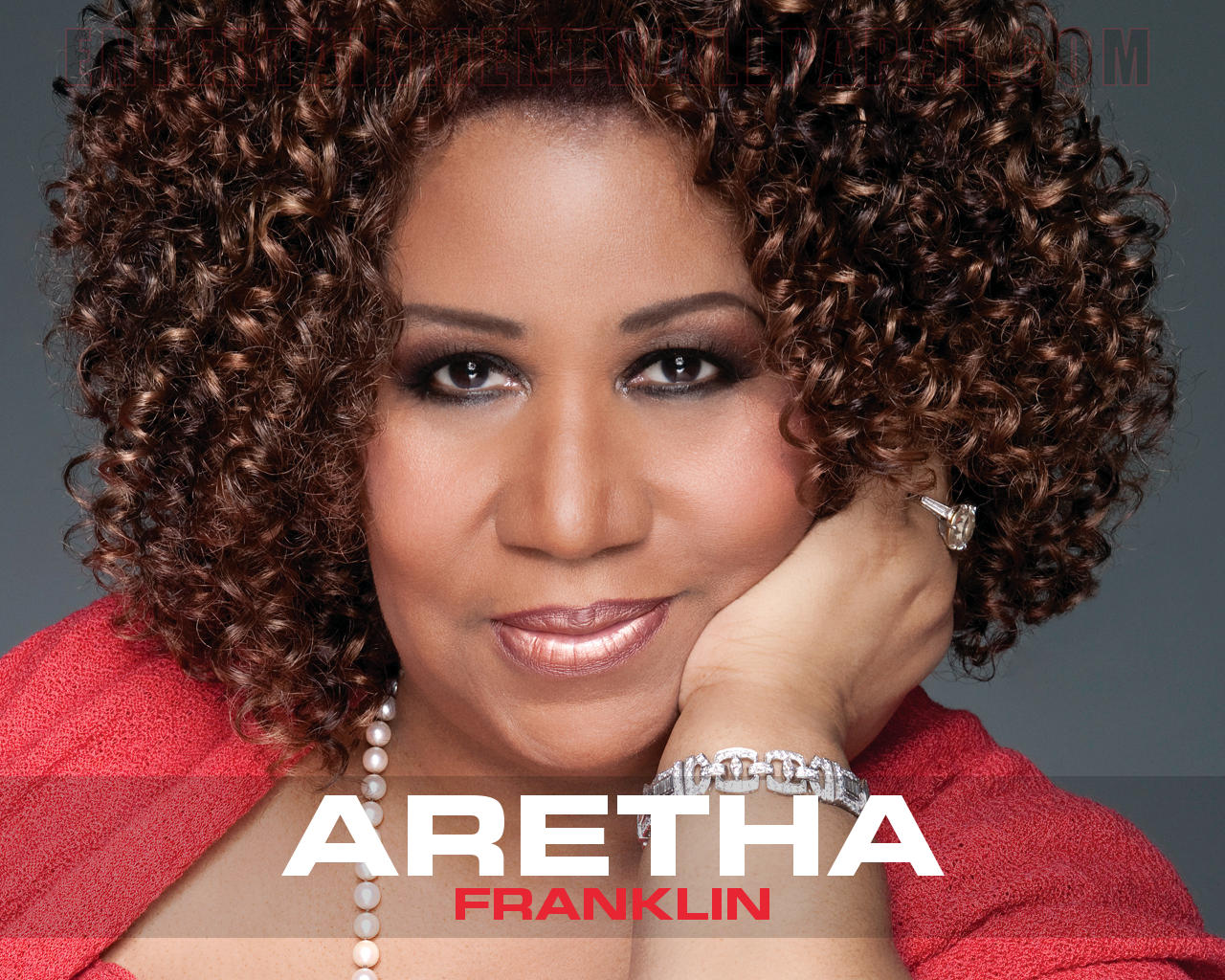
Aretha-aretha-franklin-27121751-1280-1024Greenie:  “You don’t sing like Aretha but its a great one-word tag line.  A two-word tag line might be “Holistic R-E-S-P-E-C-T.”

Jordan:  “Holistic respect is going to some explaining.  But it does capture the essence of the issue.”

JC:  “Holistic respect doesn’t ring, as they say.  Let’s have lunch and see how it sounds after some food.”


#81 Want Quality Education? Start with Quality Teachers…and No Busing

30 Saturday Aug 2014

Posted by Jordan Abel in Back Asswards Thinking, Education Issues, Possible Solutions, Societal Issues

≈ Leave a comment

(Readers: Please note the blog is constructed as a story. While not all chapters are linked, after reading a few recent entries, you might want to start at the beginning. More about the blog and about the author. )

Scene:  JC, Greenie and Jordan continuing conversation about higher education.  Start of conversation entry #80.

Greenie:  “You really think schools can be separate but equal.  Seems like such a throwback.”

122813_2140_15Education2.jpgJordan:  “Schools are never equal.  That’s a misnomer.  I do think, as a society, we can make sure all children are exposed to a credible minimum level of quality instruction.”

JC:  “That’s a mouthful…but I agree.  There is a number of ways of measuring performance so I think we have multiple methods to achieve a credible minimum standard.”

Greenie:  “I’ll buy the claim we can achieve minimum academic standards.  Not easily achieved but possible.  But what about social interaction in education?  Isn’t that lost without busing?”

010414_1635_16TeachingS1.jpg JC:  “Some.  But think about how much social interaction we’re losing now.  We’re becoming more segregated with private schools, parochial schools, charter schools.  Even worse, look at how many people are home schooling.  Where’s the social interaction with home schooling?”

Jordan:  “Good point.  I’m all for putting the kibosh on home schooling.”

Greenie:  “Jordan, you do like to swim upstream, don’t you?  Why the kibosh on home schooling?“

Jordan:  “First, I’m all for encouraging kids to learn as fast as possible.  But a major part of education is developing social skills and learning to get along with people who are different.”

JC:  “Proponents of home schooling claim public schools hold back smart kids.”

Jordan:  “Hogwash.  If the parents think the kids are so smart, then enroll them in a program after school hours.  No one is proposing to quit learning.”

Greenie:  “Can they get more learning during school hours?”

Jordan:  “I know people think we were educated in the Stone Age…and maybe they’re right.  However, I recall my 8th grade math class…”

JC:  “…Mrs. Davidson, right?”

Jordan:  “Yes.  She set up an extra credit program for the entire year.”

cootie-bug-canada JC:  “Was that the Cootie Bug thing?”

Jordan:  “You’re on a roll, JC.  Anyway I finished the entire year’s math coursework and all the extra credit work by mid-October.”

Greenie:  “So what did Mrs. Davidson do with little Jordan?”

Jordan:  “Made little Jordan a TA.”

Greenie:  “Really.  I never knew you were a teacher’s assistant.  In 8th grade?  I’m impressed.”

JC:  “Don’t be.  His only shining moment.  Just kidding, Jordan.  This conversation seems centered on one thing.”

Greenie:  “What’s that?”

JC:  “Making sure there are high-quality teachers at all levels.”

Jordan:  “That means upping the ante for teacher’s salaries.  Much more than we pay them now.”

Greenie:  “Plus, we need to put some respect back in the teaching profession.”

JC:  “Agreed.  Becoming a teacher should not be a ‘can’t-find-anything-else-to-do’ occupation.  Teaching needs to become a profession of first choice.”

Jordan:  “Attracting that caliber of person to teaching is going to require a radical change in thinking about salaries.”

Greenie:  “JC, if you were graduating school today, what salary would entice you to teach?”

JC:  “$100k.”

Greenie:  “$100k?  Tenured teachers don’t earn that much most places.”

Black School Teacher JC:  “That’s the problem.  Smart people who can be good teachers have many alternatives, even in a lousy job market.  Why should they teach for $40-50k given the alternatives?”

Jordan:  “Want to hear some back asswards thinking?  Starting pay for teachers in North Carolina?  Just over $30k, which is near the bottom of all states.  The legislators hadn’t increased the salary for several years.  Then they wanted to cut other support for teachers.  And the same legislators couldn’t understand why teachers were leaving the state.  Duh.”

Greenie:  “You’re not suggesting the same salaries for teachers in all school districts are you?”

Jordan:  “No.  What I am suggesting is without quality teachers in quality neighborhood schools this country is going to continue to fall behind in education.”

JC:  “Who’s going to fund all the increases in salaries?”

Greenie:  “JC, have you become a Republican?”

JC:  “No, but it’s a legitimate question.  We’re talking about a large increase in compensation and it needs to come from somewhere.”

Greenie:  “As a start, let’s get rid of most all school buses.”

Jordan:  “What else?”

JC:  “I’d like to take a look at every part of the school budget, including facilities.  What’s that called where you take a look at every part of the budget as if you are starting over?”

zbbJordan:  “Zero-based budgeting.”

JC:  “That’s it.  The approach requires justification for every expenditure.”

Jordan:  “Zero-based budgeting is often an emotional exercise.  People like to protect their pet programs…and their jobs.”

Greenie:  “I hear you.  But, if we don’t use something like zero-based budgeting, how else can real change be made?  The people in charge will never make the changes required.”

JC:  “Jordan, you’ve been involved with major organizational changes.  How’d it get pulled off?”

Jordan:  “Not easily and almost always with a lot of personnel changes…and pain.”

open-mindedGreenie:  “I’m certain it was painful for people who normally are uncomfortable with change.  What about people who were more open-minded?”

Jordan:  “For most of the open-minded, the change was exciting.  Not everyone liked all the changes but they knew the old way was not working.  And they supported the changes.”

JC:  “As a society are we really ready to tackle the problem of getting more quality teachers?”

Jordan:  “Everyone – left, right and center – seems frustrated with the current education system.  What we need is a pilot program to demonstrate how quality teachers can move toward quality education.”

Greenie:  “Quality public education that can be achieved in neighborhood public schools…”

JC:  “…without busing.”

Jordan:  “Without busing.  But with more parental involvement.”

(To be continued.)

#80 OK Parents — Want a Yellow Bus or Another Teacher?

27 Wednesday Aug 2014

Posted by Jordan Abel in Economics, Innovative Thinking: Ideas and Products, Possible Solutions, Societal Issues

≈ 2 Comments

Scene: Jordan and JC have been chatting over coffee.  Just finished phone conversation with Rock Man.

Jordan:  “Interesting conversation with Rock Man.  Anxious to get his ideas.  By the way, when are you leaving to go see Greenie?”

010414_1635_16TeachingS1.jpgJC:  “I’m not.”

Jordan:  “Why not?”

JC:  “Because she’s coming here.  She finished her meeting early, called and we thought we could gang up on you for a while.”

Jordan:  “Just what I need.  Two women ganging up on me.”

JC:  Jordan, you love it.  And here’s Greenie.”

Greenie:  “Jordan, been a long time.  Great to see you…but you feeling OK?”

Jordan:  “Greenie, nice to see you.  You sound like your partner in crime over here.  Same question.  Yes, I’m fine.  How are you?”

010414_1635_16StudentsL2.jpgGreenie:  “As one used to say, ‘fair to meddling.’  I’m fine.  Thanks.  Understand from JC you been taking some nasty pills lately.”

Jordan:  “See, you guys have started already.  Whadda mean nasty pills?”

Greenie:  “Beating up on the black community.  What’s going on?”

Jordan:  “First, I’m not beating up on the black community.  Actually trying to help.  But you know as well as I, that solving tough problems requires laying out some facts, good and bad.”

JC:  “We’re giving you are a hard time Jordan.  Few people are willing to really address underlying issues.  And we all know the fact-gathering phase can sometimes appear biased and ugly.”

Jordan:  “Well, I have another idea and having both your opinions would be helpful.”

JC:  “Greenie, want to bet what the topic is?”

Greenie:  “No, but I’m certain it will be interesting…and controversial.  What is it, Jordan?”

Jordan:  “Sort of all came together on the way here this morning.  Today is the…”

Greenie:  “…first day of school.  Have something to do with school?”

Jordan:  “You guys are good.  Yes.  I left early, it was not even 6:00am…”

JC:  “…People get up that early?  OK, I’ll listen.”

School-Bus-ClipartJordan:  “Thank you.  Not even 6:00 and there are school buses on the road.  The school buses made me think of three things: (i) why are we having kids commute to school, especially at a ridiculously early hour? (ii) why are we spending money on buses and fuel and not on teachers and textbooks for the children ? (iii) are children learning any more by busing them to a different school?

Greenie:  “You do like controversial topics, don’t you?  You know why the kids are being bused.”

Jordan:  “The obvious answer is in response to Brown vs. Board of Education.”

JC:  “I agree.  And so, if I understand the underlying point of your question, the issue is whether Brown — i.e., busing — is still necessary and, maybe more appropriately still relevant?”

Greenie:  “I think you raise an interesting point.  But what I would like to do is address the other two concerns first – is spending money on transportation more valuable than spending money on teachers and textbooks?  Second, and a related question, at the end of the day, are students learning more by being bussed?”

JC:  “If one takes Brown out of the equation, then why would you bus students?”

Jordan:  “You wouldn’t.  That’s the essence of my question.  Busing per se seems like a non-value added activity that wastes time, adds cost and adds pollution and congestion.  Smart activity, huh?”

122813_2140_15Education4.jpgGreenie:  “I think it’s even worse.  By not being able to attend the closest school, kids do not develop an emotional bond to the school.  Think about as a kid, how often did you play at the schoolyard before or after school, weekends or in the summer?  If you attend a school outside your neighborhood, you don’t have the same attachment.”

JC:  “I hadn’t thought about this but my guess is parent participation drops sharply when kids are bused.  Parents are hard pressed for time.  When the school is outside the neighborhood, then going to a meeting with the teacher requires a 20-30 minute drive and not 3-4 minutes or a short walk.”

Greenie:  “Least we not forget the kiddies.  We all walked or rode bikes to school.  Yes, I know times are different but not that much different.  Little Janie and Johnnie can walk.  They get some exercise and a chance to talk to friends.”

JC:  “What about the cost?”

Jordan:  “I did a quick search this morning.  If you adjust most recently available data, a school district can save about $40,000 per year for each bus route eliminated.   I think that estimate is way low.  I would put the number above $100,000 per year, maybe a lot higher.”

Black School Teacher Greenie:  “Whatever the number each bus route equals at least one teacher.  So the trade-off becomes, OK parents, what do you want for your kids — a yellow bus or teacher? ”

JC:  “When all the busing got started, society could probably afford both the bus and the teacher.  But not as much today.  Why are few people talking about the economics?”

Jordan:  “Because we are caught up in the politics…and maybe rightfully so.”

Greenie:  “My vote is this.  Hold that thought.  Let’s get a refill and continue the conversation.”

← Older posts
Newer posts →

Subscribe

  • Entries (RSS)
  • Comments (RSS)

Archives

  • August 2025
  • July 2025
  • June 2025
  • May 2025
  • April 2025
  • March 2025
  • January 2025
  • December 2024
  • November 2024
  • September 2024
  • August 2024
  • July 2024
  • June 2024
  • May 2024
  • April 2024
  • March 2024
  • February 2024
  • January 2024
  • December 2023
  • November 2023
  • October 2023
  • September 2023
  • August 2023
  • July 2023
  • June 2023
  • May 2023
  • April 2023
  • March 2023
  • February 2023
  • January 2023
  • December 2022
  • November 2022
  • October 2022
  • September 2022
  • August 2022
  • July 2022
  • June 2022
  • May 2022
  • April 2022
  • March 2022
  • February 2022
  • January 2022
  • December 2021
  • November 2021
  • October 2021
  • September 2021
  • August 2021
  • July 2021
  • June 2021
  • May 2021
  • April 2021
  • March 2021
  • February 2021
  • January 2021
  • December 2020
  • November 2020
  • October 2020
  • September 2020
  • August 2020
  • July 2020
  • June 2020
  • May 2020
  • April 2020
  • March 2020
  • February 2020
  • January 2020
  • December 2019
  • November 2019
  • October 2019
  • September 2019
  • August 2019
  • July 2019
  • June 2019
  • May 2019
  • April 2019
  • March 2019
  • February 2019
  • January 2019
  • December 2018
  • November 2018
  • October 2018
  • September 2018
  • August 2018
  • July 2018
  • June 2018
  • May 2018
  • April 2018
  • March 2018
  • February 2018
  • January 2018
  • December 2017
  • November 2017
  • October 2017
  • September 2017
  • August 2017
  • July 2017
  • June 2017
  • May 2017
  • April 2017
  • March 2017
  • February 2017
  • January 2017
  • December 2016
  • November 2016
  • October 2016
  • September 2016
  • August 2016
  • July 2016
  • June 2016
  • May 2016
  • April 2016
  • March 2016
  • February 2016
  • January 2016
  • December 2015
  • November 2015
  • October 2015
  • September 2015
  • August 2015
  • July 2015
  • June 2015
  • May 2015
  • April 2015
  • March 2015
  • February 2015
  • January 2015
  • December 2014
  • November 2014
  • October 2014
  • September 2014
  • August 2014
  • July 2014
  • June 2014
  • May 2014
  • April 2014
  • March 2014
  • February 2014
  • January 2014
  • December 2013

Categories

  • Affordable Solutions
  • Back Asswards Thinking
  • Background
  • Background Stupid Is as Stupid Does
  • Benefits of Revolution
  • Causes of the Revolution
  • Common Sense Policies
  • Corporate Policy
  • Definitions
  • Diversions
  • Economics
  • Education Issues
  • Federal Budget
  • General Motors
  • Gov't Policy
  • Infrastructure & Fixed Fuel Prices
  • Innovative Thinking: Ideas and Products
  • Lessons of Revolution
  • Personal Stories
  • Possible Solutions
  • Post Trump Presidency
  • Rebranding Black Community
  • SCOTUS
  • Sense Check
  • Societal Issues
  • Stupid Is as Stupid Does
  • Tech Tsunami
  • Trump 47
  • Uncategorized

Meta

  • Create account
  • Log in

Blog at WordPress.com.

Privacy & Cookies: This site uses cookies. By continuing to use this website, you agree to their use.
To find out more, including how to control cookies, see here: Cookie Policy
  • Subscribe Subscribed
    • usrevolution5
    • Join 32 other subscribers
    • Already have a WordPress.com account? Log in now.
    • usrevolution5
    • Subscribe Subscribed
    • Sign up
    • Log in
    • Report this content
    • View site in Reader
    • Manage subscriptions
    • Collapse this bar
 

Loading Comments...