• Home
  • Booklets/Grouped Entries
  • Tech Tsunami
  • List of Entries to Date
  • About the Author

usrevolution5

~ USA Headed for a 5th Revolution! Why?

usrevolution5

Category Archives: Possible Solutions

Range of ideas to consider for helping the US transition from revolution to a more stable environment.

#73 ‘Need to Rap? Try TAP.’ Rock Man Becomes a Painter. (Rebranding Part 4)

02 Saturday Aug 2014

Posted by Jordan Abel in Innovative Thinking: Ideas and Products, Possible Solutions, Rebranding Black Community, Societal Issues

≈ Leave a comment

(Readers: Please note the blog is constructed as a story. While not all chapters are linked, after reading a few recent entries, you might want to start at the beginning. More about the blog and about the author. )

Scene: Pizza joint with Jordan and Rock Man discussing ideas to help get blacks off the bottom rung of the economic ladder. Initial episode for this section begins #67 “Why Do Blacks Remain at the Bottom of the Economic Ladder?”

Rock Man: “Jordan, we’ve covered a lot of ground. Are we making any progress?”
Jordan: “I’m sure this conversation seems as if we’re spending too much time covering stuff you think everyone knows.”
010114_1917_19RockManCo1.png Rock Man: “Yes, it is frustrating. When do we start making some real progress?”
Jordan: “You ever painted a room before the room was prepared properly?”
Rock Man: “Haven’t we all? What a disaster. After the first coat of paint I had to go back and fix some stuff. In the end it took me twice as long to paint the room as it would have had I spent more time preparing it properly.”
Jordan: “And how did the room look after all that extra work?”
Rock Man: “Room never did look right.”

paint_and_brush_clip_art_10540 Jordan: “Alright, let’s pretend this project is like painting a room. We need to make sure we take enough time to prepare.”
Rock Man: “OK, I’ll be patient. What’s next?”
Jordan: “Where do people in the black community get information?” What’s the most credible source of info?”
Rock Man: “Good questions. I don’t know.”
Jordan: “Where do you think kids get info?”
Rock Man: “Like all kids, everyplace but their parents. Let’s see – friends, social media, school, TV, some internet sites.”
Jordan: “And who do the kids trust most?”
Rock Man: “When all said and done probably an adult they respect and trust. One thing to get info from your friends. But kids are not stupid. They know adults have more knowledge about a lot of issues.”
Jordan: “So the key to getting info to the kids is twofold: a credible source and relatively easy access.”
Rock Man: “Kids need to be willing to talk to these adults without fear of retribution.”
Jordan: “What we need to figure out is what type of person kids will listen to and talk to.”
Rock Man: “Don’t know why I thought of this but we need a “Dear Abby” for black kids.
Jordan: “…and one for adults.”
Rock Man: “Maybe there is one. That’s the kind of information you miss out on when you live outside the US for a while.”
Jordan: “Who can become the ‘Dear Abby’ in the different neighborhoods?”
Rock Man: “Let’s go back to the basics. Historically, who has been the ‘go to’ person for advice?”
Jordan: “Teachers and preachers?”
Rock Man: “We could start a program called TAP – teachers and preachers.”
Jordan: “Our theme — ‘Listen to TAP, not rap.”
Rock Man: “Kids are going to listen to rap no matter what we say. But let’s get someone to write some rap lyrics about TAP.”
Jordan: “We can change to ‘Need to rap? Try TAP.’…or something like that.”
Rock Man: “Now we have the foundation for a promotion program. I like it. ‘Need to rap? Try TAP.’”
Jordan: “As they say in advertising business, the idea has ‘legs’. Lots of potential variations. Let’s move on.”
Rock Man: “What’s next?”
Jordan: “Trying to decide. Several items we would normally discuss – production, profit, penetration.”
Rock Man: “Any of those really apply to this project?”
Jordan: “Probably not now. Let’s try another key item, then we can take a break. Passion.”
Rock Man: “Passion by whom? And passion for what?”

passion Jordan: “Passion for change. Does the black community want to make change? Without the passion to address and overcome some major barriers, this program will never be a success.”
Rock Man: “Are you saying ‘you can lead a horse to water but can’t make it drink?”
Jordan: “Exactly. Furthermore, someone in the black community needs to take the lead and start promoting the idea of real change.”
Rock Man: “Thought we weren’t ready for solutions, yet.”
Jordan: “We’re not. But we need to have some understanding whether the black community really wants to change…and is willing to make the necessary sacrifices for changes to occur.”
Rock Man: “Seems like an odd question. Why wouldn’t the black community want to change? The current situation is anything but ideal, even after the revenge revolution.”
Jordan: “I agree it seems obvious the black community would want to change. I also know reality. Some people in very difficult…even dire…circumstances resist change.”
Rock Man: “Give me an example.”
Jordan: “Look at the Palestinians in the West Bank and especially Gaza. Do you see any real effort to make change? The answer is ‘no.’”
Rock Man: “Are you saying Israel has no fault in this situation?”
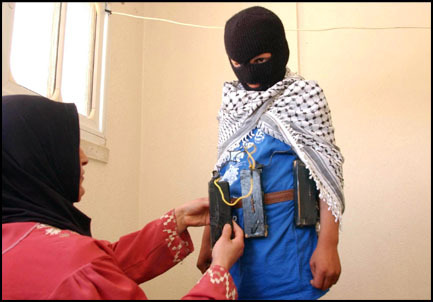
child_suicide_bomber Jordan: “You can find fault on both sides and passion on both sides. When one looks at the type of passion, the differences are dramatic. The passion of many Palestinians is about complete destruction of another society, Israel. The Palestinians are so passionate they are willing to sacrifice their own people…even its own children…to destroy the other society.”
Rock Man: “I agree that a society has a warped sense of value when parents cheer when their own children die blowing up themselves and others nearby.”
Jordan: “Passionately cheering when your children die is set of values that is not only hard to understand but eliminates the possibility of any real solution.”
Rock Man: “You’re not implying the black community is like many of the Palestinians are you?”
Jordan: “No. But the behavior of the Palestinians is one of the reasons I suggested earlier the black community is doing itself no favors by allowing so many members to convert to Islam. Have passion, yes. Have misguided passion, no. Misguided passion will make problems worse.”
Rock Man: “You’re really asking if there is enough passion…positive passion…in the black community to address problems facing the community.”
Jordan: “That’s exactly what I am saying.”
Rock Man: “Let’s go back to painting the room. We need to check the passion of the black community. Is the community willing to address problems and take the time to develop and implement proper solutions?”
Jordan: “We are talking about a program that is likely to take several generations. Lots of discipline. No shortcuts. And, like painting the room, the preparation often will be tedious, even boring at times.”
Rock Man: “We need to find out if the community is ready.”
Jordan: “Rock Man, I think you just turned into a painter.”
(To be continued)

#69 Setting the Stage for Getting Started: Describing an Ideal Black Community

19 Saturday Jul 2014

Posted by Jordan Abel in Innovative Thinking: Ideas and Products, Possible Solutions, Societal Issues

≈ Leave a comment

(Readers: Please note the blog about the 5th revolution in the US is constructed as a story. While not all chapters are linked, after reading a few recent entries, you might want to start at the beginning. More about the blog and about the author. )

Scene: Jordan and Rock Man at pizza joint continuing conversation about how to get blacks off the bottom rung of the economic ladder. Conversation started “#67 Why Do Blacks Remain at the Bottom Rung of the Economic Ladder?”

Rock Man: “Jordan, I hear what you’re saying about blacks being stuck on the bottom rung. I also hear some of the ideas about focusing on education and not sports. How do we pull this off?”
Jordan: “Rock Man, you and I have both been involved with projects that have been very successful and…”
010114_1941_20RockMans1.png Rock Man: “…and projects that were duds.”
Jordan: “And what was the difference between those projects…assuming that the project was not so outlandish that it had no chance of success?”
Rock Man: “For me, success projects have three key characteristics. #1 a purpose that is easy to understand; #2 timeline to accomplish; #3 ability to link one’s role to the project purpose.”
Jordan: “I agree. Clarity, timeline and link. But I’ll bet not all the projects you’ve been involved with were easy to accomplish.”
Rock Man: “No. In fact, the one’s I worked hardest on and the ones I remember the most were the most difficult…but we accomplished them.”
Kennedy Requests Funding for Apollo Jordan: “An old example but one that I still marvel at how it was accomplished is putting a man on the moon. President Kennedy made the announcement in 1961 and US astronauts landed on the moon in 1969.”
Rock Man: “Today, in that same 8 years, Congress…at least Congress before the revolution…couldn’t agree to support the project, let alone agree on funding.”
Jordan: “Let’s take the Apollo program…the moon shot…and bounce off your reference points. Was the mission clear?”
Rock Man: “Very clear. Put a man on the moon.”
Jordan: “Was the timing clear?”
Rock Man: “Yes. By the end of the decade – 1969.”
Jordan: “Were participants able to link tasks to the assignment.”
Moon Walk Rock Man: “It was probably very easy to decide what to do for almost all tasks. The task either contributed to getting a man on the moon or it didn’t.”
Jordan: “Now let’s use your reference points and the moon shot to guide our mission at hand.”
Rock Man: “Getting blacks off the bottom rung of the economic ladder…and let me add ‘permanently’ off the bottom. We do not need to have someone else start another program 50 years from now.”
Jordan: “Success for the Apollo program was clear. A man on the moon. Throw out some words that describe a black community that has gotten off the bottom rung.”
Rock Man: “You want words, or more description. What do you want?”
Jordan: “Throw out some words. Whatever comes to mind. We can sort ideas out later.”
Rock Man: “Here goes. A black community that is ‘vibrant.” One that is ‘educated.”
Jordan: “Good. Keep going.”
Rock Man: “Never really thought about this before.”
Jordan: “Don’t stop. More words.”
Rock Man: “’Fun loving.’ A black community that is ‘respectful’…and ‘respected’. A community that is ‘supportive of its members and others.’’’
Jordan: “Anything else?”
Rock Man: “Yeah. Community that has ‘independent thinking.’ What I’m trying to say is a community that can make it on its own…you know, that’s independent.”
Jordan: “You thinking of an independent state, or states?”
Rock Man: “No. But a community that has a lot less dependence on assistance from everyone else, including the government.”
Jordan: “Sounds like a great community. So how do we help make it happen?”

Pizza arrives. To be continued.

#67 Why Do Blacks Remain at the Bottom of the Economic Ladder?

12 Saturday Jul 2014

Posted by Jordan Abel in Economics, Personal Stories, Possible Solutions, Societal Issues

≈ 13 Comments

(Readers: Please note the blog is constructed as a story. While not all chapters are linked, after reading a few recent entries, you might want to start at the beginning. More about the blog and about the author. )

Scene: Jordan meeting with Rock Man, who has been on sabbatical.

Jordan: “Rock Man, wonderful to see you. How was the sabbatical?”
Rock Man: “Great learning experience and great fun. This was my Sloan Program.”
Jordan: “Hope so. The Sloan Program was a seminal moment in my life.”
010114_1917_19RockManCo1.png Rock Man: “I know your time is short. What’s on your mind?”
Jordan: “A problem that has been bothering me for a long time. And it only seems to get worse.”
Rock Man: “You with a problem? Losing your touch? What’s the issue and why me?”
Jordan: “One is you are coming off sabbatical so your brain is clear of lots of mundane stuff.”
Rock Man: “You’re assuming I still have a brain.”
Jordan: “You’ve got a brain. Second reason is someone needs to lead this effort to come up with a solution. And your qualifications are perfect.”
Rock Man: “OK, let me have it. What am I in for now?”
ladder Jordan: “The question, really a dilemma, is this. Why do blacks stay at the bottom of the economic rung when every other ethnic group has progressed? I know there is no easy answer but the issue perplexes me and frustrates me.”
Rock Man: “Frustrates me, too. I’ve got two kids that are doing OK but a lot of people I grew up with…and I mean a lot of them…are no better off today than 40-50 years ago.”
Jordan: “While each immigrant group has its own characteristics, all immigrant groups faced some discrimination. Some of the discrimination was severe. Yet all have made significant progress.”
Rock Man: “I hate to say this but many blacks seem to have self-destructive behavior. One behavior that really baffles me is the attraction to Islam. What are these guys thinking?”
Jordan: “I agree. I understand the desire for religion. But if you want to get out of the cellar why choose Islam? One is hard pressed to find an Islamic-dominated country that offers equal rights, has sustained economic growth and a well-educated population.”
Rock Man: “Maybe the converts think Islam is going to get them an education.”
Jordan: “At one time I would have agreed with that. That time, however, was up until the 16th or 17th Century.”
Rock Man: “You that old Jordan?”
Jordan: “Good one, Rock Man. Glad you haven’t lost your touch.”
Rock Man: “I’ve got a good mentor…you.”
Jordan: “Thanks for the compliment. But back to Islam. For centuries, Muslims were very involved in international trade and leaders in some fields of education. Muslims are given credit for advancements in algebra, for example.”
Rock Man: “I did not know that. What about now?”
Jordan: “If you want to hitch your wagon to a religion or group that pushes education, find a Jewish wagon.”
Rock Man: “Good point. Jews were enslaved by the Egyptians. And they’ve suffered some form of discrimination since.”
Jordan: “More important to blacks is many Jews were early supporters of the Civil Rights Movement in the US.”
Rock Man: “I’m too young to remember but I read several Jews were killed in the 1960’s marching with blacks in the South.”
Jordan: “Here’s my take. Every other ethnic group has moved up the economic ladder through education. Not sports. Not entertainment. Education.”
Rock Man: “Maybe blacks need to take a different approach and really emphasize education.”
Jordan: “If you were black…I know you’re already there but you know what I mean. If you were black and wanted an education would you become a Muslim or a Jew?”
Rock Man: “I know where you’re headed but give me some facts.”
Jordan: “OK, here’s something to think about. Jews constitute about 0.2% of the world’s population.”
Rock Man: “Only 2 of every 1,000 people is Jewish?”
Jordan: “What percent of the world’s population is Muslim?”
Rock Man: “I’ll guess 20%. 200 out of every 1,000 people.”
Jordan: “About right. That means there are at least 100 Muslims for every one Jew.”
Rock Man: “So why do Muslims feel so threatened by Jews? Muslims have a 100:1 advantage.”
Jordan: “We’ll talk about why another time but remember the 100:1 ratio.”
Rock Man: “Got it. 100 Muslims, 1 Jew.”
Jordan: “Now when I say awards for science, medicine, economics, etc…you know accomplishments requiring high level of education…what prize comes to mind?
Nobel Rock Man: “The Nobel Prize.”
Jordan: “What percentage of Nobel Prizes has been awarded to Jews?”
Rock Man: “I know this is a set up so I’ll exaggerate my answer. 5%. No, make it 10%.”
Jordan: “Nobel prizes awarded to Muslims?”
Rock Man: “Well, if Muslims account for 20 out of 100 people, they should have at least 10% of the prizes.”
Jordan: “Let’s just say your right. Each group has 10%. That ratio would make Jews 100x more likely to be awarded a Nobel Prize than a Muslim.”
Rock Man: “Wow. That’s a big difference.”
Jordan: “Now what if I told you that of all the Nobel Prizes awarded 20+% have gone to Jews and 1% to Muslims.”
Rock Man: “If I do my math correctly, that means Jews are not 100x more likely but 2,500x more likely to be awarded a Nobel Prize based on population.”
Jordan: “Your math is correct.”
Rock Man: “Jews 2,500 times more likely than Muslims. The difference is so large that it’s difficult to comprehend.”
Jordan: “Let’s try this approach. If you were selecting players for a basketball team, would you choose the player who scored 2,500 points or the player scored one point?”
Rock Man: “Duh, let me think about that. The 2,500 point player.”
Jordan: “Let me try one other comparison. If you started to take a walk, after the Muslim took one step, the Jew would be 1.5 miles down the road.”
Rock Man: “I see your point. If you think education is a key to getting off the bottom rung of the ladder, go with people who are proven winners, not losers.”
Jordan: “OK, called me biased because I’m Jewish. I know the comparison re Nobel Prizes is a bit convoluted, but the facts are hard to refute.”
Rock Man: “What’s adding to my frustration is blacks are aligning with a group responsible for 09/11 and bringing down the World Trade Towers.”
Jordan: “Look, aligning with Jews is not the only answer but you get my point about the value of education.”
Rock Man: “Jordan, you’ve thrown a lot out on the table. I need to digest this. May we take a short break?”
Jordan: “Of course. Let’s get a coffee.”


#63 Capitalizing on Jewels…or Was that Joules?

28 Saturday Jun 2014

Posted by Jordan Abel in Innovative Thinking: Ideas and Products, Possible Solutions, Societal Issues

≈ Leave a comment

(Readers: Please note the blog about the 5th revolution in the US is constructed as a story. While not all chapters are linked, after reading a few recent entries, you might want to start at the beginning. More about the blog and about the author. )
 

Scene: Italian restaurant. Jordan and friends, Ms and daughter, Maggie. Having dessert and coffee. Dinner starts Entry #61.

Maggie: “OK, so you are working on a project to rebuild US manufacturing. I’ve got a question.”
Jordan: “Fire away.”
Margaret Maggie: “Does more US manufacturing mean more pollution?”
Ms: “Yeah, Jordan, why does it seem that increased manufacturing always means more pollution. There must be a better way. Let’s hear it smart guy.”
Jordan: “You guys are tough…and asking a good question.”
Ms: “We’re waiting for the answer.”
Jordan: “The answer is economic growth and pollution are not inextricably linked.”
Maggie: (Looking at her mother) “Does he always talk like this?”
Ms: “Usually worse. More eco-babble, please.”
Jordan: “Economic growth can occur using clean energy – solar, wind, etc.”
Womens symbolMaggie: “Solar seems OK but wind uses those large propeller things. They’re ugly, make lots of noise and kill birds. Isn’t there any type of clean energy?”
Jordan: “Yes. Thermal and kinetic energy.”
Ms: “Tell us more, please.”
Jordan: “Let me give you a couple of examples. Ms, think back to when you were a kid. Its summer time.”
Ms: “Hot and sticky in Louisiana.”
Jordan: “Was there a garden hose at your house?”
Ms: “Dark green.”
Jordan: “Did you ever get a drink out of the hose?”
Ms: Yes but the water was so hot we had to let it run for a while before we could drink it.”
Jordan: “Next example. Maggie, where do you want to pretend to be?”
Maggie: “Back in Newport Beach.”
Green Garden HoseJordan: “Alright. Now take off your sandals and walk through the parking lot to your car.”
Maggie: “I live on the beach and don’t have to walk through the parking lot.”
Jordan: “Your answers sometimes remind me of your mother.”
Ms: “Jordan, be nice to us and I’ll buy dinner.”
Jordan: “You know what I meant. And yes, I will be nice. You know I like both of you very much.”
Maggie: “Back to the example…and I will play along.”
bare-feet Jordan: “Good. Go to the store and walk across the parking lot in your bare feet.”
Maggie: “Can’t. The asphalt is too hot and my feet will burn.”
Ms: “Where are you headed with these examples? A garden hose and an asphalt parking lot.”
Jordan: “Each is an example of the effect of thermal energy.”
Maggie: “You’re saying the water and the parking lot were made hot by the sun and nothing else.”
Jordan: “Exactly. And heated for free by the sun.”
summer-smile-sun-hi Ms: “So back to your project. How can we capture thermal energy for free and replace energy from say coal or oil?”
Maggie: “Besides oil, coal…even natural gas…are expensive compared to free. Coal, oil and natural gas have lots of pollution.”
Jordan: “We’re getting better are reducing pollution from fossil fuels but zero is hard to beat.”
Ms: “What can we use thermal energy for?”
Jordan: “The most obvious is heating, especially water. Heating water takes lots of energy.”
Maggie: “How much does it cost every month to heat water?”
Jordan: “Spoken by someone who must live in Newport Beach.”
Ms: “Jordan, you are on the edge of not getting me to pay for dinner. Be nice.”
Jordan: “The comment was such an opening I could not resist. Anyway, depends on the area but to heat water costs $40-$50 per month.”
Ms: “That’s more than I realized. $50 bucks is more than 25-30% of my monthly electric bill.”
Maggie: “Can you convert thermal energy into electricity?”
Jordan: “Yes. A simple approach is making water hot enough to turn to steam. The steam then turns a generator and makes electricity. In many ways like a power plant fueled by coal but without the pollution.”
Ms: “Let’s not turn dessert and coffee into a physics lesson. I’m too old to go back to high school.”
Maggie: “You gave us two examples. Thermal and what was the other one?”
Jordan: “Kinetic energy. Easiest way to think about kinetic energy is the energy of an object in motion.”
Maggie: “Like a car or truck or motorcycle.”
Kinetic EnergyJordan: “Good examples.”
Maggie: “So the faster the car goes, the more kinetic energy?”
Ms: “And I suppose the heavier truck has more kinetic energy.”
Jordan: “I know you want to skip the physics lesson but the formula for kinetic energy, or KE, is ½ mass times velocity squared.”
Ms: “In the words of Ricky Ricardo, ‘Splain that, please.’”
Jordan: “Half the weight of the object multiplied by the square of how fast it is going.”
Maggie: “Say a rock weighs 10 pounds. And as you carry it you accidentally drop it on your foot. The KE would be ½ weight of the rock – 5 pounds – times the square of how fast the rock was going when it hit your foot – say 10 miles per hour. So KE would be 5 (pounds) times 100 (10 mph x 10 mph).
Jordan: “You got it.”
Ms: “So, if we’re in the car, KE at say 40 mph is not simply 2x KE at 20 mph but 4x KE at 20 mph. The square of 20 is 400 and the square of 40 is 1600.”
Maggie: How do they measure KE anyway? What’s miles per hour times pounds? Even I know that won’t work.”
Jordan: “The measurement is joules.”
Ms: “I like that measurement. Maggie, we could take the car and have a jewel crash. A little ding could be a ruby incident. A fender bender could be an emerald crash. And totaling the car would be a diamond crash.”
Crown Jewels Maggie: “I could tell my hubby, ‘Gee honey, I’m your queen. And he’ll ask why. Then I can tell him I had an emerald crash today in the car.’ That sounds a whole lot better than ‘I dented the front fender.’”
Jordan: “The measurement is spelled ‘j-o-u-l-e-s,’ not ‘j-e-w-e-l-s’.”
Ms: “Too bad. I thought we were on to something.”
Maggie: “OK, Jordan, other than wrecking the car, how does one capture kinetic energy?”
Jordan: “One of my favorite examples is capturing the energy of waves in the ocean. Any kind of wave, actually, but waves in the ocean have the most energy.”
Ms: “What do you do, build some device to convert waves to electricity?”
Jordan: “As a matter of fact, I’m part of a group that designed such a device. We’re not the only ones working on converting kinetic energy to electricity.”
Maggie: “But capturing KE…and thermal energy…are ways to generate electricity without any pollution. And the energy cost is free.”
Ms: “Why isn’t this country adopting more of these ideas? We seem to be fighting innovative ways of generating electricity with little or no pollution. Resisting this makes no sense to me.”
Jordan: “Unless you are in a business that’s going to be replaced.”
Maggie: “But that’s a losing battle. Otherwise we still be riding around in buggies pulled by horses.”
Jordan: “I agree, but a lot of people are fighting it. I think that attitude is changing. We have a real desire among a lot of people to make changes. People are starting to call the events the last months the beginning of the 5th US Revolution. The people also elected a new Congress and demanding Congress get something done. I’m actually hopeful.”
Ms: “Glad to hear that.”
Maggie: “Guys, the waiter is here. Let’s have some more coffee.”

(To be continued)


#60 Being Fair. Part of POTUS’ Project on Manufacturing

18 Wednesday Jun 2014

Posted by Jordan Abel in Causes of the Revolution, Innovative Thinking: Ideas and Products, Personal Stories, Possible Solutions, Societal Issues

≈ Leave a comment

(Readers: Please note the blog about the 5th revolution in the US is constructed as a story. While not all chapters are linked, after a few recent entries, you might want to start at the beginning. More about the blog and about the author. )

Scene: Jordan and Matt, Jordan’s Office

Jordan: “Matt, thanks for taking time to talk again.”
Matt: “Jordan, the least I could do. You spent a lot of time preparing for the POTUS project. My guess is these comments will be a good add.”
reporter on typewriter clipartJordan: “Hope so. Some of the ideas stem from actions by GM. Others are based on recent experience.”
Matt: “OK, let’s get started. What’s the theme? What idea…or ideas do we want to add?”
Jordan: “The idea might seem obvious or naïve or both. And it might be. I want to talk about fairness.”
Matt: “Mmmm, that is interesting. And talking about ‘fairness’ does seem appropriate. We never talked specifically about it. Implied, yes but not fairness as a specific topic.”
Jordan: “Reason I bring it up is some recent experience and a conversation with a long-time friend. I was going to say old friend but she would not like that.”
Matt: “What happened?”
Jordan: “Incidents with the cell-phone company and airlines and TSA. The conversation with my friend led to a discussion of an earlier incident with GM – not product but culture.”
Matt: “I need some details to help understand the issue.”
Jordan: “I figured you might. Rather than take your time now, I wrote several papers describing what happened.”
Matt: “Good. I’ll read those later. What was your conclusion?”
Jordan: “Simple. Fairness is a critical component for long-term success of an organization.”
Matt: “Keep going.”
Jordan: “Do you deal with people or companies that have a ‘heads I win, tails you lose’ approach?
Matt: “Not if I can help it.”
Jordan: “Everyone feels the same way. Why get the shaft in every situation?”
021214_1242_24Resultsof1.gifMatt: “So how does fairness affect POTUS’ policy on rebuilding US manufacturing?”
Jordan: “Fairness needs to be a key component. We talked a lot about how GM became a money machine and then started to focus on earnings and slid into bankruptcy. And then the turmoil over ignoring obvious safety issues.”
Matt: “You’re saying…if I hear you correctly…the overarching issue for GM’s downfall was fairness, or really lack of fairness.”
Jordan: “Fairness for customers. Fairness for employees. Fairness for suppliers. And fairness for people who sell the product.”
Matt: “What about fairness for the community?”
Jordan: “Great point. You’ll see in one of the write-ups that I think GM’s chairman in the 1980’s, Roger Smith, took revenge on Flint, Michigan.”
Matt: “Really? I’ll read the paper. Now, how do we translate fairness into some policy recommendations?”
Jordan: “Take your question about fairness to the community. Tell me why as a country do we encourage states to recruit businesses from other states?”
Matt: “Economic development, I suppose.”
Jordan: “Economic development for whom? The policy forces a winner and a loser. The state where the business moved considers itself the winner. The state where the business moved from is the loser. In fact, there is probably a net loss when add the incentives are added up. The US as a country gains nothing by the move. ”
USmapMatt: “What about competitiveness of the company moving? Lower wages will make the company more competitive.”
Jordan: “That’s often the argument but it’s not necessarily true. In fact, I’d claim it is not true far more often than true. Why not increase worker productivity enough to offset any wage differential?”
Matt: “You think companies can really increase productivity to offset wage increases?”
Jordan: “Did we talk about the company I ran in California?”
Matt: “Not sure. What’s relevant?”
Jordan: “Short story is with some changes to the manufacturing process we reduced labor cost dramatically.”
Matt: “How much?
Jordan: “We could have doubled the wages of workers in California and paid workers in China zero and still come out ahead.”
Matt: “What? You could pay workers in California twice what they were making. Then pay workers in China nothing and still have lower costs?”
Line chartJordan: “You got it. And the reason is twofold. First reason is increased productivity. By the way, we did not lay off any workers. We actually added workers.”
Matt: “You added workers and increased output? That’s un-American.”
Jordan: “I know. Counter intuitive, huh? The second reason is all the other costs associated with producing in a remote location.”
Matt: “You had a term for that. I remember now…a holistic approach to cost.”
Jordan: “Taking all costs into account.”
Matt: “Is that example a one-of-a-kind or are there more examples?”
Jordan: “An example few people know about is the coal industry.”
Matt: “Not a very popular topic, especially among environmentalists.”
Jordan: “Not a very popular topic among former coal miners either.”
Matt: “What do you mean, former coal miners? Still lots of coal being produced in the US.”
Jordan: “Actually, production is higher than during the 1970’s.”
Matt: “What about employment. You said former miners.”
Coal MinerJordan: “Productivity is way up. We need to confirm these numbers but I think employment is down from about 250,000 miners to only about 50,000 today.”
Matt: “That’s all that work in coal mining? That’s a blip on the employment radar screen. That’s it?”
Jordan: “All because of productivity.”
Matt: “Makes you wonder why some politicians claim environmental laws will destroy coal mining jobs.”
Jordan: “The coal industry destroyed the jobs through productivity.”
Matt: “That’s a good and bad example for POTUS. Good because technology can increase output. Bad because of reduced employment.”
Jordan: “We need a balanced policy in manufacturing policy. Companies should adopt technology but not just dump workers on society. They have an obligation to their employees.”
Matt: “How can that policy work? Sounds like socialism. Won’t such a policy just encourage companies to produce outside the US?”
Jordan: “Not if the policy is structured properly. We’re talking about being fair. If some people view being fair as socialistic, then so be it. But being fair does not mean being equal.”
Matt: “You’re really hammering on being fair. Few people ever talk about companies being fair.”
Jordan: “Lack of fairness is why we had a revolution. In fact, lack of fairness has been the cause of each revolution in this country…”
Matt: “…and, if you think about it, elsewhere as well.”
Jordan: “So why not make being fair part of the manufacturing policy recommendations for POTUS? Maybe fair should be part of every policy in Washington.”
Matt: “Jordan, you might be on to something. Get people to move away from hard-core ideology…”
Jordan: “…which most ideologues do not really understand…”
Matt: “…and focus on fairness. Sounds so simple.”
Jordan: “It is simple. Start addressing problems with the premise, ‘What’s fair?’ Then work out the details.”
Matt: “Listen, I gotta run. And I need to start drafting a formal paper for POTUS. But I want to make sure we include your thoughts about fairness.”
Jordan: “I’ve written a couple of papers on fairness. I should write a couple more.”
Matt: “If you want. But I’m a reporter. I’m used to working from interviews with people. If it’s OK with people you talk to, just record the interview and send me the audio or the transcript.”
Coffee CupJordan: “Alright. We each have our assignments.”
Matt: “Let’s keep in touch and meet periodically.”
Jordan: “Deal. And just to be fair, I’ll buy coffee next time.
Matt: “No, just to be fair, I’ll buy.”
Jordan: “Get out of here.”

(Want a PDF version for Entries #1-10, #11-20, #21-30 formatted as an e-book? Entries #31-40 available soon. Click links for download. America’s 5th Revolution Volume I (Entries 1-10), America’s 5th Revolution Volume II (Entries 11-20), America’s 5th Revolution Volume III (Entries 21-30)


#43 Beginning My Years with General Motors

19 Saturday Apr 2014

Posted by Jordan Abel in General Motors, Innovative Thinking: Ideas and Products, Personal Stories, Possible Solutions

≈ Leave a comment

(Readers: Please note the blog about the 5th revolution in the US is constructed as a story. While not all chapters are linked, the story might be more meaningful by starting at the beginning.)

(Want a PDF version for Entries #1-10, #11-20, #21-30 formatted for tablets and e-books?  Entries #31-40 available soon.  Click links for download.  America’s 5th Revolution Volume I (Entries 1-10), America’s 5th Revolution Volume II (Entries 11-20), America’s 5th Revolution Volume III (Entries 21-30)

Scene: Jordan’s office with Matt, reporter asked by POTUS to help Jordan write story why GM was so successful and why it failed.  Report will be used as part of effort to rebuild US-based manufacturing.

Jordan:  “First bit of trivia.  Matt, how many times has GM gone bankrupt?

reporter on typewriter clipartMatt:  “One that I know of – 2009.  That’s when the Feds put in a lot of cash and got a lot of stock in return.  People started calling it Government Motors.”

Jordan:  “A lot of people thought the Feds should have let GM die.  Doing so would have been a huge mistake.  We can discuss why in another session…but not today.”

Matt:  “OK, I give.  How many times has GM gone BK, or bankrupt?”

Jordan:  “Three.  2009, then twice before 1920.  The first was about 1909 and the second about 1919.  We need to get exact dates but close enough for now.”

Matt:  “Three times.  That’s a surprise.”

Jordan:  “And they might survive all three.”

Matt:  “What happened in 1909 and 1919?”

Jordan:  “The short version is this.  Rapid expansion of production and rapid sales growth without proper financial controls.  The result was the deadly sin – running out of cash.”

Matt:  “So unlike 2009 when demand was weak, the other two times demand was strong.  But GM expanded too quickly…really beyond their ability to raise enough cash to finance the growth.”

Jordan:  “Yes.  And that reminds me of my first day in finance at MIT.”

Matt:  “Alright.  First day of finance class.  What happened?”

CashJordan:  “The professor begins the class by saying, ‘Ladies and gentlemen, if you learn nothing else the entire time you are at this esteemed institution, I want you to remember one thing.  It does not matter whether your income statement indicates you made money or lost money.  The only thing that matters is…never run out of cash.’”

Matt:  “Well, GM management apparently didn’t go to that class.”

Jordan:  “A lot of people seemed to have skipped that class…a hundred years ago and now.”

Matt:  “OK, GM goes BK.  But in 1919 there is no government bailout.  Who bailed them out?”

Jordan:  “My view is the second BK and the bailout is the beginning of the GM juggernaut.  The bailout is from the DuPont family.  DuPont’s, already an investor, put in a boatload of cash and end up with a boatload more shares – 30-35% ownership.”

Matt:  “Anything else happen?”

APSJordan:  “The cornerstone for GM’s future success.  Pierre DuPont, chairman of the Board, installs Alfred P. Sloan as president.”

Matt:  “Is that the same Sloan as Sloan-Kettering Hospital in NY…and the Sloan School at MIT?”

Jordan:  “The same Alfred Pritchard Sloan.  Sloan was an MIT grad.  And I think he implemented three major ideas that separated GM from the pack.”

Matt:  “Under Sloan, GM operated differently than other car companies?”

Jordan:  “Very much so.  GM set a new standard.  The ideas applied to car companies and most other manufacturing companies.  And the ideas are still relevant today.”

Matt:  “I’m anxious to hear more but is the story going to get too complicated for people to understand?  We have to keep the story out of the weeds and make sure it is understandable.”

Jordan:  “The topics might seem a bit deep at times.  But this is not a story told in sound bites.  Success does not come with slogans and talking heads…despite what some people think.”

Matt:  “Alright but really try to KISS – keep it simple, stupid.”

Jordan:  “In my estimation, Sloan’s three major contributions were: (i) implementing understandable financial controls (ii) clearly separating GM’s different products (iii) separating strategic and operational decisions.”

Matt:  “I sort of understand financial controls and separating products.   Separating strategic and operational decisions is a bit more abstract.”

Jordan:  “OK, let take these one at a time, starting with financial controls.”

Matt:  “Are you talking about say authority to write checks and keep accurate books?”

Jordan:  “Yes, but there is much more.  What is hard to understand now with computers, electronic databases and scanning equipment is companies were run using information written on index cards and hand-written ledgers.”

Matt:  “That is hard to imagine.”

Jordan:  “Imagine this – and I think the date is about right – until the mid-1920’s Ford Motor Company operated without any real accounting system.”

Matt:  “Ford had become a huge company by then…and no real accounting system?”

Jordan:  “GM before Sloan was similar.  But Sloan brings systems thinking.  Systems for accounting, systems for cash management and systems for forecasting production.”

Matt:  “What you’re saying is GM went from shoe-box accounting to at least reconciling bank statements and creating a budget.”

Jordan:  “In very simple terms, yes.  However, it is hard to overstate the importance of the discipline Sloan began instilling in the company.”

Matt:  “Wasn’t it just an accounting system?”

Jordan:  “No, it was creating a culture of being accountable.  Having a system in place allowed performance to be measured.”

Matt:  “You’re saying the measurement system – production, cost, etc. – allowed measurement of the performance of individuals and groups.  And the measurement made them more accountable.”

Jordan:  “Exactly.  Individuals and groups began to understand what needed to be accomplished and how well they performed.”

Matt:  “Have a specific example?”

Jordan:  “Yes, and I hope it is not too abstract.  But I think critically important to GM’s success.”

Matt:  “What is it?”

Jordan:  “Budgeting is critical in the auto industry…and any industry with high fixed costs.  The company must generate enough sales to pay for all the fixed cost before it begins earning a profit.”

Matt:  “Like the sales person on full commission.  He or she needs to sell a certain amount just to cover expenses – mortgage, utilities, groceries, car payment, fuel.  Then sell some more just to have some spending money.”

Jordan:  “Good example.  And the higher the mortgage payment and car payment, the more the person has to sell.”

Matt:  “But the sales person never knows how much will be sold, and therefore never knows what the commission check will be.”

Jordan:  “Car companies face the same problem.  When the economy is good, people have more money and buy more cars.  When the economy is not so good, people put off buying a new car and sales fall.”

Matt:  “What was so innovative about what Sloan did?”

Jordan:  “Sloan created a budgeting procedure such that GM broke even profit wise at 70% of its capacity.”

Matt:  “So if the company had capacity to sell 1,000,000 cars for a certain year and sales were only 700,000 cars for that year, GM would break even…really, not lose money?  That idea seems so simple.”

Jordan:  “The idea is incredibly simple but very hard to execute.  Forcing the execution helped create a culture of the importance of managing costs.”

Matt:  “So budgets were built around 70% of capacity.  Still not sure if I understand the significance.  And does the process have a name?”

Jordan:  “The budget was called a ‘standard-volume budget.’  Focusing on ‘standard volume” helped people form a discipline of controlling costs.  Early in my career I was assigned to coordinate the budget process for Cadillac.  The budgeting process was not easy and not very pretty.  A lot of negotiating, arm twisting and cajoling.  By the end everyone involved understood the importance of controlling costs.”

Matt:  “Obviously left quite an impact on you.  What’s the second point?”

Jordan:  “All sales above 70% of capacity were very profitable…and I mean very profitable.”

Matt:  “How often did sales fall below 70% of capacity?”

GM,_logoJordan:  “Not very often, even in the Depression.  In fact, GM made money every year from the early 1920’s and throughout the Depression.”

Matt:  “You’re kidding?”

Jordan:  “GM made money while many car companies went out of business.  Duesenberg, Cord, Auburn just to name a few.”

Matt:  “So how many years in a row was GM profitable?”

Jordan:  “70+ years.  From the early 1920’s to the early 1990’s.”

Matt:  “What a run.  What happened?”

Jordan:  “This is a good time to take a break.  Sloan implemented a couple more key ideas that made the 70-year string possible…and the string should still be going on.  We can talk about what went wrong after we talk about what went right.  Let’s take a break.”


#40 Why Manufacturing in the US Can Be Less Expensive

09 Wednesday Apr 2014

Posted by Jordan Abel in Back Asswards Thinking, Causes of the Revolution, Economics, Innovative Thinking: Ideas and Products, Possible Solutions

≈ 1 Comment

Note: Entry #41 begins a series of blogs about General Motors.  How did an apparent culture change over time likely lead to bankruptcy and an apparent disregard for addressing safety issues.  Such actions by corporations affect societal attitudes.

(Want a PDF version for Entries #1-10, #11-20, #21-30 formatted for tablets and e-books?  Click links for download.  America’s 5th Revolution Volume I (Entries 1-10), America’s 5th Revolution Volume II (Entries 11-20), America’s 5th Revolution Volume III (Entries 21-30)

Scene: Jordan met former college economics professor. Just got a coffee refill.

Professor: “A few minutes ago you asked why US companies manufacturer electronic products in China when albert_einstein_professor croppedmuch of the production is automated.”

Jordan: “I really do not understand. But I think the #1 reason by far is perceived lower labor costs.”

Professor: “The perception of lower labor costs, not necessarily the reality of lower labor costs.”

Jordan: “Let me give you some personal experience. I realize data points of one are dangerous but the more I talk to people about their real experiences, the more my experience seems typical.”

Professor: “This should be interesting.”

Jordan: “I was recruited to run a small, publicly held company in northern California.”

Professor: “Lucky you. Near wine country?”

Jordan: “Smack in the middle of it. The area is great for grapes and apples but not what one calls a hotbed for manufacturing.”

Professor: “What was the product line?”

Jordan: “Electric bikes and scooters, all of which are assembled at company facilities in the same town.”

Professor: “What’s the issue? The company was manufacturing, or at least assembling in the US”

Jordan: “The Board of Directors wants to move assembly to China and lay off many of the US employees.”

Professor: “Because labor costs were too high?”

Jordan: “That’s what they thought but none of the Board members had any real manufacturing experience.”

Professor: “They could have been right. If the area is not a major manufacturing center, the costs could be too high.”

Jordan: “My analysis? To understand true labor costs we also needed to analyze other systems. When I started average production was 37 scooters per day. Some days production was 75 scooters and other days production was zero scooters.”

Professor: “Seems like a production scheduling issue.”

Jordan: “Scheduling and parts sourcing at a minimum. The company did not fully evaluate how quality of parts could affect the rate of production.”

Professor: “Give me an example.”

Jordan: “The scooter drive system included a sprocket that linked the electric motor and a belt, which turned one of the wheels. The price of the sprocket appeared cheap…”

Professor: “But further analysis…”

Jordan: “Further analysis indicated 80% of the parts were not to specifications. As a result the output of the motor assembly line was lower. Even worse was when the workers tried to make the sprocket fit, they sometimes inadvertently damaged the motor, which caused more problems.”

Professor: “So to get 100 good sprockets you had to buy 500 sprockets. Where were the sprockets manufactured? Let me guess…China.”

Jordan: “Yes. Look, China makes some quality products. I asked the chief engineer to call a contact of mine in automotive. We sent the drawings. He quoted parts from a US manufacturer that cost 30% less and guaranteed all parts were to spec.”

Professor: “The individual part cost 30% less?”

Jordan: “Each part. Not the total but each part.”

Professor: “Good move. Quality goes up, production goes up and purchase costs go down and warranty goes down. As if that’s not enough, anything else?”

Jordan: “We made some changes to the assembly line.”

Professor: “Equipment and automation?”

Jordan: “No capital equipment or automation, just basic layout and processes. Most of the ideas came from the employees. We also implemented some recommendations from lean manufacturing techniques…but all ideas you would learn before the first coffee break on the first day of class.”

Professor: “You’re telling me you used very basic information to begin to make improvements.”

Jordan: “I am embarrassed to tell you how basic. We literally taped off work stations, color-coded hand tools by worker, bought a few hand carts and implemented employee suggestions.”

Professor: “What happened to production?”

Jordan: “Give me a guess. In just 7 months how much do you think production increased?”

Professor: “50%? No make it 100%. You doubled production.”

Jordan: “Try a higher number.”

Professor: “OK 300%. Production increased from 37 to 150 per day.”

Jordan: “Try 37 to 250 per day. Well above a 500% increase in production with basically the same equipment…and workforce.”

Professor: “You didn’t add any people?”

Jordan: “We added a few in shipping because they could not keep up. But nowhere else.”

Professor: “What about labor costs? How much more did you pay people?”

Jordan: “We gave people bonuses for reaching certain targets. Here’s an interesting statistic. Take the US labor rate and bonus at the seven months and double it.”

Professor: “So you are going to pay the US twice as much?”

Jordan: “Yes. Now take the labor cost for products made in China and make it zero.”

Professor: “Double the labor cost in the US and make labor cost in China zero…free.”

Jordan: “And tell where it’s cheaper to build the product?

Professor: “I know this is a set up. Cheaper in the US.”

Jordan: “Hard to believe but it is true.”

Professor: “That’s remarkable. But seems like an extreme example.”

Jordan: “I agree the percent increase in production is unusual but not the savings in other costs. What companies often overlook are the less obvious costs – lead time between order and receipt of goods. Cost of not being able to adjust production quickly for parts changes or even a bad part. You might end up with container loads of product before the change.”

Professor: “What is the lead time between ordering and receipt.”

cargo_shipJordan: “Usually months. Unless you air freight, you have 6-8 weeks shipping time on the ocean versus days by train or truck in the US.”

Professor: “Is quality control really an issue?”

Jordan: “Quality control is a problem for any manufacturing company. But when your supplier is thousands of miles away and with long lead time, the impact of problems grows exponentially. Plus, the cultures are different when it comes to quality. Also ask companies how difficult it is to protect IP.”

Professor: “Intellectual property?”

Jordan: “Yes. Product knock-offs are a real problem.”

Professor: “In your example labor costs became a very small piece of the overall cost. Why do you think the companies continue to source outside the US when total cost seems to be cheaper when manufacturing in the US?”

Jordan: “That’s my frustration. And let’s take electronics specifically. Virtually all of the manufacturing and assembly of many electronic products are automated. Why go outside the US?”

Professor: “US offers competitive…and maybe lower cost…and faster turnaround time.”

Jordan: “That’s why we need a national policy to get more companies to start manufacturing in the US. Even with automation, there will be more people employed in the US. And we can start to rebuild wealth.”

Professor: “The administration can begin rebuilding with some macro-economic policies. The first recommendation might sound silly but the administration needs to promote buying products made in America. I’m not talking about everything but products that can be made here at a very competitive price.”

Jordan: “Are you suggesting that as a policy?”

Professor: “Jordan, you know as well as I know the power of persuasion. If the president begins to discuss in understandable terms why people should buy products made in America, then customers will begin to force companies to change.”

fdr_~FdrJordan: “You talking about fireside-chat talks, like FDR did?

Professor: “Have you ever listened to those chats…or read the transcripts? If you have not, you should. FDR presented major issues and solutions in an understandable way.”

Jordan: “None of the hyperbole of today?”

Professor: “Incredibly straightforward. You need to listen to them. If fact, all politicians Firesideneed to listen to them.”

Jordan: “A series of fireside chats might be a great start.”

Professor: “The chats will give you time to refine some recommendations.”

Jordan: “OK, we have a plan. I’ll propose fire-side chats. Can you help with the longer-term recommendations?

Professor: “Thought you would never ask. It would be an honor. ”


#35 US Solar Efforts Back Asswards? (con’t)

22 Saturday Mar 2014

Posted by Jordan Abel in Back Asswards Thinking, Innovative Thinking: Ideas and Products, Possible Solutions

≈ Leave a comment

(Readers: Please note the blog about the 5th revolution in the US is constructed as a story. While not all chapters are linked, I think the story will be more meaningful by starting at the beginning.)

Want a PDF version for Entries #1-10, #11-20, #21-30 formatted for tablets and e-books?  Click links for download.  America’s 5th Revolution Volume I (Entries 1-10) America’s 5th Revolution Volume II (Entries 11-20) America’s 5th Revolution Volume III (Entries 21-30)

Scene: Jordan’s Office.  Jordan and Technology Man have refilled coffee.  Conversation about US solar energy efforts continues. 

Jordan: “I’m not forgetting about that venture. I learned just enough about batteries to be dangerous.”

TechManTechMan: “Even more dangerous than normal?”

Jordan: “I’ll ignore that comment. A lot of articles lately about breakthroughs in battery technology. But I remember two sayings from our battery days. ‘Technology will be ready in just five more years…”

TM: “…And, ‘Liars, damn liars and battery manufacturers.'”

Jordan: “It’s hard to tell what’s real progress and what’s hype. Based on what you know, what newer-technology, higher-energy density batteries are in production, affordable…and safe?”

Flow Battery cell_stack_illustrat_700TM: “Our old friend the flow battery is making a rebound. Flow batteries are ideal for storing electricity from solar…and wind.”

Jordan: “How would you link batteries to the electric grid? Right now, don’t all surplus electrons go back on the grid?”

TM: “If the truth be known, most of the electrons from solar and wind are likely wasted.”

Jordan: “You’re kidding? How?”

TM: “The current system makes it difficult for the utilities to integrate electricity from solar and wind.”

Jordan: “But it seems so simple.”

TM: “Like you said, Jordan, you know enough to be dangerous. Think about it the situation. A utility cannot count on a predictable flow of electrons from solar or wind. So what do they do?”

Jordan: “Why can’t they store the electrons?”

TM: “Hold on. We’ll get there. While the utilities will likely never admit it…at least publically…my guess is they keep the power plant operating as if there were no solar panels or wind…just to make sure there is enough electricity.”

Jordan: “From a planning standpoint I can’t blame them. If that’s true, then the only beneficiary of solar is the home owner who realizes a lower bill.”

TM:    “And whatever cost the homeowner saves is probably passed on to everyone else who does not have solar.”

Jordan: “So, at the end of the day, unless we can figure out how to store electrons. The power plant still operates the same way and…”

TM: “…Everyone else’s electric bill is slightly higher. But not high enough so that anyone can track it.”

Jordan: “What about storing electrons in electric vehicle batteries.”

TM: “Another brain freeze, Jordan? Have you forgotten everything you ever learned? Washington must really screw up the brain.”

Jordan: “Yeah, I know it was a stupid question. The minute I said it I wanted to retract it.”

TM: “OK, so you answered your own question.”

2014-chevrolet-volt-5Jordan: “Owners of 100% electric vehicles owners have a concern about range. Hybrid owners – Chevrolet Volt or Toyota Prius for example – don’t care because they can operate using the gas engine.”

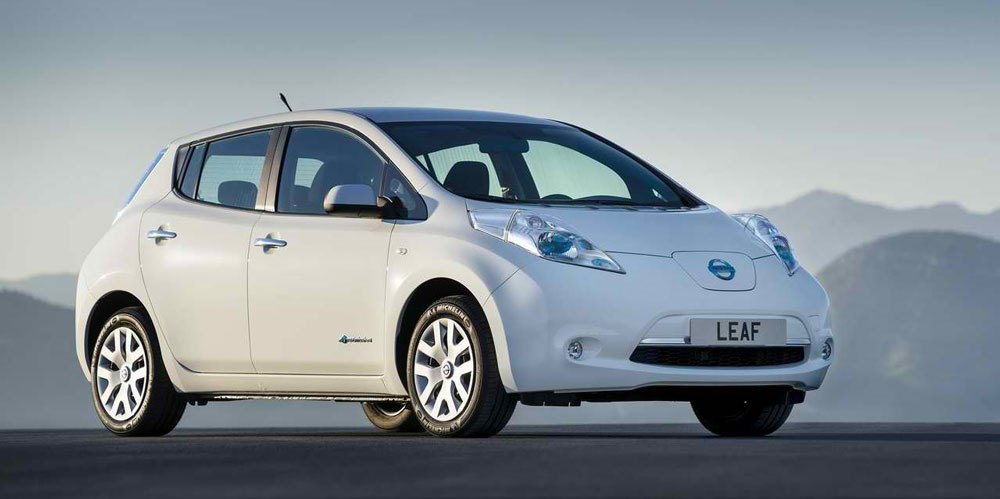
TM: “Can you imagine a Nissan Leaf or Tesla owner jumping in their car after work in say a really hot day in July? Ready to leave and oops, not 2014-Nissan-Leaf-goenough juice left to run the AC or even make the trip home. Not a happy camper.”

Jordan: “Using electric vehicle battery packs to balance the peak load is only an option if someone is home or has access to another car.”

TM: “Like I said, the idea must have been concocted by someone who has never lived in the real world. You know, Washington.”

Jordan: “OK, so we should start putting solar on all rooftops and storing those electrons using a battery, maybe a flow battery.”

TM: “Yes. Localizing the generation…the rooftop…eliminates the losses in transmission. Electrons go from the roof to the battery to the appliance.”

Jordan: “How do we make this work?”

TM: “First, you cannot put the utilities out of business. Utilities need to be part of the solution. Next, we need to start establishing localized grids. Some people call them micro-grids.”

Jordan: “You are saying that utilities, even though part of the problem, are also part of the solution.”

TM: “Think about your automotive days. The government and the auto companies finally started working together to reduce tailpipe emissions and reduce fuel consumption. They’ve made good progress.”

Jordan: “How can the utilities be part of the solution? Their business model is built around large grids, not micro-grids.”

TM: “Let’s start with the revenue stream so Wall Street won’t have apoplexy. Utilities can help fund the purchase and installation of the solar panels.”

Jordan: “Are you suggesting utilities buy the panels and then let the utilities charge customers for the panels with electricity bills, something like a mortgage?”

TM: “Yes. The model is already working in some locations. For the user, the electricity bill would be lower but the utility would also be paid back for buying and installing the panels.”

Jordan: “Utilities keep a revenue stream and reallocate capital to solar panels rather than building a new power plant.”

TM: “A big hurdle is convincing the coal lobby this makes sense? Coal lobby is well entrenched in Washington.”

Jordan: “Coal needs to realize the world is changing. Unless the coal companies can figure out how to make clean energy from coal, they will go the way of buggy-whip manufacturers.”

TM: “What about all the people employed in the coal mining industry?”

Jordan: “What about all the people that used to be employed in the auto industry, especially in Michigan? You know as well as anyone that technology can be a disruptive force. Businesses need to change to stay in business. Issues facing coal are not new.”

TM: “Some people are going to claim you are anti-union, especially against the mine workers.”

Jordan: “Look, times change and the groups involved need to quit pointing fingers and start solving problems.”

TM: “Unlike your former employer.”

Jordan: “They finally came around but it took Chapter 11 as a wake-up call. As far as solar, based on what you said we should be able to create a cost-effective micro-grid arm-wrestling-695086using existing solar and battery technology…and working with utilities.”

TM: “Yes, some arm wrestling required but the goal is achievable.”

Jordan: “Technology Man, you have got yourself a job.”

TM: “Why did I agree to have coffee with you? OK, I’ll do it.”

#34 US Solar Energy Efforts Back Asswards?

19 Wednesday Mar 2014

Posted by Jordan Abel in Back Asswards Thinking, Causes of the Revolution, Innovative Thinking: Ideas and Products, Possible Solutions

≈ Leave a comment

(Readers: Please note the blog about the 5th revolution in the US is constructed as a story. While not all chapters are linked, I think the story will be more meaningful by starting at the beginning.)

Want a PDF version for Entries #1-10, #11-20, #21-30 formatted for tablets and e-books?  Click links for download.  America’s 5th Revolution Volume I (Entries 1-10) America’s 5th Revolution Volume II (Entries 11-20) America’s 5th Revolution Volume III (Entries 21-30)

Scene: Jordan and Technology Man having coffee and bagels.

Jordan: “Technology Man, are you in between black-hole projects for the military?”

TechManTechMan: “Jordan, you know I can’t tell you anything about what I do.”

Jordan: “I know. But from what little I know you’ve been involved in some really interesting projects — stealth fighters, drones, weird electronics, and who knows what else.  Plus, the other fun things that you do — like photography.”

TechMan: “OK, Jordan. Now tell me, why are we having coffee beyond just catching up?”

Jordan: “Why would think I had something in mind?”

TM: “I’ve known you too long.”

Jordan: “Just a simple question for you.”

TM: “Simple questions are a rarity from you.”

Jordan: “I need to get your ideas on establishing a national policy for solar energy. Solar seems great. Clean source of energy. Solar is everywhere, at least some of the time.”

TM: “So what about the policy?”

Jordan: “The ‘so what’ is the approach the US is taking to solar. We don’t have a real policy. And the lack of a coherent policy was part of the cause of the revolution.”

TM: “You think so?”

Jordan: “Yes, too much reliance on coal and lots of resistance to alternative fossil fuels.”

TM: “The resistance still baffles me. The fossil-fuel energy companies have such a great opportunity to capitalize on solar and wind…and they don’t do it.”

Jordan: “When the companies do get involved, they use an antiquated approach.”

TM: Such as…”

Jordan: “Building large solar farms but putting the solar farms in the middle of nowhere.”

solar_panelsTM: “Jordan, where do you think most farms are? Farms are in the middle of nowhere.”

Jordan: “Yes, but middle of nowhere means the transportation to consumers.”

TM: “I agree the problem with solar farms in the middle of nowhere is the same – distance between the farm and the user.”

Jordan: “From what I understand, transmitting electrons over long distances is not very efficient.”

TM: “Inefficient is a better word. Not unusual for 50% of the electricity generated at a remote power plant not to make it to the user.”

Jordan: “Half lost? So what we are doing with these remote locations is doubling the size of the power plant…in this case solar farm…to compensate for the losses in transmission.”

TM: “Even worse. Many solar farms and wind farms require new transmission lines to get the electricity from the farm to the user. The cost of the lines is substantial. Plus some utilities are trying to put the new transmission lines through underdeveloped and environmentally sensitive areas. Why? Because it is easier and cheaper.”

Jordan: “What you’re describing is why current thinking about the best way to use solar and probably wind seems to be back asswards.”

TM: “Many of the plans for solar and wind have been developed by the same folks who wanted coal plants in remote locations so residents wouldn’t complain about emissions…and coal ash ponds.”

Jordan: “Alright, so what should the policy be for solar? We have a chance to make some changes.”

TM: “The most cost-effective approach, I think, is to install solar on all rooftops, whether residential or commercial buildings. And some locations are encouraging that.”

Jordan: “Solar on roofs is adequate to handle all electricity needs?”

TM: “Not until solar gets more efficient. But installing the panels cuts way back on the need for new power plants and likely eliminates the need for some older, coal-fired plants.”

Jordan: “What else would you do?”

TM: “Start storing electricity generated by solar. Right now electricity from solar is either consumed at the site or pushed onto the grid. But the problem is the mismatch of generation and demand. We need to store surplus electrons for use later.”

Jordan: “You talking about storing in batteries? Isn’t that very expensive?”

TM: “Speaking of batteries. I need to recharge mine with another cup of coffee.”

To be continued

#32 Helping Rebuild Detroit and Other Cities

12 Wednesday Mar 2014

Posted by Jordan Abel in Innovative Thinking: Ideas and Products, Possible Solutions, Societal Issues

≈ Leave a comment

(Readers: Please note the blog about the 5th revolution in the US is constructed as a story. While not all chapters are linked, I think the story will be more meaningful by starting at the beginning.)

Scene: Jordan’s Office with Housing Guru (see earlier entries for initial discussion)

Jordan: “Guru, nice to see you. Where have you been hiding?”

122213_1351_10GurusIdea1.gifGuru: “Hiding from you so I can get some work done. Actually, I’ve been revising the plan to economically rebuild housing in Detroit – at least part of it.”

Jordan: “Great. I am all ears because POTUS is interested also. What do you have?”

Guru: “POTUS? You’re kidding. You talked to POTUS about this?”

Jordan: “He called me. Met him at the White House. Saying he’s interested in this project is an understatement. He views Detroit as a template for many cities.”

Guru: “That’s good and bad. This project has become very high profile.”

Jordan: “You wanted to rebuild your architectural practice. Well, here’s the chance. Now, we need get this project going. The next call from someone on POTUS’s staff will be asking for a progress report, not just ideas.”

Guru: “Glad he agrees problems in Detroit are not unique, just the most visible. Many US cities have an eroding tax base, high legacy pension costs and infrastructure in need of serious repair.”

Jordan: “Guru, I agree completely. Now we need to layout specific ideas for Detroit and a timeline for implementation.”

Guru: “The idea is simple and what we discussed. Convert existing industrial structures into residential and commercial space.”

Jordan: “That’s what I told POTUS. His question was, ‘Isn’t converting a factory to housing expensive and fraught with problems?'”

Guru: “And I hope you said ‘likely’ unless you think modular.”

Jordan: “Exactly what I said. You’ve trained me well. We also discussed how we need to overcome the negative perception of modular.”

Guru: “I understand. Maybe a start would be to include photos of the modular homes that I designed and built in Charlotte.”

122213_1311_9Guruandthe4.jpgJordan: “Very nice homes and much better than I expected. Now, how do we, in Ricky Ricardo terms, ‘splain’ the modular concept to prospective buyers, the public and financiers?”

Guru: “I’ve done a simulation using CAD of using modular in a factory. We can combine the simulation with the video I did of the houses being assembled in Charlotte.”

Jordan: “By the way, before I forget, POTUS is arranging meetings with head of HUD and senior legislators in Southeast Michigan. We need to have some presentation ready for those meetings.”

Guru: “Jordan, you remind me of my clients. Here’s an idea. What can I look at tomorrow?”

Jordan: “You and I know this is a big deal and great opportunity. We need to be ready.”

Guru: “I know. Let me outline the general content of the pitch.”

Jordan: “Keep going.”

Guru: “The idea is build the units in one factory and install them in a former factory that is now empty. We are replacing a slab of dirt where a house usually sits with a slab of factory floor.”

Jordan: “What other differences?”

Fisher 21Guru: “The rest is fairly straightforward. The factory needs to have enough floor-to-ceiling height to handle the modular unit and some crawl space — for support braces and any adjustments to level the floor – and some space above for ventilation. But most factories have more than enough room.”

Jordan: “What about width. Aren’t there big support posts in these buildings?”

Guru: “Yes, but generally the posts are far enough apart to create adequate living space in between.”

Jordan: “So the module is built in a factory, like today, and then transported to the site. Once there the unit slides in the building?’

Guru: “Yes. But the factory for modular units can be set up next to the building to be rehabbed.  Lots of creative thinking to make that happen but that is a good description. Some units are bedrooms, some are kitchens and baths. It is easy to mix and match.”

Jordan: “What about plumbing and electrical? Are you going to use what’s in the building?”

Guru: “All the plumbing and electrical are on the outside walls of the modular unit so hook-ups are easy and maintenance is easy. The plumbing and electrical from all the units converge at a central location and link to the existing infrastructure. The unit could have a separate unit for purifying water and generating electricity – like the one you’ve been working on.”

Jordan: “How wide are these units?”

Guru: “No more than 20′ for a lot of reasons.”

Jordan: “So once inside the existing building, can you somehow link these units together to make say a three-bedroom apartment?”

Guru: “There are tricks to hooking the units together but yes. And with some creative designs, most people will never know.”

Jordan: “What about all the crud in some of those old buildings? I think of the assembly plants and sheet-metal plants I’ve been in. Who knows what stuff is really in there.”

Guru: “Remediation needs to be completed for the major problems. There are all kinds of products to seal floors, ceilings, pipes, etc. Besides all the plumbing and electrical will be new.”

Jordan: “Could you use this same idea to rehab old hotels, apartment buildings, college dorms?”

Guru: “Each of those could be done. Old factories have the most flexibility because the openings are generally larger. When the opening is smaller – hotel room, or even some factories for example – the modular unit might have to be assembled in the living space. You know, like final assembly of a car.”

Jordan: “Most people do not realize how much sub-assembly there is in a car or truck. Final assembly is the most fun to watch.”

Guru: “We could do a lot of sub-assembly work offsite and do final assembly on site.”

Jordan: “Either way do you think the rehab cost will be competitive?'”

Guru: “Yes. It is also important that total costs are considered. What is the value for taxpayers of a building sitting empty versus one that has people living in it? What is the cost to the city of tearing down a building versus rehabbing it? A lot of times people just compare the cost per square foot of new construction to the cost per square foot of the rehab. Those comparisons do not consider the other costs. Yes, the proposal is competitive.”

Jordan: “This is a great start, Guru. Hats off to you. When can I get some drawings for the upcoming meetings?”

Guru: “You never let up do you. Look, I’m not a meeting guy, especially for political stuff. My shtick is architecture. And my real expertise is making existing spaces more functional and more attractive. And what I really dislike is seeking funding for these projects.”

Jordan: “I can help with meetings and the funding, although no guarantees on funding. Everyone agrees if the project in Detroit is successful, other projects will follow in Detroit and elsewhere.”

Guru: “That potential is exciting.”

Jordan: “One of our hurdles in rebuilding Detroit will be overcoming all the bad press. A lot of people think Detroit caused all of its problems. I agree many problems were self inflicted but not all.”

Guru: “You bad-mouthing Detroit?”

Jordan: “I am not bad-mouthing Detroit. But I am being realistic. Detroit has been in decline for nearly 50 years. It might take the next 50 years to complete the turnaround.”

Guru: “It would help me tremendously if I understood what Detroit was like and the vision for where it wants to go. I can integrate some of the history and the vision into the designs.”

Jordan: “OK, I’ll tell you what I know. But let’s get some coffee first.”

Go back

Your message has been sent

Warning
Warning
Warning
Warning

Warning.

← Older posts
Newer posts →

Subscribe

  • Entries (RSS)
  • Comments (RSS)

Archives

  • August 2025
  • July 2025
  • June 2025
  • May 2025
  • April 2025
  • March 2025
  • January 2025
  • December 2024
  • November 2024
  • September 2024
  • August 2024
  • July 2024
  • June 2024
  • May 2024
  • April 2024
  • March 2024
  • February 2024
  • January 2024
  • December 2023
  • November 2023
  • October 2023
  • September 2023
  • August 2023
  • July 2023
  • June 2023
  • May 2023
  • April 2023
  • March 2023
  • February 2023
  • January 2023
  • December 2022
  • November 2022
  • October 2022
  • September 2022
  • August 2022
  • July 2022
  • June 2022
  • May 2022
  • April 2022
  • March 2022
  • February 2022
  • January 2022
  • December 2021
  • November 2021
  • October 2021
  • September 2021
  • August 2021
  • July 2021
  • June 2021
  • May 2021
  • April 2021
  • March 2021
  • February 2021
  • January 2021
  • December 2020
  • November 2020
  • October 2020
  • September 2020
  • August 2020
  • July 2020
  • June 2020
  • May 2020
  • April 2020
  • March 2020
  • February 2020
  • January 2020
  • December 2019
  • November 2019
  • October 2019
  • September 2019
  • August 2019
  • July 2019
  • June 2019
  • May 2019
  • April 2019
  • March 2019
  • February 2019
  • January 2019
  • December 2018
  • November 2018
  • October 2018
  • September 2018
  • August 2018
  • July 2018
  • June 2018
  • May 2018
  • April 2018
  • March 2018
  • February 2018
  • January 2018
  • December 2017
  • November 2017
  • October 2017
  • September 2017
  • August 2017
  • July 2017
  • June 2017
  • May 2017
  • April 2017
  • March 2017
  • February 2017
  • January 2017
  • December 2016
  • November 2016
  • October 2016
  • September 2016
  • August 2016
  • July 2016
  • June 2016
  • May 2016
  • April 2016
  • March 2016
  • February 2016
  • January 2016
  • December 2015
  • November 2015
  • October 2015
  • September 2015
  • August 2015
  • July 2015
  • June 2015
  • May 2015
  • April 2015
  • March 2015
  • February 2015
  • January 2015
  • December 2014
  • November 2014
  • October 2014
  • September 2014
  • August 2014
  • July 2014
  • June 2014
  • May 2014
  • April 2014
  • March 2014
  • February 2014
  • January 2014
  • December 2013

Categories

  • Affordable Solutions
  • Back Asswards Thinking
  • Background
  • Background Stupid Is as Stupid Does
  • Benefits of Revolution
  • Causes of the Revolution
  • Common Sense Policies
  • Corporate Policy
  • Definitions
  • Diversions
  • Economics
  • Education Issues
  • Federal Budget
  • General Motors
  • Gov't Policy
  • Infrastructure & Fixed Fuel Prices
  • Innovative Thinking: Ideas and Products
  • Lessons of Revolution
  • Personal Stories
  • Possible Solutions
  • Post Trump Presidency
  • Rebranding Black Community
  • SCOTUS
  • Sense Check
  • Societal Issues
  • Stupid Is as Stupid Does
  • Tech Tsunami
  • Trump 47
  • Uncategorized

Meta

  • Create account
  • Log in

Create a free website or blog at WordPress.com.

Privacy & Cookies: This site uses cookies. By continuing to use this website, you agree to their use.
To find out more, including how to control cookies, see here: Cookie Policy
  • Subscribe Subscribed
    • usrevolution5
    • Join 32 other subscribers
    • Already have a WordPress.com account? Log in now.
    • usrevolution5
    • Subscribe Subscribed
    • Sign up
    • Log in
    • Report this content
    • View site in Reader
    • Manage subscriptions
    • Collapse this bar
 

Loading Comments...