
Readers: this blog is set in the future (sometime after the year 2020). Each entry assumes there has been a 5th revolution in the US — the Revenge Revolution. More about the Revenge Revolution and author, Entry #1. Most entries are formatted as conversations. Characters appear in a number of entries, with many entries building on previous conversations.
Occasionally I do a “sense check.” Auditing one’s own work is problematic but I try to be objective. Entries #300 and #301 are the most recent standard “sense checks.” Entries (#310-#313) broke from conversation format. One more note — sometimes I write about another topic that does not quite fit the theme of the blog. Those comments are in the page titled “JRD Thoughts and Comments.”
Scene: Jordan’s office, Washington, DC. Continuing conversation with Gelly, Jordan’s assistant. Conversation began Entry #308.
 Gelly: “Seems to me we have two open topics – (i) if the invention of the automobile changed society; (ii) to what extent do product life cycles influence societal change. But I need to get out of the office soon, so no blabbering on, please.”
Jordan: “So diplomatic. OK, I’ll try to keep it short…”
Gelly: “…and simple.”
Jordan: “Let’s start with autos. Recall I said the iPhone…really the smartphone…seemed to be more integration of existing components than an invention. Without question, since introduction the iPhone has had a major impact on societies worldwide. But, to me the iPhone should not be categorized as a major technology breakthrough.”
 Gelly: “Your analysis surprised me before the break and still surprises me. I always thought the iPhone was some big invention. Invention or not, what does the iPhone have to do with the automobile?”
Jordan: “The introduction of the automobile, in many ways, fits in the same category as the iPhone – more integration than invention.”
Gelly: “Your comment just seems to counter-intuitive. Why do you say the automobile was more integration?”
Jordan: “What was the nickname that most people called early automobiles?”
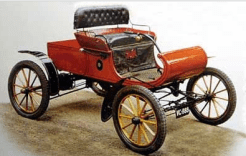 Gelly: “Horseless carriage, right?”
Jordan: “Yes. And what did the early automobiles look like?”
Gelly: “A carriage without horses.”
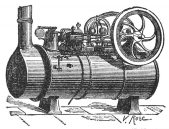
Jordan: “Now, think about the key components of an early automobile. Obviously horse-carriage components were around. If fact, for the early years, automobiles used wooden frames and wooden wheels – wheels, not tires. The engine for the automobile had been around for a while, too. Both the steam engines and the gas engine had been used in farm tractors.”
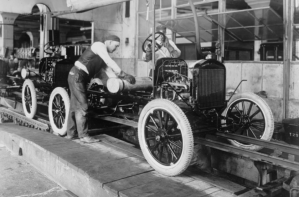 Gelly: “What about the assembly line. Didn’t Henry Ford invent that?”
Jordan: “Not really. An assembly line required parts to be standardized so each part fit the same way on every car. While Ford was probably the first auto company to use an assembly line, rifle manufacturers had been making standardized parts for decades. Ford was smart and adopted the same assembly-line technique to increase production and reduce cost of the Model A.”
Gelly: “Gee, I always thought automobiles were a technological breakthrough. Now you’re saying autos were more like an iPhone.”
Jordan: “True, but I also have a confession. Always knew that Henry Ford borrowed the idea of an assembly line but until this conversation, I never really thought about the development of the automobile as being more integration than invention.”
Gelly: “Well, well. Jordan makes a confession. Now, next topic – how do product life cycles affect societal change?”
Jordan: “Stick with autos to start. The automobile life cycle has been very long…and still going strong. While lots of things on cars have changed – design, interior, engine 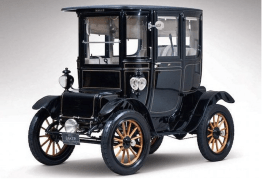 performance, emissions, creature comforts – the fundamental technology in cars and trucks is the same as the early 1900’s. I know that might sound odd, but it’s true. Most people forget there were steam-powered cars and battery-powered electric cars in 1910. See that picture on my desk. That’s a Baker Electric.”
Gelly: “You mean Elon Musk didn’t invent the electric car? Yikes! What will all those Millennials think?”
Jordan: “Now, now, be nice.”
Gelly: “I know what you mean. If you see a car that was built around 1910, even earlier, everyone still knows it’s a car. That’s not true for some major products from 40-50 years ago, or even 25-30 years ago.”
 Jordan: “So has the automobile life cycle affected societal behavior? Yes, but has society been affected by the life-cycle of the automobile manufacturers?”
Gelly: “Not sure what you mean.”
Jordan: “The answer is no, society has not. Let me tell you why. And give me some leeway on the numbers. They’re about right. In the US in 1910 there were 200 or more companies making cars. By 1920 that number had dropped to about 20.”
Gelly: “Is that drop like one of those order-of-magnitudes you were talking about before the break?”
 Jordan: “Yes. Very good. Then between about 1920 and the mid-1960’s, the number of manufacturers dropped from 20 to 4-5, depends on the timing. However, did the decline in the number of manufacturers affect how societal behavior was affected by the automobile?”
Gelly: “No. Car sales kept increasing. So the relative short life-cycle of most of the early manufacturers had no affect at all on the number of cars being produced. In fact, even though the number of car manufacturers declined sharply, the number of cars sold increased sharply.”
Jordan: “So now we’ve separated the influence of the technology from the influence of individual companies involved with the technology.”
Gelly: “The number of auto companies in the US declined but then it increased again. Right now there are a bunch of foreign companies selling cars in the US. And many of those companies have assembly plants here. Let’s see, there’s Toyota, Honda, Mazda, Mercedes, BMW…let me think some more.”
 Jordan: “You’ve made your point. There are at least 10 different auto companies with assembly plants in North America. They got here, in part, because in the late 1960’s and 1970’s and even in the 1980’s, the US companies were slow to respond to changing consumer tastes and the increased demand for more fuel-efficient cars. Even if the Big 3 auto companies had responded more quickly, they probably could not have stopped all the imports.”
Gelly: “So in the 1970’s the foreign-based companies start selling in the US…and have taken a big chunk of the US market. But what I don’t understand is why did they build assembly plants in the US? If Trump’s MAGA claim – Make America Great Again – had any validity, then why wouldn’t the various foreign manufacturers take the same approach? Just build cars in say Germany or Japan and ship to the US. Why not?
 Jordan: “The foreign-based manufacturers built plants in North America to save money and respond to market demands more quickly. What Trump seemed to overlook…more likely never understood…is the real cost and the long lead-times involved with building overseas and then shipping to the country where the cars are sold. What he also probably never understood was that before 1920, the US auto companies set up assembly plants in a number of foreign countries for the very same reasons the foreign companies built assembly plants in the US.”
Gelly: “Another example of dodo-bird reasoning in the Trump Oval Office. Boy, am I glad Trump’s gone.”
Jordan: “Speaking of gone, before you leave let me try to wrap us what we’ve been talking about.”
Gelly: “Let me try instead, please. Societies may experience major changes in behavior as a result of a new product. There does not seem to be consistent pattern whether the product that precipitated the change was an invention, a spin-off of an invention or an integration of other products, like the iPhone or the automobile. We also concluded it doesn’t really matter…other than to maybe a few academics…whether the primary product was the invention, a spin-off or some integration.”
Jordan: “OK so far.”
Gelly: “In addition, although we didn’t talk about it a lot, some products have a very long life cycle that continues to affect societal behavior – automobiles, for example. Other products have shorter cycles that affect societal behavior – mainframe computers, for example. Some version of the  shorter life-cycle product might still be around but the period of influence – its life cycle – is over. I think I understand…but the answer seems so messy.”
Jordan: “Agreed. There doesn’t seem to be a clear-cut answer whether a technology per se, products based on that technology, or some product which integrated that technology precipitated societal change…let alone did the societal change contribute to a societal revolution.”
Gelly: “One thing is clear, I need to get out of here. Good-bye, Jordan.”
Jordan: “Good-bye, Gelly.”
(Topic over for now. Will likely revisit reasonably soon.)
 Gelly: “Just looking at your coffee cup, I suspect the introduction of a paper coffee cup was a major disruption to the pottery coffee-cup makers. However, it’s hard to imagine the paper coffee cup had a major societal impact. Is that what you mean?”
 Jordan: “In the 1960’s when IBM introduced what were called mainframe computers. Granted, by today’s standards, the mainframes were big and slow. There were special air-conditioned rooms to handle all the extra heat from the computers. Plus, for a lot of applications, you had to transfer information to punch cards before you could use the computer. While those computers were clunky and dumb by today’s standards, the machines were breakthroughs for the time — offering at least a couple of orders of magnitude better data management and analysis.”
 Jordan: “Each order of magnitude represents a tenfold increase. One order of magnitude would be 10x higher than the previous number. Two orders would be 100x higher – 10x the previous number which also was 10x higher. Three orders would be 10x10x10 or 1,000x higher. Look at this chart and then imagine the line going up faster than what’s shown.”
 Gelly: “Did IBM just one day decide to invent the computer or was something else invented that allowed the mainframe to be developed?”
 Jordan: “What changed to allow IBM…and a few others…to make practical mainframes was a way to eliminate vacuum tubes. The invention was the semi-conductor. Think of a semi-conductor as a computer chip or the SIM card in your phone. The early chips were not nearly as powerful as today.”
 Gelly: “If I understand correctly, the invention of the semi-conductor did not cause societal change per se. The societal change occurred only after products were developed using the semi-conductor. So, in deciding how a society adapts or manages technology-induced disruption, does it really matter whether the invention is the driver or the catalyst for the change? Deciding which might be a good academic exercise but does anyone else care?”
 Gelly: “Jordan, are we looking at the issue from the wrong end? We’re trying to find the cause of the societal disruptions. Would a better approach be to ignore the cause and analyze how the technology disrupted society…and, if so, what kind of disruption?”
 Jordan: “Take a look at sales after WWII and the hand-drawn blue line. The company had positive sales growth virtually every year from right after WWII to almost 1990 – 45 years.”
 Jordan: “What IBM missed was the shift to the personal computer – desktops first, then laptops. Even though the PC was not as powerful as the mainframe, it was easier to use.”
 Gelly: “Near the end of the movie ‘Miracle on 34th Street’ when they’re driving down some the suburban street, Natalie Wood shouts something. Remember what she shouted”
 Gelly: “Maybe not but you have lots of study time…and a bunch of experience in the real world using economics stuff. Remember, KISS, okay?”
 Jordan: “When Siri tells you Michigan beat Indiana, that’s a form of AI.”
 Gelly: “How does she do that?”
 Gelly: “So for Siri, Alexa and their siblings, they’re best at providing quick access to available information. At the same time, the working stiffs most affected by Siri and siblings are people employed to provide information. The example might seem a bit dated but as a kid I remember being able to pick up the phone and have the operator get someone’s number, right?”
 Gelly: “What about AI replacing some functions of what lawyers do, or at least law clerks do? Same with some portion of information gathered when visiting a doctor. Seems as if a lot of people could be replaced, or maybe have been replaced already by some form of Siri and siblings. What about using AI for tasks that are a lot more complicated than say picking up boxes or searching a database?”
 Jordan: “Well, some clothes are already being made 100% or nearly 100% by machines. And over time, machines will make clothes that require more steps.”
 Gelly: “Another case of the working stiff getting screwed?”
 Jordan: “Excellent example. I’m impressed you remembered.”
 Gelly: “Now I’m starting to get even more confused. What happened to KISS…keep it simple, stupid?”
 Gelly: “The last lesson we had on economics, professor, was about how tariffs usually don’t work. As a result, when tariffs are imposed it’s often the working stiff that ends up…well, getting screwed.”
 Jordan: “You mean artificial intelligence…like Donald Trump’s intelligence — artificial?”
 Gelly: “I’m also confused about what I hear people calling ‘machine learning.’ Is machine learning the same as artificial intelligence or part of artificial intelligence?”
 Jordan: “Think about how you learn to do some task. Could be learning to use a computer. Maybe something easier like hammering a nail. What’s the first step?”
 Gelly: “So, if somebody shows the machine how to say pick a box off a shelf and load it on a cart, then the machine can learn to do that?”
 Jordan: “Good question. That’s what different about today’s machine learning and attempts in the past. In the past, the limitations were software and computer processing. To get the machine…a robot…to do something required a lot of very precise programming. Plus the capacity of machine ‘memory chips’ was limited…intellectually challenged…so the robot couldn’t really do much. Today’s chips are like Albert Einstein compared to earlier chips.”
 Gelly: “If I understand correctly, by learning a set of small steps, the machine can adapt if some part of the task changes. For example, if the first box is small and the next box is larger, the machine could pick-up either size box and load on the cart. I understand there’s some range of sizes but, as long as the machine has been taught to pick up a bunch of different size boxes, the machine can pick up any size box within that range. Right?”
 Jordan: “That’s the question that seems to be scaring a lot of people. As computer chips continue to be more powerful, the capabilities of the machines will continue to increase.”
 Jordan: “That’s the point. War machines are a different story. While it seems like a bit of science fiction, very sophisticated war robots could decide to turn around and attack.”
 Jordan: “Yes, but countries having to manage the transition from an existing to a disruptive technology is not something new. Countries worldwide have faced this very problem for centuries — what about the introduction of steam engines, planes, cars, telephones, internet…and the list goes on. Some countries have managed the transitions well, other not so well.”
 If you’re a parent, or have a brother or sister, wouldn’t you be proud to be able to make such a proclamation? Well, you can make such a proclamation if you support Donald Trump and his Republican enablers.
 If you’re religious…if not pretend you are for a few minutes…then show me where in your religion is a list of basic tenets indicating acceptable behavior includes lying, cheating, stealing, discriminating. Even if your religion “forgives” such behavior, doesn’t the person being forgiven need to stop such behavior first?
 Let’s put religion aside and talk instead about the oath of office taken by the president. The oath, which is part of the US Constitution, reads, “I do solemnly swear (or affirm) that I will faithfully execute the Office of President of the United States, and will to the best of my Ability, preserve, protect, and defend the Constitution of the United States.”
 No, I won’t get over it…and neither should you. By latest count, Trump has been lying at least 30 times a day with the rate of lies increasing with each day closer to the mid-term elections. And those 30 lies per day are the ones known to the public. How many more lies does he tell inside the White House? Trump supporters – would you tolerate your child lying 30 times a day?
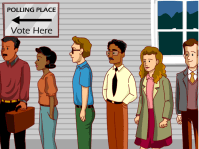 Making a choice about what type behavior you want from the president and other political leaders is not difficult. Do you want someone leading the country and/or representing you who lies, cheats, steals, and discriminates? If you would be proud of such behavior by your child or sibling, then Trump and his gang of enablers are for you.
 How many people do you know have joined a “political tribe”? And as a member of that tribe, no longer question even the most outlandish statements of tribal leaders? Think about how passive these tribal members have become. Do you know of any self-respecting four year-old who would take your statements as gospel and quit asking “why?” Chances are you’ll have a hard time finding a four year-old who fits that category.
 I know some blog readers think that lately I’ve been beating up the Republicans too much. Maybe so, but given the behavior of the so-called leaders of the Republican Party, such criticism seems more than justified.


 president when such talk from your children would result in punishment?
 Why have Republicans decided to abdicate truth in favor of Trump? Why have Republicans decided to abdicate core values of a democracy for a guy who openly courts leaders hostile to the US? Why have Republicans given up having America be the shining light worldwide for fairness and moral standards?
 (Just to be clear, Democrats are not completely clean…but the behavior by the Republicans in supporting Trump overwhelms any bad behavior by Democrats Claiming the behavior is equal is a false equivalency.)
 As noted in #310, my reference point is a Republican Party of Abraham Lincoln, Everett Dirksen and Jacob Javits. The attitude of that Republican Party could best be described using a slogan from Bush 43’s 2000 presidential campaign, “compassionate conservatism.”
 In our particular town – population approaching 50,000 – the public school system was top-notch with quality teachers in all grades. High-school students had a choice of three tracks and could switch between tracks for a limited number of classes – college prep, general education, technical training. The town produced a disproportionate number of famous and successful people in a wide range of occupations – education, entertainment, medicine, military (early astronaut), science and industry.
 So that’s a description of the Republican Party I grew up with and use as a reference point for those running for political office. Such a Republican Party no longer exists. When I hear a Republican call it the party of Lincoln, I shake my head and want to scream. Most of today’s Republicans have no clue about the values of the party of Lincoln.
 I share the view of many economists that a very good way to assess the potential impact of debt for a country is to measure outstanding debt as a percent of GDP (gross domestic product). Think of it this way. Pretend you’re a banker. Two people walk into a bank and want to borrow $25,000,000. One of them is someone like you…and the other is Warren Buffet. The bank decides on loans based on income and assets. For someone like you, the $25,000,000 is likely to be multiples higher than your income and assets. For Warren Buffet, the $25,000,000 is considered chump change. Thus, a large amount of debt isn’t necessarily bad if you have a large income and/or large asset base, which the US does. The US government owns lots of land and buildings.
 Following WWII and up to the Reagan Administration, debt as a percent of GDP declined. During the Reagan Administration debt as a percent of GDP increased from about 30% to about 50% — a relative increase of 60%. Under Reagan, the relative increase in debt was only somewhat less than experienced during the New Deal under FDR. Under Bush 41 relative debt percent increased over 25% beyond Reagan. Under Bush 43, relative debt increased over 40% from the Clinton years. Under Trump, despite a very strong economy the Federal debt for FY2018 was the highest in 6 years. The deficit under Trump is expected to balloon to over $1,000,000,000,000 annually because of the gigantic tax cut that reduced taxes primarily for the wealthy.
 What about debt increases under Democrats? They were even worse, right? Well, no. Throughout the Clinton Administration, debt as a percent of GDP decreased a little over 12%. During some years under Clinton, the US ran a surplus. Under Obama, relative debt climbed about 35%, even with the combination of fiscal stimulus required to avoid another Great Depression and the introduction of the Affordable Care Act. Debt under Obama, despite all the cries from Republicans increased less than under either Regan or Bush 43. So, which party is more fiscally conservative? If you look at fiscal policies under Republicans, one term comes to mind – red ink.
 Further, Republican have resisted increasing the minimum wage. When Reagan was inaugurated, the minimum wage in real terms (adjusted for inflation) was about $10.00 per hour. Today’s minim wage is $7.75 per hour, a decrease in real terms of more than 20%. The decrease reduces further the ability of lower-skilled, entry-level workers to earn enough to exceed the poverty line. What happened to the “compassion” of the Republican Party?
 Just in case today’s Republicans have not read the Constitution, as is abundantly clear from listening to President Trump, the First Amendment reads as follows, “Congress shall make no law respecting an establishment of religion, or prohibiting the free exercise thereof; or abridging the freedom of speech, or the press (see the press is not your enemy but protected!), or the right of people to peaceably assemble, and to petition the Government for a redress of grievances.”
 At the time the Constitution was written…for all the “Constitutionalists in the crowd” that was 225+ years ago…the United States had a very small “standing army.” The defense of the country relied on “well-regulated” state militia – think National Guard. Members of the well-regulated militia were “citizen soldiers” and expected to provide firearms, as implied in the Second Amendment. Over time the US created a permanent military for “the security of the free state,” thus the standing army eliminated the need for citizen soldiers.
 As a result actions during the confirmation process, I increased the chances of a 5th US revolution to “highly likely.” However, my reasons for changing to “highly likely” may be different from what many others have stated or written about the Kavanaugh nomination/confirmation process.
 Over the decades, what has allowed SCOTUS rulings to be recognized as law of the land by the populace? Obviously not everyone has supported every decision but why have even controversial decisions become the law of the land? Trust by the people in the objectivity of the justices. In parallel, the Court’s decisions likely have been moderated to a degree by public opinion. Justices have recognized the need to create trust and acknowledge public opinion so the vast majority of SCOTUS rulings have not been too far left or right.
 Let’s take a closer look at McConnell’s greatest achievement. The initial phase of this latest “great achievement” was McConnell denying president Obama the right to have the Senate consider a nominee to fill an open seat on SCOTUS. According to McConnell the vacancy should be filled “after the people vote.” Forget the Constitution, forget precedent, McConnell alone should decide when a vacancy on SCOTUS should be filled.
 To further build public trust…or maybe that’s distrust…in Kavanaugh, McConnell (this time thru Grassley and Trump), stonewalled efforts to dig deeper into Kavanaugh’s past. Charges ranged from sexual assault to excessive gambling. Rather than let the FBI explore a series of allegations fully, the Judiciary Committee allowed only one key witness to testify – yes, only one – Dr. Christine Blasey Ford. Kavanaugh followed Dr. Ford and managed to create even more concern about his truthfulness and demeanor as publicly insulted Senators seeking answers to some basic questions and even lied about what he should have dismissed as youthful indiscretions.
 While those on the political right might view with great satisfaction McConnell’s tactics of attempting to hide the truth about Kavanaugh, thereby giving the finger to the left, how would the right react if a nominee from a Democratic president had the same questionable background and exhibited the same rude behavior as Kavanaugh? I can hear the cries now, “Lock him up! Lock him up!”
 Senator Susan Collins is among the brainwashed or brain-dead. Collins gave a 45-minute talk justifying support of Kavanaugh. Her remarks included some truly nonsensical statements. For example, she claimed that as a sitting judge, Kavanaugh has consistently supported legal precedent…unless he considered the precedent wrong. Huh, Susan? In real speak that means precedent plays no part in Kavanaugh’s decisions. Why would anyone ever make such an inane claim? Collins was also interviewed on “60 Minutes” the day after the confirmation. Based on her comments during “60 Minutes,” no one would ever accuse her of being a deep thinker. Enough about Collins.
 Then we have Senator Lindsey Graham. Graham’s behavior of late could be compared to that of Stormy Daniels in one of her movies – constantly taking on new positions and new partners, including cuddling up to president Trump. At least Stormy Daniels has been straightforward with the public about her beliefs. No so for Graham. Say Lindsey, do you not remember any lessons from John McCain?
 Among people who have principles, there is an adage that most learned early in life. Mitch you must have missed the class…again and again and again. The adage is, “What goes around, comes around.” The follow-on part of that adage is when it comes back, the intensity is usually much greater. My suggestion Mitch? Be on the lookout because your life is about to begin heading down a very steep hill.
 Is there any hope? Yes, there’s some. While we probably can’t avoid the Revenge Revolution, the intensity could be moderated by one person – Chief Justice John Roberts. Roberts is a smart guy. Roberts knows his legacy will be determined by how credible the public views decisions of SCOTUS. Roberts also knows he’s got two justices who are considered illegitimate by many people – Thomas and Kavanaugh.
 Gelly: “Good morning, Jordan. Sorry I didn’t make it back from the conference yesterday. Long day. How was your
  Jordan: “Worked on Walt and millions of hard-core Trump supporters. Say, what’s with the sling on your left arm?”
 Jordan: “Any idea how long in the sling?”
 Jordan: “You mean such policies as tax cuts for the wealthy, tearing up trade agreements with other countries that the US drafted after WWII, efforts to severely restrict immigration and then allow only people with money to get green cards and finally citizenship. Those kinds of policies?”
 Jordan: “Question #2. If the Federal government wants to stimulate employment, which policy would be more effective – trying to create even more new jobs when unemployment is already low or trying to create new jobs when unemployment is high and a lot of people ae looking for work?”
 Gelly: “When tax revenue is high. That’s when government should pay down debt and save for a rainy day. When the economy starts to get bad is when the government should start spending more money and create more jobs.”
 Gelly: “No, that would be stupid. Sounds like a waste of money.”
 Jordan: “Short answer is greed. The Donald was never, ever for anyone but the Donald. He did not care how economic policies affected the country as long as he and his family could make more money.”
 Gelly: “When you mentioned McConnell you know what popped in my head? The scene from ‘The Graduate’ where Elaine is in Benjamin’s rented room near Berkeley, she’s just screamed and the landlord is headed toward the room and turns to Benjamin. The landlord says to Benjamin, ‘You are scum.’ Seems to fit Trump, McConnell and some others.”
 Walt: “I agree it was an interesting experience. Yes, I’ve got time for a couple more questions, then I’m outta here.”
 Walt: “Yes. Best I can tell, Woodward is about as credible a journalist as you can find. I’ve never heard what I call a true Washington journalist say he’s anything but top drawer. Forget what the talking heads say about him.”
 Walt: “Yes, and sometimes at myself for having believed him. Trump lied who knows how many times a day. He was a serial liar…even about stuff that didn’t really matter. He made Pinocchio look like a penny waiting for change. So the serial liar claims this highly respected journalist made up key parts of the book…and then the serial liar expects rational people to believe him. C’mon. At that time Woodward had written I think 7-8 books about presidents. And he’s going to make up quotes?”
 Walt: “Woodward’s book title was spot on. The word ‘fear’ was a great descriptor. Fear among the White House staff and the agencies about what crazy stuff Trump might try to do and fear of the consequences for the country.”
 Walt: “The scene from the ‘Wizard of Oz’ where the bad witch tries to bully Dorothy to give up her ruby slippers. Then the good witch – in this case Woodward rather than Glenda – shoos off the bad witch and protects Munchkin Land.”
 Jordan: “When bad witch was shooed off, the Munchkins…aka Republicans…had the opportunity to return to normal.”
 Jordan: “No. Trump’s actions made the polarization much worse. He allowed the wacko fringes to come out of the closet. In fact he seemed to promote the wacko far right. Maybe even worse, his economic policies and efforts to control the judiciary accelerated the country’s slide to becoming a banana republic.”
 Walt: “Woodward…along with a few others…confirmed what a lot of people suspected about Trump. Except what Woodward showed the situation was much worse than most anyone thought.”
 Jordan: “Or, as they say in Texas, ‘All hat; no cattle.’ That’s the same group who wanted staffers to resign if they didn’t totally agree with Trump. ‘Hail the king. He can do no wrong.’”
 usrevolution5