
Readers: this blog is set in the future (sometime after the year 2020). Each entry assumes there has been a 5th revolution in the US — the Revenge Revolution. More about the Revenge Revolution and author, How the 5th US Revolution Begins and About the Author. Many entries are formatted as conversations. Characters appear in a number of entries, with many entries building on previous conversations.
Occasionally I do a “sense check” about the likelihood of a Revenge Revolution. Entry #318 is the most recent “sense check.” One more note — sometimes I write about another topic that does not quite fit the theme of the blog. Those comments are available on the page titled “JRD Thoughts and Comments.”
This series is about the coming “Technology Tsunami.” The series addresses what might be involved and some suggestions for mitigating and even capitalizing on the opportunity. Entries #321 and #322 are intended to describe AI in more understandable terms, using personal experiences as examples.
A widespread use of AI today is what is called “profiling.” Ever notice after you’ve searched something on Google, an ad appears for the product? How does the computer know?
This entry discusses how AI was used to create “profiles” and how those profiles were used in a commercial application. The examples in this entry and the next (Entry #322) are “early stage” and intentionally selected to demonstrate: (i) applications that are easy to understand: (ii) AI-based applications have been around for a number of years; (iii) how AI can be used to increase the effectiveness of “gut-feel” profiling.
 The concept of profiling is simple. Profiles are based on the assumption that “birds of a feather flock together.” That is, people with similar profiles have similar behavior.
Of course, not everyone in the flock, or profile group, behaves the same way. But to the user, profiling is not about individuals but about probabilities of member in the group. What percentage of the people in the profile group will behave a certain way? The goal is to create a group, or profile, where there is a high likelihood that members will have a specific desired behavior.
Profiling is not a new idea. Profiles existed for eons before being formalized with computer programs. Further, virtually everyone creates profiles. Most all of us put strangers into categories based on such factors as geographic location, appearance – skin color, hair color, hair style, clothing, etc. – age, education and a host of other criteria. Think back to someone you met, then after you got to know the person much better, said to yourself, “Gee, that person is a lot different from I first imagined.”
 As for this entry, the first example seems rather crude by today’s standards. At the time the profiling technique described was considered “state-of-the-art.” Remember an abacus was considered state-of-the-art when introduced.
The time period for this entry is the mid-1980’s, at Buick Motor Division of General Motors, where I’m director of marketing. As described previously, Buick has used AI-programs to improve the accuracy of its sales forecast and to start allowing dealers more discretion when ordering cars. (Reading Entry #320 will provide more context.)
The next logical step to try to continue building market share was helping dealers refine how to order the appropriate number and mix/models of cars. For example, dealers in the Northeast knew smaller cars were preferred, but which ones were likely to sell more rapidly in a dealer’s particular sales area? Same problem with dealers throughout the country.
I do not remember who or how the introduction was made – could have been one of the “crazy phone calls” the staff often accused me of taking – but Buick was introduced to a company called Claritas. At the time Claritas had combined zip code and general  demographic data. The results were “clustered” into 40 groups, or profiles. Each profile had general buying information for products ranging from food to wine to vehicles to many other items. Claritas also assigned a descriptive and memorable to each group. Some examples of names of group – “Pools & Patios,” “Furs & Station Wagons,” “Hard Scrabble,” “Down-Home Gentry,” “Blue Blood Estates,” etc.
As I recall Buick was the first auto company to use the Claritas profiling. We introduced the concept at the annual dealer announcement meeting. And then not much  happened for several months. Finally I got a call from a dealer who purchased a store in Florida that had gone bankrupt and was in the process of converting to a Buick store.
The call went something like this, “You remember that program you told us about at the announcement meeting? I’ve forgotten the name of the program but do you think it might help me order the cars more effectively for this new store?” We asked for the zip codes he thought most likely to consider shopping buy at his store. Based on the zip codes we suggested a mix of cars he should consider ordering.
 About six months later, my wife and I were hosts on an incentive trip for dealers. During cocktail hour one night, the dealer said, “I owe you a drink. You’ve made me a ton of money.” As he told the story, the profiling program had been a major contributor to helping him turn what had been an unprofitable dealership into one that was very profitable. And, yes, I let him buy me a drink…even though drinks were already paid for.
He told his success story to many other Buick dealers and the use of the program became more widespread. What seems like standard marketing procedure now was anything but standard then.
Within a couple of years starting to work with Claritas, Buick developed a variation of an existing car that designed to appeal to a very small audience. Because introducing such a “niche” car in the traditional way would be too expensive – major national tv and print campaign that could eat all the potential profits – we decided on a targeted campaign using the information from Claritas. What was the result of promoting the niche car to selected profiles – “Pools & Patios,” “Blue Blood Estates” and a few others? A very successful, and profitable, introduction.
What’s the status of profiling today? Profiling has migrated from projecting buying patterns based on zip code (5 digit) to neighborhood profiles (9-digit zip codes) to  profiles by families to profiles for individuals within the same household. The same philosophy applies – birds of a feather flock together. However, the flock is no longer defined by geography but by attitudes and behavior gathered from information on search engines, websites, on-line purchases and social media platforms. Profiling is still about probabilities – and not individuals – even though the clusters can include specific information about individuals within the group.
What does this migration portend for the future? One of the unintended consequences of profiling seems to be the diminished value of small geographic social groups. When one had more face-to-face interaction with neighbors, it was difficult to simply walk away from people with different opinions. While you might not always agree with your neighbor, one at least tried to be civil because that neighbor would be there the next morning and you might need to rely on him or her for something. Amazon, on-line buying, delivery services, etc. have reduced the reliance for many activities. No longer does longer does one even need to talk face-to-face with neighbors. One can replace face-to-face chats by going on-line and finding a chat room of like-minded people, thereby avoiding having to listen to the neighbor with whom one might disagree.
In the future are we going to continue only to seek others in our profile and therefore become more isolated? Maybe for a few more years…then I’m hopeful the tide will turn. The underlying premise of my blog (www.usrevolution5.com): the US is headed for a 5th revolution sometime after 2020. I’ve labeled revolution as the Revenge Revolution. One societal change that I think will result is a return to neighborhoods. Some groups and communities have maintained active neighborhoods, but far too few. What I’m hoping evolves from the Revenge Revolution is a sense of cohesion among neighbors.
Yes, post Revenge Revolution you’ll still be able to use your smart phone and order on-line. At the same time, people will become more aware of and concerned about others, especially those in their neighborhoods. Maybe naively, this awareness will help neighborhoods begin to have the feel more like the 1950’s – not quite like Wally and the Beaver but a lot closer than today. And, no, in my view fences do not make good neighbors.
(In the next entry, a discussion about how AI-developed personality profiles can be extremely useful in dealing with others. Of course, women have used this approach for centuries. Men are still in the learning phase.)






 Gelly: “Seems to me we have two open topics – (i) if the invention of the automobile changed society; (ii) to what extent do product life cycles influence societal change. But I need to get out of the office soon, so no blabbering on, please.”
 Gelly: “Your analysis surprised me before the break and still surprises me. I always thought the iPhone was some big invention. Invention or not, what does the iPhone have to do with the automobile?”
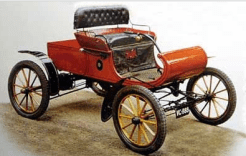 Gelly: “Horseless carriage, right?”
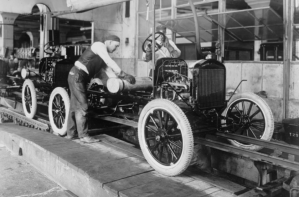 Gelly: “What about the assembly line. Didn’t Henry Ford invent that?”
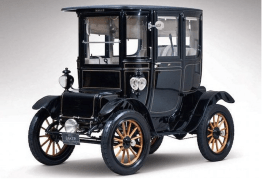 performance, emissions, creature comforts – the fundamental technology in cars and trucks is the same as the early 1900’s. I know that might sound odd, but it’s true. Most people forget there were steam-powered cars and battery-powered electric cars in 1910. See that picture on my desk. That’s a Baker Electric.”
 Jordan: “So has the automobile life cycle affected societal behavior? Yes, but has society been affected by the life-cycle of the automobile manufacturers?”
 Jordan: “Yes. Very good. Then between about 1920 and the mid-1960’s, the number of manufacturers dropped from 20 to 4-5, depends on the timing. However, did the decline in the number of manufacturers affect how societal behavior was affected by the automobile?”
 Jordan: “You’ve made your point. There are at least 10 different auto companies with assembly plants in North America. They got here, in part, because in the late 1960’s and 1970’s and even in the 1980’s, the US companies were slow to respond to changing consumer tastes and the increased demand for more fuel-efficient cars. Even if the Big 3 auto companies had responded more quickly, they probably could not have stopped all the imports.”
 Jordan: “The foreign-based manufacturers built plants in North America to save money and respond to market demands more quickly. What Trump seemed to overlook…more likely never understood…is the real cost and the long lead-times involved with building overseas and then shipping to the country where the cars are sold. What he also probably never understood was that before 1920, the US auto companies set up assembly plants in a number of foreign countries for the very same reasons the foreign companies built assembly plants in the US.”
 shorter life-cycle product might still be around but the period of influence – its life cycle – is over. I think I understand…but the answer seems so messy.”
 Gelly: “Just looking at your coffee cup, I suspect the introduction of a paper coffee cup was a major disruption to the pottery coffee-cup makers. However, it’s hard to imagine the paper coffee cup had a major societal impact. Is that what you mean?”
 Jordan: “In the 1960’s when IBM introduced what were called mainframe computers. Granted, by today’s standards, the mainframes were big and slow. There were special air-conditioned rooms to handle all the extra heat from the computers. Plus, for a lot of applications, you had to transfer information to punch cards before you could use the computer. While those computers were clunky and dumb by today’s standards, the machines were breakthroughs for the time — offering at least a couple of orders of magnitude better data management and analysis.”
 Jordan: “Each order of magnitude represents a tenfold increase. One order of magnitude would be 10x higher than the previous number. Two orders would be 100x higher – 10x the previous number which also was 10x higher. Three orders would be 10x10x10 or 1,000x higher. Look at this chart and then imagine the line going up faster than what’s shown.”
 Gelly: “Did IBM just one day decide to invent the computer or was something else invented that allowed the mainframe to be developed?”
 Jordan: “What changed to allow IBM…and a few others…to make practical mainframes was a way to eliminate vacuum tubes. The invention was the semi-conductor. Think of a semi-conductor as a computer chip or the SIM card in your phone. The early chips were not nearly as powerful as today.”
 Gelly: “If I understand correctly, the invention of the semi-conductor did not cause societal change per se. The societal change occurred only after products were developed using the semi-conductor. So, in deciding how a society adapts or manages technology-induced disruption, does it really matter whether the invention is the driver or the catalyst for the change? Deciding which might be a good academic exercise but does anyone else care?”
 Gelly: “Jordan, are we looking at the issue from the wrong end? We’re trying to find the cause of the societal disruptions. Would a better approach be to ignore the cause and analyze how the technology disrupted society…and, if so, what kind of disruption?”
 Jordan: “Take a look at sales after WWII and the hand-drawn blue line. The company had positive sales growth virtually every year from right after WWII to almost 1990 – 45 years.”
 Jordan: “What IBM missed was the shift to the personal computer – desktops first, then laptops. Even though the PC was not as powerful as the mainframe, it was easier to use.”
 Gelly: “Near the end of the movie ‘Miracle on 34th Street’ when they’re driving down some the suburban street, Natalie Wood shouts something. Remember what she shouted”
 Gelly: “Maybe not but you have lots of study time…and a bunch of experience in the real world using economics stuff. Remember, KISS, okay?”
 Jordan: “When Siri tells you Michigan beat Indiana, that’s a form of AI.”
 Gelly: “How does she do that?”
 Gelly: “So for Siri, Alexa and their siblings, they’re best at providing quick access to available information. At the same time, the working stiffs most affected by Siri and siblings are people employed to provide information. The example might seem a bit dated but as a kid I remember being able to pick up the phone and have the operator get someone’s number, right?”
 Gelly: “What about AI replacing some functions of what lawyers do, or at least law clerks do? Same with some portion of information gathered when visiting a doctor. Seems as if a lot of people could be replaced, or maybe have been replaced already by some form of Siri and siblings. What about using AI for tasks that are a lot more complicated than say picking up boxes or searching a database?”
 Jordan: “Well, some clothes are already being made 100% or nearly 100% by machines. And over time, machines will make clothes that require more steps.”
 Gelly: “Another case of the working stiff getting screwed?”
 Jordan: “Excellent example. I’m impressed you remembered.”
 Gelly: “Now I’m starting to get even more confused. What happened to KISS…keep it simple, stupid?”
 Gelly: “The last lesson we had on economics, professor, was about how tariffs usually don’t work. As a result, when tariffs are imposed it’s often the working stiff that ends up…well, getting screwed.”
 Jordan: “You mean artificial intelligence…like Donald Trump’s intelligence — artificial?”
 Gelly: “I’m also confused about what I hear people calling ‘machine learning.’ Is machine learning the same as artificial intelligence or part of artificial intelligence?”
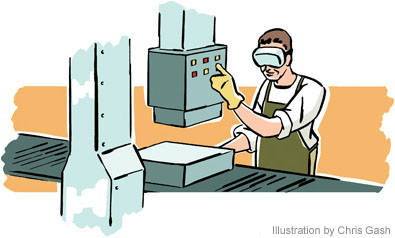
 Jordan: “Think about how you learn to do some task. Could be learning to use a computer. Maybe something easier like hammering a nail. What’s the first step?”
 Gelly: “So, if somebody shows the machine how to say pick a box off a shelf and load it on a cart, then the machine can learn to do that?”
 Jordan: “Good question. That’s what different about today’s machine learning and attempts in the past. In the past, the limitations were software and computer processing. To get the machine…a robot…to do something required a lot of very precise programming. Plus the capacity of machine ‘memory chips’ was limited…intellectually challenged…so the robot couldn’t really do much. Today’s chips are like Albert Einstein compared to earlier chips.”
 Gelly: “If I understand correctly, by learning a set of small steps, the machine can adapt if some part of the task changes. For example, if the first box is small and the next box is larger, the machine could pick-up either size box and load on the cart. I understand there’s some range of sizes but, as long as the machine has been taught to pick up a bunch of different size boxes, the machine can pick up any size box within that range. Right?”
 Jordan: “That’s the question that seems to be scaring a lot of people. As computer chips continue to be more powerful, the capabilities of the machines will continue to increase.”
 Jordan: “That’s the point. War machines are a different story. While it seems like a bit of science fiction, very sophisticated war robots could decide to turn around and attack.”
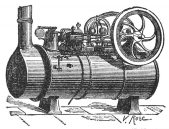 Jordan: “Yes, but countries having to manage the transition from an existing to a disruptive technology is not something new. Countries worldwide have faced this very problem for centuries — what about the introduction of steam engines, planes, cars, telephones, internet…and the list goes on. Some countries have managed the transitions well, other not so well.”
 If you’re a parent, or have a brother or sister, wouldn’t you be proud to be able to make such a proclamation? Well, you can make such a proclamation if you support Donald Trump and his Republican enablers.
 If you’re religious…if not pretend you are for a few minutes…then show me where in your religion is a list of basic tenets indicating acceptable behavior includes lying, cheating, stealing, discriminating. Even if your religion “forgives” such behavior, doesn’t the person being forgiven need to stop such behavior first?
 Let’s put religion aside and talk instead about the oath of office taken by the president. The oath, which is part of the US Constitution, reads, “I do solemnly swear (or affirm) that I will faithfully execute the Office of President of the United States, and will to the best of my Ability, preserve, protect, and defend the Constitution of the United States.”
 No, I won’t get over it…and neither should you. By latest count, Trump has been lying at least 30 times a day with the rate of lies increasing with each day closer to the mid-term elections. And those 30 lies per day are the ones known to the public. How many more lies does he tell inside the White House? Trump supporters – would you tolerate your child lying 30 times a day?
 Making a choice about what type behavior you want from the president and other political leaders is not difficult. Do you want someone leading the country and/or representing you who lies, cheats, steals, and discriminates? If you would be proud of such behavior by your child or sibling, then Trump and his gang of enablers are for you.
 How many people do you know have joined a “political tribe”? And as a member of that tribe, no longer question even the most outlandish statements of tribal leaders? Think about how passive these tribal members have become. Do you know of any self-respecting four year-old who would take your statements as gospel and quit asking “why?” Chances are you’ll have a hard time finding a four year-old who fits that category.
 I know some blog readers think that lately I’ve been beating up the Republicans too much. Maybe so, but given the behavior of the so-called leaders of the Republican Party, such criticism seems more than justified.


 president when such talk from your children would result in punishment?
 Why have Republicans decided to abdicate truth in favor of Trump? Why have Republicans decided to abdicate core values of a democracy for a guy who openly courts leaders hostile to the US? Why have Republicans given up having America be the shining light worldwide for fairness and moral standards?
 (Just to be clear, Democrats are not completely clean…but the behavior by the Republicans in supporting Trump overwhelms any bad behavior by Democrats Claiming the behavior is equal is a false equivalency.)
 usrevolution5