• Home
  • Booklets/Grouped Entries
  • Tech Tsunami
  • List of Entries to Date
  • About the Author

usrevolution5

~ USA Headed for a 5th Revolution! Why?

usrevolution5

Author Archives: Jordan Abel

#60 Being Fair. Part of POTUS’ Project on Manufacturing

18 Wednesday Jun 2014

Posted by Jordan Abel in Causes of the Revolution, Innovative Thinking: Ideas and Products, Personal Stories, Possible Solutions, Societal Issues

≈ Leave a comment

(Readers: Please note the blog about the 5th revolution in the US is constructed as a story. While not all chapters are linked, after a few recent entries, you might want to start at the beginning. More about the blog and about the author. )

Scene: Jordan and Matt, Jordan’s Office

Jordan: “Matt, thanks for taking time to talk again.”
Matt: “Jordan, the least I could do. You spent a lot of time preparing for the POTUS project. My guess is these comments will be a good add.”

reporter on typewriter clipartJordan: “Hope so. Some of the ideas stem from actions by GM. Others are based on recent experience.”
Matt: “OK, let’s get started. What’s the theme? What idea…or ideas do we want to add?”
Jordan: “The idea might seem obvious or naïve or both. And it might be. I want to talk about fairness.”
Matt: “Mmmm, that is interesting. And talking about ‘fairness’ does seem appropriate. We never talked specifically about it. Implied, yes but not fairness as a specific topic.”
Jordan: “Reason I bring it up is some recent experience and a conversation with a long-time friend. I was going to say old friend but she would not like that.”
Matt: “What happened?”
Jordan: “Incidents with the cell-phone company and airlines and TSA. The conversation with my friend led to a discussion of an earlier incident with GM – not product but culture.”
Matt: “I need some details to help understand the issue.”
Jordan: “I figured you might. Rather than take your time now, I wrote several papers describing what happened.”
Matt: “Good. I’ll read those later. What was your conclusion?”
Jordan: “Simple. Fairness is a critical component for long-term success of an organization.”
Matt: “Keep going.”
Jordan: “Do you deal with people or companies that have a ‘heads I win, tails you lose’ approach?
Matt: “Not if I can help it.”
Jordan: “Everyone feels the same way. Why get the shaft in every situation?”
021214_1242_24Resultsof1.gifMatt: “So how does fairness affect POTUS’ policy on rebuilding US manufacturing?”
Jordan: “Fairness needs to be a key component. We talked a lot about how GM became a money machine and then started to focus on earnings and slid into bankruptcy. And then the turmoil over ignoring obvious safety issues.”
Matt: “You’re saying…if I hear you correctly…the overarching issue for GM’s downfall was fairness, or really lack of fairness.”
Jordan: “Fairness for customers. Fairness for employees. Fairness for suppliers. And fairness for people who sell the product.”
Matt: “What about fairness for the community?”
Jordan: “Great point. You’ll see in one of the write-ups that I think GM’s chairman in the 1980’s, Roger Smith, took revenge on Flint, Michigan.”
Matt: “Really? I’ll read the paper. Now, how do we translate fairness into some policy recommendations?”
Jordan: “Take your question about fairness to the community. Tell me why as a country do we encourage states to recruit businesses from other states?”
Matt: “Economic development, I suppose.”
Jordan: “Economic development for whom? The policy forces a winner and a loser. The state where the business moved considers itself the winner. The state where the business moved from is the loser. In fact, there is probably a net loss when add the incentives are added up. The US as a country gains nothing by the move. ”

USmapMatt: “What about competitiveness of the company moving? Lower wages will make the company more competitive.”
Jordan: “That’s often the argument but it’s not necessarily true. In fact, I’d claim it is not true far more often than true. Why not increase worker productivity enough to offset any wage differential?”
Matt: “You think companies can really increase productivity to offset wage increases?”
Jordan: “Did we talk about the company I ran in California?”
Matt: “Not sure. What’s relevant?”
Jordan: “Short story is with some changes to the manufacturing process we reduced labor cost dramatically.”
Matt: “How much?
Jordan: “We could have doubled the wages of workers in California and paid workers in China zero and still come out ahead.”
Matt: “What? You could pay workers in California twice what they were making. Then pay workers in China nothing and still have lower costs?”
Line chartJordan: “You got it. And the reason is twofold. First reason is increased productivity. By the way, we did not lay off any workers. We actually added workers.”
Matt: “You added workers and increased output? That’s un-American.”
Jordan: “I know. Counter intuitive, huh? The second reason is all the other costs associated with producing in a remote location.”
Matt: “You had a term for that. I remember now…a holistic approach to cost.”
Jordan: “Taking all costs into account.”
Matt: “Is that example a one-of-a-kind or are there more examples?”
Jordan: “An example few people know about is the coal industry.”
Matt: “Not a very popular topic, especially among environmentalists.”
Jordan: “Not a very popular topic among former coal miners either.”
Matt: “What do you mean, former coal miners? Still lots of coal being produced in the US.”
Jordan: “Actually, production is higher than during the 1970’s.”
Matt: “What about employment. You said former miners.”
Coal MinerJordan: “Productivity is way up. We need to confirm these numbers but I think employment is down from about 250,000 miners to only about 50,000 today.”
Matt: “That’s all that work in coal mining? That’s a blip on the employment radar screen. That’s it?”
Jordan: “All because of productivity.”
Matt: “Makes you wonder why some politicians claim environmental laws will destroy coal mining jobs.”
Jordan: “The coal industry destroyed the jobs through productivity.”
Matt: “That’s a good and bad example for POTUS. Good because technology can increase output. Bad because of reduced employment.”
Jordan: “We need a balanced policy in manufacturing policy. Companies should adopt technology but not just dump workers on society. They have an obligation to their employees.”
Matt: “How can that policy work? Sounds like socialism. Won’t such a policy just encourage companies to produce outside the US?”
Jordan: “Not if the policy is structured properly. We’re talking about being fair. If some people view being fair as socialistic, then so be it. But being fair does not mean being equal.”
Matt: “You’re really hammering on being fair. Few people ever talk about companies being fair.”
Jordan: “Lack of fairness is why we had a revolution. In fact, lack of fairness has been the cause of each revolution in this country…”
Matt: “…and, if you think about it, elsewhere as well.”
Jordan: “So why not make being fair part of the manufacturing policy recommendations for POTUS? Maybe fair should be part of every policy in Washington.”
Matt: “Jordan, you might be on to something. Get people to move away from hard-core ideology…”
Jordan: “…which most ideologues do not really understand…”
Matt: “…and focus on fairness. Sounds so simple.”
Jordan: “It is simple. Start addressing problems with the premise, ‘What’s fair?’ Then work out the details.”
Matt: “Listen, I gotta run. And I need to start drafting a formal paper for POTUS. But I want to make sure we include your thoughts about fairness.”
Jordan: “I’ve written a couple of papers on fairness. I should write a couple more.”
Matt: “If you want. But I’m a reporter. I’m used to working from interviews with people. If it’s OK with people you talk to, just record the interview and send me the audio or the transcript.”
Coffee CupJordan: “Alright. We each have our assignments.”
Matt: “Let’s keep in touch and meet periodically.”
Jordan: “Deal. And just to be fair, I’ll buy coffee next time.
Matt: “No, just to be fair, I’ll buy.”
Jordan: “Get out of here.”

(Want a PDF version for Entries #1-10, #11-20, #21-30 formatted as an e-book? Entries #31-40 available soon. Click links for download. America’s 5th Revolution Volume I (Entries 1-10), America’s 5th Revolution Volume II (Entries 11-20), America’s 5th Revolution Volume III (Entries 21-30)


 

#59 Customers Unite. Out with the Bean Counters.

14 Saturday Jun 2014

Posted by Jordan Abel in Back Asswards Thinking, Personal Stories, Societal Issues, Stupid Is as Stupid Does

≈ Leave a comment

(Readers: Please note the blog about the 5th revolution in the US is constructed as a story. While not all chapters are linked, after a few recent entries, you might want to start at the beginning. More about the blog and about the author. )

Scene: Jordan and JC continuing earlier conversation.

JC: “OK, tell me the airline story. Given all the miles you’ve travelled, this must be a good one.”
Jordan: “It’s more about an organization’s culture and being fair.”
010414_1635_16TeachingS1.jpg JC: “What happened?”
Jordan: “Friday afternoon, I’m in Houston, headed back to Charlotte on USAir. Everyone boards. Then the captain announces the maintenance crew is working on the plane and it will be another 30 minutes or so. Emphasis on ‘or so.’”
JC: “Not a good start.”
Jordan: “2 to 2½ hours pass and everyone is ordered off the plane.”
JC: “No doubt you were toward the back of the plane.”
Jordan: “Yep. Huge line at the gate and only one ticket agent. So, being the genius that I am I decide to go to the ticket counter in the terminal to get help.”
USAIR JC: “So now you are back where you were three hours ago — in the terminal needing to get past security again.”
Jordan: “While in line, I call USAir 800 number and the agent arranges a flight on United. Flight leaves in about 45 minutes from the same terminal.”
JC: “And you have a new reservation number.”
Jordan: “All I have to do is go to the United kiosk, punch in the number, get a ticket and off I go. I’m a happy camper.”
JC: “So what became the problem Mister Happy Camper?”
Jordan: “The kiosk accepts the reservation number and then spits out a message, ‘See ticket agent.’”
JC: “Big line to see the agent?”
Jordan: “No. the agent is in a different terminal.”
JC: “So United has ticket kiosks and gates in this terminal…and I assume counter space…but no agents.”
Jordan: “You got it.”
JC: “So did you head out to the next terminal?”
Jordan: “No. I once again applied logic…mistakenly. I go to security and show them my boarding pass for the USAir flight and the reservation number for the United flight.”
JC: “Given this story, they must not have let you through. Why not?’
Jordan: “Because, according to TSA, the USAir flight had departed…
Mickey-Mouse-finger JC: “…even though the plane was at the gate right outside the security checkpoint.”
Jordan: “They refused to accept any type of reasoning. Nor would they even look to see if the plane was at the gate and 100 people waiting in line for help. Only comment from TSA agent, ‘You need a new ticket. Go to the other terminal.’”
JC: “Not sure if TSA has back asswards thinking or just stupid is as stupid does. You hardly fit the profile of a terrorist. Next?”
Jordan: “Off to Terminal B.”
JC: “How far is it?”
Jordan: “Half mile at least.”
united-logo JC: “Was there a shuttle close by?”
Jordan: “Train downstairs. Of course, I got to the bottom of the escalator as the train pulled out. So I walked briskly to Terminal B, found the United desk and presented my information.”
JC: “Let me guess. ‘Sorry sir, you are too late.”
Jordan: “Yes and followed by an unfriendly ‘We can’t help you. You need to go back to USAir.’”
JC: “So back down the escalator and if Murphy’s Law holds true the train was there this time.”
Jordan: “Murphy was right. ‘Whatever can go wrong, will go wrong at the worst possible time.’ Since I am now to the point where I will leave Saturday at the earliest, I don’t need to rush and then train is there.”
JC: “So back to USAir and what happens.”
Jordan: “After about 30 minutes in line I get to an agent and tell my story. She starts to write-up some information and I ask if she wants an ID?”
JC: “And…another issue?”
Jordan: “No. The only humor in the whole fiasco. She says to me, ‘No ID. No one would make up a story like that.’ She then proceeds to book a hotel.”
JC: “Decent digs?”
Jordan: “Yes, a 3-star, maybe 3½. And met a couple of other people on the shuttle who were on the flight.”
JC: “Got out OK the next day?”
Jordan: “Yes. And the night before had dinner with one of the other people on the flight. Turns out he had the same problem with United. Had a flight but the time required to get to a ticket in the other terminal caused him to miss it. He was worse off since luggage was on the canceled flight.”
JC: “USAir never unloaded the luggage?”
Jordan: “Apparently not.”
BeanCounter JC: “What I take away from this story is yet another example of bean counters looking at cost and not the customer.”
Jordan: “How so?”
JC: “USAir knew there was a serious problem with the plane at least an hour before departure. They spent that hour and another two hours trying the same fix over and over and expecting a different outcome. And Houston is not a hub so they mechanics are not as sophisticated as say in Charlotte, which is a hub.””
Jordan: “What the pilot said was the problem occurred on landing and he told the maintenance crew what the problem was. Most people in maintenance have a sense of how hard a problem is to fix…and if they are qualified to fix it. A lot of times the fix requires special equipment.”
JC: “So if the pilot identified the problem at landing, the maintenance crew should have been able to determine whether they could fix it or needed more expertise.”
Jordan: “USAir had more than enough time to call Charlotte or Phoenix or even contract another mechanic in Houston – some airline must have a hub there – and at the worst fly in a mechanic or fly in another airplane.”
JC: “USAir is bad but who really qualifies as ‘stupid is as stupid does’ is United Airlines. Having gates in one terminal and no one to help. No doubt some bean counter figured United could save a few thousand dollars per year by not having a ticket agent.”
Jordan: “The same bean counter assigns no value to customer’s time going back and forth between terminals, no cost to possible missed flights and certainly no value to customer satisfaction.”
JC: “You going to fly United any time soon?”
Jordan: “Not if I can help it. As frustrated as I was dealing with USAir, dealing with United was even more frustrating.”
JC: “The TSA agent is right up there with United in terms of not being fair. Through no fault of your own, the flight was cancelled. Through no fault of your own, United does not have a ticket agent in the terminal with the gate. In addition, you already passed security for your flight at that same TSA checkpoint. Yet they refuse to let you through security that you went through earlier.”
Jordan: “If asked, TSA would probably claim they could not let me through for reasons of national security.”
JC: “They let you through once but would not let you through again. I think that is stupid and unfair.”
Jordan: “But TSA suffers no consequence for not being fair.”
JC: “But you do and so do a lot of other people.”
Jordan: “Not to bring up General Motors again…”
JC: “…but you will.”
Jordan: “The report of why GM did not fix the ignition switch for more than 10 years indicated employees were encouraged not to bring up problems.”
Dont-Rock-the-Boat_14102010124913 JC: “Don’t rock the boat. The pressure to conform must have been intense. Knowing there was a clear safety problem and yet virtually no one openly talked about it and no one led an effort to fix it. In fact, the report said some employees hid info about the problem, even lawyers.”
Jordan: “GM was not fair to customers and not fair to employees. USAir and United…and remember ATT…were not fair to customers.”
JC: “Let’s not forget our friends as TSA.”
Jordan: “Right. Each organization fostered a culture that encouraged employees to ignore the customer, no matter how illogical or unfair the behavior.”
JC: “You have got to work with Matt and make sure a section on consequences of these type behaviors gets into the report for POTUS on rebuilding US manufacturing. I know ATT, United, USAir and TSA are services organizations, not manufacturing. But I think attitudes and cultures that evolve in manufacturing companies eventually migrate to service companies as well.”
Charles_Wilson_official_DoD_photo Jordan: “JC, I will meet Matt again. Your observations about culture in manufacturing migrating to service organizations is a good one.”
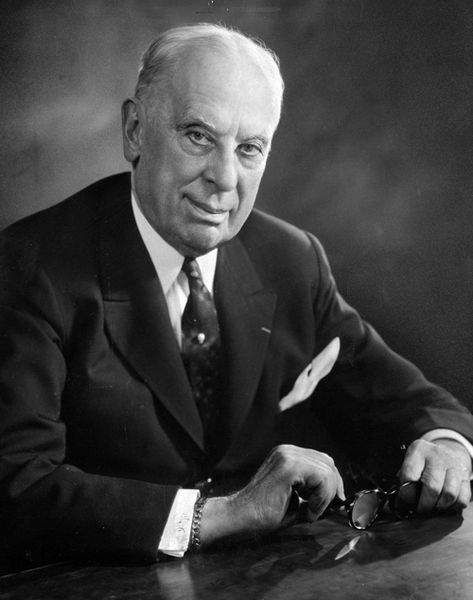
JC: “OK. So what Engine Charlie Wilson said years ago still holds true today. What’s good for General Motors is good for the country and vice versa. Say goodbye Jordan.”
Jordan: “Goodbye JC. And thanks.”

(Want a PDF version for Entries #1-10, #11-20, #21-30 formatted as an e-book? Entries #31-40 available soon. Click links for download. America’s 5th Revolution Volume I (Entries 1-10), America’s 5th Revolution Volume II (Entries 11-20), America’s 5th Revolution Volume III (Entries 21-30)



#58 More about Being Fair. Do Companies Really Understand?

11 Wednesday Jun 2014

Posted by Jordan Abel in Back Asswards Thinking, Personal Stories, Stupid Is as Stupid Does

≈ Leave a comment

(Readers: Please note the blog about the 5th revolution in the US is constructed as a story. While not all chapters are linked, after a few recent entries, you might want to start at the beginning. More about the blog and about the author. )

Scene: Jordan and JC continuing earlier conversation. 

JC: “Jordan, I need to leave pretty soon. But, if you ask me, which you haven’t, I think the POTUS project needs to be expanded beyond General Motors.”
010414_1635_16TeachingS1.jpg Jordan: “I agree. GM is what POTUS asked me to focus on.”
JC: “And you have. But your experience extends well beyond GM. You need to at least include some other ideas, especially about the importance of being fair. Besides not being fair has been a big problem for many companies, not just GM.”
Jordan: “Funny you mention other companies. Two incidents that happened to me recently point that out in spades. I’m not sure either company remembers why they are in business.”
JC: “Let me guess. One is a cell phone provider and the other a cable company.”
Jordan: “You got one right – the cell-phone provider. The other is an airline.”
JC: “Alright, what happened? Start with the airline. No, changed my mind…
Jordan: “…a prerogative of women.”
JC: “Jordan, now, now. Be careful. Like I said, I changed my mind. Start with the cell-phone provider.”
Jordan: “I get a new smart phone.”
JC: “iPhone?”
Jordan: “No LG. I have the phone a little over two weeks…16 days actually…and then have a problem. Take it back to the ATT store where I bought it. But, like the good service-minded company that ATT is, they refuse to switch it out.”
ATT-LogoJC: “Why?”
Jordan: “Because I’ve had the phone for more than two weeks.”
JC: “What do they do, if anything?”
Jordan: “Sent me to an ATT service center, about 20 minutes away.”
JC: “Service center fix it?”
Jordan: “No. The tech…let me rephrase that…the alleged technician said nothing was wrong. Before reaching that conclusion, the tech erased all the information on the phone.”
JC: “What happened next?”
Jordan: “I get the phone back and sent on my way with the claim that nothing is wrong. After 30 minutes or so, I figured out a solution that sorta, kinda solved the problem. At least enough that I could continue to use the phone. My fix worked for about six months then no more.”
JC: “Did ATT finally fix it?”
Jordan: “Tried to fix it then said the phone was defective. They agreed to replace it, except…”
JC: “…except what?”
Jordan: “There was no replacement phone in stock at the Service Center. Seems odd but I don’t work at ATT. Anyway, the plan is to ship a phone from somewhere.”
JC: “When?”
Jordan: “Next business day for sure and maybe next calendar day. But now it’s mid-afternoon Friday and ATT is unwilling to guarantee delivery to the house on Saturday. I tell them I will be in Houston Monday and ship to that office. But do not ship to the office Saturday because no one is there on weekends.”
JC: “Let me guess. ATT ships to Houston for delivery Saturday.”
Jordan: “Exactly. And then it gets delivered again Monday.”
JC: “So now you have a new phone. What’s the problem?”
Jordan: “ATT only sent the back half of the phone, not the front half. So I had to take the old phone apart and put the new phone together.”
JC: “For an MIT guy that must have been a no brainer.”
Jordan: “It was easy but the phone still does not work. I have to find an ATT store to activate the phone.”
JC: “OK, what about the old back half.”
Jordan: “The store that activates the phone will not take the broken half. I am supposed to send it back.”
JC: “So now what?”
Jordan: “I get busy all week and take off for Charlotte with the back of the old phone but not the box.”
JC: “Just get another box.”
broken-phone-sim Jordan: “I would have except the shipping label is in the box in Houston. I called ATT, told them the situation and they said to take the broken phone to the service center in Charlotte where all this started. The Service Center would then mail the phone back to wherever broken phones go.”
JC: “Seems simple enough. End of story?”
Jordan: “No. Get to the Service Center and they refuse to take the phone…but did give me a new box…”
JC: “…but no shipping label.”
Jordan: “In the meantime I am getting texts and robo calls from ATT asking me where the phone is.”
JC: “What’s next? By the way, you making up this story? Seems too bizarre.”
Jordan: “I’m not creative enough to make up a story like this. So back to Houston, find the box, put the old phone in it, use their label and mail it.”
JC: “Let me guess, again. ATT claims you still have the phone.”
Jordan: “You got it. I call ATT to explain I mailed the box and the guy at ATT asks me for the tracking number off the return label.”
JC: “Didn’t ATT send you the label?”
Mickey-Mouse-finger Jordan: “Yes. ATT does not have a record of its own tracking number. And then the guy at ATT has the audacity to tell me if I can’t find the tracking number and the phone is lost, I get to pay $300-$400.”
JC: “Gee, that seems fair to me. ATT sells you a defective phone. Finally replaces the phone. Then insists it’s your responsibility to tell ATT its own tracking number. If the phone…broken phone…is lost somewhere along the line, even though not your fault, they will charge you $400.”
Jordan: “Good way to build customer relations, right?”
JC: “By the way, did it ever get resolved?”
Jordan: “I don’t know if the broken phone ever got back to ATT. But 7-8 days after the ATT guy told me it was my job to find the tracking number, I get a text saying to the effect ‘All is well and we love you as a customer.’”
JC: “Whew! ATT has a new definition of ‘fair.’ You are responsible to overcome our incompetence. If you can’t, then you pay us even more money.”
Jordan: “Have you got time for another story about fairness – this time the airlines?”
JC: “Yes, but I need to get rid of this coffee first.”
Jordan: “Me, too.”


(Want a PDF version for Entries #1-10, #11-20, #21-30 formatted as an e-book? Entries #31-40 available soon. Click links for download. America’s 5th Revolution Volume I (Entries 1-10), America’s 5th Revolution Volume II (Entries 11-20), America’s 5th Revolution Volume III (Entries 21-30)


#57 Being Fair Is Good for GM and Good for the Country

07 Saturday Jun 2014

Posted by Jordan Abel in Back Asswards Thinking, Causes of the Revolution, General Motors, Personal Stories, Societal Issues, Stupid Is as Stupid Does

≈ Leave a comment

(Readers: Please note the blog about the 5th revolution in the US is constructed as a story. While not all chapters are linked, the story might be more meaningful by starting at the beginning.)

(Want a PDF version for Entries #1-10, #11-20, #21-30 formatted as an e-book? Entries #31-40 available soon. Click links for download. America’s 5th Revolution Volume I (Entries 1-10), America’s 5th Revolution Volume II (Entries 11-20), America’s 5th Revolution Volume III (Entries 21-30)

Scene: Coffee shop with Jordan and JC. Catching up on recent events. They’ve finished their first cup.

JC: “Thanks for buying my coffee refill. You’re so generous.”
Jordan: “You’re welcome. Next time, you buy…dinner.”
010414_1635_16TeachingS1.jpgJC: “So when you look back at what went wrong at GM, is there one overriding issue that comes to mind?”
Jordan: “Yes. And I am not sure I actually said this to Matt. GM’s downfall started when it stopped being fair.”
JC: “Stopped being fair? Jordan, that seems odd and naïve, especially from you. You want companies to be fair? What planet are you living on?”
Jordan: “Think about it? Do you deal with people or companies you don’t think are fair? They must win and you must lose.”
JC: “Occasionally, we all end up with the short end of the stick. But I try to avoid situations where I am always the loser and getting screwed.”
Jordan: “That’s what I mean. Everyone makes mistakes and not every situation is fair. But people try to stay away from situations where ‘heads I win, tails you lose.'”
win lose JC: “Now give me an example. And not just the car stuff.”
Jordan: “OK. Do you know what COLA means?”
JC: “Cost of living allowance.”
Jordan: “Hey, you’re good.”
JC: “Jordan, most everyone knows what COLA means. So tell me the story, already.”
Jordan: “I don’t remember the exact year…sometime in the early 1980’s…and the economy was in a mild recession. Car sales were down and GM was under pressure to maintain profits. More self-induced pressure but that was the claim.”
captain121217 JC: “And who was captain of the GM ship at the time?”
Jordan: “Roger Smith.”
JC: “Oh, Mister ‘focus-on-cost’ himself. This story should be good.”
Jordan: “So Squeaky decides all salaried people should sacrifice some compensation in order to help earnings.”
JC: “Everyone was to sacrifice? Across the board?”
Jordan: “All salaried employees. And Smith decides the most equitable way is to stop paying COLA. That way no one has to take a salary cut.”
JC: “How is…or was COLA calculated at GM. I know for Social Security, COLA is a percentage of benefits. Everyone gets an increase, say 2-3%. The higher the benefit payment, the higher the amount of the COLA increase. A benefit of $1,000 per month would receive $30 more per month. A base benefit of $2,000 per month would get $60 more per month.”
Jordan: “COLA was different at GM. COLA was not tied to salary amount. COLA was a specific dollar amount. And COLA was paid each quarter, not every month. The amount was linked to the UAW contract.”
JC: “You in the UAW? I mean really. ‘Look for the union label…’ That’s really funny.”
Jordan: “C’mon. By linking COLA for salaried employees to the UAW, GM thought it would deter people from joining the union.”
JC: “So Squeaky…I mean Mr. Smith…decides fair means every salaried person should give up COLA. But COLA for salaried is the same dollar amount, whether the person is chairman of the board or a mail clerk. That seems like a new definition of fair.”
Jordan: “That was Smith’s definition of fair. For Smith, COLA was barely pocket change. For lower-paid staff, eliminating COLA meant a noticeable pay cut.”
JC: “What really troubles me about the story is Smith not understanding what’s fair. If everyone had to give up say 5.0% of salary, then people would not like it…but they might understand…and think its fair. But pocket change to one person and 5.0% to another is not fair. For the lower-paid employees, that might have been grocery money.”
Jordan: “I hear you. Before announcing the plan, I wonder if Smith discussed it with anyone or if he did, if anyone tried to talk him into making it more fair?”
JC: “This story is maddening…and probably all too typical. How do we make sure CEO’s and Boards of Directors of companies become more fair? I’m convinced if POTUS wants to rebuild US manufacturing, there needs to be strong emphasis on companies being as fair as possible.”
Jordan: “Telling stories like the one about taking away COLA is a good start. Everyone…well, most everyone…will understand that was not fair.”
JC: “Here’s another fairness issue. Fast forward to GM post bankruptcy, which is a whole lot more recent. GM starts recalling millions of cars. What was it for… something to do with starting the car?”
Jordan: “The ignition switch.”
JC: “That’s it. What really happened?”
GM-Ignition-recall-2014 Jordan: “Short answer is GM was still run by bean counters. GM saved about $1 per car by not fixing a design flaw in the switch. Then GM spent hundreds of millions, maybe a billion dollars or more, to recall the cars and fix the problem.”
JC: “What about all those people who died?”
Jordan: “When the switch failed, the power to the rest of the car, including the airbags was cut off.”
JC: “How many people died?”
Jordan: “We’ll never know exactly. Initial reports indicated 13 or so…but likely more.”
JC: “That’s awful. Why didn’t they fix the problem?”
Jordan: “I’m not trying to defend any actions by GM. But most people have no idea how complicated an automobile is…and how driver’s abuse it.”
JC: “Stuff happens. I understand that. But what’s not fair is the way GM knew about the problem for 10 years and never fixed it.”
Jordan: “I agree. But the report said the problem was confined to a group, not all of GM.”
JC: “Not fixing a problem is a reflection of corporate culture. And culture starts with the CEO. Worse yet, from what I read, the lawyers were some of the main culprits. Jordan, when you were at GM, was there a culture of burying problems…I don’t mean for 10 years…or BeanCounter even five years. And did a bunch of bean counters and even worse a bunch of lawyers effectively run the company?”
Jordan: “The problem would have been fixed…and quickly.”
JC: “That’s my point. GM ran amok. Why? And, you know why.”
Jordan: “GM management go so focused on trying to generate earnings by controlling cost, it lost sight of why it was in business.”
JC: “And, oh great GM historian, when did that culture begin to change?”
Jordan: “You know when. With the reign of Roger Smith.”
JC: “You know something, Jordan, as much as I agree with your assessment of GM changing starting under Roger Smith, GM was not alone. The United States when thru a similar transition starting at the same time.”
Jordan: “You mean under Ronald Reagan?”
JC: “Yes. Just take a look at some basic economic statistics, especially median household income. We talked about this before. Upper incomes started to gain and lower incomes remained flat. The disparity got worse, and worse and worse. Then the disparity became so great…and so unfair…that people revolted. The unfairness resulted in US having its 5th revolution.”
Charles_Wilson_official_DoD_photo Jordan: “Point well taken. And lesson for the project for POTUS.”
JC: “And the lesson is ‘Why being fair is good for General Motors and good for the country.’ I know, a variation on what Engine Charlie Wilson said but still true.”


#56 Catching Up with JC. Can’t Shake GM.

04 Wednesday Jun 2014

Posted by Jordan Abel in Causes of the Revolution, General Motors, Personal Stories, Societal Issues

≈ Leave a comment

(Readers: Please note the blog about the 5th revolution in the US is constructed as a story. While not all chapters are linked, the story might be more meaningful by starting at the beginning.)

(Want a PDF version for Entries #1-10, #11-20, #21-30 formatted as an e-book? Entries #31-40 available soon. Click links for download. America’s 5th Revolution Volume I (Entries 1-10), America’s 5th Revolution Volume II (Entries 11-20), America’s 5th Revolution Volume III (Entries 21-30)

Scene: Coffee shop with Jordan and JC. Catching up on recent events.
JC: “Jordan, old boy, where have you been? Besides, you look awful.”
010414_1635_16TeachingS1.jpgJordan: “Thanks for the compliment JC. Nice to see you, too.”
JC: “Seriously, where have you been? You OK?”
Jordan: “I’m fine, I think. And I appreciate your concern.”
JC: “So, where have you been?”
Jordan: “Holed up in my office on an assignment for POTUS.”
JC: “Some project where you’ll be put on double-secret probation if you tell me?”
Jordan: “Nothing secret…at least no one told me not to discuss it.”
JC: “So what is it?”
Jordan: “POTUS is developing a plan to rebuild US manufacturing. He asked me to use my knowledge of and experience at GM for any lessons that might be helpful.”
JC: “You’ve been away from there for a while. Besides GM seems to be in a lot of trouble.”
Jordan: “That’s one of the lessons. How did GM go from the world’s leading company to basically a so-so player…at least in the car business?”
JC: “You have to write all the stuff yourself?”
reporter on typewriter clipartJordan: “No, fortunately. POTUS’ office assigned a reporter.”
JC: “I came by your office the other day and saw Matt…”
Jordan: “Pardon me for interrupting but his involvement you have to keep quiet. We don’t need a bunch of people claiming liberal bias before the report is written. Forget you saw him. But, he has been a great help.”
JC: “But why the haggard look?”
Jordan: “Talking about GM…or at least what I know about GM…during the early years was great fun. And frankly, truly inspiring. They did a great job.”
JC: “A lot of those years Sloan was in charge, right?”
Jordan: “How did you know that?”
JC: “Remember, I’m an American history major. Plus I read a lot. Plus I’ve known you since you could barely see over a split-rail fence.”
Jordan: “A very long time.”
JC: “When you said you were going to the Sloan School at MIT…I knew about MIT but not Sloan…I did some research on who Sloan was.”
Jordan: “So you read up on Alfred P. Sloan.”
APSJC: “And his middle name was Pritchard. So there.”
Jordan: “You are good. Anyway, telling the story about GM quit being fun when we started to discuss the 1980’s under Roger Smith.”
JC: “You were at Buick, then, right? From all you’ve said that was a great assignment.”
Jordan: “Buick was loads of fun. And I’d like to think I helped.”
JC: “So what’s the conflict, already?”
Jordan: “Until Matt starting probing, I’d never put the Smith regime in proper context. I’d thought about a lot of what went on but never put all the pieces together or really assessed the impact.”
JC: “And what was your conclusion?”
Jordan: “Smith…aka Squeaky in certain circles…put GM on the path to bankruptcy.”
JC: “You think intentionally?”
Jordan: “No but he intentionally caused harm to parts of GM.”
JC: “Such as?”
Jordan: “Such as the UAW and such as Flint, MI.”
JC: “Why?”
Jordan: “I don’t know exactly why. But I think Squeaky believed the UAW members made too much money.”
JC: “And therefore were effectively stealing money from GM…or at least taking it unfairly.”
Jordan: “More like taking part of Squeaky’s bonus.”
GMSITDOWN JC: “But why Flint?”
Jordan: “Because GM was forced to recognize the UAW after a sit-down strike at Fisher Body #1 in Flint.”
JC: “When was that strike? Late 1930’s?”
Jordan: “1936-37. And I don’t think Smith ever forgave the workers in Flint for the strike…or the people who supported the workers.”
JC: “I don’t want to dredge up old stories but I can tell by your voice talking about the decline of GM has been painful.”
Jordan: “The pain only gets worse the more we talk about GM post 1980. Let’s get a refill.”

#55 Wrap-Up of the GM Story…for Now

31 Saturday May 2014

Posted by Jordan Abel in Back Asswards Thinking, General Motors, Personal Stories, Stupid Is as Stupid Does

≈ Leave a comment

(Readers: Please note the blog about the 5th revolution in the US is constructed as a story. While not all chapters are linked, the story might be more meaningful by starting at the beginning.)

(Want a PDF version for Entries #1-10, #11-20, #21-30 formatted as an e-book? Entries #31-40 available soon. Click links for download. America’s 5th Revolution Volume I (Entries 1-10), America’s 5th Revolution Volume II (Entries 11-20), America’s 5th Revolution Volume III (Entries 21-30)

Scene: Jordan’s office with Matt, reporter for major publication. Matt has been asked by POTUS’ office to help write the story of GM. POTUS wants to use the information as part of a plan to help rebuild US manufacturing. Entries about GM begin #41.

Jordan: “Matt, we’ve covered a lot of ground about GM. Any thoughts on what else about GM we should cover for reporter on typewriter clipart POTUS’ project? There’s 10+ years left before GM files bankruptcy.”
Matt: “From what I’ve heard from you, the GM ship really started to take on water during Roger Smith’s tenure. The EV1 (electric vehicle) could have helped plug the leak but EV1 was thrown overboard.”
Jordan: “And the situation continued to get worse.”
Matt: “From what I know, seems like GM continued to wander around under Jack Smith and who followed him…Rick Sinkship Wagoner?”
Jordan: “You are spot on. Believe it or not, instead of GM trying to fix the car divisions, GM bought other car companies, probably in worse shape than GM.”
Matt: “What did they buy?”
Jordan: “SAAB and Hummer. And then made an alliance with Fiat. And that was Fiat pre-Sergio Marchionne. At the time Fiat was anything but a top-line European car manufacturer.”
Matt: “So more cash out the door. What on earth did anyone see in SAAB?”
SAAB Jordan: “SAAB is…or was…an interesting car with a group of buyers who would not normally consider GM products. But the SAAB buyers were quirky and more attracted to the quirkiness of SAAB.”
Matt: “So if GM tries to integrate SAAB into the rest of the company, the quirks go away and SAAB becomes…something other than SAAB. If they do not integrate it, then what’s the benefit of buying SAAB? I’m confused.”
Jordan: “You’re not the only one. Another GM boondoggle was buying Hummer. As you know, Hummer was really a military vehicle…more like an old-style Jeep on steroids.”
arnold_schwarzenegger_1641045 Matt: “Who bought Hummers? How many Arnold Schwarzenegger’s are there?”
Jordan: “Matt, quit being so perceptive. There weren’t many Schwarzenegger’s out there. GM eventually came out with a smaller version – still large but not gigantic. But GM also had SUV’s from Chevrolet, GMC and even Buick.”
Matt: “Seems as if GM kept adding new mouths to feed for product updates. And that is expensive. Putting more people at the dinner table with less money in the bank to buy food is not a good formula.”
Jordan: “Now think about GM’s alliance with Fiat. Talk about mouths to feed. Fiat was a very large family…that was very hungry.”
fiat3 Matt: “How did the Fiat alliance work out?”
Jordan: “It didn’t. I think GM had to pay about $2 billion…yes one billion plus one billion…to get out of it.”
Matt: “What the heck were they thinking?”
Jordan: “I don’t know exactly but I do know this. A lot of financial guys measure transactions at the margin.”
Matt: “Not sure what you mean.”
Jordan: “The question becomes, ‘What is the incremental cost in terms of cash?’ Using that approach there is little, if any recognition to the long-term cost…and impact on such factors as manpower needs, corporate image, time available for decisions, distribution, and a bunch of other stuff.”
Matt: “Interesting that all the deals beginning with Roger Smith and thereafter – EDS, Hughes, Saturn, EV1, SAAB, Hummer, Fiat…and who knows what else – are all dead. And all died relatively quick deaths.”
Jordan: “Some were spun off but you’re right, most died relatively quickly.”
Matt: “How much cash did GM burn in these deals?”
Jordan: “We will never know but fair to say these deals were a major contributor to putting GM into bankruptcy.”
CashBurn_big Matt: “Rather than plowing earnings back into the car divisions and making them stronger, GM kept bleeding the car divisions and making them weaker. GM spent money like a drunken sailor.”
Jordan: (laughing) “Matt, now you know all sailors aren’t drunks.”
Matt: “You know what I mean.”
Jordan: “GM’s wild spending spree and Squeaky’s reorganization plan also killed some very good suppliers divisions, which were big money makers for GM.”
Matt: “I forgot how vertically integrated GM. Why did GM get rid of the supplier divisions?”
Jordan: “Vertical integration was part of the formula for the GM money machine. Squeaky then spun off the supplier divisions. From a pure financial perspective, it appears cheaper to buy products from outside suppliers rather than buying from GM divisions…because you can shop around for the best price.”
Matt: “But, if there is anything I’ve learned from this study, the purchase price is only part of the equation. There are many more things to consider.”
Jordan: “Bean counters don’t look at the whole picture, only tangible cost. A lesson for POTUS is executives should be focused on understanding how different part of the business affect the whole. Bean counters…and all executives…should be taught to take a holistic approach to cost and many other issues.”
Matt: “You’re starting to sound like some granola junkie. Holistic approach?”
Jordan: “Look at the companies that are most successful long term. The companies are more balanced…much like GM was for many years.”
Matt: “Other thoughts?”
Jordan: “I know I’m repeating myself, but until we started this assignment for POTUS, I did not appreciate the extent to which Roger Smith, then Jack Smith and finally Rick Wagoner, screwed up the GM money machine.”
Matt: “Think it was intentional?”
Jordan: “That’s like saying there was a conspiracy to kill the electric car.”
Matt: “Then what happened?”
oneway_dictatorJordan: “The singular focus on financial – earnings per share — rather than growing the business was the problem. Squeaky’s ‘my way or the highway’ decree that earnings were more important than market share changed the culture and turned out to be the death knell of GM.”
Matt: “What about post bankruptcy?”
Jordan: “The group that replaced GM management didn’t get it either. The CEO was from a telephone company. C’mon.”
Matt: “You know, Jordan, this might be a good place to wrap up lessons learned from GM. How do we apply those lessons to help POTUS formulate a policy to rebuild US manufacturing.”
Jordan: “As simple as this sounds, and for fear of repeating myself yet again…
Matt: “Say it again.”
Jordan: “Companies need to be balanced. Take a holistic approach. And companies need to be fair. Fair to customers, fair to suppliers, fair to employees. And by employees I don’t mean just executives, or even salaried workers. Fair to everyone, including the lowest paid workers. And by being fair, the company will be consistently profitable over the long term.”
imbalance Matt: “That seems so simple.”
Jordan: “The company must have incredible discipline to continue to be fair to all parties, and not get hung up in short-term earnings. It is very difficult to create and maintain that discipline. GM maintained it for many years.”
Matt: “And during those years made tons of money, even in the Depression. Then GM lost its balance, as it were, and slid into bankruptcy.”
Jordan: “A simple and powerful lesson.”
Matt: “Jordan, thanks for the insight. This has been a great education for me. Are you available if POTUS wants some additional information?
Jordan: “Of course. Matt, I really enjoyed working with you. And thanks for your time and patience.”

#54 EV1 Ends CEO’s Tenure. Bean Counters Reign, Again.

28 Wednesday May 2014

Posted by Jordan Abel in Back Asswards Thinking, Economics, General Motors, Stupid Is as Stupid Does

≈ 2 Comments

(Readers: Please note the blog about the 5th revolution in the US is constructed as a story. While not all chapters are linked, the story might be more meaningful by starting at the beginning.)

(Want a PDF version for Entries #1-10, #11-20, #21-30 formatted as an e-book? Entries #31-40 available soon. Click links for download. America’s 5th Revolution Volume I (Entries 1-10), America’s 5th Revolution Volume II (Entries 11-20), America’s 5th Revolution Volume III (Entries 21-30)

Scene: Jordan’s office with Matt, reporter for major publication. Matt has been asked by POTUS’ office to help write the story of GM. POTUS wants to use the information as part of a plan to help rebuild US manufacturing. Entries about GM begin #41.

Matt: “As you were saying…something about a meeting.”
Jordan: “The GM EV1 (electric vehicle) program was effectively dead before it was ever introduced. Like we talked about earlier, when Bob Stempel supported the program, it likely killed his career.”
reporter on typewriter clipart Matt: “I hear you say that but really?”
Jordan: “Here’s the scene – GM Building, West Grand Boulevard, Detroit, small conference room, near executive offices and the Board room. Meeting starts at 3:00pm.”
Matt: “Who was there?”
Jordan: “Four executives from the EV1 program and four from GM corporate – chairman, president, head of financial staff and an assistant.”
Matt: “Man, heavy-weight group. What was the content?”
Jordan: “We presented a review of progress on EV1 – product update, interest among prospective buyers, media coverage, cost, etc. A bit broader than the typical product program update.”
Matt: “What was the reaction?”
Jordan: “The behavior of the individuals was the most telling. Stempel, who was a strong supporter of the program…”
Matt: “…He was still chairman, right?”
EV1 Jordan: “Yes. Stempel took notes during the meeting and asked a number of questions. Jack Smith, then GM’s president, sat with his arms folded and took not a single note.”
Matt: “What a contrast. Wasn’t Jack Smith really a financial guy?”
Jordan: “Yes, virtually all of Jack’s career leaned toward the financial side. No one ever called him a car guy…at least that I heard.”
Matt: “Then what happened?”
1700 ClockJordan: “During the meeting Jack would occasionally glance at his watch. Then at precisely 5:00pm, Jack stands up, turns to Stempel, who is to his right, and says, ‘Bob, you cannot afford the program.’ Then walks out.”
Matt: “What happened at the rest of the meeting?”
Jordan: “To tell you the truth I do not remember. Smith’s remark and then leaving the meeting effectively ended it.”
Matt: “Quite a scene. By the way, is Jack Smith related to Squeaky…I mean Roger Smith?”
Jordan: “No relation to my knowledge.”
Matt: “So Jack Smith says the EV1 program is too costly. How does Stempel counter the argument and keep the program alive? After all he is chairman.”
Jordan: “The short story is…he doesn’t. Within a few weeks Stempel resigns as chairman and Jack Smith takes over as CEO. My version of events is slightly different than the official story.”
Matt: “Different in what way?”
Jordan: “I believe that Jack Smith instigated a palace coup to throw out Stempel.”
Matt: “Why so?”
Jordan: “The Board of Directors was still packed with appointments from Roger Smith’s tenure. These were guys who supported Smith’s idea that earnings were more important than market share. Under Stempel, earnings started to fall, but through no fault of his.”
Matt: “It was on his watch.”
Jordan: “Matt, Matt, you know better than to say that. Earnings during Stempel’s time suffered from some of the shenanigans pulled under Squeaky’s reign. The poor economy just made earnings look worse. Truth be told, GM was probably technically bankrupt at the time.”
Matt: “Stempel gets caught in a vortex.”
Jordan: “My view is Jack Smith could see the problems coming. Rather than have the problems on his watch, he supported…or didn’t resist…putting Stempel in as chairman following Squeaky. Stempel was set up as the fall guy.”
Matt: “Really?”
Jordan: “Think about this. If you’re Jack Smith…or Roger Smith, who is still on the Board…you can state that Stempel’s support of the EV1 program when the company was so short of cash was proof that he did not understand how to run the company. Therefore a change at the top was needed.”
Matt: “I recall there was an issue about Stempel’s health.”
Jordan: “He did not look good at the meeting. I rarely talk about business issues with wife but I did mention to her how he did not look well.”
Matt: “How serious was the problem?”
Jordan: “He ended up with a stent as I recall. But Bob was very active for many years after the procedure. I think any concern about his health was a smoke screen.”
BeanCounter Matt: “OK, so Stempel is out and is replaced as CEO by Jack Smith. Based on what you’ve said, Jack is more of a bean counter than product guy. Then what happens?”
Jordan: “Soon thereafter, the GM Board of Directors effectively kills the EV1 program. And guess what date?”
Matt: “I have no idea.”
Jordan: “December 7.”
Matt: “You are kidding, right? How ironic. GM has a car that creates all kinds of interest and improves GM’s image. GM could capitalize on the improved image and begin to counter losses in market share to imports, especially Japanese imports. And then what does the Board do? Kill the EV1? And on what day? December 7.”
Jordan: “Hollywood script material, huh?”
Matt: “Better than Hollywood. True back asswards thinking. Actually, maybe no thinking by the Board.”
Jordan: “Let’s get another cup of coffee.”
Matt: “How about a glass of wine, instead. I’m still shaking my head.”

#53 GM Lets the Batteries Drain on EV1

24 Saturday May 2014

Posted by Jordan Abel in Back Asswards Thinking, General Motors, Innovative Thinking: Ideas and Products, Stupid Is as Stupid Does

≈ Leave a comment

(Readers: Please note the blog about the 5th revolution in the US is constructed as a story. While not all chapters are linked, the story might be more meaningful by starting at the beginning.)

(Want a PDF version for Entries #1-10, #11-20, #21-30 formatted as an e-book? Entries #31-40 available soon. Click links for download. America’s 5th Revolution Volume I (Entries 1-10), America’s 5th Revolution Volume II (Entries 11-20), America’s 5th Revolution Volume III (Entries 21-30)

Scene: Jordan’s office with Matt, reporter for major publication. Matt has been asked by POTUS’ office to help write the story of GM. POTUS wants to use the information as part of a plan to help rebuild US manufacturing. Entries about GM begin #41.

Matt: “I’ve been thinking about the last session. GM was generating a lot of positive media coverage around EV1 (electric vehicle). But support for the program internally was weak so GM pulled the plug, as it were.”
Jordan: “I would call it more like letting the batteries drain. GM eventually introduced the EV1 but the program was effectively cancelled before it was ever introduced.”
reporter on typewriter clipart Matt: “So by pulling the plug on EV1 GM managed to take all the positive publicity generated and turn it into negative publicity.”
Jordan: “Probably more negative publicity generated than positive…so GM ends up losing on what was developing into a major win for GM. Another case of GM grabbing defeat from the jaws of victory.”
Matt: “Wasn’t there a movie made about GM killing the EV1?”
Jordan: “Yes, a so-called documentary titled ‘Who Killed the Electric Car.’”
Who KIlled the EV 2 Matt: “You were in the movie if I’m not mistaken.”
Jordan: “Yes, my one and only…at least I hope only…feature film.”
Matt: “You said ‘so-called’ documentary.’ Why the label?”
Jordan: “I think the producer left out key points in the film. Look, I understand all films take some license. Films need to tell a story.”
Matt: “But you think the whole story wasn’t told?”
Jordan: “The movie claimed, or at least implied, there was a conspiracy to kill the electric car. I laughed at that idea. We were all too naïve…I sometimes say not smart enough…to have a conspiracy. The EV1 died because of some bad decisions, not because of some conspiracy.”
Matt: “What about GM crushing all the EV1’s? Why?”
Jordan: “This is my frustration with the movie. Key points were left out. In fact, I agree that GM should have crushed the cars.”
Matt: “Huh? Seems like convoluted thinking on your part. You are frustrated that GM killed the program but agree they should have crushed the cars. Why?”
Ev1_crush5 Jordan: “GM made two big mistakes when they crushed the cars. One was they never explained why. Second was they crushed the cars too soon. GM management never understood or appreciated the value of all the positive media coverage the EV1 continued to generate.”
Matt: “You’re right, I’ve never heard why the cars were crushed. All I know is the cars, other than a few, are long gone. What’s the reason?”
Jordan: “Remember GM never sold the EV1 to anyone. All cars were leased.”
Matt: “Why not sell them?
Jordan: “Two reasons. Leasing avoids the battle with the GM financial staff over what the MSRP would be. Financial guys wanted to recover costs as quickly as possible and given the low volume, MSRP would have been outrageously high.”
Matt: “I know the timeframes are different but Tesla has a high MSRP and sells quite a few cars.”
Jordan: “You’re right. And GM might have sold as many as Tesla. The more important reason GM leased the cars was associated with providing service. EV1 was plowing new ground. There were no other electric vehicles, no hybrids and very limited knowledge on how to provide service. Working on the EV1 battery pack was not like changing your car battery.”
Matt: “You mean I could have gotten fried.”
Jordan: “In a heartbeat, or lack of a heartbeat. The battery pack had lots of volts and amps. But there was also a law…at least at the time…and I suspect something similar exists today. At the time if an auto company sold a car…transferred title…then it was obligated to provide service and parts for 10 years.”
Matt: “So if I bought an EV1 in California, where it was introduced, and then moved to say Bangor, ME, GM would be obligated to provide service in Bangor for 10 more years? Even if the car was not sold in Maine?”
Jordan: “Essentially, yes.”
Matt: “And lease cars have different rules?”
Jordan: “The person leasing the car never takes title and therefore does not trigger the service obligation. Plus, the lease can include restrictions on where the car can be driven, where serviced, etc. As a lease car, the EV1 still belongs to GM. The person leasing is really like a long-term renter.”
Matt: “Now I understand why GM leased the EV1’s. I wish the movie would have explained that.”
Jordan: “You and me both. Virtually no one is aware of the service requirement.”
Matt: “But why didn’t GM renew the lease instead of calling all EV1’s back and then crushing them?”
BeanCounter Jordan: “Matt, quit thinking like a marketing guy and start thinking like a bean counter. As a bean counter, you would view the EV1 program as a cost center and not recognize any benefit. The faster the program was shut down, the faster the cost could be eliminated.”
Matt: “I’m still having trouble understanding why the financial guys could not understand the value of EV1. It seems so obvious.”
Jordan: “I hear you. Maybe a story will help you understand. The story I’m about to tell is rarely told. One reason is so few people were involved.”
Matt: “I’m all ears.”
Jordan: (cell phone rings) “Excuse me Matt. I need to take this call. We’ll continue shortly.”

#52 Value of GM EV1: Holistic Cow

21 Wednesday May 2014

Posted by Jordan Abel in Back Asswards Thinking, General Motors, Stupid Is as Stupid Does

≈ 2 Comments

(Readers: Please note the blog about the 5th revolution in the US is constructed as a story. While not all chapters are linked, the story might be more meaningful by starting at the beginning.)

(Want a PDF version for Entries #1-10, #11-20, #21-30 formatted as an e-book? Entries #31-40 available soon. Click links for download. America’s 5th Revolution Volume I (Entries 1-10), America’s 5th Revolution Volume II (Entries 11-20), America’s 5th Revolution Volume III (Entries 21-30)

Scene: Jordan’s office with Matt, reporter for major publication. Matt has been asked by POTUS’ office to help write the story of GM. POTUS wants to use the information as part of a plan to help rebuild US manufacturing. Entries about GM begin #41.

Matt: “I’m really surprised there was not more support inside GM for the EV1 (electric vehicle). I mean, people must have been aware of all the positive media coverage.”
reporter on typewriter clipart Jordan: “The lack of support within GM was virtually everywhere.”
Matt: “I really don’t understand. Why?”
Jordan: “The problem was two-fold. One, the car divisions – Chevrolet, Buick, etc. — had experienced 10 years of Roger Smith diverting funds that should have been used for product programs.”
Matt: “Funds for buying Hughes, buying EDS, buying out Ross Perot for $700, and then starting Saturn division. So the EV1 comes along and all the divisions think more product development dollars are being diverted to some low volume, goofy-looking electric car. I can understand why they did not support it.”
Jordan: “The divisions might have supported it if they understood the potential value.”
Matt: “What do you mean? It was an electric vehicle. What value is an EV to say Buick or Cadillac?”
EV1 Jordan: “EV1 qualified as what one could call a ‘halo’ car. A halo car helps improve the image for the company.”
Matt: “Which in turn increases the number of people who might consider buying a car or truck from the company, not just the halo car.”
Jordan: “Grocery stores have specials to get people in the door. The halo cars do the same for auto dealerships. Corvette is a halo car for Chevrolet. Viper for Chrysler. You get the picture.”
Matt: “But the ‘halo’ message never got across…at least inside the company.”
Jordan: “Here’s where I need to take some blame. The EV1 marketing effort focused almost 100% outside GM. We assumed…erroneously…that people inside the company understood the value of EV1.”
Matt: “How widespread was the misunderstanding, even resistance, inside GM? The divisions, yes. What about the staff?”
Jordan: “Funny story. More tragic than funny but I think representative of the problem.”
Matt: “Ok, what happened?”
Jordan: “The EV1 group had its own government relations staff, which reported to me.”
Matt: “Was that unusual?”
Jordan: “Within GM, yes. We were the only group with a separate government relations staff. All other government relations efforts had to be channeled through corporate staff.”
Matt: “Mmm, interesting. A bit of friction there?”
Jordan: “Some but I think the real problem was a perceived difference in function.”
Matt: “Not sure I understand.”
stare-down Jordan: “An example. I’m having lunch one day with the chief environmental lobbyist for GM – just the two of us. He leans across the table and says, ‘You are my worst enemy.’”
Matt: “An odd statement. What did he mean?”
Jordan: “That’s what I wanted to know. So I asked why.”
Matt: “And?
Jordan: “He said his primary task was to convince federal and state legislators to overturn tailpipe emissions laws that were too strict for the auto companies to meet. And since I was out there promoting an electric vehicle with no tailpipe emissions. My efforts were proving him wrong.”
Matt: “Did he want you to stop?”
Jordan: “Yes. Then I asked who was signing his paycheck. I told him our group worked directly for the chairman and until I was told to do otherwise, I was going to promote the zero emission EV1.”
Matt: “Now I see what you mean about internal misunderstanding and friction.”
Jordan: “The real resistance was at the operating divisions.”
Matt: “They were still smarting over the diversion of funds.”
Jordan: “I can’t blame the divisions for lack of support. Product program funds had been diverted for the Squeaky’s boondoggles. Matt, at the same time the CEO says the company policy is to increase earnings and not be concerned about market share.”
Matt: “And for 75 years the divisions and dealers have focused on market share. Isn’t achieving certain market share a key part of the dealer franchise agreement?”
Jordan: “It was then and I assume so now. “
Matt: “No wonder the divisions were in a sour mood about EV1. What about the US economy? Wasn’t it starting to slow down about the same time?”
annoyed Jordan: “Yes, for lots of reasons. Plus the savings and loan scandal disrupted the financial markets for a while.”
Matt: “Sounds like the perfect storm.”
Jordan: “It was not the same storm as in 2008 but things were not good.”
Matt: “You said part of the problem was not educating the staff inside GM on the value of the EV1. Tell me more of what you mean.”
Jordan: “What the EV1 group did not promote was the spin-off benefits.”
Matt: “Such as?”
Jordan: “While the EV1 was in development, engineers at Delco were taking components and testing in gasoline cars.”
Matt: “You mean integrating some of the electronic features from EV1?”
Jordan: “Exactly.”
Matt: “Who knew about such programs? I’ve never heard anything about it.”
Jordan: “I don’t think many people knew, even many GM executives.”
Matt: “But why? Seems like a good idea.”
Jordan: “Part of the problem was GM and the other auto companies were suing the state of California over laws requiring zero-emissions vehicles, aka ZEV’s. One of GM’s arguments was cost for developing EV’s was too high.”
Matt: “The argument goes away if development costs are spread over say 4-5 million cars and trucks versus say 25,000 EV’s.”
Jordan: “Absolutely. Take say $250 million development costs for the EV1. If you spread out development costs over GM production for 5 years – about 25,000,000 cars and trucks – the cost is $10 per car. The same $250 million over 5 years of EV1 sales – remember the forecast was about 5,000 per year – development cost comes to $10,000 per car.”
Matt: “So GM knows it will lose its argument for the lawsuit if it promotes using EV1 components in all its cars and trucks.”
Jordan: “Another case of back asswards thinking. Why not promote the value of the EV1 as helping all cars and trucks?”
Matt: “Senior GM management apparently did not understand the value of what it had developed.”
Jordan: “Unfortunately, EV1 suffered from the same problem as the boy who cried wolf’ too often. When the real wolf came no one believed him.”
Cried Wolf Matt: “No one believed him but it was true. But wasn’t Bob Stempel chairman by now?”
Jordan: “Yes, but he was fighting the financial staff who looked only at the bottom line. Remember the financial guys were part of Squeaky’s cadre, and not loyal to Stempel. In fact, many in the EV1 group considered the CFO as a spy.”
Matt: “Not a good scene. Let me summarize. What I want to do is translate the events into al lesson POTUS can use to help explain how to rebuild US manufacturing.”
Jordan: “For me the simplest lesson is educating people inside the company is as important…maybe more important…than educating people outside the company.”
Matt: “Another lesson is to look beyond the obvious. Making lemonade out of lemons. GM kept claiming costs for the EV1 were excessive but in fact, could have been spread over many carlines.”
Jordan: “If you think about the cost of the EV1 – use $250 million – and take a look at the positive media coverage that was generated about GM, the development cost becomes inexpensive advertising.”
holistic approach Matt: “But the financial group would not recognize the value of positive image?”
Jordan: “Never. To them EV1 was only a cost program. Virtually none of the financial guys had any experience in marketing.”
Matt: “So the lesson is to implement a more holistic approach to value creation and not just look at cost.”
Jordan: “Matt, great way to end this session.”

#51 The Electric Spark

17 Saturday May 2014

Posted by Jordan Abel in Back Asswards Thinking, General Motors, Innovative Thinking: Ideas and Products

≈ Leave a comment

(Readers: Please note the blog about the 5th revolution in the US is constructed as a story. While not all chapters are linked, the story might be more meaningful by starting at the beginning.)

(Want a PDF version for Entries #1-10, #11-20, #21-30 formatted as an e-book? Entries #31-40 available soon. Click links for download. America’s 5th Revolution Volume I (Entries 1-10), America’s 5th Revolution Volume II (Entries 11-20), America’s 5th Revolution Volume III (Entries 21-30)

Scene: Jordan’s office with Matt, reporter for major publication. Matt has been asked by POTUS’ office to help write the story of GM. POTUS wants to use the information as part of a plan to help rebuild US manufacturing. Entries about GM begin #41.

Matt: “So the Squeaky reigns ends when, sometime in 1990.”
Jordan: “Yes, ten years of proctology decisions. I will say the last major idea had merit.”
reporter on typewriter clipartMatt: “Really? What decision was that?”
Jordan: “At the Los Angeles Auto Show, early 1990, Squeaky announced GM would build a 2-passenger electric car.”
Matt: “Was that the EV1?”
Jordan: “Yes, but the original name was ‘Impact.’ Great name for a car, huh? Impact.”
Matt: “Whose idea was that?”
Jordan: “I don’t know for sure but I should. Might have been Smith. Might have been someone else. But Smith bought into the name.”
EV1
Matt: “You ended up on that program, right?”
Jordan: “Yes, and I give Squeaky credit. The idea of GM taking the lead on electric vehicles was a good strategy, but…”
Matt: “But what? Poor execution, again?”
Jordan: “Setting proper expectations is critical to any successful program. If you over-promise, then the program might be labeled a failure even though it would have been considered successful if proper expectations had been set.”
Expectations
Matt: “You’re saying too high of expectations can create the perception of failure.”
Jordan: “Absolutely. And that was one of the problems with the electric vehicle program. Expectations far exceeded what was likely to happen. Yet, many aspects of the program were highly successful.”
Matt: “You need to explain more. I need some reference points.”
Jordan: “On the positive side, many electronics and features, even in today’s cars, had their origin during the Impact program. The program really helped changed thinking about integrating electronics into vehicles.”
Matt: “No one seems to know that.”
Jordan: “You’re right. That was a real positive that helped improve fuel economy on every new car and truck. Now, let’s talk expectation. Impact…err EV1…was announced as a regular production model. Cars in the category need to sell a minimum 20-25,000 units per year to be considered even marginally successful.”
Matt: “That seems like a reasonable number.”
Jordan: “The major hurdle for EV1…aside from being electric, was the 2-passenger configuration.”
Matt: “But you bought a Miata and its 2-passenger.”
Jordan: “I bought a Miata for me as a personal car. On occasion I have a passenger, usually to go get ice cream or something like that. I also bought a Miata because it goes vroom, vroom.”
Matt: “And the Impact didn’t go vroom, vroom.”
Jordan: “You’ve driven an electric vehicle, haven’t you? I know you driven a golf cart. The only noise is a little whine from the motor and the tires on the road.”
Matt: “And guys with sporty cars want noise.”
Jordan: “Beyond the vroom, vroom part 2-passenger cars have an inherent problem – space. People want a back seat, even if it is cramped. And with no back seat, a lot of people who liked the car and the idea of an electric vehicle just walked away because there was not enough room.”
Matt: “I hear what you’re saying but when you look on the road, seems well more than half the cars have just one person. Was there any research to support why people claimed they needed more space?”
Jordan: “Lots of research indicates people buy cars, and especially SUV’s, for occasional, even rare use – one or two trips per year. 2-passenger cars are basically 1-person cars with room for briefcase, backpack, golf clubs…and the occasional passenger.”
Matt: “How can you get around that kind of behavior?”
Jordan: “You can’t, really. We even considered allowing people to have access to a SUV for 1-2 weeks a year through AVIS. But people just don’t want the inconvenience of picking up another vehicle…even if there is no charge.”
Matt: “Seems like more of an excuse.”
Jordan: “I agree. But let me give you an example where the need for room is real. We’re at a research clinic in Phoenix. A lady drives the Impact and says to me, ‘I really love the car and I would buy all electric if…”
Matt: “And the ‘if’ was?”
Jordan: “If it had a back seat. I drop my two kids off at school in the morning and I have a briefcase and purse. Even a small back seat would be OK. But I can’t buy a 2-passenger.”
Matt: “So now you’re discovering the sales potential might be less than the 20-25,000 necessary for a regular production model. And the problem with proper expectations.”
Jordan: “The research suggested no more than 5,000 units per year and less initially. And the 5,000 assumed a very favorable MSRP.”
Pie
Matt: “So know you have a piece of the pie but not the whole pie. Knowing the problems with a 2-passenger, why not add a back seat? The car was still a prototype, right? You had time to make a change.”
Jordan: “Funny you mention adding a back seat. I said the same thing in a staff meeting right after the research in Phoenix.”
Matt: “And what was the reaction?”
Jordan: “This is close to the quote, ‘We can’t change the design because Roger Smith said it would be 2-passenger.’”
Matt: “Was Smith still chairman of the Board?”
Jordan: “No. He was a board member but not chairman. Yet, managers more senior than I were still so intimidated they would not go forward to fix an obvious problem.”
Matt: “Did the second seat idea have support among other staff members?”
Mickey-Mouse-finger
Jordan: “The manufacturing manager accused me of trying to sabotage the program because I would not support sales volume of 20-25,000 units for the existing design.”
Matt: “A classic case of shooting the messenger.”
Jordan: “That’s a lesson we need to make sure is in the write-up for POTUS. Listen to your customers and your staff, especially when you don’t agree.”
Matt: “So noted. But despite the limited sales forecast, wasn’t support for the EV1 concept among the public pretty good?”
Jordan: “The fact that GM was taking the lead on introducing a viable electric vehicle was great for its image.”
Matt: “GM sure needed a boost following Squeaky. It needs even more of a boost now. But how do you know it was good for GM’s image?”
Jordan: “We hired a company to measure coverage about GM — articles in newspapers, magazines, TV coverage. Remember at the time the internet was in its infancy.”
Matt: “Results were what?”
Line chart
Jordan: “The EV1 group generated more positive publicity about GM than the rest of the company combined. And that lasted for probably three years.”
Matt: “Promotion budget must have been pretty healthy.”
Jordan: “Oh contraire, Matt. The dollars we spent were a fraction – and I mean a tiny fraction – of the marketing budgets for the car divisions. I think our total marketing budget was about 1% of what Buick spent and Buick’s budget was about 1/5 of GM’s marketing budget. We’re talking peanuts.”
Matt: “That’s impressive. All the positive coverage must have generated widespread support inside GM.”
Jordan: “I wish that were the case but just the opposite happened. There was a lot of opposition.”
Matt: “Another bummer story coming up. GM demonstrates how to grab defeat from the jaws of victory.”
Jordan: “That’s what happens with back asswards thinking. I’ll take part of the blame for not generating more support inside the Company. And I will explain what went wrong at my end…after we take a break.”

← Older posts
Newer posts →

Subscribe

  • Entries (RSS)
  • Comments (RSS)

Archives

  • August 2025
  • July 2025
  • June 2025
  • May 2025
  • April 2025
  • March 2025
  • January 2025
  • December 2024
  • November 2024
  • September 2024
  • August 2024
  • July 2024
  • June 2024
  • May 2024
  • April 2024
  • March 2024
  • February 2024
  • January 2024
  • December 2023
  • November 2023
  • October 2023
  • September 2023
  • August 2023
  • July 2023
  • June 2023
  • May 2023
  • April 2023
  • March 2023
  • February 2023
  • January 2023
  • December 2022
  • November 2022
  • October 2022
  • September 2022
  • August 2022
  • July 2022
  • June 2022
  • May 2022
  • April 2022
  • March 2022
  • February 2022
  • January 2022
  • December 2021
  • November 2021
  • October 2021
  • September 2021
  • August 2021
  • July 2021
  • June 2021
  • May 2021
  • April 2021
  • March 2021
  • February 2021
  • January 2021
  • December 2020
  • November 2020
  • October 2020
  • September 2020
  • August 2020
  • July 2020
  • June 2020
  • May 2020
  • April 2020
  • March 2020
  • February 2020
  • January 2020
  • December 2019
  • November 2019
  • October 2019
  • September 2019
  • August 2019
  • July 2019
  • June 2019
  • May 2019
  • April 2019
  • March 2019
  • February 2019
  • January 2019
  • December 2018
  • November 2018
  • October 2018
  • September 2018
  • August 2018
  • July 2018
  • June 2018
  • May 2018
  • April 2018
  • March 2018
  • February 2018
  • January 2018
  • December 2017
  • November 2017
  • October 2017
  • September 2017
  • August 2017
  • July 2017
  • June 2017
  • May 2017
  • April 2017
  • March 2017
  • February 2017
  • January 2017
  • December 2016
  • November 2016
  • October 2016
  • September 2016
  • August 2016
  • July 2016
  • June 2016
  • May 2016
  • April 2016
  • March 2016
  • February 2016
  • January 2016
  • December 2015
  • November 2015
  • October 2015
  • September 2015
  • August 2015
  • July 2015
  • June 2015
  • May 2015
  • April 2015
  • March 2015
  • February 2015
  • January 2015
  • December 2014
  • November 2014
  • October 2014
  • September 2014
  • August 2014
  • July 2014
  • June 2014
  • May 2014
  • April 2014
  • March 2014
  • February 2014
  • January 2014
  • December 2013

Categories

  • Affordable Solutions
  • Back Asswards Thinking
  • Background
  • Background Stupid Is as Stupid Does
  • Benefits of Revolution
  • Causes of the Revolution
  • Common Sense Policies
  • Corporate Policy
  • Definitions
  • Diversions
  • Economics
  • Education Issues
  • Federal Budget
  • General Motors
  • Gov't Policy
  • Infrastructure & Fixed Fuel Prices
  • Innovative Thinking: Ideas and Products
  • Lessons of Revolution
  • Personal Stories
  • Possible Solutions
  • Post Trump Presidency
  • Rebranding Black Community
  • SCOTUS
  • Sense Check
  • Societal Issues
  • Stupid Is as Stupid Does
  • Tech Tsunami
  • Trump 47
  • Uncategorized

Meta

  • Create account
  • Log in

Create a free website or blog at WordPress.com.

Privacy & Cookies: This site uses cookies. By continuing to use this website, you agree to their use.
To find out more, including how to control cookies, see here: Cookie Policy
  • Subscribe Subscribed
    • usrevolution5
    • Join 32 other subscribers
    • Already have a WordPress.com account? Log in now.
    • usrevolution5
    • Subscribe Subscribed
    • Sign up
    • Log in
    • Report this content
    • View site in Reader
    • Manage subscriptions
    • Collapse this bar
 

Loading Comments...