• Home
  • Booklets/Grouped Entries
  • Tech Tsunami
  • List of Entries to Date
  • About the Author

usrevolution5

~ USA Headed for a 5th Revolution! Why?

usrevolution5

Category Archives: Innovative Thinking: Ideas and Products

Revolutions often result in society adopting new ways of thinking. The ideas often are suppressed until the revolution, then voila, the ideas are allowed to come forth. Some ideas are adopted, some are not. Posts in the “Category” reflect some ideas whose time might be right. The first hybrid car was when? Hint: Porsche in ’98. That was Ferdinand Porsche in 1898. You get the idea.

#51 The Electric Spark

17 Saturday May 2014

Posted by Jordan Abel in Back Asswards Thinking, General Motors, Innovative Thinking: Ideas and Products

≈ Leave a comment

(Readers: Please note the blog about the 5th revolution in the US is constructed as a story. While not all chapters are linked, the story might be more meaningful by starting at the beginning.)

(Want a PDF version for Entries #1-10, #11-20, #21-30 formatted as an e-book? Entries #31-40 available soon. Click links for download. America’s 5th Revolution Volume I (Entries 1-10), America’s 5th Revolution Volume II (Entries 11-20), America’s 5th Revolution Volume III (Entries 21-30)

Scene: Jordan’s office with Matt, reporter for major publication. Matt has been asked by POTUS’ office to help write the story of GM. POTUS wants to use the information as part of a plan to help rebuild US manufacturing. Entries about GM begin #41.

Matt: “So the Squeaky reigns ends when, sometime in 1990.”
Jordan: “Yes, ten years of proctology decisions. I will say the last major idea had merit.”

reporter on typewriter clipartMatt: “Really? What decision was that?”
Jordan: “At the Los Angeles Auto Show, early 1990, Squeaky announced GM would build a 2-passenger electric car.”
Matt: “Was that the EV1?”
Jordan: “Yes, but the original name was ‘Impact.’ Great name for a car, huh? Impact.”
Matt: “Whose idea was that?”
Jordan: “I don’t know for sure but I should. Might have been Smith. Might have been someone else. But Smith bought into the name.”
EV1
Matt: “You ended up on that program, right?”
Jordan: “Yes, and I give Squeaky credit. The idea of GM taking the lead on electric vehicles was a good strategy, but…”
Matt: “But what? Poor execution, again?”
Jordan: “Setting proper expectations is critical to any successful program. If you over-promise, then the program might be labeled a failure even though it would have been considered successful if proper expectations had been set.”
Expectations
Matt: “You’re saying too high of expectations can create the perception of failure.”
Jordan: “Absolutely. And that was one of the problems with the electric vehicle program. Expectations far exceeded what was likely to happen. Yet, many aspects of the program were highly successful.”
Matt: “You need to explain more. I need some reference points.”
Jordan: “On the positive side, many electronics and features, even in today’s cars, had their origin during the Impact program. The program really helped changed thinking about integrating electronics into vehicles.”
Matt: “No one seems to know that.”
Jordan: “You’re right. That was a real positive that helped improve fuel economy on every new car and truck. Now, let’s talk expectation. Impact…err EV1…was announced as a regular production model. Cars in the category need to sell a minimum 20-25,000 units per year to be considered even marginally successful.”
Matt: “That seems like a reasonable number.”
Jordan: “The major hurdle for EV1…aside from being electric, was the 2-passenger configuration.”
Matt: “But you bought a Miata and its 2-passenger.”
Jordan: “I bought a Miata for me as a personal car. On occasion I have a passenger, usually to go get ice cream or something like that. I also bought a Miata because it goes vroom, vroom.”
Matt: “And the Impact didn’t go vroom, vroom.”
Jordan: “You’ve driven an electric vehicle, haven’t you? I know you driven a golf cart. The only noise is a little whine from the motor and the tires on the road.”
Matt: “And guys with sporty cars want noise.”
Jordan: “Beyond the vroom, vroom part 2-passenger cars have an inherent problem – space. People want a back seat, even if it is cramped. And with no back seat, a lot of people who liked the car and the idea of an electric vehicle just walked away because there was not enough room.”
Matt: “I hear what you’re saying but when you look on the road, seems well more than half the cars have just one person. Was there any research to support why people claimed they needed more space?”
Jordan: “Lots of research indicates people buy cars, and especially SUV’s, for occasional, even rare use – one or two trips per year. 2-passenger cars are basically 1-person cars with room for briefcase, backpack, golf clubs…and the occasional passenger.”
Matt: “How can you get around that kind of behavior?”
Jordan: “You can’t, really. We even considered allowing people to have access to a SUV for 1-2 weeks a year through AVIS. But people just don’t want the inconvenience of picking up another vehicle…even if there is no charge.”
Matt: “Seems like more of an excuse.”
Jordan: “I agree. But let me give you an example where the need for room is real. We’re at a research clinic in Phoenix. A lady drives the Impact and says to me, ‘I really love the car and I would buy all electric if…”
Matt: “And the ‘if’ was?”
Jordan: “If it had a back seat. I drop my two kids off at school in the morning and I have a briefcase and purse. Even a small back seat would be OK. But I can’t buy a 2-passenger.”
Matt: “So now you’re discovering the sales potential might be less than the 20-25,000 necessary for a regular production model. And the problem with proper expectations.”
Jordan: “The research suggested no more than 5,000 units per year and less initially. And the 5,000 assumed a very favorable MSRP.”
Pie
Matt: “So know you have a piece of the pie but not the whole pie. Knowing the problems with a 2-passenger, why not add a back seat? The car was still a prototype, right? You had time to make a change.”
Jordan: “Funny you mention adding a back seat. I said the same thing in a staff meeting right after the research in Phoenix.”
Matt: “And what was the reaction?”
Jordan: “This is close to the quote, ‘We can’t change the design because Roger Smith said it would be 2-passenger.’”
Matt: “Was Smith still chairman of the Board?”
Jordan: “No. He was a board member but not chairman. Yet, managers more senior than I were still so intimidated they would not go forward to fix an obvious problem.”
Matt: “Did the second seat idea have support among other staff members?”

Mickey-Mouse-finger
Jordan: “The manufacturing manager accused me of trying to sabotage the program because I would not support sales volume of 20-25,000 units for the existing design.”
Matt: “A classic case of shooting the messenger.”
Jordan: “That’s a lesson we need to make sure is in the write-up for POTUS. Listen to your customers and your staff, especially when you don’t agree.”
Matt: “So noted. But despite the limited sales forecast, wasn’t support for the EV1 concept among the public pretty good?”
Jordan: “The fact that GM was taking the lead on introducing a viable electric vehicle was great for its image.”
Matt: “GM sure needed a boost following Squeaky. It needs even more of a boost now. But how do you know it was good for GM’s image?”
Jordan: “We hired a company to measure coverage about GM — articles in newspapers, magazines, TV coverage. Remember at the time the internet was in its infancy.”
Matt: “Results were what?”
Line chart
Jordan: “The EV1 group generated more positive publicity about GM than the rest of the company combined. And that lasted for probably three years.”
Matt: “Promotion budget must have been pretty healthy.”
Jordan: “Oh contraire, Matt. The dollars we spent were a fraction – and I mean a tiny fraction – of the marketing budgets for the car divisions. I think our total marketing budget was about 1% of what Buick spent and Buick’s budget was about 1/5 of GM’s marketing budget. We’re talking peanuts.”
Matt: “That’s impressive. All the positive coverage must have generated widespread support inside GM.”
Jordan: “I wish that were the case but just the opposite happened. There was a lot of opposition.”
Matt: “Another bummer story coming up. GM demonstrates how to grab defeat from the jaws of victory.”
Jordan: “That’s what happens with back asswards thinking. I’ll take part of the blame for not generating more support inside the Company. And I will explain what went wrong at my end…after we take a break.”


#45 GM’s Organizational Structure Helped Build an Economic Engine

26 Saturday Apr 2014

Posted by Jordan Abel in Economics, General Motors, Innovative Thinking: Ideas and Products

≈ Leave a comment

(Readers: Please note the blog about the 5th revolution in the US is constructed as a story. While not all chapters are linked, the story might be more meaningful by starting at the beginning.)

(Want a PDF version for Entries #1-10, #11-20, #21-30 formatted for tablets and e-books?  Entries #31-40 available soon.  Click links for download.  America’s 5th Revolution Volume I (Entries 1-10), America’s 5th Revolution Volume II (Entries 11-20), America’s 5th Revolution Volume III (Entries 21-30)

Scene: Jordan’s office with Matt, reporter for major publication.  Matt has been asked by POTUS’ office to help write the story of GM.  POTUS wants to use the information as part of a plan to help rebuild US manufacturing.

reporter on typewriter clipartMatt:  “I’m still dumbfounded over the last session.  But we have one more segment to go on Sloan – organizational structure.  Why was it so important?”

Jordan:  “Couple of reasons.  Maybe the most important  is Sloan understood people like to identify with an organization or with a brand.  Ask some people who they work for.”

Matt:  “You mean like Apple, or Honda or Starbucks?”

Jordan:  “Right.  Do you ever hear anyone say, ‘Gee I work for this acronym of a holding company.”

Matt:  “No, other than a few Wall Street types.”

Jordan:  “When GM was at its best, the divisions – Cadillac, Buick, etc – were effectively ?????????????????????????????????????????????????????????????????independent companies.  The employees – hourly and salary – the dealers, even some of the suppliers would say ‘I work at Buick.’  And notice I used the word ‘at’ and not ‘for.  Because the employees felt part of the team.”

Matt:  “Did anyone ever say I work at General Motors?”

Jordan:  “Rarely, if ever.  Even when I worked on the corporate staff in New York, we used to identify ourselves as the Treasurer’s Office, New York, aka TONY.”

Matt:  “All these divisions sound great but wasn’t it inefficient to allow so much autonomy?  There must have been a lot of overlap and extra cost.”

Jordan:  “You sure you aren’t a bean counter?”

BeanCounterMatt:  “Jordan, you know I’m not.  But still, seems like a lot of unnecessary overhead.”

Jordan:  “Matt, take a deep breath and listen.  Keep in mind how large the divisions were.  For example, Buick Division was larger than say all of Goodyear Tire and Rubber Company.   That’s Goodyear worldwide.  And Buick was not especially large in GM.”

Matt:  “I had no idea each division was that large a business.”

Jordan:  “Well, now you know what an economic engine GM was.  Sloan understood the economic engine was fueled by sales.  And he understood that clear brand identity was critical for sales.”

Matt:  “Is identity with the brand the foundation for creating an emotional bond?”

Jordan:  “For a reporter, you’re not bad marketer.  Absolutely.  Establishing an emotional bond is important for all types of products.”

Matt:  “You have some examples?”

Jordan:  “Jump from brands of cars to brands of electronics.  In a somewhat cynical way, you can think of most computers, phones and other electronic equipment as just pushing around electrons.”

Matt:  “I suppose not much different than looking at a car as mere transportation.”

Jordan:  “And for some buyers that’s true.  But many, many buyers develop an emotional bond with their product.  When thinking about buying electronic equipment some people are die-hard Apple fans; others are in love with Google.  And still others are die-hard Microsoft fans.  And the same applies to cars and trucks.”

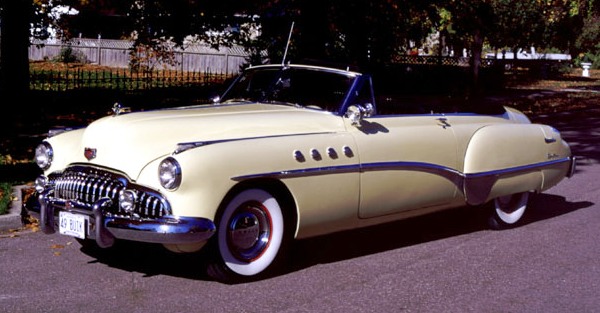
BuickMatt:  “Now that you mention it, my grandfather used to refer to himself as a proud ‘Buick’ man.”

Jordan:  “Mine did as well.  That’s why I was so happy to be assigned to Buick after the Sloan program.”

Matt:  “Was your grandfather alive then?”

Jordan:  “No.  But many times when talking about Buick product or dealers I would think of him…and one product in particular.  While I was at Buick we introduced…really re-introduced… a large rear-wheel drive sedan.  And guess what we called it?”

Matt:  “Roadmaster?”

Jordan:  “You got it.  The name Roadmaster fit perfectly.  My grandfather loved his Roadmasters.  But the funny part of the naming story happened during some consumer research of the car.”

Matt:  “What do you mean?”

Jordan:  “We had a fiberglass model of the car in a research clinic but no badge identification.”

Matt:  “You mean like no Ford oval or Chevrolet bowtie?”

Jordan:  “No markings at all.  Anyway, this young lady gets a first look at the car and says without any prompting, ‘That looks like a master of the road.  A road master.”

Matt:  “So that cemented any doubts about the name.”

Jordan:  “I could not have scripted it better.”

APSMatt:  “OK, so Sloan allows the divisions to operate fairly autonomously.  You also mentioned the New York office.  What was the name again, TONY?

Jordan:  “The Treasurer’s Office, New York operated as a consulting group.  TONY was to be a voice away from the day-to-day activities at Detroit HQ and the ‘hype’ at the car divisions.”

Matt:  “’Hype’ seems a bit pejorative.  I mean the car divisions weren’t all used-car sales people.”

Jordan:  “Actually only dealers sell used cars but I know what you mean.  The divisions were vertically integrated and included engineering and manufacturing staffs.  But like organizations with a product, the goal for the divisions was to sell more products.”

Matt:  “I still think ‘hype’ is a bit too much.  Still too much like used-car sales people.”

Jordan:  “OK.  How ‘bout ‘enthusiastic’?”

Matt:  “That works.  Back to the New York office.”

Jordan:  “Recall that GM’s bankruptcies in 1909 and 1919…we need to confirm those dates… were not caused by lack of demand but by running out of cash.”

Matt:  “Did Sloan set up some type of system to manage cash?”

Jordan:  “I don’t know all the background but any expenditure beyond a certain dollar amount had to be reviewed and approved by corporate staff…or even the Board.”

Matt:  “And that was TONY’s role?”

Jordan:  “Yes.  We worked directly with the chairman, coordinating the meetings, providing the analysis and making recommendations.  Plus the group developed forecasts of demand.  TONY even had an Economist’s Staff.”

Matt:  “You mean with real PhD economists?”

Jordan:  “Yes, I worked on that staff for a while.  And no I am not a PhD economist.  But I am a decent model builder and forecaster.  At least I was.”

Matt:  “The NY office really does sound like a consulting group.  What about the Treasury function?”

Jordan:  “When the office was established, being close to Wall Street had advantages.  Far less so today.”

Matt:  “What I’ve heard so far is GM was at its best when the divisions operated fairly independently and with their own engineering and manufacturing staffs.  Doing so created…or at least helped create…strong brand identity, which helped build an emotional bond with customers and with employees.”

Jordan:  “Good summary so far.”

Matt:  “In addition, GM had a separate office in NY to oversee use of capital, both internally and as a treasury function.”

Jordan:  “Let’s take a break.  Next session we’ll talk about how some organizational changes in the 1980’s began to destroy Sloan’s formula for the economic engine.”

#44 Sloan’s Segmentation Works, then Trashed by Bean Counters

23 Wednesday Apr 2014

Posted by Jordan Abel in Back Asswards Thinking, General Motors, Innovative Thinking: Ideas and Products, Societal Issues

≈ 1 Comment

(Readers: Please note the blog about the 5th revolution in the US is constructed as a story. While not all chapters are linked, the story might be more meaningful by starting at the beginning.)

(Want a PDF version for Entries #1-10, #11-20, #21-30 formatted for tablets and e-books?  Entries #31-40 available soon.  Click links for download.  America’s 5th Revolution Volume I (Entries 1-10), America’s 5th Revolution Volume II (Entries 11-20), America’s 5th Revolution Volume III (Entries 21-30)

Scene: Jordan’s office with Matt, reporter asked by POTUS to help Jordan write story why GM was so successful and why it failed.  Report will be used as part of effort to rebuild US-based manufacturing.

Jordan:  “Ready for some more GM history under Sloan?”

reporter on typewriter clipartMatt:  “Have my coffee and ready to listen.”

Jordan:  “In addition to the financial discipline, Sloan segmented GM’s car lines.”

Matt:  “Segment in what way?”

Jordan:  “I know the term segmentation seems obvious today but it was not going on 100 years ago.  At the time there were 20 or more car manufacturers with a wide variety of products.

Matt:  “So GM had several brands at the time, didn’t It.?”

Jordan:  “Buick, which was really the cornerstone for GM, Cadillac and Oldsmobile.”

Matt:  “What about Chevrolet and Pontiac?”

Jordan:  “Chevrolet became part of GM in 1918.  Pontiac in the mid-1920’s.”

Matt:  “Saturn was when?”

Jordan:  “Saturn, Hummer, Saab are part of GM post 1980.  We’ll talk about those brands later.  For this paper we’ll skip some other GM brands – Oakland and LaSalle and all the brands sold outside the US – Opel, Vauxhall, Holden’s.  Including them will just confuse the issue.”

APSMatt:  “So under Sloan GM analyzes the car market, segments it and then decides on roles for the different brands.”

Jordan:  “Exactly.  What he…I mean GM…tried to implement was clarity.  Clarity so people outside the company knew what each brand stood for.”

Matt:  “And so people inside the company knew what each brand stood for.”

Jordan:  “You’ve got it.  Remember, at the time Ford was selling only the Model T.  GM models were higher priced so buyers needed to understand what each brand stood for and why it was worth more money.”

Matt:  “What was the segmentation strategy?”

Jordan:  “A car for every price and purpose.  The car market is still emerging.  Most of the segments we have today did not exist.”

Matt:  “Chevrolet covered the lower end.  Oldsmobile, Buick middle to lower upper end.  Cadillac the higher end.  Pontiac filled a gap just above Chevrolet.  Even before Pontiac, GM offered cars for most everyone.”

Jordan:  “Many buyers wanted to move away from the Model T one size fits all.  After owning a couple of Model T’s…that look identical to every other Model T…buyers wanted something different.”

Matt:  “Sloan’s segmentation is another idea that seems so simple.  How successful was it?”

Jordan:  “GM, actually Chevrolet, outsold Ford Motor Company for the first time in 1926 or 1927.  While I think Sloan was a genius, Henry Ford helped GM by sticking with the Model T too long.  During Ford’s changeover to the Model A, GM became the #1 seller.”

Matt:  “Did Ford bounce back and overtake GM?”

Jordan:  “Since then GM has outsold Ford nearly every year, if not every year.  GM was the #1 car company until 2008, when Toyota outsold it worldwide for the first time.  The companies have switched leads several times since.”

Matt:  “When was GM at its peak?”

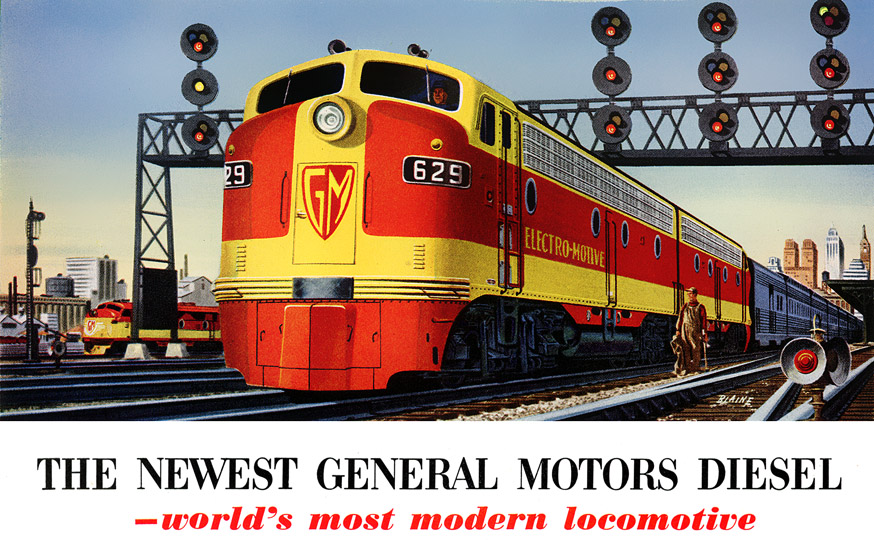
Jordan:  “In the 1950’s and 1960’s, GM accounted for more 5 of every 10 cars sold in the US.  GM also has the #1 brand refrigerator and the #1 train locomotive.

S052050Matt:  “What?  GM had the #1 selling refrigerator and the #1 selling locomotive?”

Jordan:  “And to help finance cars, GM started a finance company – General Motors Acceptance Corporation.  In fact, GM was so dominant in so many areas the Federal government began an anti-trust investigation.”

Matt:  “What a change.  Anti-trust and too large to government bailout.  Hard to imagine what a machine they were.”

Jordan:  “That’s why POTUS wants this series of articles.  What lessons can we take away that can be applied today?”

Matt:  “So GM peaks in the 1960’s or maybe later and then starts to slide.  Did GM management quit following Sloan’s principles?”

Jordan:  “Yes but not all at once.  We’ll talk more about this later but in the early 1980’s the GM CEO declared that profitability was more important than market share.”

Matt:  “Doesn’t a company have to have market share to generate revenue…and profit?”

Jordan:  “Low market share leads to lower total profits.  The percent profit per car might look good but at the end of the day the stack of dollar bills is smaller.”

Matt:  “What was the rationale?”

Jordan:  “GM could ‘optimize’ earnings and shareholder value by focusing on selling only cars and trucks with certain profit.”

Matt:  “What happened to Sloan’s segmentation scheme?”

Jordan:  “Part of the plan to reduce cost was to reduce the differentiation between the brands.  Doing so would allow certain development costs to be spread over more cars…and customers would never know, or so they thought.”

Matt:  “With this plan, some programs that made Chevrolet different from say Pontiac would be reduced or eliminated.”

Jordan:  “Exactly.  The plan was that separation between Buick and Oldsmobile could also be reduced.  Even Cadillac would be affected.”

Matt:  “But some of this narrowing of brand differentiation started before the 1980’s.”

Jordan:  “True.  But if you look at GM market share, the point of inflection is in the 1980’s.

Matt:  “Did the plan work?”

Line Chart FallingJordan:  “In one word, no.  In fact, the plan made an already difficult situation worse.  GM share at the beginning of the 1980’s was about 45%.  By the end of the 1980’s it was about 35%.”

Matt:  “How much loss is that?”

Jordan:  “1.2-1.5 million cars and trucks per year.”

Matt:  “How many assembly plants is that?”

Jordan:  “Equal to all the production of 5-6 assembly plants per year.  5-6 plants two shifts, 60 cars or trucks per hour, all year long.  Not one year but every year.  So you think the planned worked?”

goodbye-1l842i0Matt:  “They waved good bye to 5-6 assembly plants?  How much money did they wave good-bye to?”

Jordan:  “The numbers are staggering.  Every year GM no longer sold 1,500,000 cars and trucks it used to sell.  In today’s dollars GM sales price to dealers averages about say $30-35,000.”

Cash

Matt: “So GM waves good-bye to $50 billion…$50 billion dollars per year…out the door.  Good-bye.  Whose idea was this?”

Jordan:  “Only a bean-counter could think up such a back-asswards strategy.  Show me one company that saved its way into prosperity?  To earn money companies need to generate revenue.  You cannot make up profit on $50 billion in revenue by cutting expense.  The math does not work.”

Matt:  “I am almost speechless.”

Jordan:  “You should be speechless.  It’s a staggering number.  And we’ve not talked about what happened to all the GM customer and GM employees as a result.”

Matt:  “I see now why you insist this story is more than a numbers game.  It is about management and how it influences the culture of the organization.”

Jordan:  “I’ll give you one more arrow in the culture quiver.  In the 1990’s a then GM CEO had the audacity to state that Sloan’s segmentation was no longer relevant.”

Matt:  “Was he right?”

Jordan:  “Segmentation criteria might get tweaked a bit over time but the fundamentals do not.  Segmentation in the 1990’s was as important as in the 1920’s.”

Matt:  “Why do you think he claimed Sloan’s segmentation was no longer relevant?”

Jordan:  “I don’t know for certain.  But given his background, he thought the reason GM lost so much market share was Sloan’s segmentation.  He never considered that by ignoring Sloan’s segmentation, especially in the 1980’s, GM lost market share.”

Matt:  “Another case of back asswards thinking.  May we take a break, please?  My head hurts.”

#43 Beginning My Years with General Motors

19 Saturday Apr 2014

Posted by Jordan Abel in General Motors, Innovative Thinking: Ideas and Products, Personal Stories, Possible Solutions

≈ Leave a comment

(Readers: Please note the blog about the 5th revolution in the US is constructed as a story. While not all chapters are linked, the story might be more meaningful by starting at the beginning.)

(Want a PDF version for Entries #1-10, #11-20, #21-30 formatted for tablets and e-books?  Entries #31-40 available soon.  Click links for download.  America’s 5th Revolution Volume I (Entries 1-10), America’s 5th Revolution Volume II (Entries 11-20), America’s 5th Revolution Volume III (Entries 21-30)

Scene: Jordan’s office with Matt, reporter asked by POTUS to help Jordan write story why GM was so successful and why it failed.  Report will be used as part of effort to rebuild US-based manufacturing.

Jordan:  “First bit of trivia.  Matt, how many times has GM gone bankrupt?

reporter on typewriter clipartMatt:  “One that I know of – 2009.  That’s when the Feds put in a lot of cash and got a lot of stock in return.  People started calling it Government Motors.”

Jordan:  “A lot of people thought the Feds should have let GM die.  Doing so would have been a huge mistake.  We can discuss why in another session…but not today.”

Matt:  “OK, I give.  How many times has GM gone BK, or bankrupt?”

Jordan:  “Three.  2009, then twice before 1920.  The first was about 1909 and the second about 1919.  We need to get exact dates but close enough for now.”

Matt:  “Three times.  That’s a surprise.”

Jordan:  “And they might survive all three.”

Matt:  “What happened in 1909 and 1919?”

Jordan:  “The short version is this.  Rapid expansion of production and rapid sales growth without proper financial controls.  The result was the deadly sin – running out of cash.”

Matt:  “So unlike 2009 when demand was weak, the other two times demand was strong.  But GM expanded too quickly…really beyond their ability to raise enough cash to finance the growth.”

Jordan:  “Yes.  And that reminds me of my first day in finance at MIT.”

Matt:  “Alright.  First day of finance class.  What happened?”

CashJordan:  “The professor begins the class by saying, ‘Ladies and gentlemen, if you learn nothing else the entire time you are at this esteemed institution, I want you to remember one thing.  It does not matter whether your income statement indicates you made money or lost money.  The only thing that matters is…never run out of cash.’”

Matt:  “Well, GM management apparently didn’t go to that class.”

Jordan:  “A lot of people seemed to have skipped that class…a hundred years ago and now.”

Matt:  “OK, GM goes BK.  But in 1919 there is no government bailout.  Who bailed them out?”

Jordan:  “My view is the second BK and the bailout is the beginning of the GM juggernaut.  The bailout is from the DuPont family.  DuPont’s, already an investor, put in a boatload of cash and end up with a boatload more shares – 30-35% ownership.”

Matt:  “Anything else happen?”

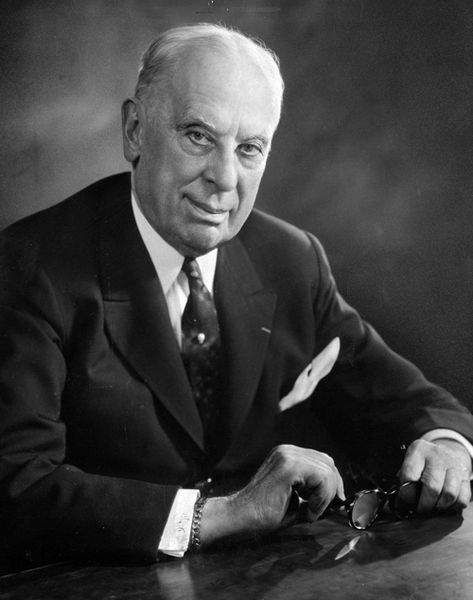
APSJordan:  “The cornerstone for GM’s future success.  Pierre DuPont, chairman of the Board, installs Alfred P. Sloan as president.”

Matt:  “Is that the same Sloan as Sloan-Kettering Hospital in NY…and the Sloan School at MIT?”

Jordan:  “The same Alfred Pritchard Sloan.  Sloan was an MIT grad.  And I think he implemented three major ideas that separated GM from the pack.”

Matt:  “Under Sloan, GM operated differently than other car companies?”

Jordan:  “Very much so.  GM set a new standard.  The ideas applied to car companies and most other manufacturing companies.  And the ideas are still relevant today.”

Matt:  “I’m anxious to hear more but is the story going to get too complicated for people to understand?  We have to keep the story out of the weeds and make sure it is understandable.”

Jordan:  “The topics might seem a bit deep at times.  But this is not a story told in sound bites.  Success does not come with slogans and talking heads…despite what some people think.”

Matt:  “Alright but really try to KISS – keep it simple, stupid.”

Jordan:  “In my estimation, Sloan’s three major contributions were: (i) implementing understandable financial controls (ii) clearly separating GM’s different products (iii) separating strategic and operational decisions.”

Matt:  “I sort of understand financial controls and separating products.   Separating strategic and operational decisions is a bit more abstract.”

Jordan:  “OK, let take these one at a time, starting with financial controls.”

Matt:  “Are you talking about say authority to write checks and keep accurate books?”

Jordan:  “Yes, but there is much more.  What is hard to understand now with computers, electronic databases and scanning equipment is companies were run using information written on index cards and hand-written ledgers.”

Matt:  “That is hard to imagine.”

Jordan:  “Imagine this – and I think the date is about right – until the mid-1920’s Ford Motor Company operated without any real accounting system.”

Matt:  “Ford had become a huge company by then…and no real accounting system?”

Jordan:  “GM before Sloan was similar.  But Sloan brings systems thinking.  Systems for accounting, systems for cash management and systems for forecasting production.”

Matt:  “What you’re saying is GM went from shoe-box accounting to at least reconciling bank statements and creating a budget.”

Jordan:  “In very simple terms, yes.  However, it is hard to overstate the importance of the discipline Sloan began instilling in the company.”

Matt:  “Wasn’t it just an accounting system?”

Jordan:  “No, it was creating a culture of being accountable.  Having a system in place allowed performance to be measured.”

Matt:  “You’re saying the measurement system – production, cost, etc. – allowed measurement of the performance of individuals and groups.  And the measurement made them more accountable.”

Jordan:  “Exactly.  Individuals and groups began to understand what needed to be accomplished and how well they performed.”

Matt:  “Have a specific example?”

Jordan:  “Yes, and I hope it is not too abstract.  But I think critically important to GM’s success.”

Matt:  “What is it?”

Jordan:  “Budgeting is critical in the auto industry…and any industry with high fixed costs.  The company must generate enough sales to pay for all the fixed cost before it begins earning a profit.”

Matt:  “Like the sales person on full commission.  He or she needs to sell a certain amount just to cover expenses – mortgage, utilities, groceries, car payment, fuel.  Then sell some more just to have some spending money.”

Jordan:  “Good example.  And the higher the mortgage payment and car payment, the more the person has to sell.”

Matt:  “But the sales person never knows how much will be sold, and therefore never knows what the commission check will be.”

Jordan:  “Car companies face the same problem.  When the economy is good, people have more money and buy more cars.  When the economy is not so good, people put off buying a new car and sales fall.”

Matt:  “What was so innovative about what Sloan did?”

Jordan:  “Sloan created a budgeting procedure such that GM broke even profit wise at 70% of its capacity.”

Matt:  “So if the company had capacity to sell 1,000,000 cars for a certain year and sales were only 700,000 cars for that year, GM would break even…really, not lose money?  That idea seems so simple.”

Jordan:  “The idea is incredibly simple but very hard to execute.  Forcing the execution helped create a culture of the importance of managing costs.”

Matt:  “So budgets were built around 70% of capacity.  Still not sure if I understand the significance.  And does the process have a name?”

Jordan:  “The budget was called a ‘standard-volume budget.’  Focusing on ‘standard volume” helped people form a discipline of controlling costs.  Early in my career I was assigned to coordinate the budget process for Cadillac.  The budgeting process was not easy and not very pretty.  A lot of negotiating, arm twisting and cajoling.  By the end everyone involved understood the importance of controlling costs.”

Matt:  “Obviously left quite an impact on you.  What’s the second point?”

Jordan:  “All sales above 70% of capacity were very profitable…and I mean very profitable.”

Matt:  “How often did sales fall below 70% of capacity?”

GM,_logoJordan:  “Not very often, even in the Depression.  In fact, GM made money every year from the early 1920’s and throughout the Depression.”

Matt:  “You’re kidding?”

Jordan:  “GM made money while many car companies went out of business.  Duesenberg, Cord, Auburn just to name a few.”

Matt:  “So how many years in a row was GM profitable?”

Jordan:  “70+ years.  From the early 1920’s to the early 1990’s.”

Matt:  “What a run.  What happened?”

Jordan:  “This is a good time to take a break.  Sloan implemented a couple more key ideas that made the 70-year string possible…and the string should still be going on.  We can talk about what went wrong after we talk about what went right.  Let’s take a break.”

 

#40 Why Manufacturing in the US Can Be Less Expensive

09 Wednesday Apr 2014

Posted by Jordan Abel in Back Asswards Thinking, Causes of the Revolution, Economics, Innovative Thinking: Ideas and Products, Possible Solutions

≈ 1 Comment

Note: Entry #41 begins a series of blogs about General Motors.  How did an apparent culture change over time likely lead to bankruptcy and an apparent disregard for addressing safety issues.  Such actions by corporations affect societal attitudes.

(Want a PDF version for Entries #1-10, #11-20, #21-30 formatted for tablets and e-books?  Click links for download.  America’s 5th Revolution Volume I (Entries 1-10), America’s 5th Revolution Volume II (Entries 11-20), America’s 5th Revolution Volume III (Entries 21-30)

Scene: Jordan met former college economics professor. Just got a coffee refill.

Professor: “A few minutes ago you asked why US companies manufacturer electronic products in China when albert_einstein_professor croppedmuch of the production is automated.”

Jordan: “I really do not understand. But I think the #1 reason by far is perceived lower labor costs.”

Professor: “The perception of lower labor costs, not necessarily the reality of lower labor costs.”

Jordan: “Let me give you some personal experience. I realize data points of one are dangerous but the more I talk to people about their real experiences, the more my experience seems typical.”

Professor: “This should be interesting.”

Jordan: “I was recruited to run a small, publicly held company in northern California.”

Professor: “Lucky you. Near wine country?”

Jordan: “Smack in the middle of it. The area is great for grapes and apples but not what one calls a hotbed for manufacturing.”

Professor: “What was the product line?”

Jordan: “Electric bikes and scooters, all of which are assembled at company facilities in the same town.”

Professor: “What’s the issue? The company was manufacturing, or at least assembling in the US”

Jordan: “The Board of Directors wants to move assembly to China and lay off many of the US employees.”

Professor: “Because labor costs were too high?”

Jordan: “That’s what they thought but none of the Board members had any real manufacturing experience.”

Professor: “They could have been right. If the area is not a major manufacturing center, the costs could be too high.”

Jordan: “My analysis? To understand true labor costs we also needed to analyze other systems. When I started average production was 37 scooters per day. Some days production was 75 scooters and other days production was zero scooters.”

Professor: “Seems like a production scheduling issue.”

Jordan: “Scheduling and parts sourcing at a minimum. The company did not fully evaluate how quality of parts could affect the rate of production.”

Professor: “Give me an example.”

Jordan: “The scooter drive system included a sprocket that linked the electric motor and a belt, which turned one of the wheels. The price of the sprocket appeared cheap…”

Professor: “But further analysis…”

Jordan: “Further analysis indicated 80% of the parts were not to specifications. As a result the output of the motor assembly line was lower. Even worse was when the workers tried to make the sprocket fit, they sometimes inadvertently damaged the motor, which caused more problems.”

Professor: “So to get 100 good sprockets you had to buy 500 sprockets. Where were the sprockets manufactured? Let me guess…China.”

Jordan: “Yes. Look, China makes some quality products. I asked the chief engineer to call a contact of mine in automotive. We sent the drawings. He quoted parts from a US manufacturer that cost 30% less and guaranteed all parts were to spec.”

Professor: “The individual part cost 30% less?”

Jordan: “Each part. Not the total but each part.”

Professor: “Good move. Quality goes up, production goes up and purchase costs go down and warranty goes down. As if that’s not enough, anything else?”

Jordan: “We made some changes to the assembly line.”

Professor: “Equipment and automation?”

Jordan: “No capital equipment or automation, just basic layout and processes. Most of the ideas came from the employees. We also implemented some recommendations from lean manufacturing techniques…but all ideas you would learn before the first coffee break on the first day of class.”

Professor: “You’re telling me you used very basic information to begin to make improvements.”

Jordan: “I am embarrassed to tell you how basic. We literally taped off work stations, color-coded hand tools by worker, bought a few hand carts and implemented employee suggestions.”

Professor: “What happened to production?”

Jordan: “Give me a guess. In just 7 months how much do you think production increased?”

Professor: “50%? No make it 100%. You doubled production.”

Jordan: “Try a higher number.”

Professor: “OK 300%. Production increased from 37 to 150 per day.”

Jordan: “Try 37 to 250 per day. Well above a 500% increase in production with basically the same equipment…and workforce.”

Professor: “You didn’t add any people?”

Jordan: “We added a few in shipping because they could not keep up. But nowhere else.”

Professor: “What about labor costs? How much more did you pay people?”

Jordan: “We gave people bonuses for reaching certain targets. Here’s an interesting statistic. Take the US labor rate and bonus at the seven months and double it.”

Professor: “So you are going to pay the US twice as much?”

Jordan: “Yes. Now take the labor cost for products made in China and make it zero.”

Professor: “Double the labor cost in the US and make labor cost in China zero…free.”

Jordan: “And tell where it’s cheaper to build the product?

Professor: “I know this is a set up. Cheaper in the US.”

Jordan: “Hard to believe but it is true.”

Professor: “That’s remarkable. But seems like an extreme example.”

Jordan: “I agree the percent increase in production is unusual but not the savings in other costs. What companies often overlook are the less obvious costs – lead time between order and receipt of goods. Cost of not being able to adjust production quickly for parts changes or even a bad part. You might end up with container loads of product before the change.”

Professor: “What is the lead time between ordering and receipt.”

cargo_shipJordan: “Usually months. Unless you air freight, you have 6-8 weeks shipping time on the ocean versus days by train or truck in the US.”

Professor: “Is quality control really an issue?”

Jordan: “Quality control is a problem for any manufacturing company. But when your supplier is thousands of miles away and with long lead time, the impact of problems grows exponentially. Plus, the cultures are different when it comes to quality. Also ask companies how difficult it is to protect IP.”

Professor: “Intellectual property?”

Jordan: “Yes. Product knock-offs are a real problem.”

Professor: “In your example labor costs became a very small piece of the overall cost. Why do you think the companies continue to source outside the US when total cost seems to be cheaper when manufacturing in the US?”

Jordan: “That’s my frustration. And let’s take electronics specifically. Virtually all of the manufacturing and assembly of many electronic products are automated. Why go outside the US?”

Professor: “US offers competitive…and maybe lower cost…and faster turnaround time.”

Jordan: “That’s why we need a national policy to get more companies to start manufacturing in the US. Even with automation, there will be more people employed in the US. And we can start to rebuild wealth.”

Professor: “The administration can begin rebuilding with some macro-economic policies. The first recommendation might sound silly but the administration needs to promote buying products made in America. I’m not talking about everything but products that can be made here at a very competitive price.”

Jordan: “Are you suggesting that as a policy?”

Professor: “Jordan, you know as well as I know the power of persuasion. If the president begins to discuss in understandable terms why people should buy products made in America, then customers will begin to force companies to change.”

fdr_~FdrJordan: “You talking about fireside-chat talks, like FDR did?

Professor: “Have you ever listened to those chats…or read the transcripts? If you have not, you should. FDR presented major issues and solutions in an understandable way.”

Jordan: “None of the hyperbole of today?”

Professor: “Incredibly straightforward. You need to listen to them. If fact, all politicians Firesideneed to listen to them.”

Jordan: “A series of fireside chats might be a great start.”

Professor: “The chats will give you time to refine some recommendations.”

Jordan: “OK, we have a plan. I’ll propose fire-side chats. Can you help with the longer-term recommendations?

Professor: “Thought you would never ask. It would be an honor. ”


#39 How Manufacturing Can Create Societal Wealth

05 Saturday Apr 2014

Posted by Jordan Abel in Definitions, Economics, Innovative Thinking: Ideas and Products, Societal Issues

≈ Leave a comment

Note: Entry #41 begins a series of blogs about General Motors.  How did an apparent culture change over time likely lead to bankruptcy and an apparent disregard for addressing safety issues.  Such actions by corporations affect societal attitudes.

(Want a PDF version for Entries #1-10, #11-20, #21-30 formatted for tablets and e-books?  Click links for download.  America’s 5th Revolution Volume I (Entries 1-10), America’s 5th Revolution Volume II (Entries 11-20), America’s 5th Revolution Volume III (Entries 21-30)

Scene: Jordan Visiting College Campus. Meets Former Economics Professor.

Jordan: “Professor, nice to see you again. Been a while since I was in one of your classes.”

albert_einstein_professor croppedProfessor: “Yes, a long time. I understand you’re spending a lot of time in Washington.

Jordan: “Too much time. I need these kinds of breaks to keep my thinking straight.”

Prof (laughing): “You’re not saying people inside the Beltway have distorted thinking?”

Jordan: “I’ll skip my thoughts on that one. But if you have a few minutes I would like to get your thoughts on some serious issues facing the country.”

Prof: “I’ve got about an hour before my next lecture. What’s on your mind?”

Jordan: “There are some disturbing trends in the economy.

Prof: “Such as?”

Jordan: “The United States needs to generate more wealth as a country. Taxing the rich does not create wealth, merely redistributes income. Like moving money from one pocket to another. What policies should we consider implementing to create more wealth for society? Not just wealth for some individual or some company but wealth for society.”

Prof: “Great question. Creating wealth is a simple concept but far more difficult to execute.”

Jordan: “Let’s pretend we are back in Econ 101. Explain the concept and then we can talk about execution.”

Prof: “OK students, quiet down. Just kidding. For me the easiest way to understand how to create wealth for society is to think manufacturing.”

Jordan: “Exactly what do you mean by manufacturing?

Prof: “Most people think manufacturing as making cars or airplanes or furniture. But in the broadest sense manufacturing is the process by which value is added to a product.”

Jordan: “If I understand, then farming can be considered manufacturing. You start out with seeds and you end up with a bunch of corn. Mining would also be the same. Start out with dirt and end up with say iron ore.”

Prof: “Let’s use your examples. How is wealth created? Let’s take raw material – iron ore, corn, lumber. Step 1 is consider the value of that raw material on its own – a hunk of iron ore, stalk of corn or a tree. Step 2 is think about a product that uses the raw material. Step 3 is compare value between the raw material and the finished product?”

Jordan: “Let’s take this coffee mug. The raw material is some type of clay and some paint for decorations.”

I Luv NY Mug CroppedProf: “Good example. What would you pay for the clay and paint as raw materials?”

Jordan: “Nothing because they are of no value to me.”

Prof: “What did you pay for the coffee mug — $10?

Jordan: “Try $20.  It’s a nice mug.”

Prof: “So value went from $0 for the raw material to $20 as a coffee mug?”

Jordan: “Yes. Whoever made the mug must have created the value.”

Prof: “He does remember Econ 101. Actually there are some other people in the chain but you have the idea.”

Jordan: “The other people – the trucking company, the place where I bought the mug, the company that mined the clay and the company that made the paint – all contributed to the wealth creation.”

Prof: “On a very simplest level, none of those people would be working if you didn’t buy the coffee mug.”

Jordan: “So each one of the companies involved in making and then getting the coffee mug to me contributed to value creation?”

Prof: “One can argue that the people between the potter and the buyer are merely middlemen. You could have purchased the coffee mug directly from the maker.”

Jordan: “So the middleman might not really add value, bur rather…call it ‘facilitate’?”

Prof: “The word ‘facilitate’ will work. ‘Catalyst’ will work also. A catalyst allows a reaction to occur without becoming part of the reaction.”

Jordan: “Hasn’t the internet started to replace the middleman? Many more companies seem to be selling directly to the customer.”

Prof: “The internet has been a disruptive force to the middleman, or distribution system. For centuries people in developed countries bought in physical stores. Virtually all these stores were operated by merchants who sold the goods but did not make the goods.”

Jordan: “Now, with the internet, in many cases I can buy directly from the manufacturer and have the product delivered to my location – no more brick-and-mortar store.”

Prof: “A lot of jobs associated with…call it merchandising business…have been eliminated.”

Jordan: “Did those people really add value and create wealth?”

Prof: “Technically, no. But what they did do was enable a lot more people to buy the product. Without the middleman, the potter who made the coffee mug would have a very limited population to sell to. With the middleman, the potential for sales expanded exponentially.”

Jordan: “Now the potter can use the internet and reach many more people than before. In some cases maybe even more people than with the middleman.”

Prof: “And keep more of the profits since no payment to the middleman.”

Jordan: “At the same time, employment declines because fewer people are working to distribute the product. So did we really create any additional wealth by selling on the internet?”

Prof: “Answering a related question will help you set policies for wealth creation.”

Jordan: “Where are we headed?”

Prof: “What if the coffee mug is no longer made in the US but now made in say China…bad pun, I know.”

Jordan: “I’ll forgive you. If the mug is made in China, the wealth created between the raw material and the finished product – coffee mug – stays in China and not the US.”

Prof: “You’ve got it.

Jordan: “Rather than $20 being spread among US companies, the only value in the US is for transportation and distribution — maybe $5-6. The potter is cut out completely.”

Prof: “One can make a good argument that no wealth is created for US society when products are manufactured outside this country. What we as a society confuse is wealth creation for an individual or company compared to wealth creation for society.”

Jordan: “Macro and micro economics. Or as a friend of mine calls it macro schmacro and micro schmicro economics.”

Prof: “I’ll remember those terms. But the distinction is important. What is of benefit to an individual or a company…schmicro economics…is not always a benefit to society…schmacro economics.”

Jordan: “Moving production of coffee mugs to China might generate more profits for a specific company…schmicro…but overall the US loses wealth as a result…schmacro.  Correct?”

Prof: “Yes…but…and the ‘but’ is the value of trade between countries.”

Jordan: “So trading between countries is not just a one-way street but can create wealth in both countries?”

Prof: “Trading is important because more demand can be created. Just like the internet opened up new markets for the potter who made the coffee mug, trade opens up new markets for countries.”

Jordan: “But isn’t trade usually one sided. I mean the country that exports seems to benefit the most.”

Prof: “The country doing the exporting is usually more efficient at making those products than the country buying the products. But for trade to work the country buying has to offer something in return – another product at a lower cost or some raw material that has value.”

Coffee beansJordan: “Let’s take coffee. Brazil is more efficient at growing coffee beans than the US mainland. Therefore, the US should buy coffee beans from Brazil.”

Prof: “The US is also very efficient at growing certain crops – corn, soybeans, wheat. And it exports lots of those crops.”

Jordan: “But Brazil and the US are not as efficient at producing electronics as say China. So Brazil might trade coffee beans for US wheat and the US might trade corn for electronics made in China.”

CornProf: “You’ve got it the basics. In theory…and I emphasize theory…each country trades products that it produces more efficiently. As a result products made in another country are less costly to consumers and wealth is created in each of the countries.”

Jordan: “I realize understanding wealth creation has many more variables. But the gist of it seems taking a raw material and refining it so it is worth more. Clay becomes a coffee mug. Wheat becomes flour which becomes a cake. Silica becomes silicon which becomes an electronic circuit which becomes a computer.”

Prof: “Very good Jordan.”

Jordan: “Prof, I have a somewhat related question that has bothered me for some time.”

Prof: “Which is…?”

Jordan: “The manufacturing of electronics is mostly automated. Labor cost as a percent of the cost of the product must be very low. So what is the advantage of making so many electronic products in Asia? Lead times are long and it is hard to protect intellectual property.”

Prof: “Let’s take a break and come back to that question. But I want to put the answer in the context of your first question – what policies will help the US create more wealth for society and not just individuals or certain companies?”

Jordan: “Good.  Now I want to refill by coffee mug.  Let’s see where this was made?”


#35 US Solar Efforts Back Asswards? (con’t)

22 Saturday Mar 2014

Posted by Jordan Abel in Back Asswards Thinking, Innovative Thinking: Ideas and Products, Possible Solutions

≈ Leave a comment

(Readers: Please note the blog about the 5th revolution in the US is constructed as a story. While not all chapters are linked, I think the story will be more meaningful by starting at the beginning.)

Want a PDF version for Entries #1-10, #11-20, #21-30 formatted for tablets and e-books?  Click links for download.  America’s 5th Revolution Volume I (Entries 1-10) America’s 5th Revolution Volume II (Entries 11-20) America’s 5th Revolution Volume III (Entries 21-30)

Scene: Jordan’s Office.  Jordan and Technology Man have refilled coffee.  Conversation about US solar energy efforts continues. 

Jordan: “I’m not forgetting about that venture. I learned just enough about batteries to be dangerous.”

TechManTechMan: “Even more dangerous than normal?”

Jordan: “I’ll ignore that comment. A lot of articles lately about breakthroughs in battery technology. But I remember two sayings from our battery days. ‘Technology will be ready in just five more years…”

TM: “…And, ‘Liars, damn liars and battery manufacturers.'”

Jordan: “It’s hard to tell what’s real progress and what’s hype. Based on what you know, what newer-technology, higher-energy density batteries are in production, affordable…and safe?”

Flow Battery cell_stack_illustrat_700TM: “Our old friend the flow battery is making a rebound. Flow batteries are ideal for storing electricity from solar…and wind.”

Jordan: “How would you link batteries to the electric grid? Right now, don’t all surplus electrons go back on the grid?”

TM: “If the truth be known, most of the electrons from solar and wind are likely wasted.”

Jordan: “You’re kidding? How?”

TM: “The current system makes it difficult for the utilities to integrate electricity from solar and wind.”

Jordan: “But it seems so simple.”

TM: “Like you said, Jordan, you know enough to be dangerous. Think about it the situation. A utility cannot count on a predictable flow of electrons from solar or wind. So what do they do?”

Jordan: “Why can’t they store the electrons?”

TM: “Hold on. We’ll get there. While the utilities will likely never admit it…at least publically…my guess is they keep the power plant operating as if there were no solar panels or wind…just to make sure there is enough electricity.”

Jordan: “From a planning standpoint I can’t blame them. If that’s true, then the only beneficiary of solar is the home owner who realizes a lower bill.”

TM:    “And whatever cost the homeowner saves is probably passed on to everyone else who does not have solar.”

Jordan: “So, at the end of the day, unless we can figure out how to store electrons. The power plant still operates the same way and…”

TM: “…Everyone else’s electric bill is slightly higher. But not high enough so that anyone can track it.”

Jordan: “What about storing electrons in electric vehicle batteries.”

TM: “Another brain freeze, Jordan? Have you forgotten everything you ever learned? Washington must really screw up the brain.”

Jordan: “Yeah, I know it was a stupid question. The minute I said it I wanted to retract it.”

TM: “OK, so you answered your own question.”

2014-chevrolet-volt-5Jordan: “Owners of 100% electric vehicles owners have a concern about range. Hybrid owners – Chevrolet Volt or Toyota Prius for example – don’t care because they can operate using the gas engine.”

TM: “Can you imagine a Nissan Leaf or Tesla owner jumping in their car after work in say a really hot day in July? Ready to leave and oops, not 2014-Nissan-Leaf-goenough juice left to run the AC or even make the trip home. Not a happy camper.”

Jordan: “Using electric vehicle battery packs to balance the peak load is only an option if someone is home or has access to another car.”

TM: “Like I said, the idea must have been concocted by someone who has never lived in the real world. You know, Washington.”

Jordan: “OK, so we should start putting solar on all rooftops and storing those electrons using a battery, maybe a flow battery.”

TM: “Yes. Localizing the generation…the rooftop…eliminates the losses in transmission. Electrons go from the roof to the battery to the appliance.”

Jordan: “How do we make this work?”

TM: “First, you cannot put the utilities out of business. Utilities need to be part of the solution. Next, we need to start establishing localized grids. Some people call them micro-grids.”

Jordan: “You are saying that utilities, even though part of the problem, are also part of the solution.”

TM: “Think about your automotive days. The government and the auto companies finally started working together to reduce tailpipe emissions and reduce fuel consumption. They’ve made good progress.”

Jordan: “How can the utilities be part of the solution? Their business model is built around large grids, not micro-grids.”

TM: “Let’s start with the revenue stream so Wall Street won’t have apoplexy. Utilities can help fund the purchase and installation of the solar panels.”

Jordan: “Are you suggesting utilities buy the panels and then let the utilities charge customers for the panels with electricity bills, something like a mortgage?”

TM: “Yes. The model is already working in some locations. For the user, the electricity bill would be lower but the utility would also be paid back for buying and installing the panels.”

Jordan: “Utilities keep a revenue stream and reallocate capital to solar panels rather than building a new power plant.”

TM: “A big hurdle is convincing the coal lobby this makes sense? Coal lobby is well entrenched in Washington.”

Jordan: “Coal needs to realize the world is changing. Unless the coal companies can figure out how to make clean energy from coal, they will go the way of buggy-whip manufacturers.”

TM: “What about all the people employed in the coal mining industry?”

Jordan: “What about all the people that used to be employed in the auto industry, especially in Michigan? You know as well as anyone that technology can be a disruptive force. Businesses need to change to stay in business. Issues facing coal are not new.”

TM: “Some people are going to claim you are anti-union, especially against the mine workers.”

Jordan: “Look, times change and the groups involved need to quit pointing fingers and start solving problems.”

TM: “Unlike your former employer.”

Jordan: “They finally came around but it took Chapter 11 as a wake-up call. As far as solar, based on what you said we should be able to create a cost-effective micro-grid arm-wrestling-695086using existing solar and battery technology…and working with utilities.”

TM: “Yes, some arm wrestling required but the goal is achievable.”

Jordan: “Technology Man, you have got yourself a job.”

TM: “Why did I agree to have coffee with you? OK, I’ll do it.”

#34 US Solar Energy Efforts Back Asswards?

19 Wednesday Mar 2014

Posted by Jordan Abel in Back Asswards Thinking, Causes of the Revolution, Innovative Thinking: Ideas and Products, Possible Solutions

≈ Leave a comment

(Readers: Please note the blog about the 5th revolution in the US is constructed as a story. While not all chapters are linked, I think the story will be more meaningful by starting at the beginning.)

Want a PDF version for Entries #1-10, #11-20, #21-30 formatted for tablets and e-books?  Click links for download.  America’s 5th Revolution Volume I (Entries 1-10) America’s 5th Revolution Volume II (Entries 11-20) America’s 5th Revolution Volume III (Entries 21-30)

Scene: Jordan and Technology Man having coffee and bagels.

Jordan: “Technology Man, are you in between black-hole projects for the military?”

TechManTechMan: “Jordan, you know I can’t tell you anything about what I do.”

Jordan: “I know. But from what little I know you’ve been involved in some really interesting projects — stealth fighters, drones, weird electronics, and who knows what else.  Plus, the other fun things that you do — like photography.”

TechMan: “OK, Jordan. Now tell me, why are we having coffee beyond just catching up?”

Jordan: “Why would think I had something in mind?”

TM: “I’ve known you too long.”

Jordan: “Just a simple question for you.”

TM: “Simple questions are a rarity from you.”

Jordan: “I need to get your ideas on establishing a national policy for solar energy. Solar seems great. Clean source of energy. Solar is everywhere, at least some of the time.”

TM: “So what about the policy?”

Jordan: “The ‘so what’ is the approach the US is taking to solar. We don’t have a real policy. And the lack of a coherent policy was part of the cause of the revolution.”

TM: “You think so?”

Jordan: “Yes, too much reliance on coal and lots of resistance to alternative fossil fuels.”

TM: “The resistance still baffles me. The fossil-fuel energy companies have such a great opportunity to capitalize on solar and wind…and they don’t do it.”

Jordan: “When the companies do get involved, they use an antiquated approach.”

TM: Such as…”

Jordan: “Building large solar farms but putting the solar farms in the middle of nowhere.”

solar_panelsTM: “Jordan, where do you think most farms are? Farms are in the middle of nowhere.”

Jordan: “Yes, but middle of nowhere means the transportation to consumers.”

TM: “I agree the problem with solar farms in the middle of nowhere is the same – distance between the farm and the user.”

Jordan: “From what I understand, transmitting electrons over long distances is not very efficient.”

TM: “Inefficient is a better word. Not unusual for 50% of the electricity generated at a remote power plant not to make it to the user.”

Jordan: “Half lost? So what we are doing with these remote locations is doubling the size of the power plant…in this case solar farm…to compensate for the losses in transmission.”

TM: “Even worse. Many solar farms and wind farms require new transmission lines to get the electricity from the farm to the user. The cost of the lines is substantial. Plus some utilities are trying to put the new transmission lines through underdeveloped and environmentally sensitive areas. Why? Because it is easier and cheaper.”

Jordan: “What you’re describing is why current thinking about the best way to use solar and probably wind seems to be back asswards.”

TM: “Many of the plans for solar and wind have been developed by the same folks who wanted coal plants in remote locations so residents wouldn’t complain about emissions…and coal ash ponds.”

Jordan: “Alright, so what should the policy be for solar? We have a chance to make some changes.”

TM: “The most cost-effective approach, I think, is to install solar on all rooftops, whether residential or commercial buildings. And some locations are encouraging that.”

Jordan: “Solar on roofs is adequate to handle all electricity needs?”

TM: “Not until solar gets more efficient. But installing the panels cuts way back on the need for new power plants and likely eliminates the need for some older, coal-fired plants.”

Jordan: “What else would you do?”

TM: “Start storing electricity generated by solar. Right now electricity from solar is either consumed at the site or pushed onto the grid. But the problem is the mismatch of generation and demand. We need to store surplus electrons for use later.”

Jordan: “You talking about storing in batteries? Isn’t that very expensive?”

TM: “Speaking of batteries. I need to recharge mine with another cup of coffee.”

To be continued

#33 Rekindling the Emotional Bond with Detroit

15 Saturday Mar 2014

Posted by Jordan Abel in Economics, Innovative Thinking: Ideas and Products, Societal Issues

≈ Leave a comment

(Readers: Please note the blog about the 5th revolution in the US is constructed as a story. While not all chapters are linked, I think the story will be more meaningful by starting at the beginning.)

Want a PDF version for Entries #1-10, #11-20, #21-30 formatted for tablets and e-books?  Click links for download.  America’s 5th Revolution Volume I (Entries 1-10) America’s 5th Revolution Volume II (Entries 11-20) America’s 5th Revolution Volume III (Entries 21-30)

Scene: Jordan’s Office with the housing Guru.  Continuing conversation.

Guru: “OK, Jordan, we have our coffee refill.     Tell me what I need to know about making the rehab in Detroit more appealing.”

122213_1351_10GurusIdea1.gifJordan: “You consider yourself a car guy?”

Guru: “Huh? What do you mean?”

Jordan: “You answered the question. You’re not a car guy. Detroit still is the car capital of the world, even if many assembly plants have left.”

Guru: “Where is this conversation headed?”

Jordan: “Are you a fan of Motown music?”

Guru: “Who isn’t? Motown music is alive. It’s lasted several generations and cuts across all ethnic groups.”

Jordan: “And for good reason. The Motown sound is great music.”

Guru: “OK. So are you saying the rehab needs to incorporate cars and Motown?”

Jordan: “In spirit anyway. The rehab program has got to have a soul. It somehow needs to build the same kind of emotional bond that people have with their cars and people have with Motown music.”

Guru: “How am I supposed to do that?”

Jordan: “Guru, that’s your job. You’re the architect…you’re the designer. I’m just the client.”

Guru: “Give me some more guidance about what you want. Start with cars.”

Jordan: “Cars and trucks are very high tech. Today even the least expensive cars have extensive integration of electrical and mechanical components. Somehow the rehab needs to highlight the combination of electrical and mechanical functions. Show how automated functions can make an older building modern.”

Guru: “Like automated parking, for example?”

Jordan: “There you go. Perfect example.”

Guru: “Many of these old factories are wide – in fact, too wide for two modular units and still meet the code for natural lighting. We could have parking between the units…and automate the parking.

Jordan: “Automated parking inside the building that used to assemble cars. I like that.”

Guru: “Now, let’s try to build on that idea. What else can we do?”

Jordan: “How much electronics can you include in the building and in the modular units?

Guru: “As much as you want. All electric circuits and outlets could be integrated – just like a smart house. You can also link the circuits to a smart phone or car.”

Jordan: “What about upgrades to the circuits over time?”

Guru: “How many times are you going to ask me that same question?”

Jordan: “I don’t know. But the modular unit should be designed to allow the resident to upgrade easily wiring and other electrical features for at least 50 years, and preferably 100 years.”

Guru: “All the wiring is on the outside of the module and easily accessible for upgrades and any repairs.”

Jordan: “I know. But just want to make sure it can be upgraded easily.  By the way, we need to stop calling these modular units.  It’s confusing.”

Guru:  “What’s so confusing?”

Jordan:  “People think of modular in the same vein as double-wides.”

Guru:  “They’re completely different.”

Jordan:  “Maybe to you and people in the industry but not to most folks, me included.”

Guru:  “You have a better name?”

Jordan:  “What about ‘component construction’?  Sometimes the component can be large — like an entire unit — or sometimes small — like apportion of a wall.  Using the term ‘component construction’ is easier to understand and allows more flexibility.”

Guru: “Alright, we’ll call it ‘component construction.’  But I might slip every now and then.  Moving right along. What about incorporating the themes of different car companies – Ford, GM, and Chrysler? What about other companies?”

Jordan: “There were lots of companies. In 1910 there were about 400 companies nationwide making cars and some making few trucks. By 1920, I think the number was closer to 20 companies. Many became part of larger companies – GM included Buick, Cadillac, Oldsmobile, Chevrolet and later Pontiac. Cadillac also had the LaSalle brand.”

Guru: “What about other companies that were not acquired. Wasn’t Packard in Detroit?”

Jordan: “Yes. A number of other companies were in Indiana – Auburn, Cord, Duesenberg, and Studebaker. But let’s focus on companies in southeast Michigan.”

Guru: “Alright. What else you thinking about?”

Jordan: “Well, we could name a floor after a company and use the theme from the brand for certain features or design themes on the floor. We don’t want to get too cutesy but capture some of the history.”

Guru: “You worked at both Cadillac and Buick, didn’t you?”

Jordan: “Yes, even though Buick was based in Flint, there is a lot of connection to Detroit. For one, Buick was the cornerstone for GM.”

???????????????Guru: “You know what I remember most about Buick? Portholes.”

Jordan: “You’re not alone. Portholes have been a Buick signature for 70 years.”

Guru: “Portholes are a great branding idea.”

Jordan: “The original portholes were to cool the engine but the look quickly became associated with Buick. Years ago when I was at Buick my nephew, about 9 or 10 at the time, and my brother were doing their weekend ‘Let’s go to the junk yard routine.'”

Guru: “Obviously true car guys.”

Jordan: “My nephew sees a stack of crushed cars and yells, ‘Look there’s a Buick. I see the portholes.'”

Guru: “What great brand identity. Recognizing a brand in a stack of crushed cars. That gives me an idea. We could use portholes or circular lamps on one of the floors or in the lobby. Tell me some other themes.”

Ford OvalJordan: “Ford uses the ‘oval’ in the middle of the grill. Chevrolet uses the ‘bow tie.’ The original Chrysler logo looks like an award ribbon. Cadillac has the crest. Fisher Body used what looks like a carriage for a queen. There are all kinds of logos.”

ChevroletGuru: “So if we wanted, we could incorporate some of the logos as escutcheons for door locks – the Ford oval or the Cadillac crest. Or, we could also use door handles from certain models. Didn’t older cars have pull down handles?”

Jordan: “Yes. Another feature from early model cars – at least Fisher Body LogoI know it was true for Cadillac – is the opera lamp. Opera lamps were used originally on horse-drawn carriages. Cadillac brought back opera lamps many years later.”

Guru: “You know we could use automotive lighting – past and present – throughout the building and the parking area. We could actually use headlamp bezels from cars as light fixtures.”

Jordan: “Now you’re thinking like a car guy.’

Guru: “We could also make a mosaic in the front lobby…or maybe outside the elevators on every floor. The mosaic pattern would be a company logo. Hey, I’m liking this.”

Jordan: “One more thing. How would you mix different periods of design? In the early years cars were much like horse carriages. During the 1930’s there was a lot of art deco – Buick had an metallic instrument panel. Can you mix and match decades in the building?

Guru: “Not sure about combining features of early design with the art deco or the modern design on the same floor, for example. But let me think about it.”

Jordan: “We’ve not talked about how to incorporate Motown but I’m sure you will think of something.”

Guru: “Let me work on incorporating automotive stuff first. Then we can talk Motown.”

Jordan: “OK, when will you have ideas to review?”

Guru: “Give me a week or so. I need to get focused.”

Jordan: “Thanks, Guru. See you soon.”

← Back

Thank you for your response. ✨

#32 Helping Rebuild Detroit and Other Cities

12 Wednesday Mar 2014

Posted by Jordan Abel in Innovative Thinking: Ideas and Products, Possible Solutions, Societal Issues

≈ Leave a comment

(Readers: Please note the blog about the 5th revolution in the US is constructed as a story. While not all chapters are linked, I think the story will be more meaningful by starting at the beginning.)

Scene: Jordan’s Office with Housing Guru (see earlier entries for initial discussion)

Jordan: “Guru, nice to see you. Where have you been hiding?”

122213_1351_10GurusIdea1.gifGuru: “Hiding from you so I can get some work done. Actually, I’ve been revising the plan to economically rebuild housing in Detroit – at least part of it.”

Jordan: “Great. I am all ears because POTUS is interested also. What do you have?”

Guru: “POTUS? You’re kidding. You talked to POTUS about this?”

Jordan: “He called me. Met him at the White House. Saying he’s interested in this project is an understatement. He views Detroit as a template for many cities.”

Guru: “That’s good and bad. This project has become very high profile.”

Jordan: “You wanted to rebuild your architectural practice. Well, here’s the chance. Now, we need get this project going. The next call from someone on POTUS’s staff will be asking for a progress report, not just ideas.”

Guru: “Glad he agrees problems in Detroit are not unique, just the most visible. Many US cities have an eroding tax base, high legacy pension costs and infrastructure in need of serious repair.”

Jordan: “Guru, I agree completely. Now we need to layout specific ideas for Detroit and a timeline for implementation.”

Guru: “The idea is simple and what we discussed. Convert existing industrial structures into residential and commercial space.”

Jordan: “That’s what I told POTUS. His question was, ‘Isn’t converting a factory to housing expensive and fraught with problems?'”

Guru: “And I hope you said ‘likely’ unless you think modular.”

Jordan: “Exactly what I said. You’ve trained me well. We also discussed how we need to overcome the negative perception of modular.”

Guru: “I understand. Maybe a start would be to include photos of the modular homes that I designed and built in Charlotte.”

122213_1311_9Guruandthe4.jpgJordan: “Very nice homes and much better than I expected. Now, how do we, in Ricky Ricardo terms, ‘splain’ the modular concept to prospective buyers, the public and financiers?”

Guru: “I’ve done a simulation using CAD of using modular in a factory. We can combine the simulation with the video I did of the houses being assembled in Charlotte.”

Jordan: “By the way, before I forget, POTUS is arranging meetings with head of HUD and senior legislators in Southeast Michigan. We need to have some presentation ready for those meetings.”

Guru: “Jordan, you remind me of my clients. Here’s an idea. What can I look at tomorrow?”

Jordan: “You and I know this is a big deal and great opportunity. We need to be ready.”

Guru: “I know. Let me outline the general content of the pitch.”

Jordan: “Keep going.”

Guru: “The idea is build the units in one factory and install them in a former factory that is now empty. We are replacing a slab of dirt where a house usually sits with a slab of factory floor.”

Jordan: “What other differences?”

Fisher 21Guru: “The rest is fairly straightforward. The factory needs to have enough floor-to-ceiling height to handle the modular unit and some crawl space — for support braces and any adjustments to level the floor – and some space above for ventilation. But most factories have more than enough room.”

Jordan: “What about width. Aren’t there big support posts in these buildings?”

Guru: “Yes, but generally the posts are far enough apart to create adequate living space in between.”

Jordan: “So the module is built in a factory, like today, and then transported to the site. Once there the unit slides in the building?’

Guru: “Yes. But the factory for modular units can be set up next to the building to be rehabbed.  Lots of creative thinking to make that happen but that is a good description. Some units are bedrooms, some are kitchens and baths. It is easy to mix and match.”

Jordan: “What about plumbing and electrical? Are you going to use what’s in the building?”

Guru: “All the plumbing and electrical are on the outside walls of the modular unit so hook-ups are easy and maintenance is easy. The plumbing and electrical from all the units converge at a central location and link to the existing infrastructure. The unit could have a separate unit for purifying water and generating electricity – like the one you’ve been working on.”

Jordan: “How wide are these units?”

Guru: “No more than 20′ for a lot of reasons.”

Jordan: “So once inside the existing building, can you somehow link these units together to make say a three-bedroom apartment?”

Guru: “There are tricks to hooking the units together but yes. And with some creative designs, most people will never know.”

Jordan: “What about all the crud in some of those old buildings? I think of the assembly plants and sheet-metal plants I’ve been in. Who knows what stuff is really in there.”

Guru: “Remediation needs to be completed for the major problems. There are all kinds of products to seal floors, ceilings, pipes, etc. Besides all the plumbing and electrical will be new.”

Jordan: “Could you use this same idea to rehab old hotels, apartment buildings, college dorms?”

Guru: “Each of those could be done. Old factories have the most flexibility because the openings are generally larger. When the opening is smaller – hotel room, or even some factories for example – the modular unit might have to be assembled in the living space. You know, like final assembly of a car.”

Jordan: “Most people do not realize how much sub-assembly there is in a car or truck. Final assembly is the most fun to watch.”

Guru: “We could do a lot of sub-assembly work offsite and do final assembly on site.”

Jordan: “Either way do you think the rehab cost will be competitive?'”

Guru: “Yes. It is also important that total costs are considered. What is the value for taxpayers of a building sitting empty versus one that has people living in it? What is the cost to the city of tearing down a building versus rehabbing it? A lot of times people just compare the cost per square foot of new construction to the cost per square foot of the rehab. Those comparisons do not consider the other costs. Yes, the proposal is competitive.”

Jordan: “This is a great start, Guru. Hats off to you. When can I get some drawings for the upcoming meetings?”

Guru: “You never let up do you. Look, I’m not a meeting guy, especially for political stuff. My shtick is architecture. And my real expertise is making existing spaces more functional and more attractive. And what I really dislike is seeking funding for these projects.”

Jordan: “I can help with meetings and the funding, although no guarantees on funding. Everyone agrees if the project in Detroit is successful, other projects will follow in Detroit and elsewhere.”

Guru: “That potential is exciting.”

Jordan: “One of our hurdles in rebuilding Detroit will be overcoming all the bad press. A lot of people think Detroit caused all of its problems. I agree many problems were self inflicted but not all.”

Guru: “You bad-mouthing Detroit?”

Jordan: “I am not bad-mouthing Detroit. But I am being realistic. Detroit has been in decline for nearly 50 years. It might take the next 50 years to complete the turnaround.”

Guru: “It would help me tremendously if I understood what Detroit was like and the vision for where it wants to go. I can integrate some of the history and the vision into the designs.”

Jordan: “OK, I’ll tell you what I know. But let’s get some coffee first.”

← Back

Thank you for your response. ✨

← Older posts
Newer posts →

Subscribe

  • Entries (RSS)
  • Comments (RSS)

Archives

  • August 2025
  • July 2025
  • June 2025
  • May 2025
  • April 2025
  • March 2025
  • January 2025
  • December 2024
  • November 2024
  • September 2024
  • August 2024
  • July 2024
  • June 2024
  • May 2024
  • April 2024
  • March 2024
  • February 2024
  • January 2024
  • December 2023
  • November 2023
  • October 2023
  • September 2023
  • August 2023
  • July 2023
  • June 2023
  • May 2023
  • April 2023
  • March 2023
  • February 2023
  • January 2023
  • December 2022
  • November 2022
  • October 2022
  • September 2022
  • August 2022
  • July 2022
  • June 2022
  • May 2022
  • April 2022
  • March 2022
  • February 2022
  • January 2022
  • December 2021
  • November 2021
  • October 2021
  • September 2021
  • August 2021
  • July 2021
  • June 2021
  • May 2021
  • April 2021
  • March 2021
  • February 2021
  • January 2021
  • December 2020
  • November 2020
  • October 2020
  • September 2020
  • August 2020
  • July 2020
  • June 2020
  • May 2020
  • April 2020
  • March 2020
  • February 2020
  • January 2020
  • December 2019
  • November 2019
  • October 2019
  • September 2019
  • August 2019
  • July 2019
  • June 2019
  • May 2019
  • April 2019
  • March 2019
  • February 2019
  • January 2019
  • December 2018
  • November 2018
  • October 2018
  • September 2018
  • August 2018
  • July 2018
  • June 2018
  • May 2018
  • April 2018
  • March 2018
  • February 2018
  • January 2018
  • December 2017
  • November 2017
  • October 2017
  • September 2017
  • August 2017
  • July 2017
  • June 2017
  • May 2017
  • April 2017
  • March 2017
  • February 2017
  • January 2017
  • December 2016
  • November 2016
  • October 2016
  • September 2016
  • August 2016
  • July 2016
  • June 2016
  • May 2016
  • April 2016
  • March 2016
  • February 2016
  • January 2016
  • December 2015
  • November 2015
  • October 2015
  • September 2015
  • August 2015
  • July 2015
  • June 2015
  • May 2015
  • April 2015
  • March 2015
  • February 2015
  • January 2015
  • December 2014
  • November 2014
  • October 2014
  • September 2014
  • August 2014
  • July 2014
  • June 2014
  • May 2014
  • April 2014
  • March 2014
  • February 2014
  • January 2014
  • December 2013

Categories

  • Affordable Solutions
  • Back Asswards Thinking
  • Background
  • Background Stupid Is as Stupid Does
  • Benefits of Revolution
  • Causes of the Revolution
  • Common Sense Policies
  • Corporate Policy
  • Definitions
  • Diversions
  • Economics
  • Education Issues
  • Federal Budget
  • General Motors
  • Gov't Policy
  • Infrastructure & Fixed Fuel Prices
  • Innovative Thinking: Ideas and Products
  • Lessons of Revolution
  • Personal Stories
  • Possible Solutions
  • Post Trump Presidency
  • Rebranding Black Community
  • SCOTUS
  • Sense Check
  • Societal Issues
  • Stupid Is as Stupid Does
  • Tech Tsunami
  • Trump 47
  • Uncategorized

Meta

  • Create account
  • Log in

Create a free website or blog at WordPress.com.

Privacy & Cookies: This site uses cookies. By continuing to use this website, you agree to their use.
To find out more, including how to control cookies, see here: Cookie Policy
  • Subscribe Subscribed
    • usrevolution5
    • Join 32 other subscribers
    • Already have a WordPress.com account? Log in now.
    • usrevolution5
    • Subscribe Subscribed
    • Sign up
    • Log in
    • Report this content
    • View site in Reader
    • Manage subscriptions
    • Collapse this bar
 

Loading Comments...