• Home
  • Booklets/Grouped Entries
  • Tech Tsunami
  • List of Entries to Date
  • About the Author

usrevolution5

~ USA Headed for a 5th Revolution! Why?

usrevolution5

Author Archives: Jordan Abel

#220 Rioters in Charlotte. Drive Looking through the Windshield or the Rearview Mirror? (Part 2)

02 Sunday Oct 2016

Posted by Jordan Abel in Back Asswards Thinking, Societal Issues, Stupid Is as Stupid Does

≈ Leave a comment

First-time readers, this blog is set in the future (sometime after the year 2020).  Each entry assumes there has been a 5th revolution in the US — the Revenge Revolution.  More about Revenge Revolution and author, Entry #1.  List and general description of entries to date.  Annual assessment whether Revolution plausible.

Note: most characters appear in a number of entries, with many entries building on previous conversations.  Profile of characters.  You’ll catch on quickly.  Thanks for your time and interest…and comments.

Scene: Jordan’s office in Washington, DC.  Conversation for this series starts Entry #219.

Jordan:  “So, Matt, we agree that for anyone or any group to make progress, one needs to look through the windshield and not the rearview mirror.”

092615_2031_Characters11.pngMatt:  “Yes, it seems logical.  But are you suggesting people ignore the past…and just look ahead?”

Jordan:  “Not at all.  Go back to driving.  You look through the windshield and occasionally check the rearview mirror…and the side mirrors.  But you check mirrors just for reference.”

Matt:  “As simple as the metaphor is, I never thought about viewing life in the Carsame way as how one drives – looking through the windshield.  Interesting and simple concept.”

Jordan:  “Glad you like it.”

Matt:  “I’m still a bit confused, however.  How do I let go of the past?  You know, stuff in life that you might see in the rearview mirror.”

Jordan:  “Give me an example.”

Matt:  “What about slavery?  Should the black community, or for that matter the the-underground-railroad-2white community, just forget about slavery?  I mean, that’s hard to forget.”
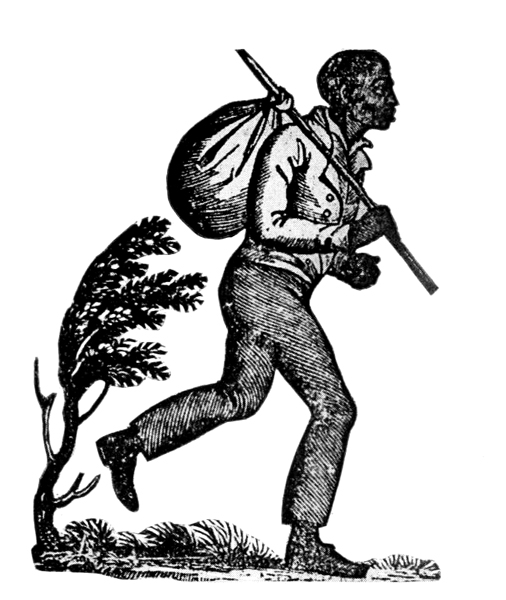
Jordan:  “I agree.  However, slavery ended in the US 150+ years ago.  That’s 6-7 generations.”

Matt:  “So in today’s rearview mirror, slavery is barely visible.  Slavery is unlike a highly visible semi-truck tailgating you.”

TurtleneckJordan:  “Now you understand the idea.  Look, I’m not saying forget slavery completely.  But to make any progress, you have to focus on current issues.  Issues that are either causing a problem or going to cause a problem.”

Matt:  “You mean like avoiding a major accident.”

Jordan:  “Yes.  Good example.  Have you ever been able to avoid what could have been a major accident?”

1990mazdamiata_01_700Matt:  “Several times.  For some reason, the one that comes to mind first was in my Miata.”

Jordan:  “I didn’t know you had a Miata.  I’ve got an original.  Bought it new.  And a very low VIN.  Anyway, tell me about the almost accident.”

Matt:  “On the Interstate, right lane and just coming up to pass an 18-wheeler.  A tire on the back of the trailer comes apart and I’m faced with a large, ugly tire alligatorgator bouncing around in my lane.”

Jordan:  “Mmm.  Not good.  If you don’t get out-of-the-way and run over the gator, the underside of your Miata is ripped out…and who knows what else happens.  What’d you do?”

Matt:  “Hard right into the breakdown lane.  I avoided the gator but made the mistake of cutting back too sharply.  I’m then faced with an equally difficult situation.  If I try to correct too quickly, I might flip the car and then I’m toast.”

Jordan:  “Or…?”

median-highway-barriers-form_031Matt:  “If I head across all the lanes as an escape, I’m facing a median blocked by a concrete barrier.  There’s no grassy bailout area.”

Jordan:  “Now what?”

Matt:  “Fortunately, I’d been checking the rearview mirror regularly so I knew I had about ¼ mile space before any other cars.  I decided to it the brakes hard and hopefully slide across the road but not hit the barrier.”

Jordan:  “Were you successful?”

u-turnMatt:  “Yes.  I ended up in the outside breakdown lane but facing the wrong way – looking into traffic.  After a few cars passed, shifted into first, did a U-turn and went on my way.”

Jordan:  “Need to change your underwear?” 

Matt:  “Almost.  Now that I’ve told my story, tell me what lessons are relevant for black community?  What are they supposed to learn from my experience about avoiding an accident?”

Jordan:  “My take is three key lessons.  Lesson #1 — conditions in life can change quickly and most of the time those changes are out of your control.”

Matt:  “Like having a tire come apart right in front of me.  Nothing I could do to prevent that occurrence.”

Jordan:  “Lesson #2 — even if the event is out of your control, the response to the event is under your control.  You had the option of staying the course and Whiningnot changing your behavior.  You could have whined and blamed the truck driver all day long for the tire coming apart.  But, blaming and whining would have accomplished nothing.  If you didn’t change your behavior…and change it quickly…the outcome was likely very serious damage to the car and possibly you.”

Matt:  “But the avoidance maneuver was not without risk.  There might have been who knows what in the breakdown lane and then I slid across the pavement.”

Jordan:  “True.  But the risks associated with doing something were far less than doing nothing.”

Matt:  “What’s the 3rd lesson?”

Jordan:  “Lesson #3 – understand the conditions around you before take action.  Connecting DotsMake sure you’re connecting the dots.  Because you were constantly gathering data as you drove, you knew certain options were available.  Even after you made a mistake and over-corrected, you knew you had the option of sliding across the pavement without getting broadsided.  Even though you had only a second or so to decide, you were able to consider multiple options because you were knowledgeable and prepared.”

Matt:  “I’m still a bit confused.   If I’m black, what should I be doing?  Obviously the question doesn’t apply to everyone in the black community, but if we go back to the rioters in Charlotte, which is where we started this conversation, what behavior change should I be considering?”

Jordan:  “First, spend your time looking ahead.  It’s OK to glance in the rearview mirror occasionally, but your life lies ahead of you, not behind you.  Second, mirror-clipart_jpgrecognize events will occur that are out of your control.  Blaming someone else for those events might make you feel good but blaming…and especially rioting and damaging other property…does not solve the problem.  Don’t be stupid and make matters worse.  Third, and this may be the most important, take a hard look in the mirror and acknowledge that you and you alone are responsible for how you react to those events.  You cannot blame anyone else for how you react.  Your reaction is your choice.”

(Continued)      

#219 Rioters in Charlotte. Drive Looking through the Windshield or the Rearview Mirror? (Part 1)

25 Sunday Sep 2016

Posted by Jordan Abel in Back Asswards Thinking, Causes of the Revolution, Societal Issues, Stupid Is as Stupid Does

≈ 4 Comments

First-time readers, this blog is set in the future (sometime after the year 2020).  Each entry assumes there has been a 5th revolution in the US — the Revenge Revolution.  More about Revenge Revolution and author, Entry #1.  List and general description of entries to date.  Annual assessment whether Revolution plausible.

Note: most characters appear in a number of entries, with many entries building on previous conversations.  Profile of characters.  You’ll catch on quickly.  Thanks for your time and interest…and comments.

Scene: Jordan’s office in Washington, DC.

Jordan (Answering phone):  “Jordan Abel.”

092615_2031_Characters11.pngMatt:  “Jordan, its Matt.  Got a few minutes?”

Jordan:  “You picked a good time to call.  What’s up?”

Matt:  “You know Greenie is writing a series on the causes of the Revenge Revolution.  She realized there was no article about the riots in Charlotte in 2016.  She asked me to do some research.”

TurtleneckJordan:  “And you want me to provide some insight, right?”

Matt:  “You’ve lived in Charlotte for a while and I thought you would be a good place to start.”

Jordan:  “OK, I’m not sure I can help but I’ll try.”

Matt:  “As I’ve looked back over the material, the riots seem to have been ignited by the police shooting a black man.”

Jordan:  “That seemed to be the trigger.  The police were serving an arrest warrant on someone else in the same apartment complex as the guy who was shot.”

Matt:  “What was this guy doing?”

car_sedan_blueJordan:  “As I understand, in his car in the parking lot and smoking some weed.  The police ask him to get out of the car.  When he gets out he’s got a gun in his hand.”

Matt:  “I read that members of the victim’s family claimed he was holding a book and not a gun.  Any evidence to support that claim?”

Jordan:  “None.  Even a phone video made by the guy’s wife has voices of the police telling the guy to drop the gun.”

Matt:  “Seems hard to confuse a book and a gun.”

Jordan:  “I agree.  Why the family claimed it was a book, I don’t know.”

Matt:  “Also, from what I read, the police asked the guy a number of time to drop the gun.”

PoliceJordan:  “On the family made phone video, the police ask the guy seven times, yes seven times, to drop the gun.  They might have asked even more.”

Matt:  “Did this guy ever fire at the police?”

Jordan:  “No evidence.  But if you ask someone with a gun to drop it at least seven times and he doesn’t, what are the police supposed to think?  Gee, let’s just wait ‘till this guy starts firing at near point-blank range, then we’ll fire back.  The police were in a very difficult situation and this guy was clearly an unknown commodity.”

Matt:  “Was all this info known to the public right away?  My research indicates info came out in dribs and drabs.”

facebook_circle_color-512Jordan:  “The dissemination of information turned out to be a real problem.  For example, right away the family made the claim the victim had a book in his hand and not a gun.  That info spread quickly on social media.  Unfortunately, for several days the police stayed quiet and never offered any hard evidence to the contrary, even though they had a video from a body cam.”   

Matt:  “Thus, without any evidence from the police, the black community…at least part of the black community…views the family’s version as baseline and believes the police shot a black man unnecessarily.  But, still, why the riots?”

Jordan:  “I’m the wrong guy to ask that question.”

clt-riotMatt:  “Maybe, but what do you think?  Why the riots?  And especially why did the rioters damage cars, buildings, and businesses in their own neighborhood?”

Jordan:  “It makes no sense.  To me the rioters in Charlotte are a classic case of ‘stupid is as stupid does.’  Looting businesses and burning buildings in your own neighborhood, which they did the first night, is as dumb an idea as I can think of.  If I’m a rioter I want to make sure the companies that employ my neighbors and provide services to the neighborhood are damaged.  Duh?”

Wrong WayMatt:  “Aren’t you being overly harsh?  Many blacks were very frustrated.”

Jordan:  “Look, a lot of people were frustrated.  Being frustrated doesn’t give you the right to break the law.  In case no one told the rioters, damaging property and looting are breaking the law.”

Matt:  “What should these people…and I suppose even more important…what should the black community have done?”

Jordan:  “Matt, I’ve used the analogy many times over the years, and it seems appropriate now as well.  Remarkably, some people just don’t seem to get the gist of it.  I’ll start by asking, ‘Do you drive a car?’”

Matt:  “Of course.  Why?”

Jordan:  “When you’re driving, do you look mostly out the windshield or the rearview mirror?”

CarMatt:  “That seems like a silly question.”

Jordan:  “Well, I’ll ask again.  When driving do you look out the windshield or the rearview mirror?”

Matt:  “The windshield, of course.  You can’t go very fast looking out the rearview mirror…and that would be dangerous besides.”

Jordan:  “Exactly.  If you go through life looking mostly through the rearview mirror, then you cannot go very fast and you’ll miss all the opportunities that lie ahead.”

Matt:  “Unless you look through the windshield, all those opportunities will pass you by.”

Jordan:  “Now you understand why I asked the question.”

Matt:  “What about addressing problems from the past?”

blameJordan:  “I’m not trying to discount the problems of the past.  Blaming someone else for those problems might make you feel good.  However, running around blaming someone else for problems does not provide a solution.  The solution…”

Matt:  “…lies with the individual and lies ahead.  To solve the problem you’ve got to start looking through the windshield and quit spending all your time looking through the rearview mirror.”

(Continued)

#218 Voting for the Devil You Know vs the Devil You Don’t Know

20 Tuesday Sep 2016

Posted by Jordan Abel in Causes of the Revolution, Societal Issues

≈ Leave a comment

First-time readers, normally this blog is set in the future (sometime after the year 2020).  Each entry assumes there has been a 5th revolution in the US — the Revenge Revolution.  More about Revenge Revolution and author, Entry #1.  List and general description of entries to date. 

Note: most characters appear in a number of entries, with many entries building on previous conversations.  Profile of characters.  You’ll catch on quickly.  Thanks for your time and interest…and comments.

Periodically I change formats for this blog, writing commentary rather than dialogue for the regular characters.  Since starting the blog, I’ve tried to keep the politics reasonably well-balanced without exagggerated bias left or right.  I consider this entry in the same vein, although I’m certain some will disagree.

With less than 50 days until the 2016 US presidential election, I thought this commentary was appropriate…and needed.  One thing for certain in this Woman-Pulling-Hair-outelection – voters are frustrated.  To some the frustration stems from a dislike of president Obama; to others the frustration stems from a lack of meaningful action by Congress; to others the frustration stems from just ‘government.’

To address these frustrations and help solve the problems, however one perceives the problems, voters have a choice between Trump/Pence or Clinton/Kaine.  A small percentage of voters will support a 3rd party – the Libertarian 092615_2031_Characters10.gifticket of Johnson/Weld or the Green Party.  Voting for a 3rd party is effectively not voting, although one can argue that with enough 3rd-party votes, the president-elect might consider some issues of the 3rd-party platform.  Enough 3rd-party votes might also influence the reformulation of the Republican Party, which is likely to occur, whether Trump wins or loses. 

For those considering the two major parties, many are selecting their candidate based on a false dilemma or false choice.  The false choice — if a voter dislikes Hillary Clinton, for example, then the voter thinks he or she must vote for Trump.  If the voter dislikes Trump, then Clinton must be the choice.      

Such a false choice is not necessary.  However, I’m not naïve enough to think that a large percentage of prospective voters study-mdactually studies the issues.  Based on my observations, the vast majority of voters, including seemingly well-educated voters, select a candidate based on an array of intangibles.  The selection is made without considering the impact of proposed policies and/or without considering meaningful past behavior of the candidate.  And, yes, everyone makes mistakes.  But one needs to consider the frequency of major mistakes and the context.

Even some who claim to study issues, intangibles override evidence.  Over voodoo-2015958coffee recently, a colleague replied to my presentation of well-documented economic data with the comment, “That’s your version of the facts, I have mine.”  No, my friend, you don’t have “your version” of facts; you have voodoo facts.  Facts don’t come in versions.  

So, what how should a non-policy, non-fact-based voter decide which presidential candidate to vote for?  My suggestion is simple.  Ask yourself the question, “Am I better off voting for the devil I know or voting for the devil I don’t know?”  For a voter wanting Confused Clip Artto change behavior in Washington, please remember that all legislation is initiated by Congress.  Legislation is not initiated by the president but by Congress.  While the president can modify some policies by issuing Executive Orders, the effect of many EO’s can be negated by Congress.

Where the president has more influence is in building and maintaining US relations with other countries…and some influence but not outright control over 122913_1337_14BringingU3.pngcertain aspects of the military.  So when you’re ready to cast your ballot, you should think about how well will the  candidate of my choice work with other countries, the military and Congress?  I understand you might not like either candidate – you’re not alone – but the choice of candidates is not a false choice.  You do not have to choose Trump because you dislike Clinton…or you do not have to choose Clinton because you dislike Trump.

The choice for president is real.  So even if you dislike Clinton…and I mean dislike intensely…do 092615_2031_Characters8.gifyou really want to vote for a candidate who has encouraged the assassination of the rival candidate?  Mr. Trump has twice encouraged supporters to do so.  And, no, he was not being facetious when making those comments.  Do you really want someone as president who admires a strong-arm dictator?  Putin the dictator, who Trump so admires, in fact, assassinates the opposition.  

The situations encountered by the president should not be viewed as a zero-sum game.  Developing economic and fiscal policy, working with members of Congress, negotiating trade deals, strengthening international relations are not zero-sum games.  Building coalitions within the US and strengthening relations with other countries are not the same as negotiating tax abatements for hotels in Manhattan. 

The president needs to make certain the primary players feel as if the negotiations were fair and each  came out somewhat ahead.  Negotiations are not just about one side, as seems to be the mantra of Mr. Trump.

Do you want someone as president who has bragged repeatedly about not Income Taxpaying taxes and who refuses to release tax returns?  What is there to hide in the tax returns?  And, no the IRS does not care if tax returns are released.  If you want that kind of person as president, and you’re not part of the 1.0%, then plan on getting the shaft.  If you want that kind of president, then you also need to explain to your children and/or grandchildren why you voted for someone with such obvious irrational behavior.  Explain to them why you took the risk of increasing the likelihood of an even more intense and prolonged Revenge Revolution. 

Now you ask, “Is this guy smoking something or is such a revolution possible?”  I american-revolution-728714started publishing this blog in 2013.  The original idea for a 5th US revolution stemmed from some research I did in 2009.   Since originally developing the premise about a 5th revolution, the negative attitude and polarization of the electorate have intensified.  Unfortunately, I think the Revenge Revolution is inevitable no matter which candidate wins in 2016.  However, based on my observations and analysis, the severity of the Revenge Revolution will be far less if Hillary Clinton rather than Donald Trump becomes president.

Why will the Revenge Revolution be less intense under Clinton?  Because Trump has demonstrated repeatedly erratic, irrational behavior…and encouraged violence.  Just listen to his words…carefully listen… if you don’t believe me.  To me electing Trump is not worth the risk.  While one might not like capturethe options of either Clinton or Trump, voting for the devil you know seems more rational than the risk and consequences of voting for the devil you don’t know…and, don’t kid yourself,  you really don’t know Trump.   



#217 Trade Agreements Cost Jobs! But Why? (Part 4 of 4)

11 Sunday Sep 2016

Posted by Jordan Abel in Back Asswards Thinking, Economics

≈ Leave a comment

First-time readers, this blog is set in the future (sometime after the year 2020).  Each entry assumes there has been a 5th revolution in the US — the Revenge Revolution.  More about Revenge Revolution and author, Entry #1.  List and general description of entries to date.  Annual assessment whether Revolution plausible.

Note: most characters appear in a number of entries, with many entries building on previous conversations.  Profile of characters.  You’ll catch on quickly.  Thanks for your time and interest…and comments.

Scene: Jordan’s Office, on phone with nephew of long-time friend.  Nephew is taking advanced economics course and been assigned paper to determine if  trade agreements cost US workers jobs.  Conversation begins Entry #214.

Jordan:  “Billy, you asked if automation might be costing jobs in the service industry.  What do you think?”

Billy:  “I’ve never really thought about it.  All the hype in the 2016 presidential election student clip_art_free_-_school_clip_art_free_20121124_1951589029was on manufacturing jobs.  I don’t remember much talk at all about service jobs.”

Jordan:  “That’s because many jobs in the service are not affected by trade agreements.  As we talked about, if you want to stay in a hotel in Manhattan, a hotel in Cancun is of no value, no matter how inexpensive it is.”

Billy:  “Where should we start?”

Jordan:  “We’ll look at some general categories of service sector jobs.  Let’s start with bofa-logobanking.”

Billy:  “As best I can tell, automation and the internet have been responsible for a major loss in banking jobs.  You know, the only time I’ve been in a bank is with my grandparents.  Other than needing some cash now and then, which I can actually get at the grocery store, why do I need a bank?  If people need a bank, put it in the grocery store.”

Jordan:  “What about safe-deposit boxes for valuables – jewelry, old coins, pictures, important papers?  That kind of stuff.”

multi-story_self_storage_buildingBilly:  “People store furniture and other items in self-storage units.  Why couldn’t you have a self-storage unit of safe-deposit boxes?  Most of those self-storage places are open 24×7…and banks sure aren’t.  You could make the place as secure as a bank.”

Jordan:  “What about the food service industry?  We know most jobs are unaffected by trade agreements…but what about automation?”

panerakiosksBilly:  “Lots of places…at least the ones I go to…have an iPad-like device on the table for ordering.  In most places, people still bring your food but there aren’t many servers around.”

Jordan:  “What about automation in the kitchen?”

Billy:  “I see more automation all the time, especially at fast food places.  And you know what?  I think the quality is more consistent and overall, the food tastes better.”

fedex_logoJordan:  “What about delivery services – pizza, FedEx, UPS, even the Post Office?  How much has automation affected employment?”

Billy:  “From what I understand, a lot.  Most of the automation is in areas we don’t see – back office stuff.  Also, a lot of drivers are being eliminated by self-driving vehicles.  Again, those are in areas we don’t see – one warehouse to another.  The deliveries in the neighbor are still by humans…but who knows how long that will last.”

TurtleneckJordan:  “Two more categories and then we’ll call it a wrap.”

Billy:  “OK, you’ve really got me thinking.”

Jordan:  “What about skilled trades – carpenters, plumbers, electricians, brick layers?”

Billy:  “Did you know another uncle has a construction company?  Mostly new residential.”

Jordan:  “No, tell me more.”

construction_clipart_houseBilly:  “When I was 7 or 8 years old, he used to take me to the job sites to watch homes being built.  Lots of people hammering, sawing, installing stuff.  People everywhere.”

Jordan:  “You still go?”

Billy:  “I did this past summer and wow, what a change.”

Jordan:  “What’s so different?”

Billy:  “Most all the heavy-duty construction is done in a factory.  The job site is more like assembling Lego’s.  He’s even got robot installing lots of bricks.”

Jordan:  “Where are all the skilled trades?”

modular-home-assembly-and-construction-on-siteBilly:  “Some skilled trades are in the factory to make sure everything installed correctly and a few at the job site for final hook-up.  But a lot of skilled trades have been replaced by machines at the factory and workers with fewer skills.”

Jordan:  “But none of the people replaced by robots or constructing in a factory were the result of trade agreements, right?”

Billy:  “All affected by automation.  What’s the final category?”

Jordan:  “There are many more industry categories we could address – medicine, legal, auto technicians, for example – but I want you to think about the effect of trade agreements on software development.”

brick-wall-square-hiBilly:  “Well, it’s really hard to put a wall around electrons.  I suppose you could put some sort of tariff on software development.”

Jordan:  “Any ideas how?”

Billy:  “Not really.  Companies could develop software and then put on servers in another country.  People in the US could easily access software and their files though the cloud.  I just don’t know.”

Jordan:  “Billy, what’s your conclusion now?  Do trade agreements affect employment in the US?”

Billy:  “Some.  The real culprit seems to be innovation.  And innovation is going to occur with or without a trade agreement.”

Jordan:  “What about trying to bring jobs like it used to be in America?”

Billy:  “You mean like the Trump slogan from 2016, ‘Make America Great Again’?”

Jordan:  “Possible or not?”

running_stick_man_clip_art_22430Billy:  “One thing is for certain.  If you try to recreate a by-gone era, it’s guaranteed the rest of the world will run past and the US will fall behind.”

Jordan:  “Now you have the foundation for your paper.  Countries should try to make sure the playing field is reasonably level for any trade agreement.  However…”

Billy:  “…thinking one can recreate the past and avoid being realistic about the impact of technology on jobs is fool hearty.  Right?”

(End of segment on trade agreements.  I know there’s more to cover but enough for now.)

#216 Trade Agreements Cost Jobs! But Why? (Part 3)

04 Sunday Sep 2016

Posted by Jordan Abel in Causes of the Revolution, Corporate Policy, Economics, Gov't Policy

≈ Leave a comment

First-time readers, this blog is set in the future (sometime after the year 2020).  Each entry assumes there has been a 5th revolution in the US — the Revenge Revolution.  More about Revenge Revolution and author, Entry #1.  List and general description of entries to date.  Annual assessment whether Revolution plausible.

Note: most characters appear in a number of entries, with many entries building on previous conversations.  Profile of characters.  You’ll catch on quickly.  Thanks for your time and interest…and comments.

Scene: Jordan’s Office, on phone with nephew of long-time friend.  Nephew is taking advanced economics course and been assigned paper to determine if  trade agreements cost US workers jobs.  Conversation begins Entry #214.

Jordan:  “Billy, I’ve got my coffee refilled.  Back to the question, ‘Do trade agreements cause job losses for US workers?’  For now focus on manufacturing jobs.”

student clip_art_free_-_school_clip_art_free_20121124_1951589029Billy:  “I suppose it depends on what expertise each country has.”

Jordan:  “Give me an example.”

Billy:  “If a country has much lower labor cost, then high labor-content jobs might move to the new country…assuming the skills were there.”

Jordan:  “OK, I’ll buy that argument.  What about jobs where labor content is low?”

Billy:  “Then there’s no reason any jobs should be lost.  Why would you move to a different country if labor content in the US plant is low?  That makes no sense.”

TurtleneckJordan:  “What about moving jobs if the labor cost in the new country is lower but the delivery times are longer and other logistics issues are more complicated?”

Billy:  “That might make sense.  If I were the US company, I’d have to decide if responding to customer orders more quickly was more important than savings a few bucks.  I suppose if you’re making Popsicle sticks that are all the same, cost per stick becomes more important.  However, I think for many products turnaround time and responding the customer requests are more important than a few dollars saved.”

Jordan:  “You mean if you were selling products like clothing, furniture, cars?  Stuff like that?”

t-shirtBilly:  “For clothing it’s probably OK to source overseas generic items like T-shirts, underwear and some other articles that rarely change – maybe some standard jeans, for example.  But for products that are more subject to fashion changes, I’d want to have assembly as close to the marketplace as I could.”

Jordan:  “What about automotive products — cars and trucks?”

Billy:  “If I ran an auto company, I’d want at least some cars and trucks assembled in the US.”

Jordan:  “Seems as if the most of the foreign auto companies agree with you.”

Billy:  “Never thought about how many foreign auto companies have assembly Honda Logo 1plants in the US.  Let’s see, Toyota, Nissan, Honda, BMW, and Hyundai…even Mercedes.    I’d also want key components assembled in the US.  Look what happened to the Japanese auto companies after the earthquake and tsunami in Japan in what 2011 or 2012.  The Japanese auto companies had to cut way back on production until they could find another supplier before resuming production.  Then they had to air freight some of the parts to keep the assembly lines operating.  Talk about expensive.”

Jordan:  “What else do you think is different about auto plants…in fact most manufacturing plants…than 25-30 years ago, and especially 40-50 years ago?”

Billy:  “Not sure what you mean.  I wasn’t around then.”

Selectric_IIJordan:  “Here’s another way to think about it.  Do you know how to use a typewriter?”

Billy:  “I know how to type…but you know what?  I don’t think I’ve ever seen a typewriter, other than photographs in books and in old movies.”

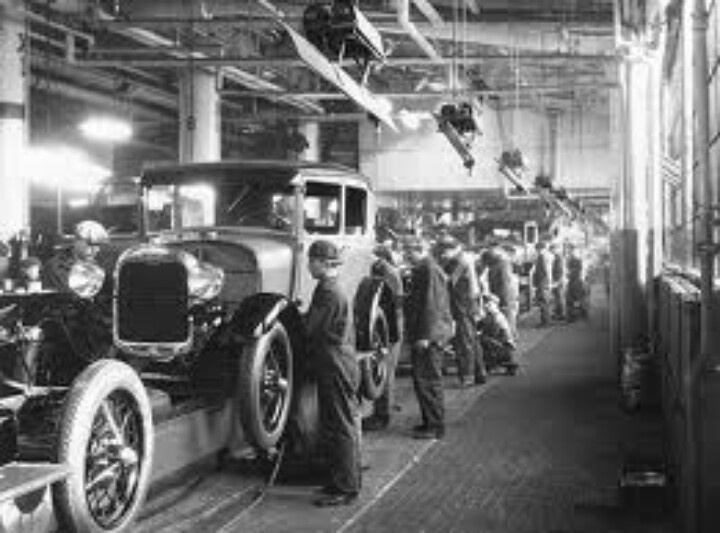
Jordan:  “Ever seen a picture of an old auto assembly plant?”

Assembly Line 3Billy:  “Yeah, lots of people working on an assembly line.”

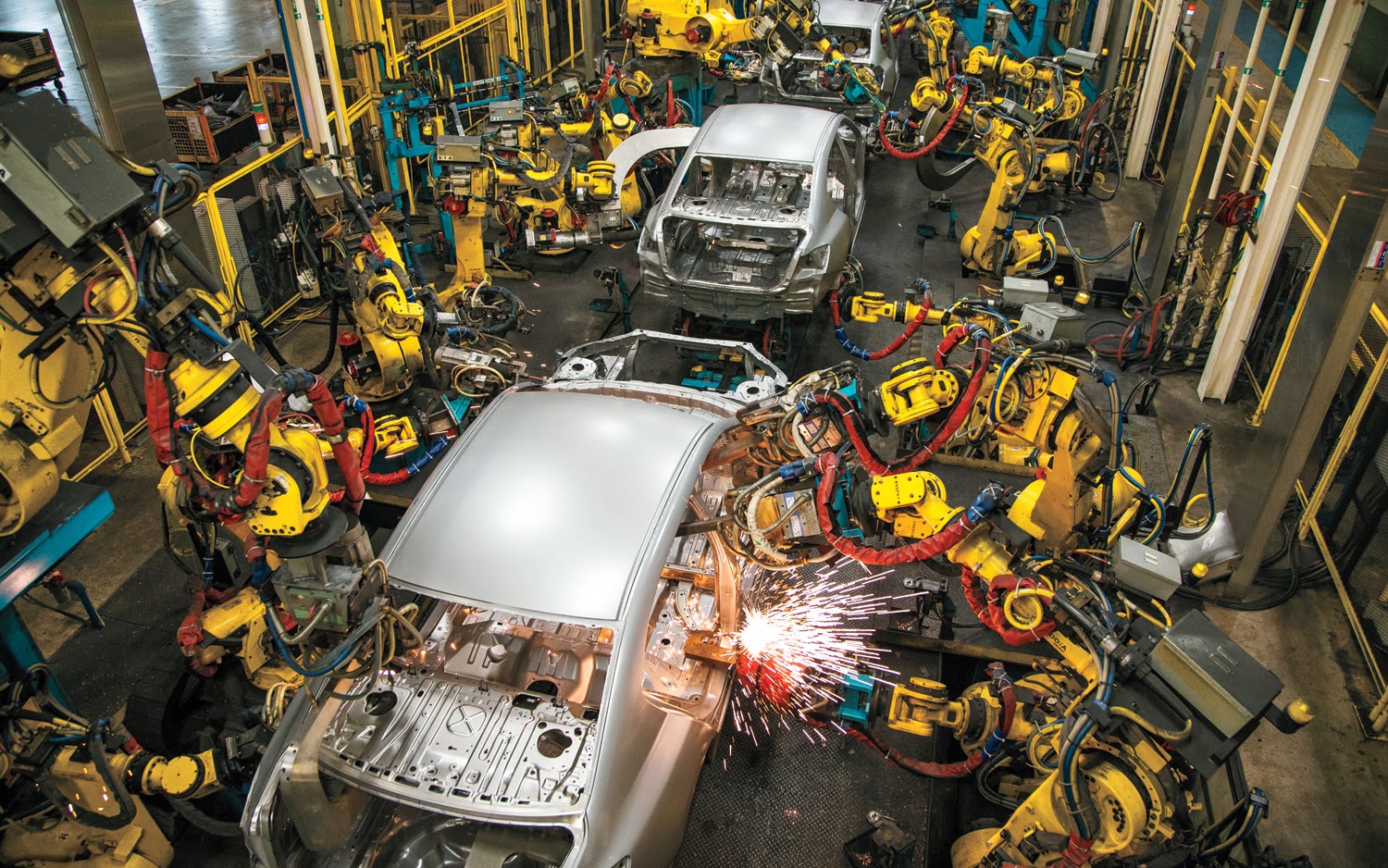
Jordan:  “Have you seen a picture of a modern auto assembly plant?”

Billy:  “Seems as if no one is around.  Most everything is assembled by a robot.  The few people who are around seem to be watching the robots.”

Honda-of-America-Manufacturing-assembly-lineJordan:  “Now do you understand my question about what’s different from 25-30 years ago?”

Billy:  “You mean much of the labor content in putting together cars and trucks has disappeared.”

Jordan:  “With that in mind, now what do you think about the argument by some politicians that countries with which we have trade agreements have stolen many US jobs?”

Billy:  “The jobs in automotive…and probably most manufacturing jobs…were not lost to Mexico or China or wherever…but lost to automation.”

Jordan:  “Claiming jobs were lost because of trade agreements makes for good donald-trump10-second sound bites.  And, yes, some jobs were lost.  But the decline in manufacturing jobs and the decline in jobs requiring say high-school or some college have been lost to automation, not trade agreements.”   

Billy:  “My paper needs to explain that while some jobs in certain industries can be lost due to trade agreements, many of the job losses, in fact possibly most of the job losses in manufacturing, are due to adaptation and implementation of technology.”

Jordan:  “So far we’ve talked about manufacturing jobs.  What about the service sector?”

Billy:  “You know, I don’t think I’ve heard a politician talk about whether trade 75% Pie chartagreements affect jobs in the service sector.  From what I’ve studied so far in economics, the service section is a much greater percentage of GDP than manufacturing.  In terms of employment service sector accounts for about 70.0% of all jobs.”

Jordan:  “Good guess.  It’s a bit higher — 75.0%+.”

Billy:  “Then why don’t politicians talk about the service sector?  Why just manufacturing jobs when they talk trade agreements?”

Jordan:  “Because many service-sector jobs…not all but many…cannot be exported.”

Billy:  “So politicians focus on the sound bite, not the substance.”

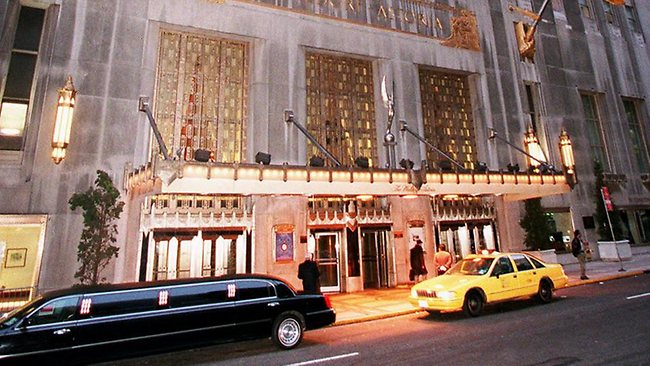
Jordan:  “I’m not discounting the importance of manufacturing jobs.  I’m a big 352596-waldorf-astoriabeliever of a very strong manufacturing sector.  But the fact is, service jobs dominate the economy.  If you want to stay in a hotel in Manhattan, you cannot export your stay to a hotel in Cancun.  The hotel, staff, food service all have to be in Manhattan.”

Billy:  “What about the effect of automation on service sector jobs, like what happened to jobs in manufacturing?”

Jordan:  “Great question, Billy.  We’ll talk about that next.  I think many people are in for a big surprise.”

(Continued)     

#215 Trade Agreements Cost Jobs! But Why? (Part 2)

27 Saturday Aug 2016

Posted by Jordan Abel in Back Asswards Thinking, Economics, Gov't Policy

≈ Leave a comment

First-time readers, this blog is set in the future (sometime after the year 2020).  Each entry assumes there has been a 5th revolution in the US — the Revenge Revolution.  More about Revenge Revolution and author, Entry #1.  List and general description of entries to date.  Annual assessment whether Revolution plausible.

Note: most characters appear in a number of entries, with many entries building on previous conversations.  Profile of characters.  You’ll catch on quickly.  Thanks for your time and interest…and comments.

Scene: Jordan’s Office, on phone with nephew of long-time friend.  Nephew is taking advanced economics course and been assigned paper to determine if  trade agreements cost US workers jobs.  Conversation begins Entry #214.

092615_2031_Characters7.gifGelly: (answering in-bound call) “Mr. Abel’s office.  May I help you?”

Caller:  “My name is Billy Belleville.  I believe Mr. Abel talked to my aunt.  I also left a voice mail yesterday that I would call back.”

Gelly:  “Yes, Mr. Belleville, we’ve been expecting your call.  And, FYI, please call Mr. Abel, ‘Jordan.’  I know you’ve had good upbringing, but this is a business call.  I’ll patch you through.”

student clip_art_free_-_school_clip_art_free_20121124_1951589029Billy:  “Thanks.”

Gelly:  “Jordan, Billy Belleville is on line #2.”

Jordan:  “Billy, thanks for calling again.  My apologies for having to leave a voice mail yesterday.  Gelly and I were both out of the office.  How may I help you?”

Billy:  “Did my aunt tell you about my assignment?”

Jordan:  “I have some idea but why don’t you assume I know nothing and start over.”

professor4Billy:  “I’m taking an advanced economics class this semester.  A major portion of the grade is a paper to determine if trade agreements help, hurt or have minimal impact on US employment.”

Jordan:  “Any other instructions?”

Billy:  “Not about the problem.”

Jordan:  “Interesting topic.  I like that your professor kept the instructions vague.  Welcome to the real world.”

Billy:  “I was hoping you could give me some guidance.”

TurtleneckJordan:  “Glad to try.  My first question is, ‘What do you think the impact of trade agreements is on US employment – positive, negative or neutral?’”

Billy:  “I really don’t know.  There seems to be a significant difference of opinion in Washington.”

Jordan:  “What have you heard?”

Billy:  “I remember the 2016 presidential election.  Donald Trump kept saying that trade agreements were bad for US workers.  He also said if elected, he donald-trumpwould tear up the agreements and renegotiate them in favor of the US.”

Jordan:  “So based on Trump logic, you’d conclude that trade agreements are bad, right?”

Billy:  “Yes, but that makes no sense.  I mean, why would the US enter into all these agreements if the agreements are always bad?”

Jordan:  “Welcome to Washington hyperbole.  Just for fun let’s discount the figure-thinking-hiDonald’s logic and assume for a minute that maybe not all trade agreements are bad.  What do you think trade agreements are supposed to do?”

Billy:  “Trade agreements should make it easier for two countries, or even a block or countries, to trade with one another.”

Jordan:  “Good fundamental answer.  I would add that ideally the countries involved in the trade agreement have different skill sets or capabilities.”

Billy:  “So, if we take the US, since we’re a very efficient producer of many agricultural products – corn, soybeans and wheat, for example – the US should seek out countries that might need these products but have some products the US doesn’t produce or where the US cost is too high.  Is that right?”

Jordan:  “Yes.  Now let’s take a trade agreement that is in place and see what naftaeach country could or should bring to the table.  Let’s take NAFTA – the North American Free Trade Agreement that includes Canada, the United States and Mexico.  Let’s start with Canada – what does it bring to the table?”

Billy:  “Agriculture, especially wheat, fish products, manufacturing and lots of minerals and timber products.”

Jordan:  “What about the US?”

Billy:  “Agriculture – as I said corn, wheat, soybeans…and I think even rice.  Huge manufacturing base, although a lot fewer people today that say 40-50 years ago.  Lots of oil and gas.  Many minerals – although not as much as Canada, and software, if that counts.”

Jordan:  “Software counts.  What about Mexico?”

Billy:  “Maybe not fair, but I think Mexico as very limited manufacturing, except Mexican Flagon the Rio Grande border, not much agriculture for export.  I guess mostly tourist locations.  Lots of lower-cost labor.”

Jordan:  “What you described for Mexico is a huge untapped market for goods produced in the US and Canada.”

Billy:  “But don’t the Mexican people need more income to buy the goods.  Don’t they need higher-paying jobs?  They just can’t go buy on credit if they don’t have money to pay it back.”

Jordan:  “Where are those jobs going to come from?”

Billy:  “According to what Trump kept saying, the jobs were coming from US workers.  If not US workers – or Canadian workers — where do they come from?”

Jordan:  “The better question is, ‘How can trade agreements create jobs in both countries and…notice I said both countries.  Or for NAFTA, create jobs in all three countries’?”

Billy:  “I understand your question.  For jobs to be created in one country doesn’t that mean jobs are lost in the other country, or countries.  Is that right?”

Jordan:  “Trade between countries is not a zero-sum game.  Trade agreements should create job opportunities.”

RantBilly:  “Then why did Trump and some other politicians keep ranting that trade agreements are bad for the US?”

Jordan:  “I want to add one more issue to think about…and then we’re going to take a short break.  Why are politicians who oppose trade agreements with other countries not opposed to one state in the US recruiting companies from another state?  Such recruiting, especially by southern states, includes huge taxpayer-funded incentives.  Why should North Carolina use taxpayer money to recruit companies located in say Buffalo, Cleveland, Detroit, New York City?  Allowing states to use taxpayer funds to recruit companies in other states is worse that zero-sum, it’s negative.  Think about that issue over the break.”

(Continued)      

#214 Trade Agreements Cost Jobs! But Why? (Part 1)

21 Sunday Aug 2016

Posted by Jordan Abel in Back Asswards Thinking, Causes of the Revolution, Economics, Gov't Policy, Societal Issues

≈ 3 Comments

First-time readers, this blog is set in the future (sometime after the year 2020).  Each entry assumes there has been a 5th revolution in the US — the Revenge Revolution.  More about Revenge Revolution and author, Entry #1.  List and general description of entries to date.  Annual assessment whether Revolution plausible.

Note: most characters appear in a number of entries, with many entries building on previous conversations.  Profile of characters.  You’ll catch on quickly.  Thanks for your time and interest…and comments.

Scene: Jordan’s Washington, DC Office

092615_2031_Characters7.gifGelly:  “Jordan, Ms is on the phone and would like to talk to you.”

Jordan:  “Really?  What’s she want to talk what?”

Gelly:  “Some question about trade agreements and the impact on American jobs.”

Jordan:  “OK, thanks.”  (Jordan picks up phone.)  “Mr. Abel here.  How may I help you?”

Womens symbolMs:  “Cut the formality, Jordan.  How are you?  Been a while since we chatted.” 

Jordan:  “Agreed it has been too long.  I’m doing OK.  More importantly, how you doing?  You survive the floods in Louisiana?”

Ms:  “Floods were south of here.  I’ve got a lot of friends in that area.  Most of them have lived down there for a long time and never experienced a flood.  But not this time.  Really bad damage.  Awful.”

TurtleneckJordan:  “Sorry to hear about your friends.  But are you OK?”

Ms:  “Just had another check-up and everything looks fine…thankfully.”

Jordan:  “Great.  Now, really why the call?”

Ms:  “My nephew is in college and taking some advanced economics course.  On the first day the professor assigned everyone a paper to analyze and decide whether US trade agreements are good, bad or neutral for US employment.”

DrakeJordan:  “And he thought you might have a contact that could help him?”

Ms:  “He knew for sure that I couldn’t help him.  What does a motorcycle riding aunt know about trade agreements and employment?”

Jordan:  “You never know.”

Ms:  “So what do I tell him?  Can you help?”

Jordan:  “I’ll try.  What’s his name?”

Ms:  “Beaufort Belleville.”

student clip_art_free_-_school_clip_art_free_20121124_1951589029Jordan:  “You kidding me?  Beaufort Belleville.  What kind of name is that?”

Ms:  “You know some old-line southern families use surnames of close relatives for first names of children.  Anyway, he goes by Billy, so please don’t call him Beaufort.”

Jordan:  “Glad to talk to Billy.  Have him call me Wednesday or Thursday this week, if possible.  I’ll give Gelly a heads up about the call.”

Ms:  “Thanks Jordan.  He’ll appreciate it…and I will to.”

Jordan:  “Let’s have dinner next time you’re at the farm up here or when I’m down your way, OK?”

Ms:   “OK, but remember it’s your turn to buy.”

Jordan:  “Alright, I’ll buy.  Take care.”   

#213 Republican Leaders Have No Balls…and Two Strikes

14 Sunday Aug 2016

Posted by Jordan Abel in Causes of the Revolution, Societal Issues

≈ Leave a comment

First-time readers, this blog is set in the future (sometime after the year 2020).  Each entry assumes there has been a 5th revolution in the US — the Revenge Revolution.  More about Revenge Revolution and author, Entry #1.  List and general description of entries to date.  Annual assessment whether Revolution plausible.

Note: most characters appear in a number of entries, with many entries building on previous conversations.  Profile of characters.  You’ll catch on quickly.  Thanks for your time and interest…and comments.

Scene: Jordan’s office in Washington, DC

Gelly:  “Jordan, I was cleaning out a filing cabinet and I found this op-ed piece 092615_2031_Characters7.gifyou wrote in 2016.  This get published?”

Jordan:  “Yes, but the article never generated as much response as I was hoping for.”

Gelly:  “Why not?”

Jordan:  “The publication date was in August 2016.  At the time Trump was making so many outlandish statements so often than the press Trumphad a hard time keeping up.  There was little time to reflect on the content of the article – what Republican leaders should be doing to counter the Donald.”

Gelly:  “So the real meat of this article was lost in all the noise, right?”

Jordan:  “A lot of people were thinking the same thing that I wrote, especially some high-profile people in the Republican Party…and certainly some big donors.  But not much was really said by leadership of the Republicans Party.”

Gelly:  “Some Republicans seemed to take a stand against Trump – like the 50 or so national security people.  And like the senator from Maine…”

TurtleneckJordan:  “…you mean Susan Collins?”

Gelly:  “…that’s the one.  The security group and the senator seemed to distance themselves from Trump.”

Jordan:  “I think the security group did a good job in making their position clear.  Others were less harsh and frankly less effective in their statements.”

Gelly:  “Is that why you chose the title for the article?”

CongressJordan:  “Yep.  Think about it.  The Senate Majority Leader and the Speaker of the House…combined they may have more influence than POTUS on what happens to the American people day to day…and neither of them would openly denounce Trump.  What kind of leadership is that?”

Gelly:  “Weren’t they just trying to protect their political careers?”

Jordan:  “Gelly, you just nailed one of the key reasons why I think Republican leaders had no balls…and two strikes…in the 2016 presidential election.”

Gelly:  “OK, what’d I nail?”

parrothead_tnsJordan:  “The term ‘political careers.’  Voters, most voters anyway, elect officials, Republicans and Democrats, to do what’s right for the country and right for the constituents.”

Gelly:  “And not worry about their political career?  But…”

Jordan:  “Your term ‘but’ is right on.  Too many politicians, especially Republicans in 2016, were looking out for their own butt.”

Gelly:  “Were you saying that in 2016 Republican leaders covered their butt and had no balls?  That’s not a very nice thing to say, Jordan.”

Jordan:  “Whether nice or not doesn’t matter.  If you’re to be an effective leader, then you have to provide an ethical path for others to follow.  You can’t just hide and hope the problem goes away.”

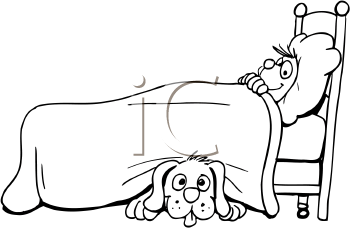
Dog under BedGelly:  “Hiding reminds me of our dog when I was a kid.  During a thunderstorm she would crawl underneath the bed, hiding from the storm.”

Jordan:  “You dog story is a good one.  When I wrote the article, Mitch McConnell and Paul Ryan had, in effect, crawled underneath the bed and were hiding from the Trump thunderstorm.”

Gelly:  “You think if McConnell and Ryan had taken a more of a leadership role re Trump, the outcome of the election would have changed?”

Humpty DumptyJordan:  “The outcome would have been the same.  But the Republican Party would not have been so torn apart.  After the election, the Republican Party looked more like Humpty Dumpty after the great fall.  And the Party still hasn’t recovered fully.”

Gelly:  “When you wrote the article do you think there was still time for McConnell and Ryan to demonstrate leadership instead of acting like a scared dog?”

Baseball BatterJordan:  “There was time.  Remember it was mid-August 2016.  There were 2½ months until the election.  The amount of time left to the election is why I added ‘…two strikes’ to the title of the article.”

Gelly:  “So like baseball, even with two strikes, the batter can get a home run and win the game.  Right?”

Jordan:  “Right you are.  Now, let’s go get a coffee.”

#212 The Blame Game: Beginning the Reversal? Rock Man Teams with O’Reilly (Part 4 of 4)

07 Sunday Aug 2016

Posted by Jordan Abel in Possible Solutions, Societal Issues

≈ Leave a comment

First-time readers, this blog is set in the future (sometime after the year 2020).  Each entry assumes there has been a 5th revolution in the US — the Revenge Revolution.  More about Revenge Revolution and author, Entry #1.  List and general description of entries to date.  Annual assessment whether Revolution plausible.

Note: most characters appear in a number of entries, with many entries building on previous conversations.  Profile of characters.  You’ll catch on quickly.  Thanks for your time and interest…and comments.

Scene: Bill O’Reilly Show Fox Network  (Conversation for this section begins Entry #209)       

O’Reilly:  “We have a special program this evening.  The OReilly Show Logoconversation is about how to begin addressing and ideally how to start solving some ongoing issues facing the black community.  My guest is someone with an incredibly interesting background…and even better he’s not a politician or a nationally known figure – at least not yet.  (O’Reilly then describes Rock Man’s background and accomplishments).  Welcome to the show Rock Man.  Thanks for coming on.”

Rock Man:  “You’re welcome, Bill.  And thanks for the nice introduction.”

O’Reilly:  “Don’t thank me.  I just summarized what you’ve accomplished…and it’s very impressive.”

092615_2031_Characters5.pngRock Man:  “Appreciate it.”

O’Reilly:  “Before we go any farther, I want to emphasize I had to twist Rock Man’s arm a bit to come on the show.”

Rock Man (laughing):  “Twist only a bit?  You almost broke my arm.”

O’Reilly:  “OK.  I met Rock Man through a mutual acquaintance.  Rock Man is here representing no one but himself – no organization, no political group and no agenda other than wanting to help the black community.  You want to add anything to that Rock Man?”

Rock Man:  “Just that I found your piece about issues facing the black community very thought provoking…and disturbing.”

O’Reilly:  “Why disturbing?”

Rock Man:  “What was disturbing is not what you said.  I can get past some of your editorializing – I know that comes with the territory.  But what caused me pause was the observation that the black community, the politicians, even the general public seem to avoid talking about many of the points you raised.  I hear lots of blaming but no real discussion about the cause.”

Bill-O’ReillyO’Reilly:  “For those who haven’t seen the piece, which I first published in 2016, the main issue was a question about how the following behaviors affected the economic and social well-being of the black community.  General categories were: (i) high percentage of births outside marriage; (ii) seeming lack of emphasis on education; (iii) use of illicit drugs; (iv) the effect of the media glamorizing certain negative behavior.”

Rock Man:  “I agree these items are linked and contribute to the problem.  And, yes, I also agree that no one outside the black community is forcing this kind of behavior.  The black community cannot blame whites, Hispanics, politicians, the media or even slavery for their behavior.”

O’Reilly:  “Folks, Rock Man’s comments are why I thought this conversation would be productive.  So what can we do to start turning this ship around?”

blameRock Man:  “The first step is the black community needs to look in the mirror and quit pointing fingers and blaming others.  Blaming others might make one feel better but it does not lead to any improvement.”

O’Reilly:  “Then what?”

Rock Man:  “This might upset a lot of black politicians and so-called leaders but I think we…”

O’Reilly:  “…we meaning the black community?”

Rock Man:  “Yes.  The black community needs to ask other ethnic groups how they succeeded.”

O’Reilly:  “Ask any group in particular?”

Rock Man:  “If one looks back in US history, virtually all ethnic groups suffered significant discrimination for some period.”

No Irish Need ApplyO’Reilly:  “My grandfather had a sign in his office that read ‘Help Wanted.  No Irish Need Apply.”

Rock Man:  “I’ve never seen that sign but its great example.  So maybe the black community sits down with some Irish – like the O’Reilly clan – and tries to understand how the Irish transitioned from blatant discrimination to having a president elected and having someone become a kingpin at the Fox Network.”

O’Reilly (smiling):  “Not sure about a kingpin part.  But thanks.  Now, what about other ethnic groups?”

Rock Man:  “We could learn a lot from many groups – Jews, many Asian cultures, every major group that has immigrated.”

O’Reilly:  “You bring up an interesting point.  Many blacks obviously look markedly different from whites.  There’s no confusion about your heritage.  Many Asians are also easily identified.  Looking different from most everyone else is a cause of some discrimination, like it or not.”

Rock Man:  “I agree looking different is likely always going to cause some discomfort – for both sides.  But if appearance were an overriding issue, you and I wouldn’t be talking.”

O’Reilly:  “So you think there are issues more fundamental than appearance, right?”

Plan Goal StrategyRock Man:  “Your list from 2016 is a great start.  We should ask other ethnic groups what plans, goals and strategies they developed to hold families together, encourage education…really their ideas to make life better for future generations.”

O’Reilly:  “You going to lead that effort, Rock Man?”

Rock Man:  “How can I lead that effort?  You said earlier that I’m no high-profile entertainer, no major sports figure, and certainly no politician.”

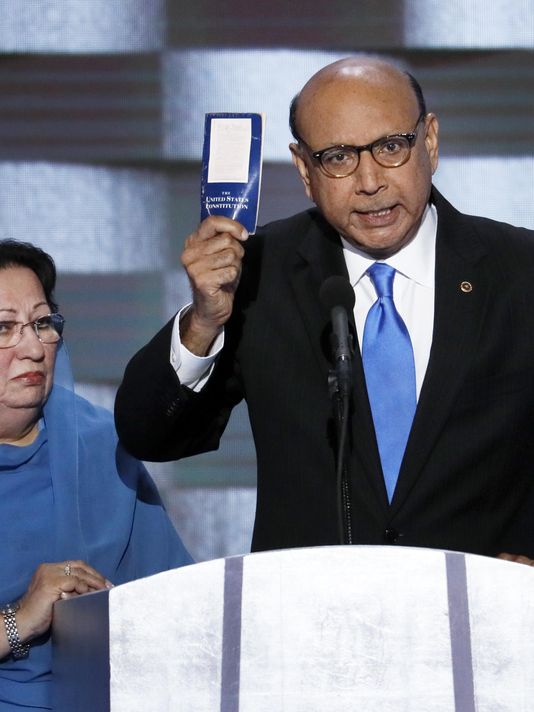
O’Reilly:  “I’ll tell you how.  Remember the 2016 Democratic Convention?  One of the Kahn at DNCmost memorable moments was the speech by Khizr Kahn talking about loss of his son, an officer in the US military, and then Mr. Kahn’s offer to lend Donald Trump a copy of his constitution.”

Rock Man:  “That was a great moment.”

O’Reilly:  “Mr. Kahn started an important dialogue that changed many people’s mind about the ‘credibility’ of the Donald.  You might become the new Mr. Kahn for changing discourse in the black community.”

Rock Man:  “Thanks but where am I going to get that kind of audience?”

O’Reilly:  “You can start right here.  I realize there aren’t many black viewers for this show.  Maybe we can change that…at least when you’re on.”

Rock Man:  “Are you inviting me back?”

O’Reilly:  “Rock Man, this country has a problem – an underperforming black community.  And all of us need to help with a turnaround.”

Rock Man:  “Help, yes, but the black community needs to take the lead.  You serious about using this show?”

agreement-clipart-business_handshakeO’Reilly:  “Yes, dead serious.  While you and I are opposite politically, we both want to help the black community improve.  As part of that effort you can a regular on this show.  Have we got a deal?”

Rock Man:  “Bill, you’re a persuasive guy.  We’ve got a deal.”

#211 The Blame Game – Starting to Bridge the Gap (Part 3)

31 Sunday Jul 2016

Posted by Jordan Abel in Education Issues, Possible Solutions, Societal Issues

≈ 1 Comment

First-time readers, this blog is set in the future (sometime after the year 2020).  Each entry assumes there has been a 5th revolution in the US — the Revenge Revolution.  More about Revenge Revolution and author, Entry #1.  List and general description of entries to date.  Annual assessment whether Revolution plausible.

Note: most characters appear in a number of entries, with many entries building on previous conversations.  Profile of characters.  You’ll catch on quickly.  Thanks for your time and interest…and comments.

Scene: Rock Man calling Bill O’Reilly’s office.  (Part 1 of conversation begins Entry 209)

O’Reilly’s Assistant:  Mr. O’Reilly’s office.  May I help you?”

telephone-operator_141743005Rock Man:  “My name is Rock Man.  I was referred to Mr. O’Reilly by…”

O’Reilly’s Assistant:  “…Oh, yes, Rock Man, we’ve been expecting your call.”

Rock Man:  “Really?  How’d you know I was going to call?”

O’Reilly’s Assistant:  “Gelly…in Jordan Abel’s office…called me and gave me a heads up.  She and I have been friends for years.  We went to high school together.”

Rock Man:  “She never mentioned that…or maybe I was so shocked about the idea of 010114_1941_20RockMans1.pngcalling Mr. O’Reilly I didn’t hear her.  Is Mr. O’Reilly available to talk?”

O’Reilly’s Assistant:  “Yes.  FYI, he prefers you call him Bill.  He’s also been briefed on why you’re calling.  I’ll put him through.”

O’Reilly:  “Bill O’Reilly here.  Is this Rock Man?”

Rock Man:  “Yes.  Nice to meet you.  If you have a few minutes I’d like to discuss your talking points about starting a conversation with the black community.”

O’Reilly:  “I’d love to talk.  I assume you’re talking about the list I published a few Oreilly Head Shotyears ago?”

Rock Man:  “Yes, from 2016 I think.”

O’Reilly:  “Even after the Revenge Revolution, there seems to be a huge gap between say what seems important to the Black Lives Matter movement and what many in the white community think is important.  However, before we start discussing the list of question, could you run through your background, please?  I’ve heard some but I’d like to hear more from you.”

Rock Man:  “Grew up in eastern North Carolina, one of 8 children.  Parents were tenant cotton farmers.  Parents had very limited education – maybe through 8th grade but I don’t really know.”

DrakeO’Reilly:  “Did I understand correctly that all the children graduated from college – I mean all 8 of you graduated?”

Rock Man:  “Yes.  Several earned graduate degrees.”

O’Reilly:  “Amazing…and very impressive.  My apologies for asking, but you are black, right?”

Rock Man:  “Yes, and no apologies necessary.”

O’Reilly:  “And you went to college where?”

Rock Man:  “Started out at Johnson C. Smith in Charlotte…”

O’Reilly:  “…Smith is a historically black college?”

UNC_Charlotte_logoRock Man:  “…yes.  My junior year I transferred to University of North Carolina-Charlotte because the curriculum was more rigorous.”

O’Reilly:  “Then what?”

Rock Man:  “After graduating I opened a rock climbing gym in Charlotte.  At the time I think I was the only black guy in the country that owned a climbing gym.”

O’Reilly:  “Ah, that answers my question of why the name Rock Man.  Married?”

Rock Man:  “Yes, wife’s an executive with a large international company.”

O’Reilly:  “Kids?”

Yale_Bulldogs2Rock Man:  “Two – daughter and son.  Both accelerated programs.  Our daughter has her heart set on Yale or Harvard.”

O’Reilly:  “Wow, what a background.  You and your wife are true role models.”

Rock Man:  “You sound like Jordan Abel.  You know Jordan?”

O’Reilly:  “We’ve met a couple of times and had a few drinks together.  So now you have at least two people in Washington citing you as a role model.  I really am impressed.”

Rock Man:  “Thanks.  Now, what about your background?

O’Reilly:  “Nothing as impressive as yours.  I’m just a commentator.”

Rock Man:  “Speaking of commentators, do you know why the aristocratic father potato-clip-art-clippotato3potato would not let the aristocratic daughter potato marry Bill O’Reilly?”

O’Reilly:  “I give.  Why?”

Rock Man:  “Because he was just a common tator.”

O’Reilly:  “You got me there Rock Man.  That was bad.”

Rock Man:  “OK, whadda say we get started on your list of questions for the black community?”

O’Reilly:  “We’ll get to the list but I’ve got an idea on how we approach it.  Based on what I know about you and our conversation so far, I think our discussion about the list will be productive and interesting to a lot of people.  We also have an opportunity to demonstrate how two people with likely polar opposite views on a number of issues can have a civilized and meaningful conversation.  I think you need to come on the show.”

Rock Man:  “Huh?  Me on your TV show?”

O’Reilly:  “Why not?”

Rock Man:  “What about a rehearsal?  We could sort of practice now.”

O’Reilly:  “The show will be more effective with just the two of us talking…and no tv-camera-clipart-1.jpgrehearsal.  We’ll tape it so if there’s a major problem we can do some edits.  However, I think the more spontaneity, the more credibility the conversation will have.  How ‘bout it?”

Rock Man:  “OK, but how soon?”

O’Reilly:  “Ideally within the next week.  I need to review my calendar and see what times are available.  You have any restrictions on time?”

Rock Man:  “During the day is better.”

O’Reilly:  “Alright.  We’ll get back.  And thanks Rock Man.  Looking forward to meeting in person.”

Rock Man:  “Same here.”

(Continued)

← Older posts
Newer posts →

Subscribe

  • Entries (RSS)
  • Comments (RSS)

Archives

  • August 2025
  • July 2025
  • June 2025
  • May 2025
  • April 2025
  • March 2025
  • January 2025
  • December 2024
  • November 2024
  • September 2024
  • August 2024
  • July 2024
  • June 2024
  • May 2024
  • April 2024
  • March 2024
  • February 2024
  • January 2024
  • December 2023
  • November 2023
  • October 2023
  • September 2023
  • August 2023
  • July 2023
  • June 2023
  • May 2023
  • April 2023
  • March 2023
  • February 2023
  • January 2023
  • December 2022
  • November 2022
  • October 2022
  • September 2022
  • August 2022
  • July 2022
  • June 2022
  • May 2022
  • April 2022
  • March 2022
  • February 2022
  • January 2022
  • December 2021
  • November 2021
  • October 2021
  • September 2021
  • August 2021
  • July 2021
  • June 2021
  • May 2021
  • April 2021
  • March 2021
  • February 2021
  • January 2021
  • December 2020
  • November 2020
  • October 2020
  • September 2020
  • August 2020
  • July 2020
  • June 2020
  • May 2020
  • April 2020
  • March 2020
  • February 2020
  • January 2020
  • December 2019
  • November 2019
  • October 2019
  • September 2019
  • August 2019
  • July 2019
  • June 2019
  • May 2019
  • April 2019
  • March 2019
  • February 2019
  • January 2019
  • December 2018
  • November 2018
  • October 2018
  • September 2018
  • August 2018
  • July 2018
  • June 2018
  • May 2018
  • April 2018
  • March 2018
  • February 2018
  • January 2018
  • December 2017
  • November 2017
  • October 2017
  • September 2017
  • August 2017
  • July 2017
  • June 2017
  • May 2017
  • April 2017
  • March 2017
  • February 2017
  • January 2017
  • December 2016
  • November 2016
  • October 2016
  • September 2016
  • August 2016
  • July 2016
  • June 2016
  • May 2016
  • April 2016
  • March 2016
  • February 2016
  • January 2016
  • December 2015
  • November 2015
  • October 2015
  • September 2015
  • August 2015
  • July 2015
  • June 2015
  • May 2015
  • April 2015
  • March 2015
  • February 2015
  • January 2015
  • December 2014
  • November 2014
  • October 2014
  • September 2014
  • August 2014
  • July 2014
  • June 2014
  • May 2014
  • April 2014
  • March 2014
  • February 2014
  • January 2014
  • December 2013

Categories

  • Affordable Solutions
  • Back Asswards Thinking
  • Background
  • Background Stupid Is as Stupid Does
  • Benefits of Revolution
  • Causes of the Revolution
  • Common Sense Policies
  • Corporate Policy
  • Definitions
  • Diversions
  • Economics
  • Education Issues
  • Federal Budget
  • General Motors
  • Gov't Policy
  • Infrastructure & Fixed Fuel Prices
  • Innovative Thinking: Ideas and Products
  • Lessons of Revolution
  • Personal Stories
  • Possible Solutions
  • Post Trump Presidency
  • Rebranding Black Community
  • SCOTUS
  • Sense Check
  • Societal Issues
  • Stupid Is as Stupid Does
  • Tech Tsunami
  • Trump 47
  • Uncategorized

Meta

  • Create account
  • Log in

Create a free website or blog at WordPress.com.

Privacy & Cookies: This site uses cookies. By continuing to use this website, you agree to their use.
To find out more, including how to control cookies, see here: Cookie Policy
  • Subscribe Subscribed
    • usrevolution5
    • Join 32 other subscribers
    • Already have a WordPress.com account? Log in now.
    • usrevolution5
    • Subscribe Subscribed
    • Sign up
    • Log in
    • Report this content
    • View site in Reader
    • Manage subscriptions
    • Collapse this bar
 

Loading Comments...