• Home
  • Booklets/Grouped Entries
  • Tech Tsunami
  • List of Entries to Date
  • About the Author

usrevolution5

~ USA Headed for a 5th Revolution! Why?

usrevolution5

Category Archives: Societal Issues

#111 Working with “Opinionaters” (Part #7 of Rebuilding Infrastrucutre)

31 Saturday Jan 2015

Posted by Jordan Abel in Economics, Infrastructure & Fixed Fuel Prices, Societal Issues

≈ Leave a comment

Scene: Jordan alone in office working on the paper for POTUS.  Earlier POTUS asked Jordan for ideas how to convince politicians and the public that it would be a good idea to fund rebuilding US infrastructure by fixing the price for gas and diesel fuel.  The paper is overdue, POTUS is frustrated and Jordan struggling to finish.  Original conversation with POTUS Entries #104, #105.

Jordan (mumbling to himself): Need to get this draft finished.  The Super Bowl starts iTurtleneckn a few hours. Usually not a great football game but fun to watch.  Besides I’m supposed to meet some friends at a party.  Get out of here for a while and relax.

The entire project now seems to make sense.  I mean, can you think of a better and more equitable way to fund rebuilding infrastructure than having a fixed price for fuel?  Everyone shares in the funding.  The higher fuel prices are an incentive to increase fuel efficiency on cars and trucks…plus the lower fuel consumption reduces emissions.

So what can sidetrack a perfectly logical, practical plan that should have widespread Congresssupport among the voters, private industry and the Congress?  Should be relatively easy to implement…right?  We’ll be lucky if it flies.

A major question is whether POTUS has the passion to turn the idea into a reality.  No doubt the Republicant diehards will resist the idea.  For Republicants, having private industry lead rebuilding infrastructure would be considered a smart investment and Republicants would support it.  But the very same plan, if lead by government, Republicants would consider wasteful and inefficient.

If private industry raised prices to help fund such an effort, there would be no resistance from Republicants since higher prices were necessary.  When government makes such a proposal, it is considered an unfair tax on the wealthy and any and all effort to raise taxes, no matter how rational the idea, must be thwarted.

POTUS knows all this but is he willing to strong-arm Congress to approve the plan?  Chances of approval are much better since the Revenge Revolution…but many good legislative ideas still seem to get bogged down in Congress.

Plus, the radio talking heads will have a field day with this proposal.  Somehow…and I really do not understand how…the radio psychobabblers and the Fox News bobble heads have brainwashed a large percentage of the population.

Good example is their proposal for an amendment forcing a balanced Federal budget.  Do the idiots proposing the amendment have any idea of the consequences?  Forcing a balanced budget in a recession is exactly the opposite of what should occur.  A balanced budget in a recession creates a death-spiral for the economy.

parrothead_tnsFunny…well, not really funny since the potential effect is so tragic…is the true lack of understanding of economics by these parrot-heads.  At dinner the other night, I was floored when Sonny said to me, “Well you have your opinion and I have mine.”  Sonny, I hate to remind you again that I was dealing with facts and loads of empirical evidence, not just an opinion.

What was even more maddening is when pressed for facts, Sonny – like many others brainwashed – changed the subject and started to blame someone else.  Hey pal, don’t go around spouting off stuff you claim are facts but have no support for.  Oh, well, that’s an ideal world I’m wanting to live in.  I guess “opinionaters” don’t let facts get in their way.

But POTUS is up against some influential “opinionaters” so he will have to make a spoliticstrong case for the benefits of higher fuel prices.  He might even cite some of the opinionaters’ irrational arguments.

Boy, am I glad I am not a politician.  Schmoozing is not my game.  Plus some of the politicians have no shame, which really galls me.

Enough kvetching, already.  Let’s wrap up this draft.  Final check – what are the real problems with the idea to fund rebuilding infrastructure with higher fuel prices?

Real problems.  None, at least from my end.

Perceived problems.  Well, probably three and all about equal.  First is the perception ttaxpayerhat the extra cost for fuel is a tax.  The perception will exist even among those who support the idea.  And, they’re right.  POTUS can call it something like “infrastructure investment” or some other euphemism.  At the end of the day, it’s a tax.  Worthwhile but still a tax.  Let’s just cut the BS and call it a tax.

Second perception is that some of the money will be spent on non-infrastructure issues.  I agree that’s a valid concern.  Addressing the concern would be a good way to get Republicants involved and to claim partial victory with their constituents.

royalty-free-cell-phone-clipart-illustration-1067376Third perception problem is oil-and-gas industry will claim the fixed price takes away their profit potential.  Hooey.  But we need to address and demonstrate how their profits can be more stable and higher over the long-term.

All these problems are theoretically manageable.  What a great term, “theoretically manageable.”  Reminds me of some academic class.  But the problems can be addressed successfully with the right people involved.  We can talk about the right people when I meet with POTUS.  In the mean time I need to talk to my namesake about lining up the oil guys.  I wonder if he’ll be at the Super Bowl party tonight.

N122913_1337_14BringingU2.pngow, time to bail out of here, go have a drink and a good time.

(To be continued)

#107 Selling the Idea of a Fixed Fuel Price (Part #3)

28 Sunday Dec 2014

Posted by Jordan Abel in Economics, Infrastructure & Fixed Fuel Prices, Innovative Thinking: Ideas and Products, Possible Solutions, Societal Issues

≈ Leave a comment

Scene: Jordan calling JC about meeting to review a communications proposal.  POTUS asked Jordan for ideas how to convince politicians and the public that it would be a good idea to fund rebuilding US infrastructure by fixing the price for gas and diesel fuel.  Original conversation with POTUS Entries #104, #105.

Jordan:  “JC, are you ready to review the communications proposal for POTUS?”

010414_1635_16TeachingS1.jpgJC:  “Jordan, send me what you have and let me look at it first.  You know I like to spend time reviewing ideas before making comments.  Besides, I have some errands to run.”

Jordan:  “Alright, I’ll send an email later today with some of the ideas.  When I get another section drafted, I’ll send that.  You review.  Then can we talk, please?”

JC:  “I know we can talk but yes we may talk.  You are finally beginning to understand how to work with other people.  It’s taken a while but I guess old guys can learn.”

Jordan:  “Old.  If I’m old, then what are you?”

JC:  “Younger than you.  I’ve always been younger than you…and probably always will be, don’t ya think?”

Jordan:  “OK, you win.  I’ll email a draft of some ideas later today.”

JC:  “OK, bye.”

Scene: Jordan begins drafting marketing-like plan for POTUS.    

(Jordan finds talking to himself helpful.) “I think most people understand that infrastructure needs to be rebuilt.  But will they understand why it makes sense to fund the rebuilding using mirror-clipart_jpga fixed price for fuel?  Fixed prices, especially ones set by government, are such a foreign idea to most US citizens.  Maybe the best approach is to pretend we are launching a new product or service.  Then use the ‘15 P’s’ approach.  The 15 P’s approach has worked well in the past.  Think I’ll try that.

Now, Jordan, listen.  Take your time and follow the steps in 15 P’s procedure.  Otherwise, you’ll get ahead of yourself.  You know it’s easy to take shortcuts.  And when you do, problems inevitably occur.  Remember the time you painted the room before you prepared it properly?  What a mess, and it took forever to fix.  Slow down Jordan and take your time.

Also, don’t worry about making all the wording perfect.  Remember, Jordan, this is a draft-stamp-hidraft.  A draft…not the final presentation.  Make some notes for yourself.  OK, got it.

What’s the purpose of the project?  “Create a fund for rebuilding infrastructure throughout the United States – rebuild and/or expand roads, bridges, rail lines (especially for public transit), water treatment facilities, airports and communications infrastructure.”

How will you position the project with the public?  Why is the project necessary?   “Rebuilding infrastructure will help increase US competitiveness in the world economy and help increase the standard of living for all US citizens.”   (Note: good concept that probably needs some more explanation, but not right now.  Work on that later.)

Where will the projects be located?  Projects will penetrate all 50 states.  All states have a need to rebuild infrastructure although the mix of what’s needed varies by state.  For example, more populated areas need to improve or build new public transit, while more rural areas need to improve roads and communications infrastructure.  (Note: water and sewage treatment a major issue in all states.  Might be separate section.  Also, need to emphasize reusing water rather than just processing.)

How will we pay for the infrastructure projects?  Create a fund based on the difference money_24077_lgbetween what the price of gasoline and diesel would have been in the open market and a pre-determined price.  Fuel prices will be fixed beginning a certain date.  The difference between a ‘free-market” price and the “fixed” price will be sent to a fund to pay for rebuilding infrastructure.  (Notes: (i) if there is a phase-in period for increased fuel prices, make sure it is very difficult to delay the increase.  Otherwise a constant political battle. (ii) Think about delaying the proposed fixed prices for gas and diesel until we can lay out clearly the extent of the problem.  If people understand, $5.00 per gallon gasoline might seem more than justified.)

How will the fund be protected against other uses?  Look what happened to Social Security Trust Fund?  Fund for infrastructure needs to be separated and protected from politicians diverting it for other uses…and not just some paper wall of protection as with Social Security.  The Highway Trust Fund seems reasonably well metro_north_logoprotected (Note: need to confirm.)  However, infrastructure extends well beyond highways and in some cases projects might appear to conflict with highway construction.  (Note: need to really make solid argument for public transit, especially rail, which is the most efficient in populated areas.)

How will the project be approved given the politics in Washington?  First step will be to conduct assessment of current state of infrastructure.  Second step will be to politicsdetermine what is required to make the US and a particular geographic area more competitive.  Focus the project initially on assessing “Where is the United States today with respect to how inferior infrastructure is slowing economic growth and costing US jobs?  Make the assessment as objective and credible as possible.  Also make sure the public understands that the investment in infrastructure is a way to accelerate economic growth and create jobs.  (Note: consider measuring using ROI.  Doing so will address Republican concerns about ‘tax-and-spend.’)

What people should be involved in the project?  Mmmm, good question.  Maybe I should create a list of the types of people affected negatively by inferior infrastructure.  Just jot them down as they come to mind.  You can sort the list later.  OK, here goes:

  • People who use public transportation, especially to get to/from work, medical appointments, school, etc.
  • Businesses which rely on cost-effective and timely transportation for inbound and outbound freight
  • People who use electronic means to communicate and/or order products
  • Transportation companies that deliver products – FedEx, UPS, USPS, freight companies, railroads, etc.
  • People who commute to work using private transportation. (Note: discourage more private use where possible.)
  • Schools that use the Internet for some instruction, data gathering
  • Homeland security, local police, fire, emergency services, etc.
  • Farmers getting crops to market

OK, it’s a big list already and you’ve only scratched the surface.  In fact most everyone in the US is affected.  So now, how do we put a group together that is representative and not mired in all the politics?  The project seems as if it’s such an apolitical issue…and it might be since we’ve had the Revenge Revolution…but I am always amazed at how Washington gets bogged down in politics.  (Note: Be careful and watch out for chat-roomsanimals wounded in the Revolution – they can lash out.)

Promoting the idea.  Maybe we should create a giant “chat room” and let people tell their own stories how inferior infrastructure affects them.  Let people sell themselves and each other on the idea.

OK, stop for now.  I need to send what I have to JC — I’m already a day late.  Make sure she knows it’s a draft and encourage her to comment on it.  Then I’m going to get a coffee refill and work on this some more.  Remember, Jordan, this is a draft and not the final document.

(To be continued)
(Readers: The assumed chronological date for most of the entries in this blog is after the expected 5th revolution in the US.  For more background about  the expected revolution – labeled the Revenge Revolution – and author, please view entry #01.) 

#105 Do What with Fuel Prices? Are You Crazy? (Part 2)

20 Saturday Dec 2014

Posted by Jordan Abel in Economics, Infrastructure & Fixed Fuel Prices, Innovative Thinking: Ideas and Products, Possible Solutions, Societal Issues

≈ 2 Comments

(Readers: The assumed chronological date for most of the entries in this blog is after the expected 5th revolution in the US.  For more background about  the expected revolution – labeled the Revenge Revolution – and author, please view entry #01.) 

Scene: POTUS called Jordan to discuss idea.  Call interrupted.  POTUS calling back.

Jordan:  “Yes, Mr. President.  Get the problem solved?”

POTUS:  “One of those events where I had to be there rather than any real problem.  L021214_1242_24Resultsof1.gifet’s get back to where we were.”

Jordan:  “We were discussing the idea of funding infrastructure using the gas tax.  But you never told me your specific idea.  What is it?”

POTUS:  “Simple.  Set fixed prices for gasoline and diesel fuel.”

Jordan:  “You talking about having the same price in all 50 states?”

POTUS:  “Yes.”

Jordan:  “What about the spot price of oil?  That get fixed also?”

POTUS:  “No.  Let the price of oil fluctuate.  Besides we cannot control the spot market for oil.  If we ever tried the Republicans and even some Democrats would scream.”

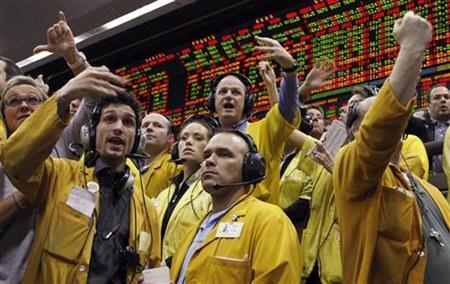
JMercantile Exchangeordan:  “So, when the price of oil in the spot market declines, the government collects more tax revenue.  And when the price of oil increases, the government collects less tax.”

POTUS:  “Simple, huh?”

Jordan:  “What about state taxes on fuel?  Do they fluctuate?”

POTUS:  “That’s up to the state.  If they want to gamble and collect more tax in down markets, that’s up to the state.  However, if they want to link to the Federal policy, states would receive a portion of additional Federal revenue.”

Jordan:  “When you first said fixed fuel price, I thought the idea was crazy.”

PcrazyOTUS:  “Thanks.  I view that as a compliment.”

Jordan:  “Then with just a bit more thought the idea didn’t seem so crazy after all.  Knowing the price of fuel will be fixed takes away a lot of uncertainty.  But what about the long-term price for gas and diesel?”

POTUS:  “Build in some adjustment for inflation – use the WPI or some other measure.”

Jordan:  “As a cynical taxpayer…”

POTUS:  “Jordan, you cynical?  Since when?”

Jordan:  “I’ll ignore that.  As a cynical taxpayer how do I know the taxes will go for repairing and improving infrastructure and not just some other part of the Federal or state budget?”

Jordan:  “Make the use of funds part of the legislation.  Put some real restrictions on the use of funds.”

Jordan:  “You think the approach will generate enough funds?”

POTUS:  “Well, let’s start with pricing gasoline at $4.50 per gallon and diesel at $5.00 per gallon.”

Jordan:  “Wow.  That’s way above current market price.  Won’t the price be a shock to the economy?”

POTUS:  “C’mon, Jordan, you sound like a Republicant.”

Jordan:  “Well, pardon me, Mr. President.”

POTUS:  “I hear you but think about this.  When gas prices increase 50₵ a gallon, even $1.00 a gallon, what happens?

Jordan:  “A lot of ranting and moaning but really not much else.”

PORantTUS:  “That’s my point.  Not much else happens.  Now think about the benefits of eliminating uncertainty…really the benefits of creating certainty.”

Jordan:  “Car and truck manufacturers can focus on improving mpg without the concern that fuel prices will fall and make the programs less marketable.  Same with air craft manufacturers and railroads.  The concern over uncertainty has slowed the adoption of many fuel-saving technologies.”

POTUS:  “Consumers could buy knowing the price for fuel.  And most importantly, we would have the funds to begin rebuilding infrastructure.”

Jordan:  “Earlier in this conversation you asked me to play Mr. Marketer.”

POTUS:  “And so, Mr. Marketer, how do we get people to want to pay $4.50-$5.00 for a gallon of fuel…and be happy about it?”

Jordan:  “If we go back to what Tip O’Neill said about all politics being local, then we need to make sure all projects are highly visible locally.  And we need to cover many different locations.”

POTUS:  “We also need to include projects other than road related.  Otherwise we are going to miss key infrastructure areas that need to be rebuilt.”

Jordan:  “You talking about railroads and mass transit?”

POTmetro-north1US:  “Yes, specifically rail-based transit.”

Jordan:  “What about communications infrastructure?”

POTUS:  “Yes.”

Jordan:  “Water and sewer projects?”

POTUS:  “Yes.”

Jordan:  “Airports?”

POTUS:  “Yes.  We’ve neglected each one of those areas.”

Jordan:  “Seems a bit unfair to put the burden on only the people who drive.”

POTUS:  “Seriously, Jordan, your brain gone dead?”

JBrain deadordan:  “Whadda mean?”

Jordan:  “Every product we buy has some cost included for transportation.  Even if you don’t own a car, you are paying for fuel riding a taxi, train or airplane.  Plus transportation costs affect grocery prices, clothing…everything.”

Jordan:  “Then your point is the cost of fuel is really a consumption tax.  The more you consume, the more you pay.”

POTUS:  “Exactly.”

Jordan:  “But isn’t the fuel tax also regressive?”

POTUS:  “True but if you really analyze the data, most every group of taxes when measured again real disposable personal income is regressive.  Besides, you have any otquestionher ideas how to fund rebuilding infrastructure?”

Jordan:  “Not right now.”

POTUS:  “When you do, let me know.  In the meantime we need to start an education campaign on why $4.50 and $5.00 fuel is good for consumers, businesses and the country.  And, guess what?  You are in charge of the campaign?  Got it?”

Jordan:  “Yes, sir.”

POTUS:  “Good.  Now you have a week to get a draft of the campaign together.  Say goodbye, Jordan.”

Jordan:  “Goodbye, Jordan…I mean goodbye Mr. President.”

#104 Paying for Infrastructure. A New Approach. (Part 1)

17 Wednesday Dec 2014

Posted by Jordan Abel in Economics, Infrastructure & Fixed Fuel Prices, Possible Solutions, Societal Issues

≈ 3 Comments

(Readers: The assumed chronological date for most of the entries in this blog is after the expected 5th revolution in the US.  For more background about  the expected revolution – labeled the Revenge Revolution – and author, please view entry #01.) 

Scene: Jordan’s office.  POTUS calls Jordan for some advice.

Jordan:  “Yes, Mr. President, nice to hear from you.”

white-house-clip-art1POTUS:  “Jordan, all well with you?”

Jordan:  “Fine, thanks.  I assume all OK with you…well, as much as can be expected in Washington.  What’s up?”

POTUS:  “A social call.”

Jordan:  “C’mon.  You calling me is never a social call.  What’s the issue and how can I help?”

POTUS:  “The issue is repairing the infrastructure in the US.  It’s horrible and needs to be fixed.”

Jordan:  “I agree.  As a country we have fallen farther and farther behind.”

POTUS:  “You know.  I know it.  But the deterioration has been gradual so a lot of people don’t realize there’s a problem.  At least don’t know it until something happens to them.”

Jordan:  “I equate the infrastructure repair problem to the proverbial frog in the pot of water.  If you put the frog in and the water is cold and then turn up the heat, the frog dfrog-in-boiling-water-photo-by-tim-sheppardoesn’t jump out and boils to death.  If you throw the frog in the water when it’s hot, it jumps out.  People don’t seem to realize the extent of the problem with infrastructure.”

POTUS:  “I’ve always wondered if the story of the frog in the pot is true.  But I guess it doesn’t really matter.  The story is a good way to think about the infrastructure issue.”

Jordan:  “You and I know the public is not good at looking ahead.  Preventive maintenance is not a strong suit for most people.”

POTUS:  “And preventive maintenance is not very sexy topic for politicians.  Think about it.  Would you rather cut a ribbon for a new bridge…or tell people we are going to repair the highway and they should plan on traffic delays for the next 12-18 months?”

Jordan:  “Not much of a political choice…at least the way most people think about issues.”

PPotholeOTUS:  “Maybe that’s the secret.  Reframe the issue.  You mentioned to me once before the need to reframe these kinds of issues.”

Jordan:  “Frame the issue so people…voters…look at the traffic disruption as a positive, not a negative.”

POTUS:  “OK, Mr. Marketer.”

Jordan:  “Former Mr. Marketer.”

POTUS:  “Whatever.  Put on your old marketing hat.  How do we convince people we need to repair infrastructure and…notice I said and…raise taxes to pay for it?”

Jordan:  “At the end of the day all politics is local.  Tip O’Neill said that how many years ago?”

POTUS:  “Sometime in the 1980’s.  But it is still true today.  Maybe we should take Tip’s advice to begin bridging the divide between Republicans and Democrats.”

Jordan:  “Part of the divide was eliminated with the new Congress after the Revenge Revolution.”

POTUS:  “But a lot of rancor still exists.  So if we frame the infrastructure issues as being local, then maybe we make some real progress.”

Jordan:  “We can position repairing the bridge and the disruption as a local project to help local area become more competitive and create more jobs locally.”

POTUS:  “Voters don’t really care much about national issues, let alone international issues.”

JRusted Bridgeordan:  “OK, then how do we convince people to pay for the cost of repairing infrastructure and be happy with the disruption?”

POTUS:  “Let’s talk about paying for it.  We can fund the repairs the same way they have been funded for many years…the gas tax.”

Jordan:  “Raise the federal tax on fuel?”

POTUS:  “Exactly.  Most people have no idea what the federal tax…or state tax…is on fuel.”

Jorquestiondan:  “I’m not even sure I know.”

POTUS:  “You made my case.”

Jordan:  “How much you thinking about raising the tax?”

POTUS:  “I have a different approach that should even satisfy die-hard, never-raise taxes Republicants.”

Jordan:  “I love the term Republicants.  What’s the idea for raising taxes?”

POTUS:  “I’ll let you know but I need to call you back in a little while.”

#103 Understanding Each Other. More Post Ferguson Blah, Blah, Blah

13 Saturday Dec 2014

Posted by Jordan Abel in Economics, Personal Stories, Rebranding Black Community, Societal Issues

≈ Leave a comment

(Readers: The assumed chronological date for most of the entries in this blog is after the expected 5th revolution in the US.  For more background about  the expected revolution – labeled the Revenge Revolution – and author, please view entry #01.) 

Scene: Jordan and RockMan continuing conversation over coffee.

Jordan:  “You know what bothers me?”

RockMan:  “Only one thing bothers you?  When did things get so good for you?”

Jordan:  “You know what I mean.  Even with all the progress you seem to be making, you know what bothers me about the effort to get blacks off the bottom rung economically?”

010114_1941_20RockMans1.pngRockMan:  “I’m game, what?”

Jordan:  “Why do we…you know the collective we…make such a big deal about understanding each other?”

RockMan:  “You talking about whites understanding blacks, and vice versa?”

Jordan:  “Yes.  And what’s the benefit of understanding each other?”

RockMan:  “Shouldn’t whites understand blacks?”

Jordan:  “Oh, give me a break.  Tell me how that’s going to happen?  I am not black, never been black and in all likelihood never will be black…at least in this lifetime.  And you’re not white and aren’t ever going to be white.  Let’s quit pretending.”

RockMan:  “You know, I’ve lived most of my adult life in white communities.  I admit there are things about whites I do not understand.”

Jordan:  “Think about this.  Whites who grew up north of the Mason-Dixon Line cannot civil warunderstand the South’s obsession with the Civil War.  It’s been more than 150 years.  You lost.  So get over it.”

RockMan:  “Spoken like a true Yankee.  Now, what about understanding someone’s religion?  I do not understand a lot about Judaism.”

Jordan:  “Trust me, Jews don’t understand a lot about Christianity.”

RockMan:  “Like what?”

Jordan:  “I think it’s called the holy trinity.”

RockMan:  “What’s not to understand about that?”

Jordan:  “Of the three, who’s in charge?  Seems like a bureaucracy.”

RockMan:  “That’s funny.  But I see your point.  By the way, what prompted this sudden revelation about not understanding another culture?”

Jordan:  “It’s not been sudden.  Several years ago — late 2014 or so — there was a series of articles in the NY Times with the title ‘What Whites Don’t Get about Blacks’.”

RockMan:  “Sounds interesting and very true.”

Jordan:  “OK but so what if whites don’t understand blacks?  The author, Nicholas Kristoff as I recall, outlined a lot of what whites don’t understand but few, if any reasons, why whites really need to understand.  So what if I don’t understand blacks?  So what if you don’t understand whites?”

RockMan:  “You keep saying ‘so what?  You sound like me talking to some black groups.’”

ladderJordan:  “You know why you and I keep saying ‘so what?’  Because that’s exactly what we mean.  Here’s a real simple question, ‘If the Black Community wants to improve its economic and social status, whose responsibility is it?’”

RockMan:  “The Black Community?  And that’s what I’ve been trying to tell them.  No more Al Sharpton or some other high-profile dude.”

Jordan:  “Now we see the same the picture.  You need to keep hammering home the idea that the Black Community needs to take charge and start making changes.”

RockMan:  “You’re saying, ‘Not my job.’”

Jordan:  “You got it.  and you know it.  Not my job.  Your job.”

RockMan:  “You want to keep the burden on those responsible.”

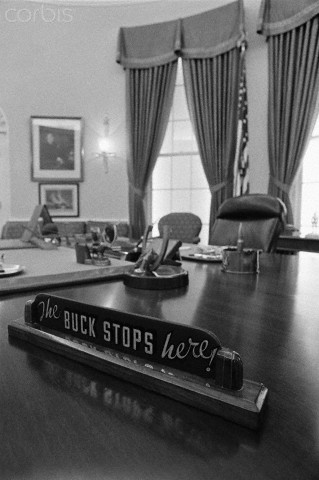
Jordan:  “Remember the sign President Truman had on his desk?”

RockMan:  “I’m not old enough to remember but I’ve read about it.  The sign was very simple and easy to understand. ‘The Buck Stops Here.’”

JHarry Truman's The Buck Stops Here Signordan:  “Well, my friend, please keep reminding the Black Community the buck stops with the Black Community.  Not with the White Community.  Not with the Federal government.  It stops with the Black Community.”

RockMan:  “Seems as if we keep having the same conversation.”

Jordan:  “A version of it.  Think of this as ‘Ground Hog Day’ with Bill Murray.  With each session I am probably less diplomatic.  But let’s not lose sight of who can make change.  Every ethnic group has faced barriers.”

RockMan:  “None as difficult as blacks.”

Jordan:  “Let me shed a tear.  Now time to move on.  OK, OK, blacks had some bad breaks.”

RockMan:  “Some?”

Jordan:  “But the Black Community has received more government help than any other group.”

RockMan:  “True.  But…”

Jordan:  “…but so what?  From what you’re telling me, your line to the Black Community is to start putting on their big-boy pants and quit acting like whiny little children.”

RockMan:  “Any other ideas?”

Jordan:  “Next time you have a session ask them to first start looking in the mirror.  Who do they see?  Who do they want to smirror-clipart_jpgee?”

RockMan:  “Even with some progress, still not very pretty right now.”

Jordan:  “Not it’s not.  But they have an example of who they should be.”

RockMan:  “In New Orleans terms, ‘who dat?’’

Jordan:  “RockMan, you know I think you are the perfect example for blacks.  Parents who were dirt poor.  Yet they managed to send 6 kids…”

RockMan:  “Try 8 kids.”

Jordan:  “Even better.  …send eight kids to college.  White families can’t claim that, even those with a lot of money.”

RockMan:  “It is amazing when you think about it.”

Jordan:  “Then you change schools because it is not tough enough academically.  I mean, how many 19-year olds do that?  What a role model.”

Rmortar-boardockMan:  “You like to lay it on thick, don’t you?”

Jordan:  “But your story is a great one and needs to be told.  Are you telling your story to these people?”

RockMan:  “Not really.”

Jordan:  “You should.  Your story might help get some in the Black Community off dead center about whose problem it really is.  Theirs, not mine.  Am I going to suffer if the Black Community stays at the bottom?  No.  But many of your colleagues will.”

RockMan:  “OK, so you’re telling me to crank it up even more.  Is that what you’re saying?

Jordan:  “You listen well.  And I would be a lot more blunt that you might have been.  This is no time for subtlety.”

RockMan:  “And you going to be around to help or do you just give advice?

Jordan:  “You know I’ll be around to help.  And I will offer advice, whether asked or not.  Keep up the good work.”

RockMan:  “Alright.  I’m out of here.”

#102 Ferguson, Post Blah, Blah, Blah.

03 Wednesday Dec 2014

Posted by Jordan Abel in Rebranding Black Community, Societal Issues, Stupid Is as Stupid Does

≈ 2 Comments

(Readers: The assumed chronological date for most of the entries in this blog is after the expected 5th revolution in the US.  For more background about  the expected revolution – labeled the Revenge Revolution – and author, please view entry #01.) 

Scene: Jordan and Rock Man having coffee.  Jordan has met with Rock Man several times.

Jordan:  “RockMan, nice to see you again.”

010114_1941_20RockMans1.pngRockMan:  “You, too, Jordan.  Been a while.”

Jordan:  “First, congratulations.”

RockMan:  “Congratulations for what?”

Jordan:  “All the progress you’ve made starting to get the Black Community off the bottom rung of the economic ladder.”

RockMan:  “We’ve not made much progress.  Besides someone needed to lead the effort…and you goaded me into it.”

Jordan:  “I think you’re doing a great job.”

RockMan:  “I don’t know whether to thank you or curse you…but it is gratifying.”

Jordan:  “These kind of changes don’t occur overnight.  What changed people’s thinking?”

RockMan:  “Simple, or at least I’d like to think it was simple.  What changed thinking was Ferguson.”

Jordan:  “You mean events in Ferguson, MO – like the riots after the grand jury decision?”

RockMan:  “Look, the Black Community was frustrated there was no indictment of the cop who shot and killed an innocent, unarmed kid.”

Jordan:  “You mean police officer and you don’t know all the facts.  So let’s stay with what we know and show a little respect.”

RockMan:  “Alright, not a cop.  Police officer.”

Jordan:  “So, people were frustrated with the grand jury.  But frustration does not justify burning someone else’s business or car.”

violenceRockMan:  “Agreed.  And finally, the Black Community started to see the lunacy in rioting and especially burning their own neighborhood.  Rioting might feel good but it creates a whole new set of problems…and alienates many people who might help.”

Jordan:  “But what really pushed them over the edge?”

RockMan:  “When they had to talk to their neighbors in Ferguson who now were out of a job because some a-hole burned a store.  Many of those who lost jobs…and I’ll bet most were black and Ferguson residents.”

J Light bulbordan:  “And the tragedy is unless the Black Community starts to act differently, many of those people will never get their jobs back.”

RockMan:  “So, the light bulb finally went on.   And some people started to say, ‘Hey. Let’s quit acting so stupid.’”

Jordan:  “Then you come along.  How’d you get started?”

RockMan:  “Met with lots of groups and listened to people whine…but no cheese with 122913_1337_14BringingU2.pngthat whine.”

Jordan:  “What were they whining about?”

RockMan:  “The usual – discrimination against blacks, no real good jobs, bad schools, unfair police force…blah, blah, blah.”

Jordan:  “Interesting you said whine and blah, blah, blah.”

RockMan:  “Well, it’s true.  I so I told them bitching and moaning won’t solve any problems.  And I reminded them blacks are not the first ethnic group to face discrimination.”

Jordan:  “Did you talk about solutions?”

RockMan:  “Yeah, and at the beginning I heard the usual tired solutions – more government programs, more quotas for this and that, more sensitivity training for the police force…blah, blah, blah.”

Jordan:  “You being cynical?”

RockMan:  “No, I’m just being realistic.  You know it.  I know it.”

Jordan:  “But did your audience know it?”

RockMan:  “Only after I kept responding, ‘so what?’ and ‘that won’t work.’”

Jordan:  “You must have been popular.”

RockMan:  “About as popular as Rush Limbaugh at a Democratic Fund Raiser.”

Jordan:  “At some point, however, they changed their minds.  What happened?” CarRockMan:  “For starters, I stole your line.  I told them to quit driving through the rearview mirror and start looking through the windshield.”

Jordan:  “Good, that seemed to work?”

RockMan:  “It also helped when I told them to trying to be white and start being black.  Some of the same stuff you and I talked about.”

Jordan:  “This is getting interesting.  I’m really want to hear more.  But let’s take a quick break.”


#101 The First 100 Entries. Reflections and Assessment.

26 Wednesday Nov 2014

Posted by Jordan Abel in Societal Issues

≈ Leave a comment

(Readers: The assumed chronological date for most of the entries in this blog is after the expected 5th revolution in the US.  For more background about  the expected revolution – labeled the Revenge Revolution – and the author, please view entry #01.) 

Last week was the 100th entry for this blog.  Thought it might be worthwhile to step back and assess the appropriateness of the content.

The premise of the blog is a Revenge Revolution that will occur sometime before 2025.  My track record for predicting such cataclysmic events is reasonably good, although I generally predict too early a date.

So, do I believe the US is still on track for a 5th revolution?  Yes.  Even more so today that when I started the blog last year.  The danger, of course, is that writing regularly about such an event diminishes one’s ability to be objective.  It’s the same danger as believing one’s own press releases.

With that caveat, I think it fair to say the US populous is more divided today than a year ago.  Congress, for all its apparent faults, is probably a fair representation of the attitude of the US population.  The rancor and bitterness in Congress has intensified.

While the 2014 mid-term elections resulted in a clear Republican majority of both houses, many candidates seem to have been elected not for what they stood for but what they stood against.  Many Republicans were very vocal about (a) not supporting affordable health care for middle and lower-income families and/or (ii) supporting tax cuts, the benefits of which would fall mostly to corporations and wealthier households.

Why would so many voters select candidates whose policies are contrary to their best interests?   My conclusion is many of the voters have been brainwashed.  Such brainwashing has happened before.

One of the most credible and honest politicians of the 20th century, George Romney (Mitt Romney’s father) stated in a campaign to become the Republican presidential nominee that he had been brainwashed by American generals about Vietnam.

Romney, who was the leading candidate, was chastised and ridiculed for the remark.  Reaction to the remark caused him to drop out of the race.

Was George Romney correct?  Absolutely.  And much of the American public, which had been brainwashed as well, eventually realized the deceit and turned against the war.

Today, the Republicans seem to be experts at brainwashing the public about what should be US economic policy.  There are a number of entries in the blog addressing what I consider the absolute lunacy of many Republicans about appropriate economic policy.

Before Republican readers get too exorcised, the Democrats seem to have been brainwashed about civil rights.  I am a big believer and supporter of civil rights.  And the rights extend to race, religion, martial preference and other aspects of society.  The US was founded on fairness…and, no, owning slaves was never fair.

A number of entries propose ideas to get blacks off the bottom run of the economic ladder.  The basic theme is responsibility.  Despite the unfair beginning, at some point the black community needs to take charge of its destiny and quite relying on someone else.  Real progress might take 2 or 3 generations but until the black community starts managing itself, no real progress will be made.  Other people and government can help but the black community needs to take charge.

In several entries I suggested that the black community stop sending athletes to the NFL and NBA.  OK to accept a college scholarship and get an education but sending athletes to professional sports sends the wrong message to younger blacks.

Since making that suggestion, there have been numerous cases where professional athletes, most if not all black, have been charged with domestic violence.  These cases have become very high-profile and reinforce the negative image of blacks.

In addition, the University of North Carolina has been cited for allowing many athletes to continue eligibility for sports by taking essentially ‘no show’ classes.  In what department were these ‘no-show’ classes – black studies?  To those of you in the black community, you need to step up and take control of your destiny.  No one said this blog was going to be politically correct.

I have some other examples of divisions within the country but I’ve made my case.  Overall the US seems more polarized than a year ago.  Despite very good economic growth the past few years (nearly 4.0% GDP growth in the most recent quarter), a large percentage of the population has made little progress with real income having declined.

At some point the frustration of groups being disadvantaged spills over the top.  And it won’t be pretty.  Imagine events in Ferguson, Missouri in 100 cities.  In 1,000 cities.  The police and National Guard could not control the rioters.

I’m going to keep writing.  As I’ve said in numerous entries, I hope my prediction proves wrong.  Your thoughts about this blog and entries are always appreciated.  Thanks for your time.  John R. Dabels for Jordan Abel (main character of this blog).

#99 Why Governments and Households Should Have Different Economic Policy

15 Saturday Nov 2014

Posted by Jordan Abel in Back Asswards Thinking, Causes of the Revolution, Economics, Societal Issues

≈ Leave a comment

(Readers: The assumed chronological date for most of the entries in this blog is after the expected 5th revolution in the US.  For more background about  the expected revolution – labeled the Revenge Revolution – and the author, please view entry #01.)

Scene: Jordan and Helicopter Man (H-Man) continuing a conversation about economics, with special emphasis about the role of government.

H-Man:  “We’ve got our coffee refill.  Now, back to my question.  ‘Why shouldn’t the man_with_speechgovernment take the same approach to economic policy as we do in our household?’  The approach makes perfect sense to me…and a lot of other people.”

Jordan:  “In certain economic situations, the behavior of households should be exactly the opposite.  Ironically, what seems right intuitively is actually wrong.”

H-Man:  “I am confused.  When should governments and households behave in opposite ways?  Give me a specific example.”

Jordan:  “Let’s say economic times are bad.  Think back to 2008-2009.”

unemploymentH-Man:  “Lots of unemployment and concerns about more layoffs.  Seems to me very logical for people to tighten their belts and reduce spending.”

Jordan:  “I agree.  Very rational behavior for an individual or family.”

H-Man:  “At least we agree on something.”

Jordan:  “Now, here’s a basic question.  ‘Where does your income come from?’”

Greenie:  “Since I’m not independently wealthy, my employer.”

Jordan:  “And where does your employer’s income come from?”

H-Man:  “Selling stuff.”

Jordan:  “So what if a lot of people quit buying stuff from your employer…and quit buying stuff from many other companies?”

H-Man:  “The companies make less money.  Then there’s probably not enough money to pay the employees…and then more layoffs”

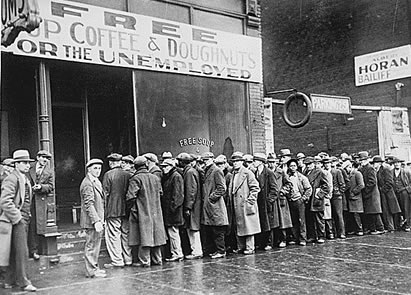
bread-lineJordan:  “So what happens if the government cuts back on spending money also?”

H-Man:  “Even fewer purchases, less income for companies…and even more layoffs.  So if the government tightens its belt along with everyone else, the economy gets worse…not better.”

Jordan:  “Remember, what you spend is my source of income.  You cut back on spending and I have less income and then I have to cut back.”

H-Man:  “So the only way to get the economy going again is for someone to start spending money.”

Jordan:  “You are beginning to understand why government needs to increase spending in economic slowdowns and not decrease spending.  The claim that the government should behave as a household actually makes the situation worse, not better.”

Tax CutsH-Man:  “Why not give tax cuts to the people making money instead of having the government spend money.  I just don’t like the idea of government spending money that’s not theirs.”

Jordan:  “Tax cuts might help some but not much.  Here’s why.  If you are out of a job, how much income tax will you be paying?”

H-Man:  “Probably little or none.  So, I see what you’re saying, a tax cut doesn’t really help.”

Jordan:  “What if you are relatively wealthy and get a tax cut.  What will you do with the extra money?”

H-Man:  “Maybe spend a little.  But won’t the wealthy invest it and create more jobs?”

Jordan:  “Invest the money in what?  Additional plant capacity?”

H-Man:  “I guess not.  If people aren’t buying products now, why would someone invest in additional plant capacity?  The idea of build it and they will come might work for a movie but not in real life.  Adding capacity without demand makes no sense.”

Jordan:  “H-Man, I’m proud of you.  We are starting to make real progress.”

CongressH-Man:  “But what about the government deficit?  All that spending with no new tax revenue scares me.”

Jordan:  “What’s the alternative?  Someone needs to spend the money.”

H-Man:  “I know but the country should not have a deficit.”

Jordan:  “Oh really, H-Man.  Just a bit of trivia.  When was the last time the federal government did not owe money?”

H-Man:  “I have no idea.  OK, under Herbert Hoover?  No, under Teddy Roosevelt.”

Jordan:  “Your second guess is closer but still way off.  Try Andrew Jackson.”

andrew_jacksonH-Man:  “Really?  That must have been about 1840?”

Jordan:  “Very good.  1835. But remember what you said was the role of government – protecting citizens, creating infrastructure, supporting commerce, helping manage the economy so citizens do not lose all assets.”

H-Man:  “What you trying to pound into my head is the method to execute those roles, especially managing the economy, is exactly the opposite of that of a household and business.  When it makes sense for people and businesses to cut back in harder economic times the government needs to take the opposite approach and spend money.  Otherwise the economy gets worse.”

Jordan:  “Besides the government can pay down the deficit when times are good and tax revenues higher.  You know, like the budget surplus under Bill Clinton.”

bill-clintonH-Man:  “I know.  I know.  And the Republicans under George Bush implemented a bunch of tax cuts and gave away the surplus.  Why did Republicans do that?  Seems like a back-asswards strategy.”

Jordan:  “You mean the people who harped about government deficits, Republicans, turning around and creating a deficit when there was an opportunity to pay down debt?  Makes you wonder if they don’t understand economics, they’re cynical or have yet a different motive.”

H-Man:  “But I still don’t like the idea of government having so much debt.  That’s not right…or fair.”

Jordan:  “OK.  Let me ask you, if the government should not have debt, then what about companies?  Should they have debt?”  And what people?  Should people or households have debt?”

H-Man:  “I suppose some debt is OK.  But not sure how much.”

Jordan:  “You own a house?”

122213_1311_9Guruandthe4.jpgH-Man:  “Yes.  Have for many years.”

Jordan:  “When you bought your first house was the mortgage larger than your annual income?”

H-Man:  “By a long shot.  I guess 2-3 times my annual income.”

Jordan:  “Did anyone think that was a bad idea to take on that much debt?”

H-Man:  “No, everyone thought it was a smart idea.”

Jordan:  “So the same people who think the government should operate like a household told you it was a smart idea to take on all that debt.”

H-Man:  “Yes.”

Jordan:  “But the same people who wanted you to take on debt don’t want government to take on debt?  Is that right?”

H-Man:  “Jordan, I’m having another one of those ‘never-thought-about-it-that-way moments’.  I see what you mean.  Their argument really makes no sense.”

Jordan:  “A lot of their economic arguments make no economic sense.”

H-Man:  “And voters finally woke up and realized that Republicans were selling them phony economic arguments.”

Jordan:  “I call it Republican economic BS.”

H-Man:  “Your economic ideas don’t seem so progressive.  In fact, they seem very rational now that I think about it.”

american-revolution-728714Jordan:  “Good.  H-Man, no economic rehab for you.”

H-Man:  “I’m sorry this country had all the disruption…but I’m glad there was a Revenge Revolution and we got this country back on track.  We are much better off now and will be for many generations.”

#98 What Are the Odds? Should You Be Grateful?

12 Wednesday Nov 2014

Posted by Jordan Abel in Causes of the Revolution, Economics, Societal Issues

≈ 1 Comment

(Readers: The assumed chronological date for most of the entries in this blog is after the expected 5th revolution in the US.  For more background about  the expected revolution – labeled the Revenge Revolution – and the author, please view entry #01.)

Scene: Helicopter Man (H-Man) and Jordan continue earlier conversation whether Republicants can transition to Republicans.

H-Man:  “Alright, we have our refill.  You were going to teach me basic economics, man_with_speechwhich I thought I already knew…but apparently not.  I really want to understand why Washington shouldn’t be run like a household.  You said that’s backwards and I want to know why.”

Jordan:  “Hold-on Bubba.  We need to back up a bit.”

H-Man:  “You saying I’m a slow learner?”

Jordan:  “What I’m saying is economics includes lots of statistics, which based on my experience, most people don’t understand.”

H-Man:  “I’m not most people, so try me.”

Jordan:  “Ok, let’s start with one’s background, which has a lot of influence on how one analyzes an issue.”

H-Man:  “Please, not some liberal argument about the alleged disadvantaged.”

Jordan:  “People can believe whatever they want about whether they have an advantage or others are disadvantaged.  But I find it helpful to frame the discussion with some basic statistics.”

H-Man:  “So give me your bleeding heart argument.”

Jordan:  “Bleeding heart or not, one things that continues to baffle me about the Republicans is why they were so ungrateful about their economic lot.  And why are Republicans so resentful of people who are not as advantaged.”

H-Man:  “See, there you go.  Claiming many Republicans don’t really deserve the wealth they’ve accumulated.  Besides I thought we were going to talk about statistics and economics?”

Jordan:  “We are.  And the first lesson is figuring out how lucky we really are…and why we should be grateful.”

occupations_lawyerH-Man:  “Have you turned into some preacher…I mean rabbi?  You know what I mean.  Look, Jordan, many Republicans…and Democrats too…worked very hard to get where they are.  What’s so bad about that?”

Jordan:  “Nothing bad about it.  I’m sure many of them worked very hard.  But let’s put their life…and our life…in proper perspective.  Just imagine everyone is running a marathon.”

H-Man:  “A bit crowded at the starting line, huh?”

Jordan:  “Crowded but the Republicans are not at the starting line.  Republicans have a huge head start.”

H-Man:  “Whadda mean?”

globeJordan:  “What’s the world’s population?”

H-Man:  “Maybe 6-7 billion people.”

Jordan:  “What about the US population?”

H-Man:  “Maybe 350 million.”

Jordan:  “So the US population is a little less than 5% of the world’s total.”

H-Man:  “What are you getting at?  Interesting number but so what?”

Jordan:  “What percent of the US population is white?”

H-Man:  “Where is this headed?”

Jordan:  “I’m asking since most Republicans are white.”

H-Man:  “Call half the US population white.”

Jordan:  “So now we’re talking about 50% of 5%, or 2½%.”

H-Man:  “Yeah, so?”

Jordan:  “So 2½% — 2 to 3 out of every 100 people have a huge head start.”

H-Man:  “If they’re not at the starting line then where do they start?  A little bit ahead or way ahead?”

running raceJordan:  “We know that people in most countries have to run the 26-some miles before they finish.  But Republicans don’t have to run 26 miles; Republicans don’t have to run 15 miles; don’t have to run 5 miles…but less than a mile.  Republicans run Just about 0.6 mile.”

H-Man:  “So you think with such a head start that Republicans should be more grateful.”

Jordan:  “Have you ever wondered why Republicans are so opposed to affordable health care for everyone when most of them already have health care.  Have you ever wondered why Republicans insist on a tax cut/credit to solve almost every other issue?  If you really think about it, what do Republicans gain…or what did they try to gain…with such positions?”

SlackardH-Man:  “I guess Republicans were trying to motivate others.  Motivate all the slackards that don’t pay any tax.”

Jordan:  “H-man, you need to go to economics rehab.  Both of your statements are tired…and frankly wrong.”

H-Man:  “The statements are true.  About half the US population doesn’t pay its fair share of taxes.”

Jordan:  “I agree with that statement…but which half does it apply to?  Many wealthy people pay far below their fair share.  Second, how many lower-income people have you met that are truly slackards?”

H-Man:  “I confess, not many.  If truth be known, the most slackards that I do know are living off trust funds.  But, Jordan, you still sound like some socialist.”

Jordan:  “Socialist, no.  Progressive, yes.  But a lot of other people must be progressive since they joined the Revenge Revolution.”

H-Man:  “I hear you.  I still don’t understand why people are so progressive.”

Jordan:  “OK, let me lay out some more basic economics.  First of all, the term progressive is promoted by Republicans as something negative.”

H-Man:  “What do you think progressive really means?”

CongressJordan:  “Start with the role of government.  What should government do?”

H-Man:  “Protect citizens against domestic violence and foreign invaders.  Provide infrastructure to help commerce.  Provide a fair system for commerce.  And I guess help manage the economy so citizens don’t all their savings.  And probably some other stuff.”

Jordan:  “Good start on the list.  Lots of common sense items.  So how can government help manage the economy?”

H-Man:  “I said operate like a household but you said I was wrong.  Why?  Why is it so wrong when it seems so right?”

Jordan:  “Part of why your wrong is background and part of why you’re wrong is incredibly simple but not obvious…but it will be obvious right after we get another refill.

(To be continued)

Gallery

#97 Republicants Don’t Become Republicans…Another Step toward the Revenge Revolution

08 Saturday Nov 2014

Posted by Jordan Abel in Causes of the Revolution, Economics, Education Issues, Societal Issues

≈ 2 Comments

This gallery contains 7 photos.

(Readers: The assumed chronological date for most of the entries in this blog is after the expected 5th revolution in …

Continue reading →

← Older posts
Newer posts →

Subscribe

  • Entries (RSS)

  • Comments (RSS)

Archives

  • August 2025
  • July 2025
  • June 2025
  • May 2025
  • April 2025
  • March 2025
  • January 2025
  • December 2024
  • November 2024
  • September 2024
  • August 2024
  • July 2024
  • June 2024
  • May 2024
  • April 2024
  • March 2024
  • February 2024
  • January 2024
  • December 2023
  • November 2023
  • October 2023
  • September 2023
  • August 2023
  • July 2023
  • June 2023
  • May 2023
  • April 2023
  • March 2023
  • February 2023
  • January 2023
  • December 2022
  • November 2022
  • October 2022
  • September 2022
  • August 2022
  • July 2022
  • June 2022
  • May 2022
  • April 2022
  • March 2022
  • February 2022
  • January 2022
  • December 2021
  • November 2021
  • October 2021
  • September 2021
  • August 2021
  • July 2021
  • June 2021
  • May 2021
  • April 2021
  • March 2021
  • February 2021
  • January 2021
  • December 2020
  • November 2020
  • October 2020
  • September 2020
  • August 2020
  • July 2020
  • June 2020
  • May 2020
  • April 2020
  • March 2020
  • February 2020
  • January 2020
  • December 2019
  • November 2019
  • October 2019
  • September 2019
  • August 2019
  • July 2019
  • June 2019
  • May 2019
  • April 2019
  • March 2019
  • February 2019
  • January 2019
  • December 2018
  • November 2018
  • October 2018
  • September 2018
  • August 2018
  • July 2018
  • June 2018
  • May 2018
  • April 2018
  • March 2018
  • February 2018
  • January 2018
  • December 2017
  • November 2017
  • October 2017
  • September 2017
  • August 2017
  • July 2017
  • June 2017
  • May 2017
  • April 2017
  • March 2017
  • February 2017
  • January 2017
  • December 2016
  • November 2016
  • October 2016
  • September 2016
  • August 2016
  • July 2016
  • June 2016
  • May 2016
  • April 2016
  • March 2016
  • February 2016
  • January 2016
  • December 2015
  • November 2015
  • October 2015
  • September 2015
  • August 2015
  • July 2015
  • June 2015
  • May 2015
  • April 2015
  • March 2015
  • February 2015
  • January 2015
  • December 2014
  • November 2014
  • October 2014
  • September 2014
  • August 2014
  • July 2014
  • June 2014
  • May 2014
  • April 2014
  • March 2014
  • February 2014
  • January 2014
  • December 2013

Categories

  • Affordable Solutions
  • Back Asswards Thinking
  • Background
  • Background Stupid Is as Stupid Does
  • Benefits of Revolution
  • Causes of the Revolution
  • Common Sense Policies
  • Corporate Policy
  • Definitions
  • Diversions
  • Economics
  • Education Issues
  • Federal Budget
  • General Motors
  • Gov't Policy
  • Infrastructure & Fixed Fuel Prices
  • Innovative Thinking: Ideas and Products
  • Lessons of Revolution
  • Personal Stories
  • Possible Solutions
  • Post Trump Presidency
  • Rebranding Black Community
  • SCOTUS
  • Sense Check
  • Societal Issues
  • Stupid Is as Stupid Does
  • Tech Tsunami
  • Trump 47
  • Uncategorized

Meta

  • Create account
  • Log in

Create a free website or blog at WordPress.com.

Privacy & Cookies: This site uses cookies. By continuing to use this website, you agree to their use.
To find out more, including how to control cookies, see here: Cookie Policy
  • Subscribe Subscribed
    • usrevolution5
    • Join 32 other subscribers
    • Already have a WordPress.com account? Log in now.
    • usrevolution5
    • Subscribe Subscribed
    • Sign up
    • Log in
    • Report this content
    • View site in Reader
    • Manage subscriptions
    • Collapse this bar
 

Loading Comments...