• Home
  • Booklets/Grouped Entries
  • Tech Tsunami
  • List of Entries to Date
  • About the Author

usrevolution5

~ USA Headed for a 5th Revolution! Why?

usrevolution5

Category Archives: Possible Solutions

Range of ideas to consider for helping the US transition from revolution to a more stable environment.

#236 Primer Cha 1: You Can’t Drive Very Fast Only Looking in the Rearview Mirror

29 Sunday Jan 2017

Posted by Jordan Abel in Common Sense Policies, Economics, Possible Solutions

≈ Leave a comment

First-time readers, the dialogue in this blog is set in the future (sometime after the year 2020).  Each entry assumes there has been a 5th revolution in the US — the Revenge Revolution.  More about Revenge Revolution and author, Entry #1.  List and general description of entries to date.  Annual assessment whether Revolution plausible.

Note: most characters appear in a number of entries, with many entries building on previous conversations.  Profile of characters.  You’ll catch on quickly.  Thanks for your time and interest…and comments.

092615_2031_Characters7.gifGelly: “Jordan, I’ve finished editing the first few chapters.”

Jordan:  “Good.  Make any changes?”

Gelly: “I tried to make the text more current by including excerpts from papers you wrote later, especially during the early days of the Trump Administration.  Hope adding the more recent information was OK.”

Jordan: Glad you added the updates.  Thanks.  Let me take a look.”

(Chapter 1 of Primer.  PDF Download will be available after a few more entries.  Text of download will be formatted in columns.)

windshield-screenImagine this: You need to get someplace quickly. You jump in the driver’s seat and start the car. But the windshield is covered by one of those sun screens. You can only see by using the rearview mirror.

Question: How fast can you drive when you can only see out of the rearview mirror? Not very fast and not very safely.

Where do we start? By removing the sun screen blocking the window. Start looking forward instead of only looking to the past. Duh, the future is different from the past. Yes, learning from the past is important so check the rearview mirror periodically, but spend more time looking ahead than looking behind.

fork-in-the-roadYes, like all countries, the United States needs to update its approach to economic development.  However, the US is facing a major fork…maybe forks…in the road.  The combination of a bifurcated economy, concern about our competitive position worldwide and a polarized Congress makes prospects for long–term growth problematic.  Without a change in approach the US could fall behind global competitors.

Think it can’t happen?  Roughly 100 years ago GDP/capita in Argentina was about 80% of the US GDP/capita.  Today, GDP/capita in Argentina is a little over 30% of US GDP/capita.  Argentina made some bad strategic economic decisions.

But what about decision–makers in the US? Why are most people in public positions, elected officials and many CEO’s, seemingly reluctant to take a stand on issues outside what is perceived as “mainstream” – thus the analogy of not driving fast while looking only through the rearview mirror?

rearview-mirror-with-diceAnd why, in 2017, is President Trump’s solution to “Make America Great Again” based on ideas that might have worked when kids hung dice on the rearview mirrors?  The ideas are great for nostalgia but they have no basis in today’s economic world, no recognition how technology has affected manufacturing employment and no recognition of the impact on jobs of emerging technologies. 

donald-duck-wishing-wellAnd, no Donald, merely claiming that GDP will increase 4.0% or more each year will not make it happen, nor will claiming “clean coal” bring jobs to back to West Virginia, nor will tweets or tariffs.  Nor will pillorying anyone, even well-respected office holders, who question the logic of these retro positions.

So, What Are They Thinking?  Given that kind of back-asswards thinking, it is no wonder that many of us get so frustrated with some government policy decisions. Is it no wonder we get angry when a CEO gets a large bonus after laying off workers? It is no wonder we get angry when tax policy encourages companies to send jobs overseas?

dude-with-questionAmong voters left, right and middle, many decisions by government and business seem to make no sense. In fact, many decisions by government and business seem to be exactly opposite of the best interest of the United States and its citizens.

Does Back-Asswards Have Negative Consequences?  Yes, most emphatically yes.  In searching for answers to what seem to me to be counter-intuitive decisions, three situations came to mind: (i) the town where I was raised and received my primary and secondary education has been devastated by job losses; (ii) my first post-college employer and a company which was the heart of US manufacturing for decades, General Motors, filed for bankruptcy (in 2011); (iii) thinking and analysis have been replaced by babble spouting talking–head entertainers.

tweetyRather than “pouting and shouting” or even worse, “tweeting” about these frustrations, I decided my therapy was to write a primer outlining how using basic economic principles, business principals and more practical, affordable solutions to help address some policy issues facing the US public and private sectors.

A few years ago I wrote a short paper titled “Why a Healthy Domestic Auto Is Important.” After distributing to a few friends and colleagues, I was surprised by how many commented they had not heard such rationale, agreed it made sense and as such changed their mind about whether the US government should have supported bailing out General Motors and Chrysler.  (The paper is included in this primer.)  

With that encouragement I drafted other essays, which will be part of the primer. My hope is at least a few people read some or all of the primer and begin to think more broadly and take action on those thoughts.

bookletThe primer is designed to be apolitical. The ideas are not exclusively left or exclusively right. Quite honestly, the ideas are so common sense and so basic that at times I am embarrassed to publish them. You would think everyone knew these fundamentals. But apparently not since many are not applied, not understood or lost in political rhetoric.

The primer is also designed to help describe what I consider the cause of the deterioration in the ability of US companies to compete effectively worldwide. Some essays are purely educational; others propose solutions.

open-mindAs you read these essays, please (i) keep an open mind about the analysis and proposed solutions; (ii) consider how you can implement part or all of the idea, whether you are a member of Congress, a CEO, employee or citizen; (ill) discuss ideas with friends, family and colleagues. The early entries are intended to offer an understanding of some common economic principles and terms. Other entries include common questions, claims and arguments for/against a particular government policy or action.

When you listen to others make claims about what government policy needs to change, or make such claims yourself, then think about the context of the argument and if some additional data or analysis would change your position.

The primer is work in progress. The intent is to add chapters regularly as topics arise. I will update existing chapters for new information and any necessary corrections.

professor4The primer is not a source authority on economics.  I would never be so presumptuous.  So, if you are schooled on these subjects, please scan the chapters. If nothing else, you can offer ideas on how to improve them.

I hope you find the primer thought provoking, entertaining at times and educational. Please send ideas other topics as well. This primer is the beginning of a journey. I need some guidance on where to go next. Thank you for your time.

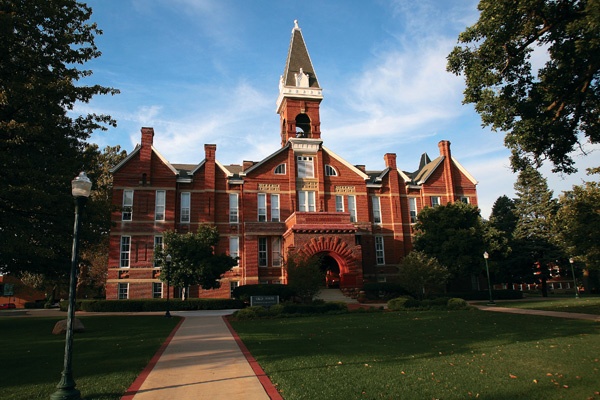
For Your Information: If you are curious about my background, raised in Danville, IL, then a town of almost 50,000 (now closer to 30,000). Danville is about 120 miles south of Chicago. Like many Midwest towns in my formative years, Danville was a mix of industrial plants surrounded by farms.  Danville offered a good mix of ethnic groups and religions. The public school system was well respected, producing more than its share of successful entertainers, astronauts, educators, doctors and corporate executives.

  • Education: Drake University (Des Moines, IA); Massachusetts Institute of Technology.
  • Job locations: Detroit area (twice), New York, Boston, San Francisco, Los Angeles, Charlotte (currently).
  • Politics: Fervent independent. Have voted for wide range of Republicans and Democrats. Some in the south consider me a liberal. I remind them of the history of the Republican Party…and that the Civil War ended 150+ years ago, ending with a gentle reminder to “get over it.”  I skip “you lost.”

 

#223 Rioters in Charlotte vs. Role Models (Part 5 of 6)

23 Sunday Oct 2016

Posted by Jordan Abel in Education Issues, Possible Solutions, Rebranding Black Community, Societal Issues

≈ 1 Comment

First-time readers, this blog is set in the future (sometime after the year 2020).  Each entry assumes there has been a 5th revolution in the US — the Revenge Revolution.  More about Revenge Revolution and author, Entry #1.  List and general description of entries to date.  Annual assessment whether Revolution plausible.

Note: most characters appear in a number of entries, with many entries building on previous conversations.  Profile of characters.  You’ll catch on quickly.  Thanks for your time and interest…and comments.

Scene: Jordan’s office in Washington, DC.  Conversation for this series starts Entry #219.

Jordan:  “So you want to know the 3rd person on the list of role models for the black community?”

092615_2031_Characters11.pngMatt:  “Do I know the person?”

Jordan:  “Probably not.  But the person has an impressive set of accomplishments.”

Matt:  “Well, how’d you find out about him…or her?”

Jordan:  “Obituary in the NY Times.”

Matt:  “I must admit, the obits in The Times make for fascinating reading.  Remarkable people, and many you’ve never heard of before.  OK, tell me more.”

TurtleneckJordan:  “Like Rock Man, the guy’s family is from the south and poor.  Also, like Rock Man he gets into college and graduates.  In fact, all nine children in the family graduate from college.”

Matt:  “Impressive.  About what year did he graduate?”

Jordan:  “Entered college in the early 1950’s, probably 1952.  Graduates in about 1956 from South Carolina State, which is a historically black college.”

Matt:  “Then what?”

yale_bulldogs2Jordan:  “Next gets a divinity degree from Harvard, then off to Columbia for masters in I think psychology.  The icing on the cake is a PhD from Yale.”

Matt:  “Oh, is that all?  I mean, whadda say other than, wow?  Did he go into politics after that?”

Jordan:  “Got very involved in the Civil Rights Movement working with church-affiliated organizations in New York City.  He was also appointed president of Benedict College, which is a Baptist college.  After Benedict he worked for the Ford Foundation until appointed president of Tuskegee University in 1980 or 1981.”

tuskegee-logoMatt:  “Tuskegee has come a long way in the last few decades.  The school really transformed itself to a credible research university.”

Jordan:  “The 3rd role model, Dr. Benjamin Payton, initiated most of those changes.  He was president for about 30 years.  Think he retired in 2010.”  (Link to Dr. Payton’s obituary, 16-10-23-223-obit-dr-benjamin-payton)

Matt:  “Dr. Payton is clearly a great role model for the black community.  But all three people could role models for everyone.”

Jordan:  “I agree and that’s one of the reasons they are on the list.”

Matt:  “The selections are great…but one thing that I’ve got to ask about.  The storyline for all three seems to be a college education.  You and I both know that not everyone is cut out for college.”

determinationJordan:  “I agree that education is a common component.  I think the overriding, and more important component, is determination.  Each one was determined not to let the system or stereotypes get in the way.  Rock Man agreed to become Mr. Mom so his wife could become a corporate executive.  Would you do that?  Lonnie Johnson was an engineer at NASA, a bit unusual itself, and then became an entrepreneur – first inventing the super squirt gun, then working on an advanced battery.  Dr. Payton gets as many degrees as you and I combined and then turned a frankly so-so historically black college into a credible research university.  Each one of these people broke the mold.” 

Matt:  “Each one belongs on the list.  One more question about the list.  And you probably don’t want to hear the question.  Why exclude ignoreathletes as role models?”

Jordan:  “First, sports for the black community are ok if…and this is the big if that seems to get overlooked in the conversation…”

Matt:  “…let me guess the ‘if.’  Sports are OK if the athlete also gets an education, right?”

Jordan:  “Spot on.  To be OK, the athlete’s degree can’t be in some half-baked major where no real jobs exist.”
NFLMatt:  “Your OK if the athlete has a degree in a credible subject.”

Jordan:  “And then the athlete uses the degree after the NFL or NBA career…and ideally during their career.”

Matt:  “These days most athletes don’t work in the off-season…at least not at regular jobs”

Jordan:  “I know.  Think about this.  What if athletes used their education in the off season to say, tutor kids?  Tutoring kids not just in schools considered disadvantaged but all schools.”

Matt:  “You mean like helping kids with reading, algebra, maybe even physics?  What a pleasant change that would be.”

nba-logoJordan:  “Imagine an NBA star coaching kids in English class and encouraging them to spend time studying rather than shooting hoops.”

Matt:  “Interesting idea.”

Jordan:  “And here’s my guess.   Having a black NBA star spending just a few days tutoring kids in higher-achieving schools would do wonders to help begin to change the image of the black community among many whites.”

Matt:  “If I heard you right, the NBA star should spend most of the time in 122813_2140_15Education4.jpgdisadvantaged schools but some time in other schools, right?”

Jordan:  “Simple idea, huh?”

Matt:  “Very simple…and could be very effective.  Now, we need to end this conversation.  I need to get to start writing articles for Greenie about how the riots in Charlotte…and elsewhere…contributed to the Revenge Revolution.  I also think that even more important is having some articles that present practical ideas on how groups and communities can move ahead.”

Jordan:  “Matt, these should be great stories for Charlotte…and a lot of communities.  In the articles, please remind readers that progress can be made 2014-chevrolet-volt-5much faster by driving looking through the windshield and not trying to drive looking through the rearview mirror.”

Matt:  “Jordan, as always, time together has been a pleasure.  OK if I call back with questions?”

Jordan:  “Of course.  Matt, enjoyed it.  Take care.”   (End of this series)

#222 Rioters in Charlotte. Drive Looking through the Windshield or the Rearview Mirror? (Part 4)

16 Sunday Oct 2016

Posted by Jordan Abel in Innovative Thinking: Ideas and Products, Personal Stories, Possible Solutions, Societal Issues

≈ Leave a comment

First-time readers, this blog is set in the future (sometime after the year 2020).  Each entry assumes there has been a 5th revolution in the US — the Revenge Revolution.  More about Revenge Revolution and author, Entry #1.  List and general description of entries to date.  Annual assessment whether Revolution plausible.

Note: most characters appear in a number of entries, with many entries building on previous conversations.  Profile of characters.  You’ll catch on quickly.  Thanks for your time and interest…and comments.

Scene: Jordan’s office in Washington, DC.  Conversation for this series starts Entry #219.

Matt:  “I agree the conversation about the black community should be frank with no sugar-coating.  But 092615_2031_Characters11.pngwhere should the conversation start?  I mean, lots of issues.”

Jordan:  “Why not start at the end and work backwards?  What should the black community look like?  An even better start would be to describe the characteristics of people the black community can look up to.”

Matt:  “You mean describe characteristics of some role models?”

Jordan:  “Role models as long they are not sports figures…no Michael Jordan’s, for example.  Nothing against the Michael Jordan’s of the world but the black community cannot solve its problems through the NBA and NFL.”

Matt:  “Then what kind of role models?”

questionJordan:  “My recommendation would be individuals most people haven’t heard of but who exemplify what I think the black community would like to become.”

Matt:  “Who’s on your list?”

Jordan:  “Three people.  #1 is someone I know reasonably well; #2 is someone I’ve met a few times in business; #3, never met but awestruck with his accomplishments.”

Matt:  “Let me guess, Rock Man is #1 on the list. 

Jordan:  “Good guess.”

Matt:  “I remember meeting Rock Man and was very impressed…but I don’t know the whole story.”    

TurtleneckJordan:  “Rock Man comes from a family of 6-8 children…I don’t remember the exact number but a lot.  Eastern North Carolina.  Parents are tenant cotton farmers with maybe an 8th-grade education.”

Matt:  “But Rock Man is a college grad, right?”

Jordan:  “As are all 6-8 children.  Everyone graduated from college and a few have graduate degrees.”

Matt:  “I admit that’s very impressive for the family, but what else about Rock Man?”

092615_2031_Characters5.pngJordan:  “After graduation he starts a climbing gym in Charlotte.  Apparently he’s got the only black-owned climbing gym in the country…at least east of the Mississippi.”

Matt:  “Mostly black clientele?”

Jordan:  “Mostly white.”

Matt:  “Well, how’d you meet Rock Man?”

Jordan:  “Through a business colleague.  I then started helping Rock Man with managing his business.”

Matt:  “Still interesting but nothing too special about this.”

woman-clipart-zyikqxpcEJordan:  “Within a few months, Rock Man meets a young lady who seems to be the perfect match – outgoing, high energy and smart.”

Matt:  “They get married?”

Jordan:  “He was balking until I beat him over the head.  I kept telling him she was perfect for him.”

Matt:  “So, they get married…then what?”

Jordan:  “Short version. She gets a job at the local branch of an international arrow-upinsurance company.  Performs well and gets on a fast track.  In less than 15 years, she goes from glorified clerk in a branch to head of one of the company’s major international operations.”

Matt:  “Wow, that’s impressive.  Any kids?”

Jordan:  “Two.  Girl and boy.  The girl is old enough to have college on her mind.  She’s torn between Harvard and Yale.  I keep pushing MIT but to no avail.  The son is not yet on a hunt for college.”

Matt:  “So what did Rock Man do while the wife is playing Ms. Corporate black-man-cookingExecutive?”

Jordan:  “Rock Man becomes Mr. Mom.”

Matt:  “Mmm, isn’t being Mr. Mom a bit unusual in the black community?”

Jordan:  “I think it is unusual…likely highly unusual.  Aside from migrating from poor cotton farmers…now I’ll use Rock Man’s terms…who were too poor to have a pot to piss in…to college graduate, what really impresses me about Rock Man is the willingness to change roles.  Being Mr. Mom and supporting the kids seems so out of character for most black men that I thought he’d be an ideal role model.”

Matt:  “Agreed.  Who’s #2 on the list?”

Jordan:  “Ever use one of those super squirt guns?”

super-soakerMatt:  “They’re a blast.  We used to have water fights with those.  Why?”

Jordan:  “Know who invented the super squirt gun?”

Matt:  “I confess.  I have no idea.”

Jordan:  “His name is Lonnie Johnson.  Worked at NASA before the squirt gun became wildly popular.  As I understand, he used the proceeds from the squirt gun to start a technology company.”

Matt:  “What was the business?”

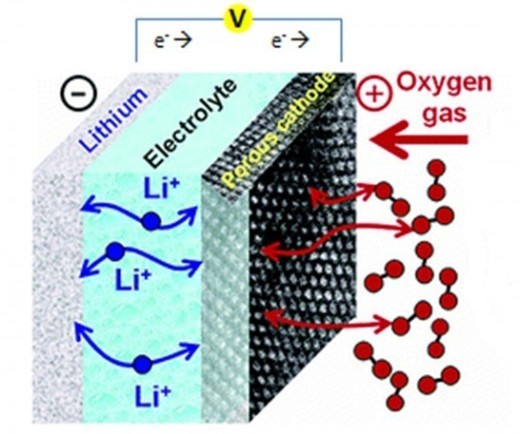
lithium-air-battery1-520x448-4ea97b0-introJordan:  “Advanced batteries.  For the record, lithium air batteries.  Trust me, a tough task.”

Matt:  “Again, interesting story but why is this guy a role model for the black community…and I assume this guy’s black?”

Jordan:  “Yes.  In addition to starting a high-tech battery company, which is impressive by itself, he locates the company in a very rough part of Atlanta.  Then he tries to hire as many neighborhood people as possible.  He also recruits as many black engineers as possible.  15-20 years black-hand-clapping-mdfrom now, I might question his bias toward black engineers.  But today he should be applauded for making an effort to employ as many blacks as possible in his high-tech company.”

Matt:  “Who’s the 3rd guy?”  (Continued)


#221 Rioters in Charlotte. Drive Looking through the Windshield or the Rearview Mirror? (Part 3)

08 Saturday Oct 2016

Posted by Jordan Abel in Possible Solutions, Societal Issues

≈ Leave a comment

First-time readers, this blog is set in the future (sometime after the year 2020).  Each entry assumes there has been a 5th revolution in the US — the Revenge Revolution.  More about Revenge Revolution and author, Entry #1.  List and general description of entries to date.  Annual assessment whether Revolution plausible.

Note: most characters appear in a number of entries, with many entries building on previous conversations.  Profile of characters.  You’ll catch on quickly.  Thanks for your time and interest…and comments.

Scene: Jordan’s office in Washington, DC.  Conversation for this series starts Entry #219.

Matt:  “OK, you’re suggesting the individuals in the black community in 092615_2031_Characters11.pngCharlotte, or at least the rioters in Charlotte, look in the mirror and acknowledge that they need to take charge of their lives.’”

Jordan:  “You got it.  Simple, huh?”

Matt:  “So, if I’m part of the black community and decide to take charge of my life, what am I supposed to do?  Where do I start?”

Jordan:  “I feel as if I’m a broken record.  Let’s start with the basics.”

Matt:  “You mean like overcoming racism.”

TurtleneckJordan:  “Matt, Matt.  You’re a reporter, a writer, and if I remember correctly a history major.”

Matt:  “Yes…and so…?”

Jordan:  “…and so you really expect racism to disappear?  Expecting racism to disappear is sheer folly.”

Matt:  “C’mon.  Why sheer folly?”

Jordan:  “I’m not sure why people don’t get my point.  Racism has existed at least pyramid2since the Egyptians enslaved the Jews about 6,000 years ago, and probably before that.”

Matt:  “So if racism has been around at least that long, then why should people’s attitudes change now?”

Jordan:  “Right.  My advice to the black community – quit focusing on racism as an issue.  Spend time and efforts on projects that can yield positive results.”

Matt:  “Alright, my last comment about racism.  You don’t think trying to eliminate racism, or trying to reduce it dramatically, is a worthwhile effort.  Is that right?“

Jordan:  “I’m a realist.  As I’ve said many times, trying to reduce racism is like stringpushing on a string.  A fruitless effort.  Do a reality check.  Every other…and, yes, I mean every other…every other ethnic group in this country has faced some form of racism.  And many of those groups still do.”

Matt:  “I assume your point is those groups didn’t focus on trying to reduce racism.  Instead they focused on trying to get ahead.  And when they did, most of the racism disappeared.”

Jordan:  “How difficult is that to understand?  If you know you can’t fix bang-head-against-wallsomething, why keep trying?  Quit banging your head against the wall and work around the problem.  Whether any of us like it or not, racism is very likely here to stay.”

Matt:  “Then where should the black community…at least those in Charlotte who rioted…where should they begin?  What should they do?”

Jordan:  “To start I’d make a list addressing three key items. #1, what’s the checklistvision?  Where do you want to be?  #2, where are you now?  List positives and negatives.  Just a list of facts…and no finger-pointing, no excuses. #3, who might help the group achieve their vision?  The only restriction is no one on the ‘who can help list’ should be expected to provide money.”

Matt:  “What will this information really do?  And why no money?”

Jordan:  “To quote Lewis Carroll, ‘If you don’t know where you’re going, any road malfunction-junction-atlwill get you there.’  The vision will provide where you want to go.  The other information is to help you get there.  To get to your destination, you’ve got to have a road map…OK call it GPS…but step #1 is deciding where you want to go.”

Matt:  “Why no money?”

Jordan:  “Money is not the issue.  The issue is having the vision.  Where do they want to go?  Having money with no vision is a recipe for disaster.  Talking about money, if any is really needed, comes later.  First, you must have the vision.”

Matt:  “You don’t think they have a vision?”

Jordan:  “You tell me, what’s the black community stand for?  What’s there vision?”

Matt:  “My cynical response?  Provide an array of football players, basketball players and entertainers.”

Jordan:  “That might be a cynical response but a view that is probably fairly mortar-boardwidely held.  In contrast, what do you think the Asian community focuses on?  What about the Jewish community?”

Matt:  “Education and education.”

Jordan:  “Reminds of a story.  Scene: inauguration of the first Jewish US president.  Person sitting next to the president’s mother, ‘You must be very proud of your son…the first Jewish president.’  Mother responds, ‘Yes, I’m proud.  But you should meet his brother, the doctor.’”

Matt:  “That’s funny, but a lot of truth in that, too.  Let’s face it, though, not everybody is cut out for a college education.  What about those who aren’t?”

plumber_3Jordan:  “Education doesn’t have to mean college.  Being in the skilled trades requires a lot of training…and will require even more so in the future.  Skilled trades are a great career track.”

Matt:  “If I understand, you’re describing a vision of a black community that is, in many ways, self-sustaining.  A black community that is part of a larger community but, if needed, can pretty much operate on its own.  Doctors, lawyers, merchant chiefs, skilled trades, teachers…the whole gamut.”

Jordan:  “Exactly.  That kind of self-sustaining community is not going to happen overnight…probably 2-3 generations, maybe longer.  But a self-sustaining black past-to-futurecommunity will never happen unless the black community stops focusing on the past and makes a serious effort to decide what it wants to be in the future.  Then lays out where it is today.”

Matt:  “Understanding the gaps.”

Jordan:  “Understanding gaps with no sugar-coating.”    (Continued)

#212 The Blame Game: Beginning the Reversal? Rock Man Teams with O’Reilly (Part 4 of 4)

07 Sunday Aug 2016

Posted by Jordan Abel in Possible Solutions, Societal Issues

≈ Leave a comment

First-time readers, this blog is set in the future (sometime after the year 2020).  Each entry assumes there has been a 5th revolution in the US — the Revenge Revolution.  More about Revenge Revolution and author, Entry #1.  List and general description of entries to date.  Annual assessment whether Revolution plausible.

Note: most characters appear in a number of entries, with many entries building on previous conversations.  Profile of characters.  You’ll catch on quickly.  Thanks for your time and interest…and comments.

Scene: Bill O’Reilly Show Fox Network  (Conversation for this section begins Entry #209)       

O’Reilly:  “We have a special program this evening.  The OReilly Show Logoconversation is about how to begin addressing and ideally how to start solving some ongoing issues facing the black community.  My guest is someone with an incredibly interesting background…and even better he’s not a politician or a nationally known figure – at least not yet.  (O’Reilly then describes Rock Man’s background and accomplishments).  Welcome to the show Rock Man.  Thanks for coming on.”

Rock Man:  “You’re welcome, Bill.  And thanks for the nice introduction.”

O’Reilly:  “Don’t thank me.  I just summarized what you’ve accomplished…and it’s very impressive.”

092615_2031_Characters5.pngRock Man:  “Appreciate it.”

O’Reilly:  “Before we go any farther, I want to emphasize I had to twist Rock Man’s arm a bit to come on the show.”

Rock Man (laughing):  “Twist only a bit?  You almost broke my arm.”

O’Reilly:  “OK.  I met Rock Man through a mutual acquaintance.  Rock Man is here representing no one but himself – no organization, no political group and no agenda other than wanting to help the black community.  You want to add anything to that Rock Man?”

Rock Man:  “Just that I found your piece about issues facing the black community very thought provoking…and disturbing.”

O’Reilly:  “Why disturbing?”

Rock Man:  “What was disturbing is not what you said.  I can get past some of your editorializing – I know that comes with the territory.  But what caused me pause was the observation that the black community, the politicians, even the general public seem to avoid talking about many of the points you raised.  I hear lots of blaming but no real discussion about the cause.”

Bill-O’ReillyO’Reilly:  “For those who haven’t seen the piece, which I first published in 2016, the main issue was a question about how the following behaviors affected the economic and social well-being of the black community.  General categories were: (i) high percentage of births outside marriage; (ii) seeming lack of emphasis on education; (iii) use of illicit drugs; (iv) the effect of the media glamorizing certain negative behavior.”

Rock Man:  “I agree these items are linked and contribute to the problem.  And, yes, I also agree that no one outside the black community is forcing this kind of behavior.  The black community cannot blame whites, Hispanics, politicians, the media or even slavery for their behavior.”

O’Reilly:  “Folks, Rock Man’s comments are why I thought this conversation would be productive.  So what can we do to start turning this ship around?”

blameRock Man:  “The first step is the black community needs to look in the mirror and quit pointing fingers and blaming others.  Blaming others might make one feel better but it does not lead to any improvement.”

O’Reilly:  “Then what?”

Rock Man:  “This might upset a lot of black politicians and so-called leaders but I think we…”

O’Reilly:  “…we meaning the black community?”

Rock Man:  “Yes.  The black community needs to ask other ethnic groups how they succeeded.”

O’Reilly:  “Ask any group in particular?”

Rock Man:  “If one looks back in US history, virtually all ethnic groups suffered significant discrimination for some period.”

No Irish Need ApplyO’Reilly:  “My grandfather had a sign in his office that read ‘Help Wanted.  No Irish Need Apply.”

Rock Man:  “I’ve never seen that sign but its great example.  So maybe the black community sits down with some Irish – like the O’Reilly clan – and tries to understand how the Irish transitioned from blatant discrimination to having a president elected and having someone become a kingpin at the Fox Network.”

O’Reilly (smiling):  “Not sure about a kingpin part.  But thanks.  Now, what about other ethnic groups?”

Rock Man:  “We could learn a lot from many groups – Jews, many Asian cultures, every major group that has immigrated.”

O’Reilly:  “You bring up an interesting point.  Many blacks obviously look markedly different from whites.  There’s no confusion about your heritage.  Many Asians are also easily identified.  Looking different from most everyone else is a cause of some discrimination, like it or not.”

Rock Man:  “I agree looking different is likely always going to cause some discomfort – for both sides.  But if appearance were an overriding issue, you and I wouldn’t be talking.”

O’Reilly:  “So you think there are issues more fundamental than appearance, right?”

Plan Goal StrategyRock Man:  “Your list from 2016 is a great start.  We should ask other ethnic groups what plans, goals and strategies they developed to hold families together, encourage education…really their ideas to make life better for future generations.”

O’Reilly:  “You going to lead that effort, Rock Man?”

Rock Man:  “How can I lead that effort?  You said earlier that I’m no high-profile entertainer, no major sports figure, and certainly no politician.”

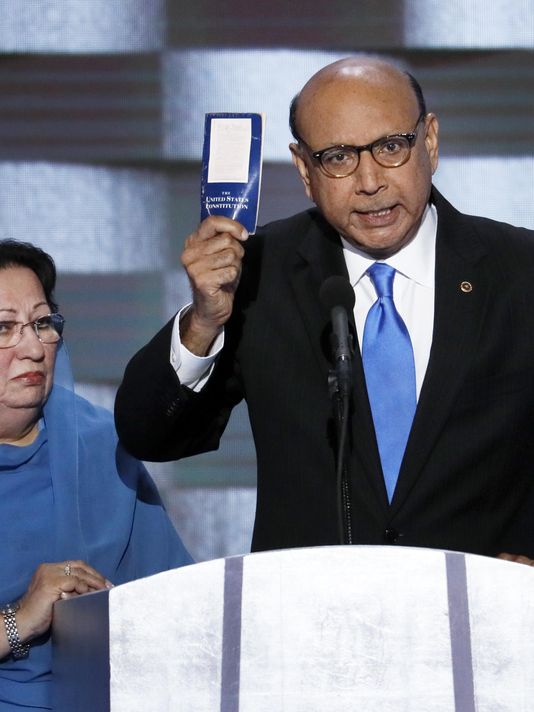
O’Reilly:  “I’ll tell you how.  Remember the 2016 Democratic Convention?  One of the Kahn at DNCmost memorable moments was the speech by Khizr Kahn talking about loss of his son, an officer in the US military, and then Mr. Kahn’s offer to lend Donald Trump a copy of his constitution.”

Rock Man:  “That was a great moment.”

O’Reilly:  “Mr. Kahn started an important dialogue that changed many people’s mind about the ‘credibility’ of the Donald.  You might become the new Mr. Kahn for changing discourse in the black community.”

Rock Man:  “Thanks but where am I going to get that kind of audience?”

O’Reilly:  “You can start right here.  I realize there aren’t many black viewers for this show.  Maybe we can change that…at least when you’re on.”

Rock Man:  “Are you inviting me back?”

O’Reilly:  “Rock Man, this country has a problem – an underperforming black community.  And all of us need to help with a turnaround.”

Rock Man:  “Help, yes, but the black community needs to take the lead.  You serious about using this show?”

agreement-clipart-business_handshakeO’Reilly:  “Yes, dead serious.  While you and I are opposite politically, we both want to help the black community improve.  As part of that effort you can a regular on this show.  Have we got a deal?”

Rock Man:  “Bill, you’re a persuasive guy.  We’ve got a deal.”

#211 The Blame Game – Starting to Bridge the Gap (Part 3)

31 Sunday Jul 2016

Posted by Jordan Abel in Education Issues, Possible Solutions, Societal Issues

≈ 1 Comment

First-time readers, this blog is set in the future (sometime after the year 2020).  Each entry assumes there has been a 5th revolution in the US — the Revenge Revolution.  More about Revenge Revolution and author, Entry #1.  List and general description of entries to date.  Annual assessment whether Revolution plausible.

Note: most characters appear in a number of entries, with many entries building on previous conversations.  Profile of characters.  You’ll catch on quickly.  Thanks for your time and interest…and comments.

Scene: Rock Man calling Bill O’Reilly’s office.  (Part 1 of conversation begins Entry 209)

O’Reilly’s Assistant:  Mr. O’Reilly’s office.  May I help you?”

telephone-operator_141743005Rock Man:  “My name is Rock Man.  I was referred to Mr. O’Reilly by…”

O’Reilly’s Assistant:  “…Oh, yes, Rock Man, we’ve been expecting your call.”

Rock Man:  “Really?  How’d you know I was going to call?”

O’Reilly’s Assistant:  “Gelly…in Jordan Abel’s office…called me and gave me a heads up.  She and I have been friends for years.  We went to high school together.”

Rock Man:  “She never mentioned that…or maybe I was so shocked about the idea of 010114_1941_20RockMans1.pngcalling Mr. O’Reilly I didn’t hear her.  Is Mr. O’Reilly available to talk?”

O’Reilly’s Assistant:  “Yes.  FYI, he prefers you call him Bill.  He’s also been briefed on why you’re calling.  I’ll put him through.”

O’Reilly:  “Bill O’Reilly here.  Is this Rock Man?”

Rock Man:  “Yes.  Nice to meet you.  If you have a few minutes I’d like to discuss your talking points about starting a conversation with the black community.”

O’Reilly:  “I’d love to talk.  I assume you’re talking about the list I published a few Oreilly Head Shotyears ago?”

Rock Man:  “Yes, from 2016 I think.”

O’Reilly:  “Even after the Revenge Revolution, there seems to be a huge gap between say what seems important to the Black Lives Matter movement and what many in the white community think is important.  However, before we start discussing the list of question, could you run through your background, please?  I’ve heard some but I’d like to hear more from you.”

Rock Man:  “Grew up in eastern North Carolina, one of 8 children.  Parents were tenant cotton farmers.  Parents had very limited education – maybe through 8th grade but I don’t really know.”

DrakeO’Reilly:  “Did I understand correctly that all the children graduated from college – I mean all 8 of you graduated?”

Rock Man:  “Yes.  Several earned graduate degrees.”

O’Reilly:  “Amazing…and very impressive.  My apologies for asking, but you are black, right?”

Rock Man:  “Yes, and no apologies necessary.”

O’Reilly:  “And you went to college where?”

Rock Man:  “Started out at Johnson C. Smith in Charlotte…”

O’Reilly:  “…Smith is a historically black college?”

UNC_Charlotte_logoRock Man:  “…yes.  My junior year I transferred to University of North Carolina-Charlotte because the curriculum was more rigorous.”

O’Reilly:  “Then what?”

Rock Man:  “After graduating I opened a rock climbing gym in Charlotte.  At the time I think I was the only black guy in the country that owned a climbing gym.”

O’Reilly:  “Ah, that answers my question of why the name Rock Man.  Married?”

Rock Man:  “Yes, wife’s an executive with a large international company.”

O’Reilly:  “Kids?”

Yale_Bulldogs2Rock Man:  “Two – daughter and son.  Both accelerated programs.  Our daughter has her heart set on Yale or Harvard.”

O’Reilly:  “Wow, what a background.  You and your wife are true role models.”

Rock Man:  “You sound like Jordan Abel.  You know Jordan?”

O’Reilly:  “We’ve met a couple of times and had a few drinks together.  So now you have at least two people in Washington citing you as a role model.  I really am impressed.”

Rock Man:  “Thanks.  Now, what about your background?

O’Reilly:  “Nothing as impressive as yours.  I’m just a commentator.”

Rock Man:  “Speaking of commentators, do you know why the aristocratic father potato-clip-art-clippotato3potato would not let the aristocratic daughter potato marry Bill O’Reilly?”

O’Reilly:  “I give.  Why?”

Rock Man:  “Because he was just a common tator.”

O’Reilly:  “You got me there Rock Man.  That was bad.”

Rock Man:  “OK, whadda say we get started on your list of questions for the black community?”

O’Reilly:  “We’ll get to the list but I’ve got an idea on how we approach it.  Based on what I know about you and our conversation so far, I think our discussion about the list will be productive and interesting to a lot of people.  We also have an opportunity to demonstrate how two people with likely polar opposite views on a number of issues can have a civilized and meaningful conversation.  I think you need to come on the show.”

Rock Man:  “Huh?  Me on your TV show?”

O’Reilly:  “Why not?”

Rock Man:  “What about a rehearsal?  We could sort of practice now.”

O’Reilly:  “The show will be more effective with just the two of us talking…and no tv-camera-clipart-1.jpgrehearsal.  We’ll tape it so if there’s a major problem we can do some edits.  However, I think the more spontaneity, the more credibility the conversation will have.  How ‘bout it?”

Rock Man:  “OK, but how soon?”

O’Reilly:  “Ideally within the next week.  I need to review my calendar and see what times are available.  You have any restrictions on time?”

Rock Man:  “During the day is better.”

O’Reilly:  “Alright.  We’ll get back.  And thanks Rock Man.  Looking forward to meeting in person.”

Rock Man:  “Same here.”

(Continued)

#210 The Blame Game (Part 2)

24 Sunday Jul 2016

Posted by Jordan Abel in Personal Stories, Possible Solutions, Societal Issues

≈ Leave a comment

First-time readers, this blog is set in the future (sometime after the year 2020).  Each entry assumes there has been a 5th revolution in the US — the Revenge Revolution.  More about Revenge Revolution and author, Entry #1.  List and general description of entries to date.  Annual assessment whether Revolution plausible.

Note: most characters appear in a number of entries, with many entries building on previous conversations.  Profile of characters.  You’ll catch on quickly.  Thanks for your time and interest…and comments.

Scene: Jordan’s office, Washington, DC.  (Conversation begins #209)

Gelly:  “OK, I watched O’Reilly’s video.”

092615_2031_Characters7.gifJordan:  “…and?”

Gelly:  “No surprise that I didn’t agree with everything he said but his points were well taken.  We’ve got to start a conversation with the black community in order to start solving problems.”

Jordan:  “What do we do next?”

Gelly:  “I was going to ask you the same question.  Big set of problems.  Who’s going to take the lead?”

Jordan:  “Let’s make a list of people who might be good candidates.  Who comes to mind first?”

Gelly:  “For me, president Obama.  He’s been out of office a few years and stayed away from politics.”

TurtleneckJordan:  “Great choice, but I think he still might be considered too controversial.  You know who would be a good person to bounce ideas off of…and maybe lead the discussion before it gets too high-profile?”

Gelly:  “Someone who really understands the black community…like Rock Man?”

Jordan:  “Like Rock Man.  Been a while since we talked to him.”

Gelly:  “Want me to try to track him down?”

Jordan:  “Please.  If you find him, see if he can Skype.  In the meantime, I’ll make a few phone calls.”

(15 minute break in conversation)

Gelly:  “Found Rock Man.  He’s waiting for us to Skype.”  (Jordan’s makes Skype connection.)

092615_2031_Characters5.pngRock Man:  “Hey guys.  Long time, no talk to.  Gelly said you need some advice.  A big dog like you needs advice from me?”

Jordan:  “Yes, from you.  And who says I’m a big dog.  More like a fire hydrant.  Anyway, the challenge is two-fold: (i) how to get groups to take personal responsibility for fixing their problems; (ii) how to get groups to quit blaming someone else for their problems.”

Rock Man:  “And you’re calling me about…let me guess…about getting the black community to take more personal responsibility.”

Jordan:  “Gelly, he’s so perceptive.”

Rock Man:  “What do you want me to do?  I’m just one guy.”

Gelly:  “From my perspective, you’re an ideal role model for taking personal responsibility.”

Rock Man:  “In what way?”

Gelly:  “I don’t know the whole story but I understand you grew up in Eastern North Carolina, dirt poor with parents who had very limited education…”

Rock Man:  “…8th grade at best…”

college degreeGelly:  “…and yet all the children, what 6 or 7 of you, earned college degrees and several earned graduate degrees.  That just didn’t happen by accident.”

Jordan: “Gelly, Rock Man won’t tell you this part.  He started out in Charlotte at Johnson C. Smith, but after his sophomore year transferred to University of North Carolina-Charlotte in order to get tougher classes.”

Gelly:  “See, Rock Man, that’s exactly what I’m talking about.  You took personal responsibility for getting a better education.  Would have been easier to stay at JC Smith but you didn’t.  You are the perfect role model.”

Rock Man:  “C’mon, my shoes are getting brown.  There are much better role models basketball_player_06than I am.  What about Michael Jordan or LeBron James or a bunch of other athletes as role models?”

Jordan:  “You and I have talked about this before.  I think professional athletes are exactly the wrong role model for young black males.  How many black professional athletes, or for that matter all professional athletes, have a college degree?  Not just attend college but graduate?”

Rock Man:  “I don’t know but not many have degrees.  The problem among black teens is education isn’t sexy like athletics.  Plus education doesn’t guarantee big bucks.”

thimbleJordan:  “What percent of college athletes make it to the pros?  As small as that number is, what percent of high school students eventually end up in the pros?  Its miniscule — a thimble full at best.”

Gelly:  “Rock Man, your parents pushed education over athletics.  My parents were 1st-generation immigrants.  My mother was barely literate.  But you know what their goal was?  What they made significant sacrifices for?”

Rock Man:  “Same as mine?  Getting the kids through college?”

Gelly:  “The goals of my parents and your parents were no different from goals of most Old Man immigrant families.  Achieving those goals might take 2 or 3 generations and many will be grandparents or great grandparents before it happens.  But the goals of the parents were clear – get the kids through college or a comparable technical school.  So if families from Europe, Asia, wherever follow the same model, why shouldn’t black families?  Your parents did…and look how the family turned out.”

Jordan:  “Seems like the best person to start talking to the black community is someone who understands the hardships of the black community and the cultural norms.”

Gelly:  “Like I keep saying, someone like you Rock Man.”

Rock Man:  “Ok, you guys are persuasive.  How do I get started?”

Jordan:  “My view is the black community needs to: (i) take the lead in this effort; (ii) ask for help from other groups, even the police.”

Rock Man:  “Let me ask again, ‘how do we get started?’”

TrumpJordan:  “Since the Revenge Revolution, the political environment is less toxic that a few years ago…”

Rock Man:  “…you mean like the toxic environment when Donald the bomb thrower was running for president?”

Jordan:  “Yes.  Make no mistake, the atmosphere is still tense.  If I were you, Rock Man, I’d reach way across the aisle and ask for help from a perceived adversary to the black community.  Someone, who if you worked with, would cause everyone to turn their head.”

Rock Man:  “Like who?”

Gelly:  “Earlier today I looked at a short video from 2016 made by Bill O’Reilly.”

Bill-O’ReillyRock Man:  “Like the Bill O’Reilly?”

Gelly:  “I said exactly the same thing when Jordan asked me to look at it.  Let me tell you, O’Reilly listed some very good questions that would help start a meaningful dialogue.”

Jordan:  “So, why not reach out to O’Reilly and get his opinion?”

Rock Man:  “Can you send me the link to the video, please?”

Jordan:  “Take a look and then ask yourself, what’s really the downside of talking to him about the issues he listed?  You might be surprised.  He might be very helpful.”

Rock Man:  “Alright, I’ll review and get back.”

(Continued)

#186 Reconfiguring US for “Smart” Manufacturing and “Smart” Infrastructure (Part #10)

24 Wednesday Feb 2016

Posted by Jordan Abel in Gov't Policy, Possible Solutions, Societal Issues

≈ 1 Comment

First-time readers, this blog is set in the future (sometime after the year 2020).  Each entry assumes there has been a 5th revolution in the US — the Revenge Revolution.  More about Revenge Revolution and author, Entry #1.  List and general description of entries to date.  Annual assessment whether Revolution plausible.

Note: most characters appear in a number of entries, with many entries building on previous conversations.  Profile of characters.  You’ll catch on quickly.  Thanks for your time and interest…and comments. 

Scene: Jordan still home recovering from surgery. He anticipates returning to Washington soon. He’s drafting a note as follow-up to a request from POTUS.  Series starts #177; conversation with POTUS, #179.

TurtleneckJordan (thinking out loud): “Maybe I should send POTUS an email with the basic tenants of the plan. That way he can review it and forward to others for review.”

To: POTUS@wh.gov, Subject: Ideas to Reconfigure US Manufacturing to be “Smart.”

Mr. President: this note outlines the framework of a plan to help reconfigure US manufacturing and infrastructure to be “smart.”  Being smarter will help US manufacturing become more  competitive and help restore the middle class.

021214_1242_24Resultsof1.gifThe program is also designed to be fair to US trading partners while recognizing this country needs to rebuild wealth generation capability.  The “working name” for the program is “ACT FAIRLY.”  One of your speech writers can come up with a sexier name.  My preference is “Get Smart” but could not make the acronym work.

The acronym FAIRLY stands for:

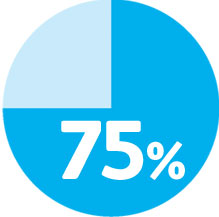
  • “F” – Favor US manufactured goods in government purchases. “US manufactured” would require 75.0% or more local content.
  • “A” – Allow foreign investment but limit the percent foreign market share in any one industry to 25.0%
  • “I” – Infrastructure – rebuild existing infrastructure and expand to be “smarter” and support additional manufacturing
  • “R” – Rebuild US factories to be “smarter” and retrain US workers to be “smarter.”
  • “L” – Legislation passed supporting the proposed program rather than implementing through an Executive Order
  • “Y” – “You” are responsible to implement. “You” refers to individuals, organizations and government entities.

carnacThe proposed program is admittedly more of a vision than a detailed plan. Think of yourself as the Great Carnac.  However, I do believe this type program needs a clear vision that is easily understood and one that can guide activities at multiple levels.

I like the an acronym like “FAIRLY” because the country has been so divided economically and socially. While each person might have a different view of how to “act fairly,” I think the outer boundaries of “fair behavior” are likely much closer together than if no reference points are set.  We need to mesh the combination of “fairly” and “smart.”

The following paragraphs provide a bit more detail. No doubt you will want to tweak for your own style. Thought this might be a good starting point.

F — Favor US Manufactured Goods. To me the Federal government and state governments should lead the way toward buying US-manufactured goods. One issue is 75 percentthe minimum level of “local content” to qualify for labeling as “US Manufactured.” My suggestion is 75.0% of the wholesale cost must be US content. The content can be raw material or labor or some combination. What cannot be labeled as “US Manufactured” is a product where most of the work is completed outside the US with only final assembly in the US. Final assembly creates little value add and does not create many higher-paying jobs.

Allow Foreign Companies in US. The 75.0% local content requirement still allows foreign companies to have a major US presence. However, the foreign share of any key US market should not exceed 25.0%. For example, virtually all the electronics sold in the US are manufactured outside the US. My question is ‘why?’ when the labor content of electronics is such a low percentage of total cost. If the foreign companies want to work with a US partner, OK, as long as local content is at least 75.0% of the wholesale cost.

The US is a huge market and 25.0% represents a very attractive opportunity for most companies. 25.0% of the US market is greater than 100.0% of most other countries. In addition, foreign companies can partner with US companies and be part of a “US Manufactured” product.

Infrastructure. President Eisenhower led the nation to build the interstate highway dwight_d_eisenhowersystem. You can lead the charge to rebuild physical transportation – roads, rail, air and water – and electronic transportation – the internet. Without the upgraded infrastructure, the economic effect of rebuilding the US manufacturing base will be much less. The transportation infrastructure needs to be more than just highways as favored by too many Congressional reps. The entire infrastructure needs to be rebuilt to be “smart,” allowing for smart/driverless cars, smart trains, smart planes and smart watercraft on inland waterways.

Like Eisenhower, you can position infrastructure rebuilding as part of national defense. Since every state will benefit from the improved infrastructure rebuilding program, Congressional support should be less of a hurdle.

Rebuild US Factories and Retrain Workers. As we’ve discussed, much of what is labeled in this country as “economic development” is really a wealth transfer from the public sector to a small group in the private sector. The ACT FAIRLY program needs to factory_07point out the cost penalties (i) associated with US-based companies relocating within the US; (ii) building greenfield facilities; and  (iii)abandoning existing facilities in another location. I think ACT FAIRLY should ban incentives for any intra-US relocation. ACT FAIRLY should also include payment to the existing host city for companies that relocate.

Why should US taxpayers subsidize companies to relocate when existing manufacturing facilities are available in Flint, Detroit, Cleveland, Buffalo, Chicago, New York and a host of other locations? Rebuild the facilities in these cities first before we allow greenfield facilities elsewhere. The greenfield plants need infrastructure. Why build new infrastructure when existing infrastructure exists? If taxpayers understood the true economics, they would not allow such shenanigans.

manufacturing-production-operations-jobsRe-educating workers is critical also. People are smarter and more willing to learn than we…societal we…give them credit for. If someone is offered a retraining opportunity and turns it down, then go to the next person in line. There are many people looking to improve their economic standing.

The retraining needs to include providing more access to classes in “skilled trades,” especially for high school students. College sounds glamorous but not everyone is suited for college nor interested in college. Besides “skilled trades” does not mean the person is not smart or well-educated.

TOH LogoOne of my “heroes” is Tom Silva on This Old House. Tom is an absolute master at solving complex problems using basic math in a very practical way. What’s his formal education? As I recall his profile on the TOH website, Tom graduated high school but did not attend college.

Legislation. While you might be able to issue an Executive Order to mandate the Federal government buys only goods with 75.0% US content, doing so would create Congressanother firestorm of charges of “overreach” and “dictator.” Provide the vision and the framework for the idea, then put the pressure on Congress to pass legislation. Some will squawk but the pressure from constituents will be considerable. People expressed their great frustration by initiating the Revenge Revolution. ACT FAIRLY is an excellent, low-risk opportunity for the House and Senate to start acting like adults.

You – Personal Responsibility. Using the bully pulpit I think you can begin to have mirror-clipart_jpgpeople look in the mirror and then begin changing their minds about why they should buy US-made products. Some companies will claim costs of US products will be higher and therefore not competitive,  However, when people start buying products that qualify as “US Manufactured” then the naysayer companies will begin changing. Same with government. People will begin to demand taxpayer dollars are spent on US-manufactured products and not products manufactured elsewhere.

Summary. Obviously the proposed program needs more discussion and analysis…and name tweaking. However, I caution those who might get involved not to get caught up in paralysis from analysis. Or, as my mother-in-law told her daughters when they were growing up, “Don’t get your panties in a wad.”

The ACT FAIRLY concept is sound and can be implemented. As POTUS you have a great opportunity to lead the transition from the Revenge Revolution to a more dynamic country and fair society. People want a change.

I’m available if you want to chat. Should be back in Washington in a couple of weeks. Thanks for the opportunity to present my ideas.

Best regards, Jordan

#183 Are Wall Street Traders Really Traitors? (Part #7)

03 Wednesday Feb 2016

Posted by Jordan Abel in Corporate Policy, Gov't Policy, Personal Stories, Possible Solutions, Societal Issues

≈ Leave a comment

First-time readers, this blog is set in the future (sometime after the year 2020).  Each entry assumes there has been a 5th revolution in the US — the Revenge Revolution.  More about Revenge Revolution and author, Entry #1.  List and general description of entries to date.  Annual assessment whether Revolution plausible.

Note: most characters appear in a number of entries, with many entries building on previous conversations.  Profile of characters.  You’ll catch on quickly.  Thanks for your time and interest…and comments. 

Scene: Jordan and POTUS continue conversation about rebuilding US manufacturing and the middle class. Series starts #177; conversation with POTUS, #179.

POTUS: “Jordan, you’re taking a tough stand. Aren’t you making it harder for white-house-clip-art1manufacturing companies? Won’t companies just leave…or just start the company outside the US and not worry about regulations?”

Jordan: “Might be making it a little more difficult. But a counter is having tax breaks for US made products.”

POTUS: “You talking about tariffs for imports? We’ve got all these trade agreements between the US and other countries.”

TurtleneckJordan: “What I’m suggesting is goods manufactured in the US – manufactured, not just assembled in the US – get some sort of tax relief. The goal is to make it less attractive for executives to locate outside the US.”

POTUS: “What about companies relocating in the States? Should there be some sort of penalty?”

Jordan: “Like banning Charlotte from recruiting companies from New York, Ohio, Michigan and elsewhere. Like I said earlier, recruiting from another state seems more like stealing to me.”

POTUS: “Couldn’t we allow states still to recruit but say ban any tax breaks or other type of incentives? Another approach would be to levy a tax on the company for relocating.”

Jordan: “Some type of tax or penalty seems reasonable. At a minimum companies should checkbook2pay for displaced workers and the loss in tax base in the community they’re bailing out of.”

POTUS: “What do we do about the influence of Wall Street? The Street seems to put lots of pressure on companies to meet quarterly earnings targets.”

Jordan: “I view the so-called pressure as an excuse by CEO’s to cut expenses and mask poor management. Some tweaks to operations are always necessary but the company is either being run fundamentally correctly or not.”

POTUS: “If the company is being run properly, any earnings shortfall in one or two quarters should work itself out. Is that what you’re saying?”

Jordan: “Exactly what I’m saying. Sophisticated investors understand that. Warren Buffett is a perfect example. Did he build the value of Berkshire Hathaway by focusing on quarterly earnings?”

POTUS: “No.”

DogJordan: “So there’s the lesson for investors. Be patient.  We’ve allowed the traders on Wall Street to gain the upper hand.  As a result management start to focus on the wrong issues.”

POTUS: “Are we letting the tail wag the dog, as it were?”

Jordan: “We…societal we…are letting Wall Street traders have too much influence on the way businesses are run. The time horizon for traders is minutes, not months or years. The political right would be apoplectic if they ever heard me say this, but the traders are more like traitors. They really don’t care about this country.”

traitorPOTUS: “C’mon. Wall Street traders are traitors? How can you say that?”

Jordan: “Because the traders have no loyalty to the company or the country. They do not care if a company goes under, the company moves production off shore and ruins a town. The traders care about one thing – making money on every trade.”

POTUS: “Keep talking.”

Jordan: “Think about it. Pension funds and individuals…but mostly pension funds…have large securities portfolios. What are the pension funds supposed to do?”

POTUS: “Protect the money of employees, current and former.”

Jordan: “Do you think the employees believe its smart business to ship jobs overseas and eliminate their own job?”

POTUS: “That seems like a silly question. Of course not.”

CashJordan: “Well, CEO’s are doing exactly that. Why? To boost quarterly earnings so some a-hole doesn’t start trying to drive down the stock price and encourage a hedge fund to begin a takeover. I sound like a broken record, but do you think for a microsecond the traders care about the company?”

POTUS: “I hear you Jordan.”

Jordan: “Who does care about the company, or at least should care about the company?”

POTUS: “Employees, the pension fund…”

Jordan: “…and maybe some of the executives. Then why do we have all these laws that permit manipulation of stock prices? Even worse is allowing investors to raid companies.”

POTUS: “How do you propose we stop that?”

Screwed-GuyJordan: “Mr. President, I don’t know. But what I do know is the American worker is getting screwed and wealth is being transferred from the worker to a small group of investors and some countries outside the US.”

POTUS: “What about unions? Wall Street and the execs are not the only ones playing this gig.”

Jordan: “I’m not naïve. Some unions were a problem 15-20 years ago. But they’re not now. And I contend the unions never were as big a problem as a lot of people claimed.”

POTUS: “I’ve heard stories where unions drove companies out of town.”

Jordan: “I have to. And there are likely a few examples. But people forget, unions are made up of people. People with kids and families. And people with feelings.”

POTUS: “Some people will claim you sound like some screaming liberal.”

Jordan: “For some issues, I probably am. I’ll give you an example of why I feel this way. Years ago, when I was at Buick, our department ‘hosted’ students during their men talkingco-op work period from Kettering University – it was General Motors Institute then. One session the son of the president of the UAW local was working in our department. A short time after the co-op work session ended, some of us attended a meeting with the UAW. The president and I chatted a while and then joined the rest of the group. I got all kinds of semi-nasty questions about why I was talking to the president.”

POTUS: “How’d you respond?”

Jordan: “I told ’em I was asking how his son was doing in school. And that the president thanked me for taking his son under my wing.”

POTUS: “You think that happens very often?”

Jordan: “Probably not, but it should. We were a couple of guys trying to help a young man get an education. What’s so terrible about that?”

POTUS: “Sounds as if both of you were trying to do the right thing. You have another example?”

Jordan: “Yes.”

POTUS: Remember the second story, please.  I’ve got to head to yet another meeting.”

(Continued)

#182 Company Relocations. Economic Development or Stealing? (Part #6)

30 Saturday Jan 2016

Posted by Jordan Abel in Causes of the Revolution, Corporate Policy, Gov't Policy, Possible Solutions, Societal Issues

≈ 2 Comments

First-time readers, this blog is set in the future (sometime after the year 2020).  Each entry assumes there has been a 5th revolution in the US — the Revenge Revolution.  More about Revenge Revolution and author, Entry #1.  List and general description of entries to date.  Annual assessment whether Revolution plausible.

Note: most characters appear in a number of entries, with many entries building on previous conversations.  Profile of characters.  You’ll catch on quickly.  Thanks for your time and interest…and comments. 

Scene: Jordan and POTUS continue conversation about rebuilding US manufacturing. Starts entry #179.

POTUS: “As you were saying, GM technically went bankrupt in the 1990’s but never white-house-clip-art1declared it. How so?”

Jordan: “Remember a company called GMAC?”

POTUS: “Wasn’t GMAC the finance arm of GM?”

Jordan: “Yes.  To help beef up the cash position and avoid being forced to declare bankruptcy, GM moved money from GMAC to the operating company.”

POTUS: “Isn’t that illegal?”

GM,_logoJordan: “Probably so but the financial guys covered their tracks very well. Part of the problem was caused by a number of accounting changes in the 1980’s during  Squeaky’s reign.  The accounting changes masked some earnings shortfalls.”

POTUS: “Pardon me for interrupting but whoever gave Roger Smith the name Squeaky deserves a drink.”

Jordan: “And I’ll buy.  Anyway, with all the accounting changes, it became very difficult to determine where there were real performance problems.  I’m not sure the finance guys really knew what was happening month-to-month.  Sales and market share kept dropping and the cash was no longer coming in…and they essentially ran out of cash in 1992.”

POTUS: “Without getting into more detail about GM, what policies should we consider to encourage manufacturers to stay in the US, or return to the US if they’ve left?”

TurtleneckJordan: “One issue that has always bothered me is the ability of companies to pick up and relocate with little or no consequence.”

POTUS: “Isn’t that a fundamental of capitalism?”

Jordan: “It’s very one-sided. Why should community and the employees make a commitment when the other side, the company, does not have to make a commitment?”

POTUS: “Are you saying the current system is unfair?”

Jordan: “Grossly unfair. And there are a couple of reasons why. First, the community Unfairand employees are often forced to make a financial sacrifice if the company threatens to relocate. Then the company can still pick up and leave.”

POTUS: “But, the community and employees have benefitted. The company has paid taxes and the employees have jobs. What’s not fair?”

Jordan: “The company has no downside risk. Heads I win, tails you lose.”

POTUS: “What if the company doesn’t sell product and make any money?”

Jordan: “Decisions that affect competitiveness are made by executive staff, not the employees or the town’s taxpayers. Failure to develop and introduce new product is a management issue, not an employee issue.”

POTUS: “What else?”

Jordan: “Laws in this country allow a company to bleed a community dry, and then taxpayerrelocate. As part of the relocation plan, the company demands prospective towns provide incentives.  It’s a shakedown.”

POTUS: “Many people consider that economic development.”

Jordan: “I consider it stealing. Its only economic development in the eyes of the city where the company relocates. And most of those cities are too lazy to develop businesses on their own.”

POTUS: “Jordan, that’s pretty harsh.”

Jordan: “Pardon me, Mr. President, but to call incentivizing a company to relocate ‘economic development’ is BS. The only people who gain in the deal are the executives of the company…and probably a few elected officials. The overall economy loses.”

POTUS: “Tell me why you think the economy is worse off.”

Jordan: “Employees and the community where the plant was located now have a lower Screwed-Guytax base, and very likely a higher welfare roll. They got screwed.  People where the company relocated have to absorb the cost of the incentives. They might not know it but they’ve been screwed.  Simple question, ‘Did employees’ wages increase?'”

POTUS: “No. Wages probably decreased except for the executives. Shareholders might benefit. I see your point.”

Jordan: “When you cut through the layers, relocation is another way to redistribute wealth…but disguised as economic development.”

POTUS: “How do we fix the problem, assuming we can convince people it is a problem?”

Jordan: “Convincing people should not be difficult. Start talking to people in cities where companies have left and see if they think its a problem.  And ask them who came out ahead.”

Fisher 21POTUS: “You mean people in cities like Flint, Buffalo, Cleveland…and a bunch of other places.”

Jordan: “You got it. The solution to such relocations…at least a partial solution?  Make the relocation costly…and difficult.”

POTUS: “Can a plan like that work?”

Jordan: “Look around Europe. Go no farther than Germany if you want to see if such an approach works.”

POTUS: “Lots of things work in Europe that don’t work in the US. National health care and gun control, for example.”

american-revolution-728714Jordan: “Attitudes in the US have changed since the Revenge Revolution. Now seems to be a good time to rethink whether we allow companies to pick up and move with no consequence.”

POTUS: “What if companies just declare bankruptcy and restart somewhere else?  And what about the unions?  Don’t they have some responsibility to keep a company from moving?”

(Continued)

← Older posts
Newer posts →

Subscribe

  • Entries (RSS)
  • Comments (RSS)

Archives

  • August 2025
  • July 2025
  • June 2025
  • May 2025
  • April 2025
  • March 2025
  • January 2025
  • December 2024
  • November 2024
  • September 2024
  • August 2024
  • July 2024
  • June 2024
  • May 2024
  • April 2024
  • March 2024
  • February 2024
  • January 2024
  • December 2023
  • November 2023
  • October 2023
  • September 2023
  • August 2023
  • July 2023
  • June 2023
  • May 2023
  • April 2023
  • March 2023
  • February 2023
  • January 2023
  • December 2022
  • November 2022
  • October 2022
  • September 2022
  • August 2022
  • July 2022
  • June 2022
  • May 2022
  • April 2022
  • March 2022
  • February 2022
  • January 2022
  • December 2021
  • November 2021
  • October 2021
  • September 2021
  • August 2021
  • July 2021
  • June 2021
  • May 2021
  • April 2021
  • March 2021
  • February 2021
  • January 2021
  • December 2020
  • November 2020
  • October 2020
  • September 2020
  • August 2020
  • July 2020
  • June 2020
  • May 2020
  • April 2020
  • March 2020
  • February 2020
  • January 2020
  • December 2019
  • November 2019
  • October 2019
  • September 2019
  • August 2019
  • July 2019
  • June 2019
  • May 2019
  • April 2019
  • March 2019
  • February 2019
  • January 2019
  • December 2018
  • November 2018
  • October 2018
  • September 2018
  • August 2018
  • July 2018
  • June 2018
  • May 2018
  • April 2018
  • March 2018
  • February 2018
  • January 2018
  • December 2017
  • November 2017
  • October 2017
  • September 2017
  • August 2017
  • July 2017
  • June 2017
  • May 2017
  • April 2017
  • March 2017
  • February 2017
  • January 2017
  • December 2016
  • November 2016
  • October 2016
  • September 2016
  • August 2016
  • July 2016
  • June 2016
  • May 2016
  • April 2016
  • March 2016
  • February 2016
  • January 2016
  • December 2015
  • November 2015
  • October 2015
  • September 2015
  • August 2015
  • July 2015
  • June 2015
  • May 2015
  • April 2015
  • March 2015
  • February 2015
  • January 2015
  • December 2014
  • November 2014
  • October 2014
  • September 2014
  • August 2014
  • July 2014
  • June 2014
  • May 2014
  • April 2014
  • March 2014
  • February 2014
  • January 2014
  • December 2013

Categories

  • Affordable Solutions
  • Back Asswards Thinking
  • Background
  • Background Stupid Is as Stupid Does
  • Benefits of Revolution
  • Causes of the Revolution
  • Common Sense Policies
  • Corporate Policy
  • Definitions
  • Diversions
  • Economics
  • Education Issues
  • Federal Budget
  • General Motors
  • Gov't Policy
  • Infrastructure & Fixed Fuel Prices
  • Innovative Thinking: Ideas and Products
  • Lessons of Revolution
  • Personal Stories
  • Possible Solutions
  • Post Trump Presidency
  • Rebranding Black Community
  • SCOTUS
  • Sense Check
  • Societal Issues
  • Stupid Is as Stupid Does
  • Tech Tsunami
  • Trump 47
  • Uncategorized

Meta

  • Create account
  • Log in

Create a free website or blog at WordPress.com.

Privacy & Cookies: This site uses cookies. By continuing to use this website, you agree to their use.
To find out more, including how to control cookies, see here: Cookie Policy
  • Subscribe Subscribed
    • usrevolution5
    • Join 32 other subscribers
    • Already have a WordPress.com account? Log in now.
    • usrevolution5
    • Subscribe Subscribed
    • Sign up
    • Log in
    • Report this content
    • View site in Reader
    • Manage subscriptions
    • Collapse this bar
 

Loading Comments...