• Home
  • Booklets/Grouped Entries
  • Tech Tsunami
  • List of Entries to Date
  • About the Author

usrevolution5

~ USA Headed for a 5th Revolution! Why?

usrevolution5

Category Archives: Personal Stories

Every story is influenced by personal issues. These stories add another dimension to the characters. Besides, the stories are a good break from the serious issues associated with the revolution.

#184 How Manufacturing in US Can Help Medical Patients, (Part #8)

10 Wednesday Feb 2016

Posted by Jordan Abel in Education Issues, Gov't Policy, Innovative Thinking: Ideas and Products, Personal Stories

≈ Leave a comment

First-time readers, this blog is set in the future (sometime after the year 2020).  Each entry assumes there has been a 5th revolution in the US — the Revenge Revolution.  More about Revenge Revolution and author, Entry #1.  List and general description of entries to date.  Annual assessment whether Revolution plausible.

Note: most characters appear in a number of entries, with many entries building on previous conversations.  Profile of characters.  You’ll catch on quickly.  Thanks for your time and interest…and comments. 

Scene: Jordan and POTUS continue conversation about rebuilding US manufacturing and the middle class. Series starts #177; conversation with POTUS, #179.

Scene: Jordan is at home in Charlotte.

Jordan: (answering phone), “Hello, Jordan Abel speaking. May I help you?”

POTUS: “Yes, you may help. This is POTUS. But Jordan, drop the formality. Relax. white-house-clip-art1You’re at home remember?”

Jordan: “How’d you know I was here, Mr. President?”

POTUS: “You know better than to ask that kind of question. How’s the recovery coming?”

Jordan: “Recovery coming along OK. Getting better each day.”

POTUS: “I didn’t know you had an issue. What hanged your mind and why surgery?”

Jordan: “The short version is long-time GP has been monitoring my PSA readings, Turtleneckwhich have been creeping up over the past several years. About 15 months ago he suggested I see a urologist.”

POTUS: “Higher PSA levels seems to be a problem for a lot of older guys…like you.”

Jordan: “And, you Mr. President, will probably have the same problem.”

POTUS: “I know. Being a big dog doesn’t make one immune from health problems. And we all get older. More details about what happened, please.”

Jordan: “I had biopsy 14-15 months ago and another late last year. After reviewing results from the second biopsy, which were still reasonably good, doctor recommended doctor-clipart-illustration-31325we explore treatment options.”

POTUS: “Why surgery versus some other treatment? Surgery seems so radical.”

Jordan: “Considered five primary data points. Following is my analysis, not the urologist’s, although I think he would agree with the general statements. For other people, the recommendation might be different.”

POTUS: “Understood.”

Jordan: “#1 consideration – to what extent was the cancer concentrated in the prostate or nearby. By removing the prostate, most if not all the cancer would be call centerremoved. #2, if follow-on treatment required, what options are available with each treatment? Some treatments leave few or even no options for follow-on. #3, what is the likelihood of negative effects following surgery? #4, what is the overall health of the patient. #5, what is the age of the patient? If I were much older and had other health problems, surgery might not be the best option, or even an option. But I’m relatively young and healthy so I needed a treatment that reduced the likelihood that prostate cancer would become a primary issue. If you consider all those factors, surgery seemed best for me. ”

POTUS: “OK but surgery’s been around a long time. I’ve heard some horror stories. Is there something different now versus say 5-10 years ago?”

Jordan: “Micro-surgery using robots. With the robots, really semi-robots since the surgeon still controls the movements, the precision is greatly enhanced and size of incisions reduced.”

POTUS: “Just out of curiosity, was the equipment made in the US?”

da-vinci-system-si-seated-surgeon-nurse-at-cart-400x235Jordan: “Forgot to ask. The brand name is diVinci. The diVinci system is a great example how technology can improve people’s quality of life and extend expected lifespan. The product would be a good example to include in your speeches about the importance of and benefits of US manufacturing.”

POTUS: “Are you OK if I mention your experience?”

Jordan: “You know I’m uncomfortable about personal acknowledgement. But, if citing a real person in the story, and one that you know, helps build credibility, go ahead. Lots of guys face the prostate problem and they should know diVinci is not your father’s surgery.”

POTUS: “Thanks for agreeing. There’s lot of areas where technology and manufacturing can help the medical community and patients. This will be a great example.”

Jordan: “”If you’ve got a few more minutes, I’ll tell you a couple of funny stories connected with the surgery.”

POTUS: “I’m all ears. Been a rough day and I need some humor.”

Jordan: “At discharge the nurse is running through her list of ‘do’s’ and ‘don’ts.” Part way through, she says “no sex.” At this point I break out laughing and ask her how I’m NO SEXsupposed to have sex when there’s a catheter inserted you know where.”

POTUS: “That’s funny. Sounds like a good skit for Saturday Night Live. You got another one?”

Jordan: “With this micro-surgery, some air is inserted in the body cavity to provide more space to operate.”

POTUS: “Sounds painful.”

Jordan: “I think the excess air in post=op was more painful that the incisions. Anyway the goal is to expel as much of the remaining gas as quickly as possible but without any undue strain. They don’t want you to press so hard you’ll damage the stitches and cause more bleeding. So you have to let the air work itself out.”

POTUS: “How long’s that take?”

Jordan: “I made no progress until later in the 3rd day.”

POTUS: “Progress being what?”

thumbs upJordan: “In the 50+ years I’ve known my wife, I don’t think she’s every complimented me on ripping one off.”

POTUS: “She complimented you? Wow, I need to remember that. What day was that…?

Jordan: “…Saturday.”

POTUS: “Then what?”

Jordan: “We started to laugh.”

POTUS: “Doesn’t laughing hurt where the incisions are?”

Jordan: “Hurts big time, but it was worth it. By the way, she’s been a real trooper, especially nurseabout emptying ‘the bag.’ She deserves the Clara Barton Home Nurse Award.”

POTUS: “Glad you are in good hands. Tell her I said hello. Also glad you are on the mend. Let’s chat more soon. We need to continue to discuss how to rebuild US manufacturing and the middle class. But when you’re ready.”

Jordan: “Thanks for calling, Mr. President.”

#183 Are Wall Street Traders Really Traitors? (Part #7)

03 Wednesday Feb 2016

Posted by Jordan Abel in Corporate Policy, Gov't Policy, Personal Stories, Possible Solutions, Societal Issues

≈ Leave a comment

First-time readers, this blog is set in the future (sometime after the year 2020).  Each entry assumes there has been a 5th revolution in the US — the Revenge Revolution.  More about Revenge Revolution and author, Entry #1.  List and general description of entries to date.  Annual assessment whether Revolution plausible.

Note: most characters appear in a number of entries, with many entries building on previous conversations.  Profile of characters.  You’ll catch on quickly.  Thanks for your time and interest…and comments. 

Scene: Jordan and POTUS continue conversation about rebuilding US manufacturing and the middle class. Series starts #177; conversation with POTUS, #179.

POTUS: “Jordan, you’re taking a tough stand. Aren’t you making it harder for white-house-clip-art1manufacturing companies? Won’t companies just leave…or just start the company outside the US and not worry about regulations?”

Jordan: “Might be making it a little more difficult. But a counter is having tax breaks for US made products.”

POTUS: “You talking about tariffs for imports? We’ve got all these trade agreements between the US and other countries.”

TurtleneckJordan: “What I’m suggesting is goods manufactured in the US – manufactured, not just assembled in the US – get some sort of tax relief. The goal is to make it less attractive for executives to locate outside the US.”

POTUS: “What about companies relocating in the States? Should there be some sort of penalty?”

Jordan: “Like banning Charlotte from recruiting companies from New York, Ohio, Michigan and elsewhere. Like I said earlier, recruiting from another state seems more like stealing to me.”

POTUS: “Couldn’t we allow states still to recruit but say ban any tax breaks or other type of incentives? Another approach would be to levy a tax on the company for relocating.”

Jordan: “Some type of tax or penalty seems reasonable. At a minimum companies should checkbook2pay for displaced workers and the loss in tax base in the community they’re bailing out of.”

POTUS: “What do we do about the influence of Wall Street? The Street seems to put lots of pressure on companies to meet quarterly earnings targets.”

Jordan: “I view the so-called pressure as an excuse by CEO’s to cut expenses and mask poor management. Some tweaks to operations are always necessary but the company is either being run fundamentally correctly or not.”

POTUS: “If the company is being run properly, any earnings shortfall in one or two quarters should work itself out. Is that what you’re saying?”

Jordan: “Exactly what I’m saying. Sophisticated investors understand that. Warren Buffett is a perfect example. Did he build the value of Berkshire Hathaway by focusing on quarterly earnings?”

POTUS: “No.”

DogJordan: “So there’s the lesson for investors. Be patient.  We’ve allowed the traders on Wall Street to gain the upper hand.  As a result management start to focus on the wrong issues.”

POTUS: “Are we letting the tail wag the dog, as it were?”

Jordan: “We…societal we…are letting Wall Street traders have too much influence on the way businesses are run. The time horizon for traders is minutes, not months or years. The political right would be apoplectic if they ever heard me say this, but the traders are more like traitors. They really don’t care about this country.”

traitorPOTUS: “C’mon. Wall Street traders are traitors? How can you say that?”

Jordan: “Because the traders have no loyalty to the company or the country. They do not care if a company goes under, the company moves production off shore and ruins a town. The traders care about one thing – making money on every trade.”

POTUS: “Keep talking.”

Jordan: “Think about it. Pension funds and individuals…but mostly pension funds…have large securities portfolios. What are the pension funds supposed to do?”

POTUS: “Protect the money of employees, current and former.”

Jordan: “Do you think the employees believe its smart business to ship jobs overseas and eliminate their own job?”

POTUS: “That seems like a silly question. Of course not.”

CashJordan: “Well, CEO’s are doing exactly that. Why? To boost quarterly earnings so some a-hole doesn’t start trying to drive down the stock price and encourage a hedge fund to begin a takeover. I sound like a broken record, but do you think for a microsecond the traders care about the company?”

POTUS: “I hear you Jordan.”

Jordan: “Who does care about the company, or at least should care about the company?”

POTUS: “Employees, the pension fund…”

Jordan: “…and maybe some of the executives. Then why do we have all these laws that permit manipulation of stock prices? Even worse is allowing investors to raid companies.”

POTUS: “How do you propose we stop that?”

Screwed-GuyJordan: “Mr. President, I don’t know. But what I do know is the American worker is getting screwed and wealth is being transferred from the worker to a small group of investors and some countries outside the US.”

POTUS: “What about unions? Wall Street and the execs are not the only ones playing this gig.”

Jordan: “I’m not naïve. Some unions were a problem 15-20 years ago. But they’re not now. And I contend the unions never were as big a problem as a lot of people claimed.”

POTUS: “I’ve heard stories where unions drove companies out of town.”

Jordan: “I have to. And there are likely a few examples. But people forget, unions are made up of people. People with kids and families. And people with feelings.”

POTUS: “Some people will claim you sound like some screaming liberal.”

Jordan: “For some issues, I probably am. I’ll give you an example of why I feel this way. Years ago, when I was at Buick, our department ‘hosted’ students during their men talkingco-op work period from Kettering University – it was General Motors Institute then. One session the son of the president of the UAW local was working in our department. A short time after the co-op work session ended, some of us attended a meeting with the UAW. The president and I chatted a while and then joined the rest of the group. I got all kinds of semi-nasty questions about why I was talking to the president.”

POTUS: “How’d you respond?”

Jordan: “I told ’em I was asking how his son was doing in school. And that the president thanked me for taking his son under my wing.”

POTUS: “You think that happens very often?”

Jordan: “Probably not, but it should. We were a couple of guys trying to help a young man get an education. What’s so terrible about that?”

POTUS: “Sounds as if both of you were trying to do the right thing. You have another example?”

Jordan: “Yes.”

POTUS: Remember the second story, please.  I’ve got to head to yet another meeting.”

(Continued)

#181 Flint, MI – Squeaky’s Sacrificial Lamb Kills the Middle Class (Part #5)

23 Saturday Jan 2016

Posted by Jordan Abel in Corporate Policy, General Motors, Personal Stories, Societal Issues

≈ Leave a comment

Scene: Jordan’s office a few days after POTUS’ first call re manufacturing and rebuilding the middle class.

092615_2031_Characters7.gifGelly: “Jordan, POTUS is on the line again.”

Jordan: “Hello, Mr. President.”

POTUS: “Hello, Jordan. Have a few minutes? I want to continue our conversation about rebuilding US manufacturing.”

Jordan: “My calendar is clear.”

POTUS: “Good. I understand the need to rebuild manufacturing and the middle class. But these are abstract concepts. If we are going to sell the idea, we need to personalize 092615_2031_Characters10.gifthe story. Make it so people can relate to it and understand what’s happened. You have an example or two in mind?”

Jordan: “You mean like what’s happened to Flint, Michigan?”

POTUS: “Wow, what a tragedy. They first lost all the manufacturing jobs, then they get hit with lead in their drinking water. Given your background, tell me what you think really happened in Flint. It went from a thriving community to being in the dumper. Why?”

TurtleneckJordan: “The very short answer is Roger Smith. He’s not the only reason but if you’re looking for the primary cause and way to personalize the story, look no farther than Roger Smith.”

POTUS: “Not sure who you mean.”

Jordan: “Ever hear about or see the movie, ‘Roger & Me’?”

POTUS: “Wasn’t that one of Michael Moore’s movies? He’s had some interesting ones. I’ve seen snippets of ‘Roger & Me’ but never the whole movie. What’s it about?”

Jordan: “About how Roger Smith, as chairman of General Motors, destroyed Flint.”

POTUS: “You think that’s true or was that just some Hollywood make-believe?”

Jordan: “My perspective is a bit different from Michael Moore’s. However, his lambconclusion is correct. Smith destroyed Flint. Flint became a sacrificial lamb.”

POTUS: “Seems like you’re taking an extreme position. Flint was a sacrificial lamb for what?”

Jordan: “Smith was chairman of GM throughout the 1980’s. He was also feared within the company, despite being known as ‘Squeaky’ to some insiders.”

POTUS: “Was he that bad? Was Squeaky…I love that name…a real ‘my way or highway’ kind of CEO?”

Jordan: “More like ‘my way or the guillotine’ kind of CEO. He was ruthless.”

flint-city-limits-signPOTUS: “So what made Flint different from other GM towns in Michigan? There’s what Lansing, Pontiac, even Detroit. What’s so different?”

Jordan: “Because Flint is where the UAW forced GM to recognize the union.”

POTUS: “But didn’t GM start in Flint with Buick? Flint was GM’s hometown. Who was the guy that started GM.? Wasn’t Sloan. What was the guy’s name?”

Jordan: “William C. Durant, aka Billy Durant.”

POTUS: “That’s the guy. If GM started in Flint, then what’s the big deal about the union?”

Jordan: “Roger hated the UAW. He never forgave the rank-and-file or the people of sitdown strikeFlint for participating in the sit-down strike of 1936.”

POTUS: “You’re really into GM history aren’t you? The strike was 45, almost 50 years before Smith became CEO. The strike was ancient history.”

Jordan: “Not to Roger, or many other people. You know Gelly, right?”

POTUS: “I talk to her when I call. Very pleasant by the way. I’ve never met her in person. Why?”

Jordan: “Her grandfather participated in the sit-down strike at Fisher #1 in Flint. She said he talked about it until the day he died. She’s 3rd or 4th generation auto family. Or at least she was until Smith’s reign of terror.”

POTUS: “Not to sound like an attorney for the defense, but did you ever see any memos or plans to destroy Flint?”

Jordan: “You know better than that counselor. My conclusion is based on his patterns of behavior in other situations. Also, I also looked at the number of facilities in Flint that were shut down in Smith’s reign compared to other locations. Disproportionately high.”

BuickPOTUS: “Maybe true but wasn’t GM losing share during the 1980’s? As I recall, GM was losing ground and imports were gaining ground.”

Jordan: “Except Flint’s hometown car, Buick, actually held its own during the 1980’s…and set a sales record.”

POTUS: “I’m certain you had no influence on that. Look, I can’t argue with your logic. You saw the company from the inside. You also analyze situations differently than most people. That’s why I call you. One question, ‘If Smith GM,_logowas so bad, why didn’t GM go bankrupt in the 1990’s? They didn’t go BK until what 2008-2009?”

Jordan: “They did go BK in the 1990’s…but not officially. I’ll tell you why.”

(Continued)

#180 “Show Some Respect for Detroit and Flint!” (Part #4)

16 Saturday Jan 2016

Posted by Jordan Abel in Education Issues, Personal Stories, Societal Issues

≈ Leave a comment

Scene: Jordan’s office. Just finished a conversation with POTUS.

Jordan: “Gelly, could you do me a favor, please?”

092615_2031_Characters7.gifGelly: “Yes, I’ll get you some coffee.”

Jordan: “How’d you know what I wanted?”

Gelly: “You are so predictable. I mean really.”

Jordan: “You sound like JC. Why do women give me such a hard time?”

Gelly: “Because you’re such an easy target. I’ll be right back.”

Turtleneck(Short break) Jordan: “Thanks for the coffee.”

Gelly: “You’re welcome. Conversation with POTUS go OK?”

Jordan: “Fairly well. I’ll get an assignment but that’s OK. I like to help.”

Gelly: “Anything you can talk about? Or do you face double-secret probation if you tell me?”

Jordan: “Topic was…or is how we rebuild manufacturing in the US.”

Gelly: “That’s a topic I like.”

Jordan: “Why’s that?”

BuickGelly: “I come from a manufacturing background. My father worked at Buick in Flint and my grandfather worked at Fisher Body in Flint.”

Jordan: “Why did I not know that? Were they hourly or salary?”

Gelly: “UAW and very proud of it.”

Jordan: “If your grandfather worked at Fisher Body and given how old you are…”

Gelly: “…but not as old as you.”

Jordan: “I know. Could your grandfather have participated in…”

sitdown strikeGelly: “…the sit-down strike? Yes he did and he was very proud of it until the day he died.”

Jordan: “The sit-down strike at Fisher #1 really changed lives for a lot of families.”

Gelly: “If you ask me, the change was all for the better.”

Jordan: “Why do you think so? A lot of people today think the unions, and especially the UAW, are the reason so many companies sent manufacturing off shore.”

Gelly: “They’re reasoning is BS. Try working for low wages and no job security. Look, I’m not saying the UAW was perfect but I do know that wages were a whole lot more Unfairequitable than they were before the union and even now.”

Jordan: “I don’t think I’ve seen you this fired up before.”

Gelly: “Because of the UAW, our family was able to afford a decent house and have a decent life.”

Jordan: “What about schooling?”

Gelly: “My sister and I were the first members of the family to go to college.”

Jordan: “She go to Michigan State also?”

Gelly: “Another Spartan. We couldn’t afford that rich kids school in Ann Arbor.”

Jordan: “Now, now. Let’s not get personal.”

Gelly: “You know what I meant, Jordan. I just get tired of people who trash working class families. And I really get upset when people trash Flint and Detroit.”

Jordan: “But both cities are in the dumper. Coming back a bit now but a long way to go.”

Gelly: “People need to understand and appreciate what Detroit and Flint have done for America.”

Aretha-aretha-franklin-27121751-1280-1024Jordan: “You mean more than The Four Tops, The Spinners, The Supremes, Aretha…Motown?”

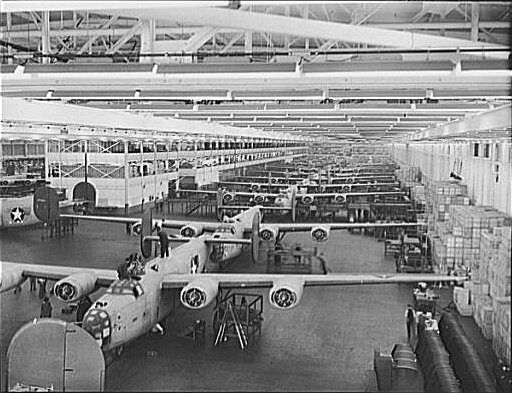
Greenie: “Seriously, Jordan, if it weren’t for the auto companies and auto workers, the world might be a different place. In just a few months after WWII started, the plants went from making cars to making tanks and airplanes. Buick even made engines for bombers. Seems to me the people in France and Belgium have more respect for what the companies and workers did than the people in America. Makes me angry.”

B-24_bomber_at_Willow_RunJordan: “It is an amazing story, which very few people seem to appreciate.”

Gelly: “Maybe you should make the southeast Michigan story part of your conversation with POTUS.”

Jordan: “Interesting idea. People can talk all they want about software zillionaires, social media and the like. At the end of the day, a country’s value comes from manufacturing things. Software is a great enabler. But you still have to manufacture stuff.”

Gelly: “I’d really appreciate it if you would mention it to POTUS. I sometimes think I’ve let my family down because my job is to push paper around and not really make stuff.”

Jordan: “Gelly, I’m certain your family is very proud of you. And I am very proud of you for how you respect what they’ve done.”

#178 Manufacturing in the US. It’s Competitive and Rebuilds the Middle Class. (Part #2)

06 Wednesday Jan 2016

Posted by Jordan Abel in Corporate Policy, Innovative Thinking: Ideas and Products, Personal Stories, Societal Issues

≈ 1 Comment

First-time readers, this blog is set in the future (sometime after the year 2020).  Each entry assumes there has been a 5th revolution in the US — the Revenge Revolution.  More about Revenge Revolution and author, Entry #1.  List and general description of entries to date.  Annual assessment whether Revolution plausible.

Note: most characters appear in a number of entries, with many entries building on previous conversations.  Profile of characters.  You’ll catch on quickly.  Thanks for your time and interest…and comments. 

Scene: Pilot Truck Stop, Central Illinois. Jordan having breakfast, sitting at the counter.  (Conversation started Entry #177.)

PilotLogoJordan: “The coffee is good. What an improvement from the old days at truck stops. Coffee was like used motor oil.”

Patron: “Some of us think the truck stops have wimped out. Too much like Starbucks fufu-coffee and not enough real-man coffee.”

Jordan: “OK, let’s get back to the topic at hand. Bringing manufacturing jobs back to America and especially mid-size and smaller communities. First question is ‘Are the workers trained for the higher-tech jobs?'”

middle_aged_man_by_asimplesongPatron: “Are the workers trained in Mexico or China? Not at first so somebody had to train them.”

Jordan: “What about the unions?”

Patron: “What about them?”

Jordan: “A lot of business people, mostly Republicans probably, claim that the unions killed manufacturing in America.”

Patron: “Another excuse by CEO’s and politicians. Most of those guys don’t know dog poop from apple butter about what goes on in manufacturing. Did these guys ever look at Germany? Lots of manufacturing, lots of exports…and very strong unions. What’s Turtleneckwrong with that model?”

Jordan: “Nothing, I guess. The education system in Germany has more emphasis on learning skilled trades.”

Patron: “Well, so did we…at least when I was growing up. In our high school we had an opportunity to take classes to become an apprentice plumber, electrician, metal worker, auto mechanic, etc. ”

Jordan: “Those courses are not available now?”

manufacturing-production-operations-jobsPatron: “Apparently someone or some bodies decided that having everyone get ready for college was more important than learning a skilled trade. So now there are no more of what we used to call ‘shop classes.’ And guess what? We’ve got a shortage of skilled trades and college grads driving cabs.”

Jordan: “Wonder if those same people ever correlated eliminating shop classes, as you called them, and the loss of manufacturing jobs?”

FartPatron: “Why would they? Those folks probably never cut anything in their life…except maybe a fart.”

Jordan: “That’s funny. Sad and true but funny.”

Patron: “You’re asking me all these questions. Whadda you think?”

Jordan: “I think you’re right…and let me tell you a story why I think you’re right.”

Patron: “Shoot.”

Jordan: “A few years ago I ran small manufacturing company in northern California – Sonoma County.”

122913_1337_14BringingU2.pngPatron: “I thought they only grew grapes and made wine there.”

Jordan: “Lots of agriculture. But this company manufactured…really assembled…electric bikes, electric scooters and some other stuff.”

Patron: “Sounds like a fun place. Why’d they want you? Just kidding.”

Jordan: “When I arrived, the company assembled an average of 37 scooters a day. The problem was some days it was 75 and some days is was zero.”

Assembly Line 2Patron: “So they hire you to fix the assembly line.”

Jordan: “The Board of Directors wanted me to move all the production to China right away.”

Patron: “Same old BS. Move to China because labor was cheaper, right?”

Jordan: “I told them to give me until the end of the year…about 7 months…to fix the problem. Then we could revisit whether to assemble in China.”

Patron: “What happened?”

Line chartJordan: “In the 7 months we increased production from 37 per day to 250 per day.”

Patron: “What’s that about 5 times…no 6 times more production each day.”

Jordan: “Yep.”

Patron: “What’d you do…buy a bunch of equipment?”

Jordan: “We bought virtually no equipment, other than some carts to move parts between stations.”

Patron: “Add a bunch of people?”

Jordan: “No the only people we added were in the shipping department.”

Patron: “What did you do?”

Listening.EarJordan: “Listened to the workers. We asked for ideas on what changes would make their jobs easier and improve product quality.”

Patron: “So you listen, make some changes to the product and the assembly line but keep the same number of people, the same equipment and production increases from 37 to 250 per day. That’s impressive.”

Jordan: “Here’s the kicker. Labor cost per unit dropped so much that we could have doubled the pay of workers in California…and paid workers in China nothing and…”

Patron: “…it would have been cheaper to build in California. Right?”

Jordan: “You got it right. Amazing, huh?”

People OrdinaryPatron: “One more question. What about the workforce? They must have been highly skilled.”

Jordan: “The workforce was a bunch of ordinary folks who lived in the area. For some English was a second language…a distant second language. We even had a couple of guys on parole from prison.”

Patron: “And you still made it all work? You’re a genius.”

Jordan: “Thanks for the compliment but all I did was listen to the people involved and then get resources to help them do their jobs better.”

Patron: “What happened to the company? Must have become very successful.”

Jordan: “Unfortunately some investors got greedy and…”

Patron: “…then moved production to China. And then the company filed for bankruptcy.”

Jordan: “You’re the genius.”

Patron: “No doubt some of the investors got their money out and left the regular investors and employees holding the bag. Makes me sick.”

Jordan: “Me, too. While it’s a sad ending, the good part of the story is there is hope for manufacturing in the US…and small town America.”

fife-drum%201Patron: “Maybe the Revenge Revolution will begin to change attitudes about the importance of manufacturing. And you need to tell your story.”

Jordan: “Thanks for the encouragement.”

Patron: “Listen, I need to run. By the way, I never did introduce myself. I’m Rich Johnson…but everyone call me Doughman. Cause I look like…”

Pillsbury-DoughboyJordan: “…the Pillsbury Doughboy?”

Patron: “Looked this way since grammar school.”

Jordan: “Doughman, I’m Jordan Abel.”

Patron: “Well, Mr. Abel, nice chatting with you. Good luck on helping bring manufacturing jobs back to the US.”

#170 Big Cat Clydesdale

25 Wednesday Nov 2015

Posted by Jordan Abel in Personal Stories

≈ Leave a comment

First-time readers, this blog is set in the future (sometime after the year 2020).  Each entry assumes there has been a 5th revolution in the US — the Revenge Revolution.  More about Revenge Revolution and author, Entry #1.  List and general description of entries to date.

Note: most characters appear in a number of entries, with many entries building on previous conversations.  Profile of characters.  You’ll catch on quickly.  Thanks for your time and interest…and comments. 

Scene: JC, Greenie, and Jordan sitting outside at a restaurant near Jordan’s office.  Con’t from #169.

092615_2031_Characters2.jpgGreenie: “Boy, you were away a long time. JC and I thought you didn’t love us anymore.”

Jordan: “Apologies for the interruption. Two calls.”

JC: “Good ones, I hope.”

Jordan: “One good and one bad.”

Greenie: “By the look on your face, the bad one was personal. Wanna talk?”

Jordan: “The news was not unexpected and you know what’s going to happen…but still.”

092615_2031_Characters1.jpgJC: “Anyone we know?”

Jordan: “You know Mr. Clydesdale, right?”

JC: “The one you call ‘Nine Lives’?”

Jordan: “That’s the one. He’s in hospice care and that’s never a good sign.”

Greenie: “Why do you call this guy ‘Nine Lives.’? He sounds fascinating.”

TurtleneckJordan: “He’s also known as ‘Big Cat.'”

Greenie: “I love it. ‘Big Cat Clydesdale.’ What a great name. Tell me more about him.”

Jordan: “You really want to know?”

JC: “Yes. Greenie, hearing about Big Cat sounds a lot more exciting than listening to the usual drivel from the male companion in our presence.”

Jordan: “You know, JC, you have a way of making a guy feel great.”

Greenie: “First, how’d you meet Big Cat?”

Jordan: “Our Chavurah. And since that group meets at least once per month, we’ve had a chance to hear some stories.”

JC: “OK, so tell us a couple of stories. I mean, like what kind of jobs has Big Cat had?”

PoliceJordan: “The ones I remember – policeman in Miami. A nurse, I think in the south as well.”

Greenie: “A male nurse? When? Big Cat’s how old?”

JC: “In his eighties for sure.”

Jordan: “Probably 85, 86. He was a nurse more than 50 years ago.”

Greenie: “Way ahead of his time. But why a nurse?”

Jordan: “Never has said but it might have been as a way to meet women.”

Greenie: “Keep going. What other jobs?”

Jordan: “Hospital administrator – upstate New York, I think. I know there are more jobs but I don’t remember the details.  He was also a certified master gardener and participated in local theater.”

JC: “Wow.  What a range of skills.  Was he married?”

Jordan: “Yes, and his last marriage lasted 40+ years.”

Greenie: “So there were other marriages I take it?”

Jordan: “Several others.”

hand-hiGreenie: “Just how many is ‘several’?”

Jordan: “Hold up your hand. How many fingers do you see?”

Greenie: “Five…as in five others?”

JC: “I thought I pushed the envelope for the number of marriages. Big Cat is in a different league.”

Greenie: “I do find it fascinating that the sixth marriage lasted so long. She must be quite a woman.”

Jordan: “All in the Chavurah agree. Somehow they were the perfect match.”

JC: “I take it there are some interesting stories associated with those other marriages. Anything you can share?”

Jordan: “One that sticks out but I’m not sure the situation ever resulted in a marriage.”

Greenie: “Do I really want to hear this?”

gas station_~u19028267Jordan: “It’s clean…and besides JC asked. Scene: gas station in south Florida and woman refilling tank. Not sure if Big Cat the attendant or another customer. Anyway, Big Cat and woman start a conversation with him asking ‘Where you headed?’ She responds Michigan…no I think Wisconsin. Then in short order, she asks if he wants to join her on the trip.”

JC: “Of course, he agrees, right?”

Jordan: “He parks his car in a grocery store parking lot and off they go.”

Greenie: “How many stories are there like this?”

Jordan: “Endless. By the way, I just got a text that he didn’t make it.”

122913_1337_14BringingU2.pngJC: “That’s too bad. What a wonderful character and what a life. Here’s a toast to Big Cat Clydesdale. May his memory be a blessing.”

Jordan: “Thanks, JC. I’m sure Big Cat would appreciate the toast.”

(Conversation at restaurant to be continued.)

#143 “You’re a Racist!” “So What?” con’t

15 Wednesday Jul 2015

Posted by Jordan Abel in Causes of the Revolution, Personal Stories, Societal Issues

≈ Leave a comment

Scene: continuation of previous entry.  Jordan and long-time friend Rock Man return from coffee break.  The conversation has been about the societal impact of removing the Confederate Battle Flag from most public property.  Suggest you first read entry #142.

More about author and the general content of the Blog, Entry #1.

War of Northen AggressionRock Man: “As we were discussing the War of Northern Aggression…I mean the US Civil War.”

Jordan: “When we first moved south, I was amazed at the number of people who called it the War of Northern Aggression. It’s as if the Confederacy was an innocent bystander.”

Rock Man: “OK, back to the topic at hand. Yes, I think we should study the Civil War and study the facts as we know them, not as we want them.”

Jordan: “There are some ugly scenes on both sides. But no matter how one cuts it, any time part of a country votes to secede, the other part of the country views it as a treasonous act. And why honor those who commit treason? Those who tried to secede are the enemy.”

Rock Man: “Wonder how the Germans…and Japanese…educate children about WWII?  Are they still in denial like many southerners seem to be?”

Jordan: “I’ll give you data point of one, which is always dangerous…except in soldier_previewWashington. When I was in grad school, several of my classmates were from Germany. After a number of months and several social events…”

Rock Man: “I thought that place on the Charles River in Cambridge was an academic institute, not a party institute.”

Jordan: “Like I said, after a few social events, my wife asked one of the students from Germany the very question at hand – ‘How was WWII taught in German schools?'”

Rock Man: “And?”

Jordan: “Very different perspective than what we were taught and the perspective of most of the documentaries I’ve seen.”

Rock Man: “No doubt there are some legitimate differences in perspectives but what was the primary difference?”

HolocaustJordan: “The Germans downplayed the Holocaust. Very much downplayed it, to the point where my classmate knew very little about it.”

Rock Man: “So southerners are not the only ones guilty of revisionist history. But your observation about German schools was a long time ago.”

Jordan: “Agreed. And in fairness, I think in recent years, the government of Germany has made much more public acknowledgment of actions leading up to and during WWII.”

Rock Man: “But have the German people changed their attitudes? Do they still think they are the Aryan race?”

TurtleneckJordan: “Tougher question. My answer, which likely is a bit biased, is the change in attitude toward Jews and others sent to the camps has been limited at best. Clearly some have changed attitudes…and people who are the most open toward others are probably younger. But I find it amazing how many Germans still have that air of superiority. You can feel it when you’re around them.”

Rock Man: “Let’s give them a break and say attitudes will change even more over the next few generations.”

Jordan: “I hope so but I wonder. Look how Germany strangled Greece in the bailout.”

Rock Man:  “That conversation is for another time.”

Jordan:  “Agreed.  I brought it up to make the point about willingness to change and work with others who might be different.  However, to me the more complex and difficult question is ‘Why should Germans change their attitude?’ What’s the incentive?”

Rock Man: “Because the attitude of superiority is wrong.”

Jordan: “Wrong by whose standard?”

Rock Man: “Civil society.”

Jordan: “Rock Man, what have you been smoking? People have little reason to change attitudes, even those who are racist and bigoted. Besides, if you’re a bigot or racist, the other group is at fault, not you.”

Rock Man: “But you don’t think like that do you? So why should the racists and bigots?”

Jordan: “But what if I did think like that?”

Rock Man: “Then I’d say, ‘You’re a racist.'”

Jordan: “And I would respond, ‘So what?'”

Rock Man: “This conversation is troubling. You’re implying…not implying, you’re stating that the racists and bigots are not going to change. Right?”

Jordan: “Not going to change without some reason to change. Pulling down the Confederate Battle Flag from public spaces and/or being called a racist is not enough incentive to change.”

010114_1941_20RockMans1.pngRock Man: “Then what is an incentive for change?”

Jordan: “The other side has to change. You’ve got to change.”

Rock Man: “You talking about me changing or the black community changing?”

Jordan: “Maybe both but the black community for sure.”

Rock Man: “I like this conversation even less. I need some fresh air. Can we take a break?”

Jordan: “Yes, we may take a break. I need one also.”

(Continued)

#119 Discrimination Is Not the Issue? (Part 2)

19 Thursday Mar 2015

Posted by Jordan Abel in Personal Stories, Rebranding Black Community, Societal Issues

≈ Leave a comment

(Readers: The blog centers around the author’s prediction that the US will experience a 5th revolution by 2020-2025.  Some early vignettes precede the revolution; later vignettes follow the revolution.  Many characters appear regularly.  More about the blog and the author.)

(Scene” Jordan having coffee with administrative assistant, Gelly.  The conversation continues after a break for a coffee refill.  Link to Part 1.)

Gelly:  “So, how do you think blacks should change?”

Jordan:  “The very first step…and I think the first step taken by every other ethnic group…is a change in attitude.”

woman_parentGelly:  “Not sure I understand but how should they change?”

Jordan:  “Change the focus from the past to how they can improve.  Once they make such a change, there will be many people who be willing to help.  But blacks have to make the change first.”

Gelly:  “You said before the break that demanding others change attitudes toward blacks won’t really help.  Why?”

Jordan:  “Because you cannot force me to change my attitude.  I’ll change my attitude when I am ready.”

Gelly:  “Your approach sounds so abstract.  Have you got an example where the approach worked?”

Jordan:  “Remember the Great Carnac?”

carnacGelly:  “Of course.  But what does the Great Carnac have to do with this issue?”

Jordan:  “One of the most influential people in my life was the Great Carnac.  Not the real Johnny Carson Carnac but someone who helped me change my attitude and behavior.”

Gelly:  “You’ve mentioned the Great Carnac before but I’ve forgotten the context.”

Jordan:  “Years ago when I was in the corporate world, our department was spun off and set up as a separate unit.”

Gelly:  “OK, so what?”

stare-downJordan:  “The guy who took my former office and part of my former responsibilities turned out to be what I thought was a real pain in the you-know-what.”

Gelly:  “Yes, I know what.  What happened?”

Jordan:  “Our new group was having a training session and the Great Carnac was leading the session.  She had not earned the title the Great Carnac at that time.  After the session I talked to her about the problems with my colleague.”

Gelly:  “This guy have a name?”

Jordan:  “Yes, Mr. E. S. Cue.”

Gelly:  “And so what was the problem with Mr. E.S. Cue?”

Jordan:  “I thought he was making lots of poor decisions…at least by my standards.  I also thought that if the staffs involved reported to me again everything could be fixed.  I was, in effect, demanding things change.”

Gelly:  “And what did Carnac suggest?”

Jordan:  “She said I was the problem, not Mr. Cue.”

Gelly:  “Very perceptive.  And what did she suggest you do?”

Jordan:  “Before she offered a solution, she had me complete an exercise.”

Gelly:  “I like this.  The exercise was?”

Jordan:  “I had to picture myself as Mr. Cue sitting in my old office.”

Gelly:  “OK, then what?”

Jordan:  “I was to visualize myself walking into Mr. Cue’s office.”

Gelly:  “And?”

Jordan:  “I was to blurt out the first word that came to Mr. Cue’s mind as I walked through the door.  She insisted I say the first word, no matter what the word was.”

Mickey-Mouse-fingerGelly:  “So what was the word?”

Jordan:  “Really want to know?”

Gelly:  “Yes.”

Jordan:  “The polite version is a-hole.”

Gelly:  (laughing) “I can buy that.  Some people we work with now probably have the same thought as Mr. Cue.”

Jordan:  “Really?”

Gelly:  “Really…but only on occasion.  So what did she suggest you do?”

Jordan:  “Respect him.”

Gelly:  “That’s it?  Respect him?  Like Aretha wanted r-e-s-p-e-c-t?”

Aretha-aretha-franklin-27121751-1280-1024Jordan:  “Like Aretha.  Respect something about him.  Anything I could find.”

Gelly:  “Then what was supposed to happen?”

Jordan:  “My problems with Mr. Cue would go away.”

Gelly:  “That seems so simple.  Did it work?”

Jordan:  “Yes, it did work and getting there was surprisingly easy.”

Gelly:  “How’d you do it?”

Jordan:  “Remember the book, ‘The Little Engine that Could’?”

little-engineGelly:  “Great book with a great theme, ‘I think I can; I think I can.’”

Jordan:  “I changed the words slightly to ‘I know I respect him; I know I respect him.’”

Gelly:  “When did you start changing your attitude?  And how?”

Jordan:  “I started that afternoon.  The men’s room was about halfway between Cue’s office and my office.  About 2:00pm…and don’t ask me why I remember the time but I do… we both headed to the men’s room.”

Gelly:  “Them what happened?”

Jordan:  “I kept trying to find something about him to respect.  I found something but I cannot remember what it was.”

Gelly:  “And your problem went away?”

Jordan:  “Not that afternoon.  But every time I was around him, I kept saying to myself, ‘I know I respect him; I know I respect him.'”

Gelly:  “Then the problem went away?”

Jordan:  “In about four months, Mr. Cue retired unexpectedly.”

Gelly:  “Really?  What a break.”

Jordan:  “And when I went to his retirement party you would have thought I was his long-lost friend.”

Gdarth_vader_by_mehdiinconnu-d4rdopcelly:  “So you went from arch-enemy — Darth Vader – to long-lost friend in four months?”

Jordan:  “Yep.”

Gelly:  “And you really believe your showing respect is what changed the relationship?”

Jordan:  “Yep.  I’ve had the same experience several times, although now I try not to let relationships deteriorate.”

friendsGelly:  “That experience is really interesting.  You think the same approach could work for the black population?”

Jordan:  “Yes.  But I have to think…and this might be unpopular and certainly not politically correct…that if blacks took the first step and started to show more respect for others, then the attitude of many people would begin to change also.  Much like what happened with Mr. Cue.  Remember I took the initiative.”

Gelly:  “The approach does seem counter-intuitive and certainly controversial.  By showing respect, does that make blacks feel subservient to whites?  Has the feeling of the Jim Crow era.”

Jordan:  “Hold that thought.  I need to take a break.”

#116 Last Ones Standing

05 Thursday Mar 2015

Posted by Jordan Abel in Personal Stories

≈ Leave a comment

(Readers: The blog centers around the author’s prediction that the US will experience a 5th revolution by 2020-2025.  Some early vignettes precede the revolution; later vignettes follow the revolution.  Many characters appear regularly.  More about the blog and the author.)

Scene: Jordan and JC having coffee.

010414_1635_16TeachingS1.jpgJC:  “So Jordan, you don’t look so good.  What’s wrong?”

Jordan:  “That’s what I like about you JC, always the diplomat.”

JC:  “Well, you do look like crap.  Besides getting old, what else is wrong?”

Jordan:  “Nothing really.”

JC:  “C’mon.  You know I won’t buy that.  What’s happened?”

TurtleneckJordan:  “Just one of those periods between projects.  You know, like between semesters.”

JC:  “You mean you are pumped up for exams, then have a letdown right afterwards?”

Jordan:  “Yea, you might say so.”

JC:  “Since both of us have been out of school for a long time, probably need a better analogy.  Maybe like having sex is a more appropriate analogy.”

Jordan:  “This sounds much more interesting.  Tell me more.”

balloon-popping-with-bang-text-pvJC:  “You know how you get all pumped up ahead of time, then sort of deflated afterwards.  You having that kind of feeling?”

Jordan:  “You have a way with words like no one else I know.”

JC:  “That’s what you pay me for.  Now, how ‘bout you get me another cup of coffee and then we get serious about what’s wrong.”

Jordan:  “Get me a cup of coffee, please.”

JC:  “Yes, mother.  Please.”

(Jordan gets coffee refills.)

Jordan:  “Here’s your coffee.  Okay, shoot.”

JC:  “You know what I think?”

Jordan:  “What?”

JC:  “I think your funk has nothing to do with what you told me.  There is something else bothering you.”

Jordan:  “You’re right.”

JC:  “So, what is it already?”

Jordan:  “We’re the last ones standing.  We’re alone.”

man on benchJC:  “No, no, no, no.  Are you telling me what I think you’re telling me?”

Jordan:  “Probably.”

JC:  “When did it happen?  And why didn’t you call me?”

Jordan:  “It happened about a week ago.”

JC:  “I’m sorry.  Very sorry.”

Jordan:  “And I didn’t call because you because of all the trauma you’ve been through lately.”

JC:  “But I want to be there at times like this.  What happened?”

Jordan:  “He’s been ill for several years.  The diagnosis was Lyme disease.”

JC:  “I knew Lyme made you sick but I never knew it was fatal.”

Jordan:  “I didn’t think so either but he got progressively worse.”

JC:  “How bad was it?”

Jordan:  “The progression was more like ALS.  Completely incapacitated at the end.”

JC:  “That’s horrible.  How’s the family handling it?”

Jordan:  “My brother’s death was no surprise given the deteriorating condition.  But it’s the finality that is hard to absorb.”

JC:  “Didn’t he and Tappy raise a couple of grandkids?”

Jordan:  “Yes.”

JC:  “How are the grandkids doing?”

sad-face4Jordan:  “Having a very tough time.  You know what it’s like to lose a parent at a young age.”

JC:  “Do I ever.  And I’ll tell you, I’ve never gotten over it.”

Jordan:  “So now, JC, you and I are the last two in our families that are still standing.”

JC:  “I know and I don’t like it.  Makes me feel old.  And depressed.”

hug_1_cJordan:  “Tell me about it.”

JC:  “Now I see why you look like crap.  Come here, let me give you a hug.”

#115 Just a Matter of Zero’s

26 Thursday Feb 2015

Posted by Jordan Abel in Personal Stories, Societal Issues

≈ Leave a comment

(Readers: The blog centers around the author’s prediction that the US will experience a 5th revolution by 2020-2025.  Some early vignettes precede the revolution; later vignettes follow the revolution.  Many characters appear regularly.  More about the blog and the author.)

Scene:  Jordan talking to son (Steve) of a long-time friend.

Son of Friend:  “Mr. Abel, I need some advice.”

Jordan:  “The first piece of advice is call me Jordan, and not Mr. Abel.”

Young manSon of Friend:  “Yes, sir.”

Jordan:  “Excuse me, Stevie, no more ‘mister,’ no more ‘sir,’ just Jordan.  Got it?”

Stevie:  “Yes, sir…I mean Jordan.  You know it is hard for me to call older people by their first names, especially friends of my parents.”

Jordan:  “I understand.  I had the same training as you did.  I appreciate the show of respect but we are in the real business world so Jordan is fine.”

Stevie:  “OK, Jordan.”

Jordan:  “Now you got it.  How may I help, Stevie?  I mean Steve.  I’ve known your pTurtleneckarents for a long time.  And, you’ve always been Stevie to me.  But no more.  Now you’re Steve.  We’re even on names.”

Steve:  “Even.  According to my parents…and my research…you’ve worked at very large companies, start-up companies and even consulted for government.  I’m trying to decide where I should work.”

Jordan:  “First, you should find a job where you can contribute…and have fun.”

Steve:  “What about a job where I can make the most money?”

Jordan:  “Alright but let’s talk about what are the most important things to you?  And Money-clip-artby things I don’t mean material objects – like cars, or clothes.”

Steve:  “I’m not sure what’s most important.  Never really thought about it.”

Jordan:  “Now might be a good time to start.  But don’t feel bad.  A lot of people go through life and never really understand what’s Important to them.”

Steve:  “So you’re suggesting I find a job that I really like?”

Jordan:  “Yes.  I know this is a cliché but life is too short to spend time being unproductive…and being unhappy.”

Steve:  “I’d like to be productive and have fun…but what about the money?  I want to make lots of money….at least I think I do.”

Jordan:  “Let’s back up and first think about what’s really important to you.  Then, if making lots of money is on the important list, find a job where you can make lots of checklistmoney.  My guess is, if you are true to yourself, there will be some items before to get to the money part…and money might not be on the list.”

Steve:  “Odd that you say money won’t be on the list.  Was it on your list?”

Jordan:  “Want to know the truth?  It’s never been on my list.”

Steve:  “But you’ve been successful financially.  No the richest guy around but living very comfortably.”

Jordan:  “You’re right.  Funny, but for me money has always been there.  Never worried about it and never really thought about it.”

Steve:  “C’mon, really?”

Jordan:  “Don’t misinterpret my comments.  Maybe I should phrase them differently.  I’m sure you’ve heard this before but money does not buy you happiness.”

Steve:  “You sound like my mother.  I know if I had lots of money I would be happy.”

Jordan:  “Would you really be happy with lots of money?  You know some people whose families have lots of money.  Are they all happy?”

Sroyalty-free-cell-phone-clipart-illustration-1067376teve:  “Well, not really.  Even the kids are not happy.  They always seem to want more.”

Jordan:  “And do you know people who don’t have a lot of money who are very happy?”

Steve:  “Yes.  Mmmm, now I see what you mean.  Like I said, never really thought about it before.”

Jordan:  “We are making progress.”

Steve:  “But, let’s go back to my original question.  Where should I try to get a job?  Large company, small company, start-up…or even government.  My dad would shoot me but I could work for government.  Really, Jordan, what’s the difference among these groups?”

JResearch_tnbordan:  “What I am about to say might sound illogical but most of the difficulty in making an organization effective has nothing to do with the size of the organization…or the product …or the service?”

Steve:  “Really?  What causes most of the problems?”

Jordan:  “People.  People make or break an organization.  Doesn’t matter  if we’re talking about the local ice cream stand, a giant auto company, a software company or a government agency.  It’s people.”

Steve:  “Are you saying the problems are about the same in all organizations?  Doesn’t matter if they are large or small?  Private or public?  Start-up or 100 years old?”

Jordan:  “Exactly.  The only difference in a small organization and a large organization zeros-2br85lzis the number of zeros on the income statement.  Big companies and big government have lots of zeros and small companies don’t have many zeros.  But they all have one thing in common….”

Steve:  “…people.  Now you have my head spinning.  I need to take a break and think about this.  Thanks, Mr. Abel…I mean Jordan.”

← Older posts
Newer posts →

Subscribe

  • Entries (RSS)
  • Comments (RSS)

Archives

  • August 2025
  • July 2025
  • June 2025
  • May 2025
  • April 2025
  • March 2025
  • January 2025
  • December 2024
  • November 2024
  • September 2024
  • August 2024
  • July 2024
  • June 2024
  • May 2024
  • April 2024
  • March 2024
  • February 2024
  • January 2024
  • December 2023
  • November 2023
  • October 2023
  • September 2023
  • August 2023
  • July 2023
  • June 2023
  • May 2023
  • April 2023
  • March 2023
  • February 2023
  • January 2023
  • December 2022
  • November 2022
  • October 2022
  • September 2022
  • August 2022
  • July 2022
  • June 2022
  • May 2022
  • April 2022
  • March 2022
  • February 2022
  • January 2022
  • December 2021
  • November 2021
  • October 2021
  • September 2021
  • August 2021
  • July 2021
  • June 2021
  • May 2021
  • April 2021
  • March 2021
  • February 2021
  • January 2021
  • December 2020
  • November 2020
  • October 2020
  • September 2020
  • August 2020
  • July 2020
  • June 2020
  • May 2020
  • April 2020
  • March 2020
  • February 2020
  • January 2020
  • December 2019
  • November 2019
  • October 2019
  • September 2019
  • August 2019
  • July 2019
  • June 2019
  • May 2019
  • April 2019
  • March 2019
  • February 2019
  • January 2019
  • December 2018
  • November 2018
  • October 2018
  • September 2018
  • August 2018
  • July 2018
  • June 2018
  • May 2018
  • April 2018
  • March 2018
  • February 2018
  • January 2018
  • December 2017
  • November 2017
  • October 2017
  • September 2017
  • August 2017
  • July 2017
  • June 2017
  • May 2017
  • April 2017
  • March 2017
  • February 2017
  • January 2017
  • December 2016
  • November 2016
  • October 2016
  • September 2016
  • August 2016
  • July 2016
  • June 2016
  • May 2016
  • April 2016
  • March 2016
  • February 2016
  • January 2016
  • December 2015
  • November 2015
  • October 2015
  • September 2015
  • August 2015
  • July 2015
  • June 2015
  • May 2015
  • April 2015
  • March 2015
  • February 2015
  • January 2015
  • December 2014
  • November 2014
  • October 2014
  • September 2014
  • August 2014
  • July 2014
  • June 2014
  • May 2014
  • April 2014
  • March 2014
  • February 2014
  • January 2014
  • December 2013

Categories

  • Affordable Solutions
  • Back Asswards Thinking
  • Background
  • Background Stupid Is as Stupid Does
  • Benefits of Revolution
  • Causes of the Revolution
  • Common Sense Policies
  • Corporate Policy
  • Definitions
  • Diversions
  • Economics
  • Education Issues
  • Federal Budget
  • General Motors
  • Gov't Policy
  • Infrastructure & Fixed Fuel Prices
  • Innovative Thinking: Ideas and Products
  • Lessons of Revolution
  • Personal Stories
  • Possible Solutions
  • Post Trump Presidency
  • Rebranding Black Community
  • SCOTUS
  • Sense Check
  • Societal Issues
  • Stupid Is as Stupid Does
  • Tech Tsunami
  • Trump 47
  • Uncategorized

Meta

  • Create account
  • Log in

Create a free website or blog at WordPress.com.

Privacy & Cookies: This site uses cookies. By continuing to use this website, you agree to their use.
To find out more, including how to control cookies, see here: Cookie Policy
  • Subscribe Subscribed
    • usrevolution5
    • Join 32 other subscribers
    • Already have a WordPress.com account? Log in now.
    • usrevolution5
    • Subscribe Subscribed
    • Sign up
    • Log in
    • Report this content
    • View site in Reader
    • Manage subscriptions
    • Collapse this bar
 

Loading Comments...